
News
Tears as Kano CAS graduates donate cash to children of deceased colleagues


Nasiru Yusuf Ibrahim
It was an emotional event as tears broke out among the members of College of Arts and Remedial Studies, CAS, Kano, IJMB Class 2002 during the disbursement of cash support to orphans of their deceased colleagues on Thursday.
KANO FOCUS reports that the forum decided to support the families of their 14 deceased members in this holy month of Ramadan to put a smile on their faces during Sallah festivities.
However, during the disbursement session, as the orphans were called upon to collect their shares, the situation went emotional as nearly everybody present, including the orphans and widows bursted into tears at the historic event.

KANO FOCUS observed that most of the organisers, the officials of CAS, where the event took place, shed tears as the Provost of the institution, Dr Sunusi Yakubu Ahmad, presented financial assistance to the beneficiaries.
It involved the intervention of the Provost, who comforted and consoled the gathering, after the session was temporarily halted, before the programme continued.
Giving a breakdown of the maiden donation, Isma’il Galadima, Chairman of the disbursement committee, said the forum donated the sum of N1,631,000 through crowdfunding.
According to him, 31 children of the 14 deceased colleagues were given N50,000 each.
He explained that 16 children of 7 deceased members, residing outside Kano had received their money via transfer.
He added that 15 children of 7 deceased members living In Kano were the one who received their shares at CAS Kano on Thursday.
In his welcome remarks earlier, the President of the association, Dr Muhammad Shamsuddin said the financial assistance was to support the families of the deceased members.
“This program could be late because we have this in mind for long but the delay was caused by formalization of the association.
“We worked assiduously to make sure this association is registered as we are on the verge of getting CAC certificate.
“That is why we decided to use the opportunity to contribute money among ourselves to support these orphans,” he said.
He said the support is a tip of the iceberg, assuring that; “next time, we will conduct investigation on the needs of the orphans. We are giving them this to put a smile on their faces during this Sallah festivities.”
He thanked the provost for his support to the forum.
In his inspiring remarks, the Provost, Dr Ahmad described the support scheme as one of his biggest achievements in his tenure as Provost.
According to him, the was astonished to the initiative, which according him, would help in securing a good future of the orphans.
“I wanted to cry but because of leadership, i summoned courage not to weep, because if i cry, the meeting would have collapsed.
“This is a kind gesture is worth emulating. It tells you that death is real and shall come to everybody,” he said.
While comforting the widows and the orphans, the provost assured them that they would smile in their future.
He urged the widows to take a good care of the orphans in order to become productive in the society.
He also promised to support the at the CAS level, and vowed to call on the other Class chapters to emulate the forum.


Nura Abdullahi
The Kano State Police Command has handed over two recovered vehicles to their rightful owners following intelligence-led operations.
KANO FOCUS reports that the recovered properties, comprising an orange Vibe motor vehicle and an ash-coloured Haojue motorcycle, were formally handed over to their owners at the Command Headquarters in Bompai, Kano, during the week.
The command disclosed this in a press release issued on Friday, by its Police Public Relations Officer, CSP Abdullahi Haruna Kiyawa.
According to the statement, the handover followed the completion of ownership verification, authentication of relevant documents and other necessary procedures.
The beneficiaries expressed gratitude to the police, commending the command for its professionalism, commitment to justice and prompt return of their properties.
They described the recovery and handover as evidence of responsive and people-friendly policing.
The Commissioner of Police, Ibrahim Adamu Bakori, congratulated the owners and said the exercise aligned with the policing vision of the Inspector-General of Police, Olatunji Rilwan Disu.
The vision, according to the statement, emphasises the protection of lives and property, the return of recovered stolen property to victims of crime, and the promotion of public trust through transparent and accountable service delivery.
CP Bakori assured residents that the command would continue working to improve security across Kano State and ensure that recovered stolen property was returned to its legitimate owners after due verification.
The police urged anyone seeking further information to contact the investigating police officer on 08140081608 or visit the office of the Police Public Relations Officer at the Bompai Police Headquarters, Kano.

Ibrahim Khalil
The Joint National Association of Persons with Disabilities (JONAPWD), Kano State Chapter, will hold its leadership election on Saturday, October 10, 2026, to elect new executives for the association.
KANO FOCUS reports that the election will take place at the Social Welfare Department, Gyadi-Gyadi Court Road, Kano.
Ahead of the exercise, the Chairman of the JONAPWD Kano State Chapter Electoral Committee, Malam Yusha’u Ibrahim Kofar Waika, has urged members, accredited delegates and representatives of the various disability clusters to arrive at the venue on time.
He said punctuality and adequate preparation were necessary to ensure a smooth and orderly electoral process.
Kofar Waika also called on all disability clusters to make the necessary arrangements and participate actively in the election.
The exercise is expected to usher in a new leadership for the association in Kano State.
The election is an important step towards strengthening democratic participation, unity and inclusive leadership among persons with disabilities in the state.
It is also expected to support effective representation and advocacy for the rights and welfare of persons with disabilities.
Nasiru Yusuf Ibrahim
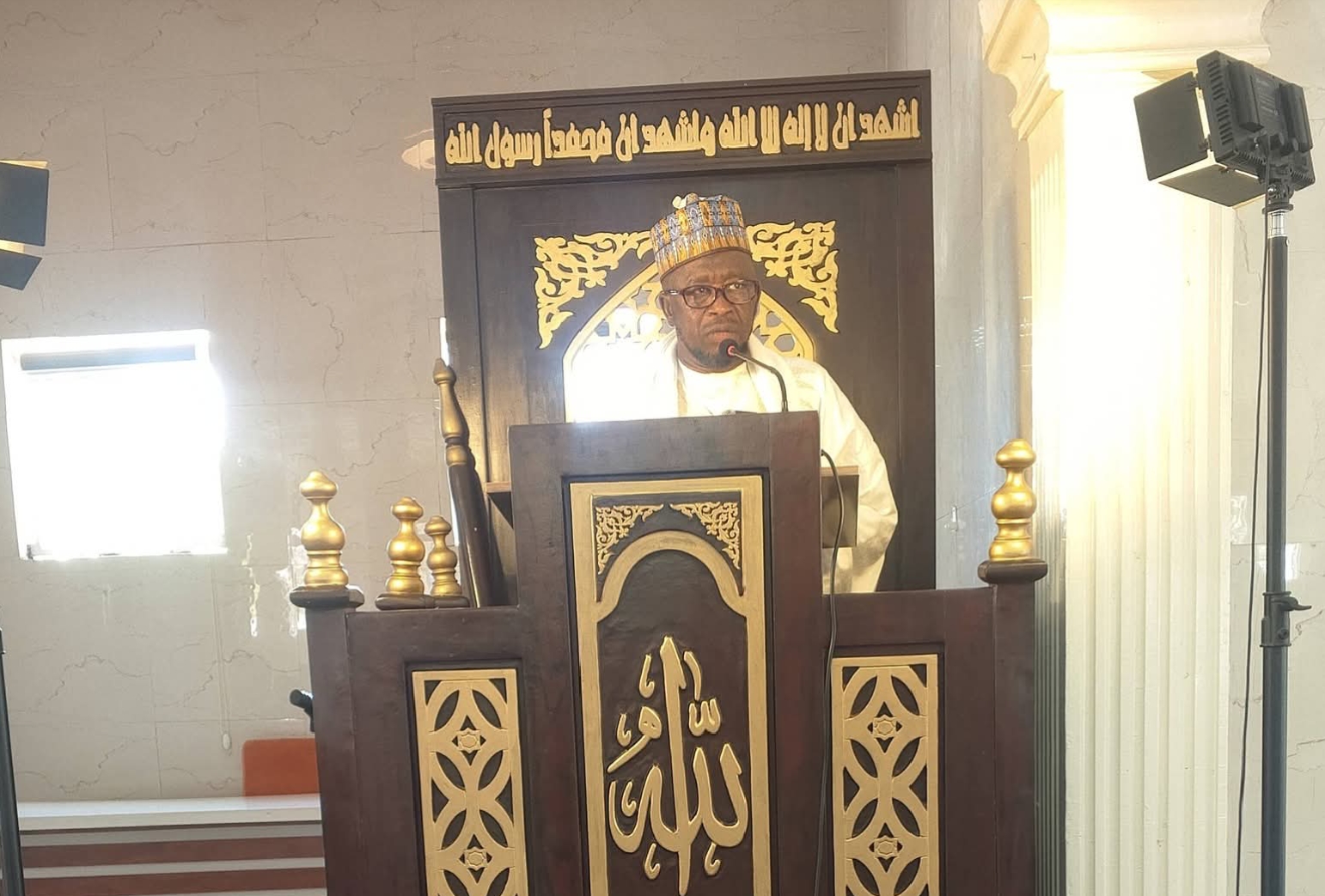
Imam Nura Garba Mato has urged Muslims to remain conscious of their actions, saying that divine reward and punishment often correspond to the nature of people’s deeds.
KANO FOCUS reports that the imam made the call while delivering a Friday sermon at Jami’u Ansar wal Muhajirun Jumaa Mosque, Cotton Ginnery Layout, Zawaciki, Kano State.
The sermon, titled “Al-Jazā’u Min Jinsil-‘Amal” (Recompense Is According to the Nature of Deeds), focused on the Islamic teaching that people’s actions have consequences and that good deeds attract divine reward.
Imam Mato said Allah had established enduring principles in human life that do not change, urging Muslims to understand these principles and allow them to guide their conduct.
He explained that one of these principles was that recompense corresponds to the nature of one’s actions, stressing the importance of living righteously and fulfilling one’s responsibilities to Allah and fellow human beings.
The imam called on Muslims to observe *taqwa* (consciousness of Allah), remain steadfast in their faith and follow the teachings and traditions of Prophet Muhammad (peace be upon him).
He also highlighted the importance of helping people in difficulty, easing the burdens of others and showing compassion to fellow Muslims.
Quoting a prophetic tradition, the imam emphasised that whoever relieves a Muslim of a hardship in this world will receive relief from Allah on the Day of Resurrection.
He further explained that whoever conceals the faults of a fellow Muslim would receive Allah’s concealment of their faults on the Day of Resurrection, while those who make things easier for people in difficulty would receive Allah’s assistance in this world and the Hereafter.
The sermon also underscored the importance of supporting others, noting that a Muslim’s relationship with Allah should be reflected in their treatment of fellow human beings.
Imam Mato urged Muslims to reflect on their deeds and recognise that their conduct carries consequences, encouraging them to embrace good actions, assist those in need and uphold the teachings of Islam in their daily lives.
He stressed that Muslims should make righteousness, compassion and service to others central to their lives in pursuit of Allah’s pleasure and success in the Hereafter.
Kano Police return recovered car, motorcycle to owners

JONAPWD Kano to hold leadership election Saturday

“As You Sow, So Shall You Reap”: Imam Reminds Muslims of Divine Justice

Kano Govt Orders Retired Civil Servants to Vacate Offices, Hand Over Government Property

Nigeria’s Data Demand Surges 47% as Stakeholders Seek Fresh Investment in Digital Infrastructure

Kano leads again as NECO successes rise to 74,413
Kano tops states in 2026 NECO results, Governor Yusuf hails students

Kano Govt Suspends Durbar Processions, Horse Riding in Metropolis

INEC holds campus debate on elections, democracy at BUK

