
Headlines
NNPP, alternative to PDP, APC – Kwankwaso


Nasiru Yusuf Ibrahim
The 2023 presidential candidate and national leader of the New Nigeria People’s Party, Senator Rabi’u Kwakwanso, has described the party as an alternative to the “failed Peoples Democratic Party and failing All Progressives Congress.”
KANO FOCUS reports that the former governor of Kano State stated this during the party’s national convention, which took place at the A-Class Event Centre in Maitama, Abuja, on Saturday.
The gathering, attended by NEC members, state chairpersons, and federal and state lawmakers, confirmed the appointment of Ajuji Ahmed as the acting national chairman of the party. Additionally, it approved the party’s constitution, slogan, and logo.

He likened the ruling APC and the PDP to birds of a feather, suggesting that both parties have inflicted immense suffering on Nigerians with their unpopular and inhumane policies.
Regarding the parties’ status, he asserted that while the PDP has already failed, the APC is currently faltering.
In contrast, he emphasised the NNPP’s rapid growth as a party in Nigeria, highlighting its understanding of the significance of education in alleviating poverty and ensuring the security of lives and property.
He said, “We are all aware that the PDP has completely failed. Many of us decided in 2014, and 2015 to bring in some positive changes. Unfortunately, we have seen what happened from 2015 to date. This is the same APC government.
“Therefore, as far as we are concerned, we have a failing party that is the APC and we believe that this country requires an alternative to the APC and of course, the PDP and the only party, in my opinion, and based on facts, because the NNPP today is the fastest growing party in this country.
” I also believe even beyond this country, that is the only hope as we stand today. In many parts of this country, especially in northern Nigeria, particularly in my part of the north, so many people have been chased out of their homes, and so many have been killed. Some are in the bushes now in the forest under the care of bandits and other criminals. And it looks like many people don’t care.
“It is even becoming a normal thing to go and pick up people in their homes, on the roads, in the markets and so on. I believe it is only in this country that this sort of nonsense is happening. And it is the responsibility of every government, responsible government to ensure the peace of its people.
“I believe, as a former minister of defence in this country, as a former chief security officer of Kano State for eight years, and so on, I believe that we have adequate resources, we have enough manpower, we have all that it takes to protect Nigerians to peace in this country today. So it’s an opportunity for me to ensure that we bring on board a united, stronger, more peaceful, more prosperous Nigeria for all of us.
“Let me say that this party will continue to unite. Its members will continue to be fair and just to all of us. All our members will continue to have an internal democracy within the party so that everybody is allowed to attain his or her position.
“Let me also, at this point, thank all of you for selecting me to be the national leader of our party. I’m so proud. I’m so happy. And I want to assure you that I will do whatever it takes to ensure that this party grows from strength to strength.”
Kwankwaso, an ex-defence Minister, emphasised that Nigeria possesses sufficient resources and manpower to address insecurity.
He guaranteed that the NNPP would introduce a revitalising change for citizens and the nation as a whole.
On his part, Kano State Governor, Abba Yusuf, thanked those who supported the party during the campaigns and legal battles.
He noted that the NNPP ranks as the third-largest party in Nigeria, boasting approximately 21 federal legislators, nearly 30 state legislators, as well as one governor and one deputy governor.

Nasiru Yusuf Ibrahim
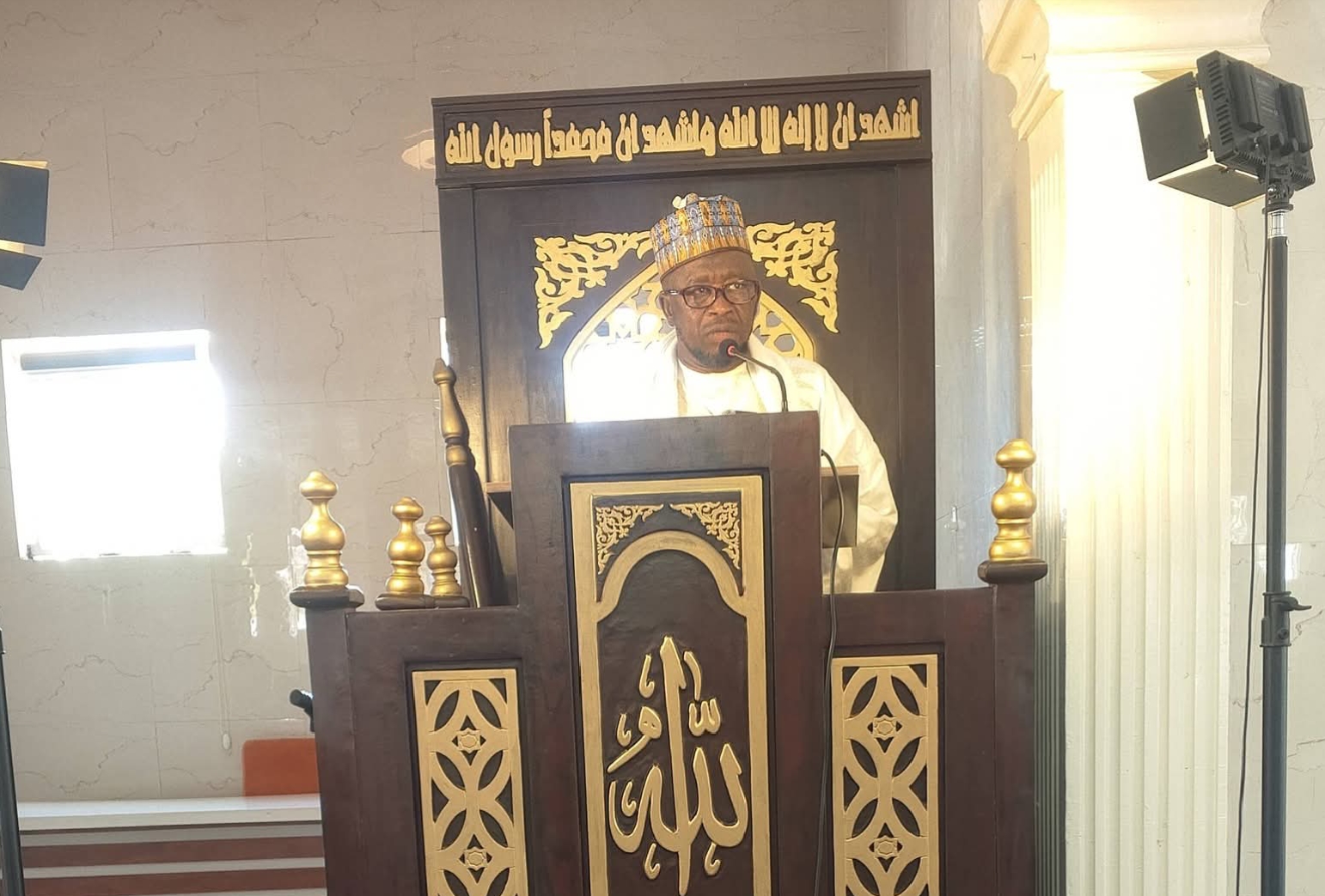
Imam Nura Garba Mato has urged Muslims to remain conscious of their actions, saying that divine reward and punishment often correspond to the nature of people’s deeds.
KANO FOCUS reports that the imam made the call while delivering a Friday sermon at Jami’u Ansar wal Muhajirun Jumaa Mosque, Cotton Ginnery Layout, Zawaciki, Kano State.
The sermon, titled “Al-Jazā’u Min Jinsil-‘Amal” (Recompense Is According to the Nature of Deeds), focused on the Islamic teaching that people’s actions have consequences and that good deeds attract divine reward.
Imam Mato said Allah had established enduring principles in human life that do not change, urging Muslims to understand these principles and allow them to guide their conduct.
He explained that one of these principles was that recompense corresponds to the nature of one’s actions, stressing the importance of living righteously and fulfilling one’s responsibilities to Allah and fellow human beings.
The imam called on Muslims to observe *taqwa* (consciousness of Allah), remain steadfast in their faith and follow the teachings and traditions of Prophet Muhammad (peace be upon him).
He also highlighted the importance of helping people in difficulty, easing the burdens of others and showing compassion to fellow Muslims.
Quoting a prophetic tradition, the imam emphasised that whoever relieves a Muslim of a hardship in this world will receive relief from Allah on the Day of Resurrection.
He further explained that whoever conceals the faults of a fellow Muslim would receive Allah’s concealment of their faults on the Day of Resurrection, while those who make things easier for people in difficulty would receive Allah’s assistance in this world and the Hereafter.
The sermon also underscored the importance of supporting others, noting that a Muslim’s relationship with Allah should be reflected in their treatment of fellow human beings.
Imam Mato urged Muslims to reflect on their deeds and recognise that their conduct carries consequences, encouraging them to embrace good actions, assist those in need and uphold the teachings of Islam in their daily lives.
He stressed that Muslims should make righteousness, compassion and service to others central to their lives in pursuit of Allah’s pleasure and success in the Hereafter.
Nasiru Yusuf Ibrahim
The Kano State Government has directed all civil servants who have attained their statutory retirement age or completed the required length of service to immediately vacate their offices and hand over government property in their possession.
KANO FOCUS reports that the directive was contained in Circular issued on Tuesday by the Establishment Directorate, Office of the Head of Civil Service, Kano State.
The circular, signed by the Permanent Secretary, Establishment, Abba A. Danguguwa, on behalf of the Head of Civil Service, was titled: “Unauthorized Continuance in Service After Statutory Retirement by Civil Servants in Ministries, Departments and Agencies (MDAs) of Government – Call for Immediate Handing Over of Official Documents, Properties.”
The government said it had observed that some civil servants continued to remain in office and operate in official capacities after reaching their statutory retirement period.
According to the circular, such conduct was a “negation to the reputation of the Civil Service of Kano State,” noting that the service had a long-standing tradition of ensuring seamless transition by retiring civil servants.
It described the continued stay in service after retirement as a direct infraction and aberration of relevant provisions of the State Civil Service Rules and other applicable service regulations.
The government stressed that it was legally and administratively untenable for any officer to remain in service or perform official functions beyond the statutory limit.
Consequently, all civil servants who had retired either by age or length of service were directed to immediately exit and hand over all official documents, government property and duties to their immediate subordinates in their respective ministries, departments and agencies.
The circular also directed all Accounting Officers, including Permanent Secretaries and Chief Executives, as well as Directors of Administration and Personnel Management, to ensure strict and immediate compliance with the directive.
It warned that any officer found aiding, abetting or condoning the continued stay of a retired officer in service would face appropriate disciplinary action in accordance with the Civil Service Rules.
The directive takes immediate effect, the circular stated.
Nasiru Yusuf Ibrahim
Kano State Governor Abba Kabir Yusuf says his administration has settled approximately N32 billion out of the N48 billion inherited backlog of gratuities and related liabilities owed to retirees in the state.
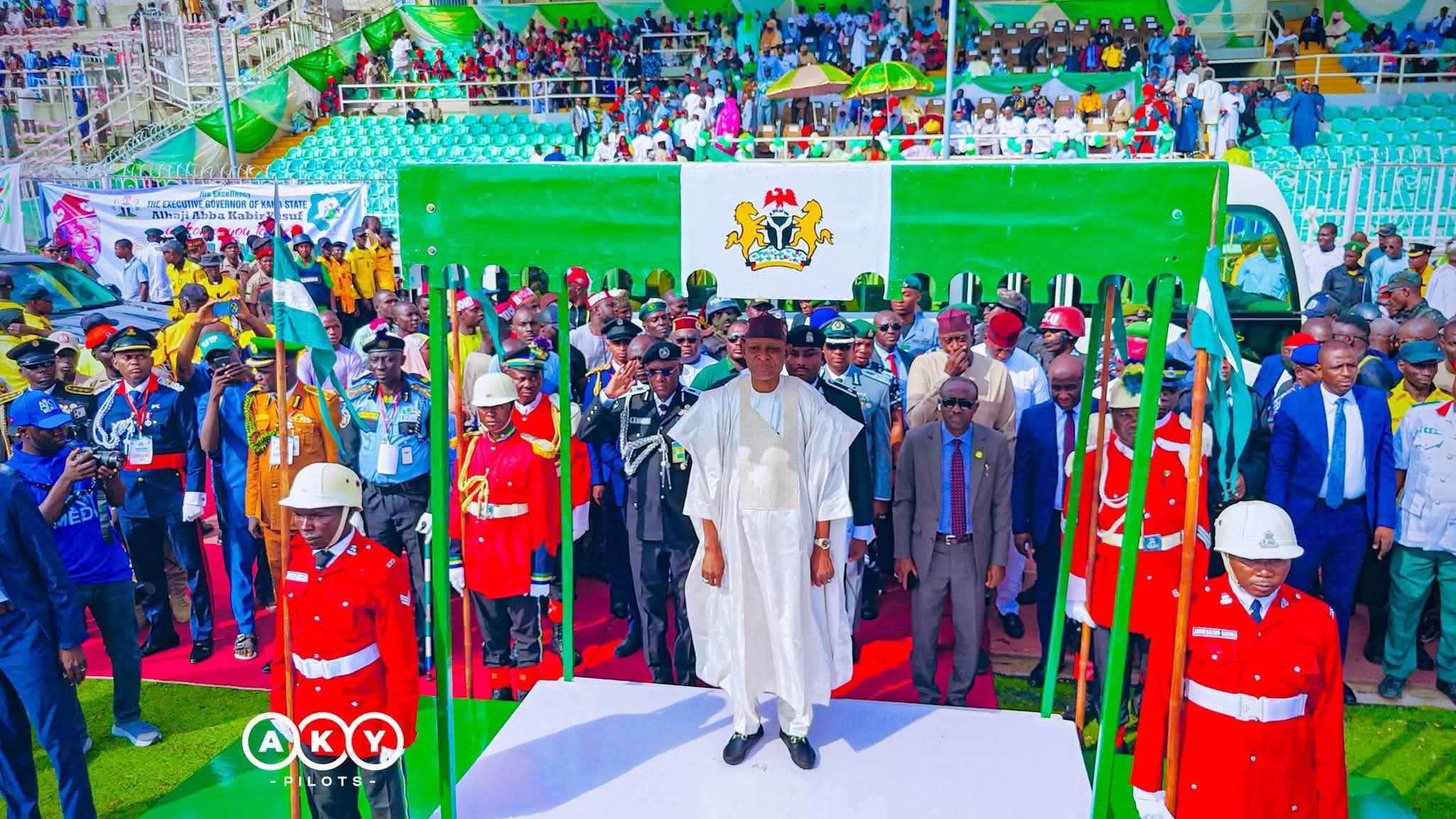
KANO FOCUS reports that Gov Yusuf disclosed this on Thursday while addressing residents at the 66th Independence Anniversary celebration held at the Sani Abacha Indoor Stadium in Kano.
The governor said the government had also sustained the regular payment of monthly pensions while increasing the minimum monthly pension from N5,000 to N20,000.
He said the welfare of workers and pensioners remained a priority of his administration, citing timely payment of salaries, improved remuneration and measures aimed at strengthening the public service.
According to him, the state has maintained the practice of paying workers’ salaries on or before the 25th of every month while implementing the N71,000 minimum wage for civil servants.
Gov Yusuf also said his administration was sponsoring public servants for professional training, including programmes at the Administrative Staff College of Nigeria (ASCON), to strengthen their administrative and leadership capacity.
He reaffirmed the government’s commitment to building a professional and motivated workforce, while ensuring that the contributions and sacrifices of serving workers and retirees were recognised and treated with dignity.

Insecurity, hunger have deepened Northern Nigeria’s distrust of Tinubu, Imam Gusau says

Kano Police return recovered car, motorcycle to owners

JONAPWD Kano to hold leadership election Saturday

“As You Sow, So Shall You Reap”: Imam Reminds Muslims of Divine Justice

Kano Govt Orders Retired Civil Servants to Vacate Offices, Hand Over Government Property

Kano leads again as NECO successes rise to 74,413
Kano tops states in 2026 NECO results, Governor Yusuf hails students

Kano Govt Suspends Durbar Processions, Horse Riding in Metropolis

INEC holds campus debate on elections, democracy at BUK

