
News
Ajrena Foods commissions Peanut Processing Facility in Kano


Aminu Abdullahi

In a major stride toward strengthening agricultural development and economic growth in Kano State, the state government has formally participated in the commissioning of Ajrena Foods Limited, a peanut-processing company built to meet international standards while creating lasting economic benefits for local farmers and communities.
KANO FOCUS reports that the commissioning ceremony, held on Wednesday, marked the official launch of the company’s operations.
The facility was established with the support of Propcom+, an initiative funded by the United Kingdom’s Foreign, Commonwealth and Development Office (FCDO).
Speaking at the occasion, the state’s Commissioner for Agriculture and Natural Resources, Danjuma Mahmud represented by Coordinator special agro processing zone SAPZ Kano Aminu Iliyasu described the factory as a catalyst for further industrial investment in the state.
He noted that the facility would play a pivotal role in transforming the agricultural value chain through modern technology and innovation, with significant potential for job creation, increased revenue generation, and expanded market access for local products.
Iliyasu urged all stakeholders to ensure the factory operates at full capacity and consistently produces high-quality products that can compete globally.
He further revealed that under the leadership of Governor Engr. Abba K. Yusuf, the state is reviving its groundnut processing industry through the Special Agro-Industrial Processing Zones (SAPZ) programme. As part of the initiative, a dedicated Agricultural Transformation Center (ATC) is set to be developed in Dawanau, Dawakin Tofa LGA, for the aggregation and primary processing of groundnuts.
Additionally, a state-of-the-art Agro-Industrial Hub (AIH) is proposed for Bagauda in Bebeji LGA, which will handle final processing of crops such as groundnuts, rice, tomatoes, and sesame.
Dr. Adiya Ode, Political Director and Team Lead at Propcom Plus, stated that the organization partnered with Ajrena Foods by providing both financial support and technical assistance in building the facility and establishing a robust local supply chain. She emphasized the company’s impact in creating opportunities for local farmers to benefit directly from the facility.
Ajrena Foods Executive Director Ajay Ramnani shared that the company’s first outgrower scheme, launched in 2024, trained over 1,000 farmers primarily women and youth in best agricultural practices, with inputs provided and product traceability established from farm to factory. This, he said, ensures the company exceeds global standards and helps rebuild rural prosperity, aiming to restore Kano’s historic reputation for its iconic “groundnut pyramids.”
Mr. Ramnani added that the facility will focus on peanut cleaning and the production of Nutzy-coated peanut snacks.
The event was attended by several dignitaries from the industrial, federal, and state sectors, marking a significant milestone in the state’s agro-industrial advancement.






Nasiru Yusuf Ibrahim
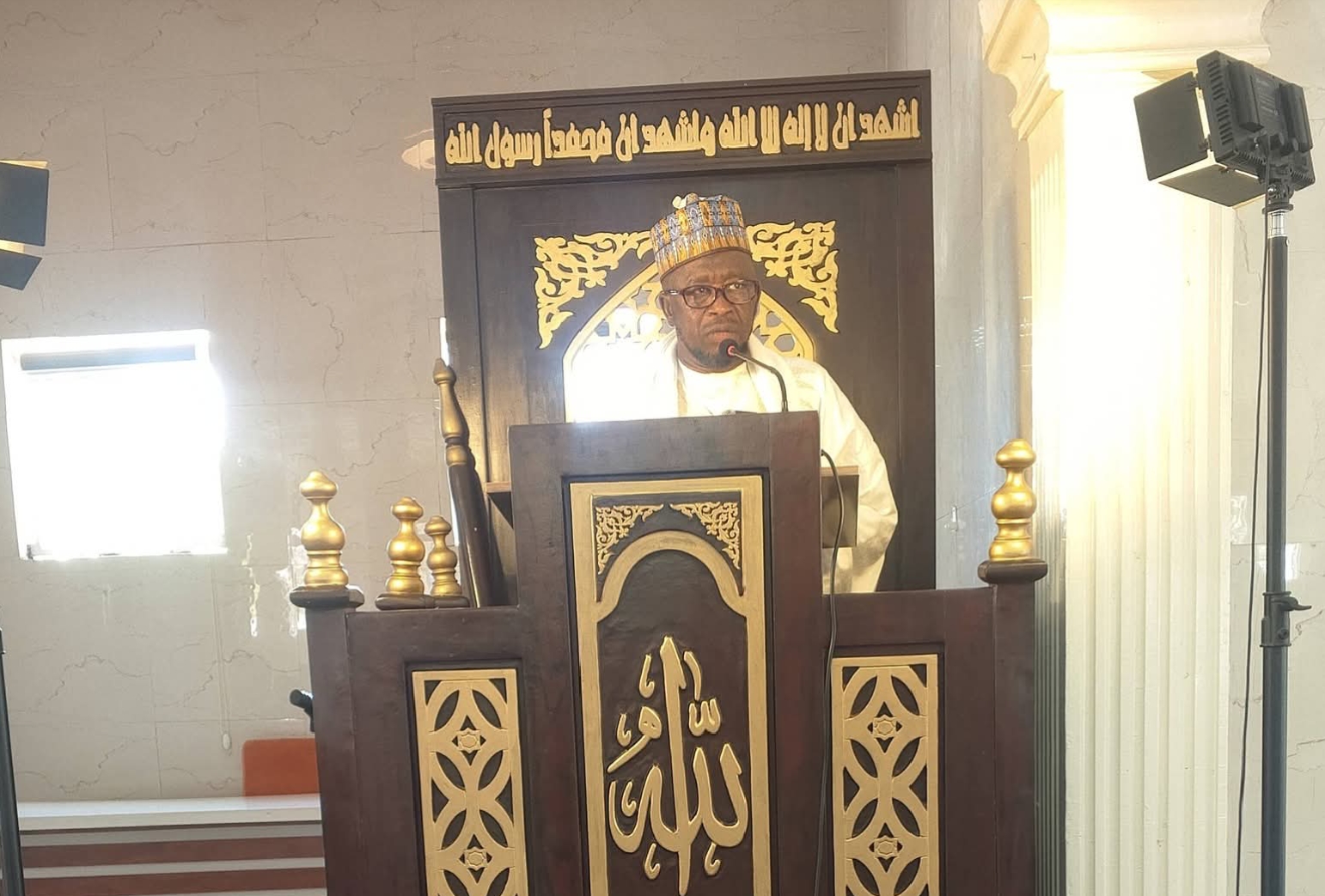
Imam Nura Garba Mato has urged Muslims to remain conscious of their actions, saying that divine reward and punishment often correspond to the nature of people’s deeds.
KANO FOCUS reports that the imam made the call while delivering a Friday sermon at Jami’u Ansar wal Muhajirun Jumaa Mosque, Cotton Ginnery Layout, Zawaciki, Kano State.
The sermon, titled “Al-Jazā’u Min Jinsil-‘Amal” (Recompense Is According to the Nature of Deeds), focused on the Islamic teaching that people’s actions have consequences and that good deeds attract divine reward.
Imam Mato said Allah had established enduring principles in human life that do not change, urging Muslims to understand these principles and allow them to guide their conduct.
He explained that one of these principles was that recompense corresponds to the nature of one’s actions, stressing the importance of living righteously and fulfilling one’s responsibilities to Allah and fellow human beings.
The imam called on Muslims to observe *taqwa* (consciousness of Allah), remain steadfast in their faith and follow the teachings and traditions of Prophet Muhammad (peace be upon him).
He also highlighted the importance of helping people in difficulty, easing the burdens of others and showing compassion to fellow Muslims.
Quoting a prophetic tradition, the imam emphasised that whoever relieves a Muslim of a hardship in this world will receive relief from Allah on the Day of Resurrection.
He further explained that whoever conceals the faults of a fellow Muslim would receive Allah’s concealment of their faults on the Day of Resurrection, while those who make things easier for people in difficulty would receive Allah’s assistance in this world and the Hereafter.
The sermon also underscored the importance of supporting others, noting that a Muslim’s relationship with Allah should be reflected in their treatment of fellow human beings.
Imam Mato urged Muslims to reflect on their deeds and recognise that their conduct carries consequences, encouraging them to embrace good actions, assist those in need and uphold the teachings of Islam in their daily lives.
He stressed that Muslims should make righteousness, compassion and service to others central to their lives in pursuit of Allah’s pleasure and success in the Hereafter.
Nasiru Yusuf Ibrahim
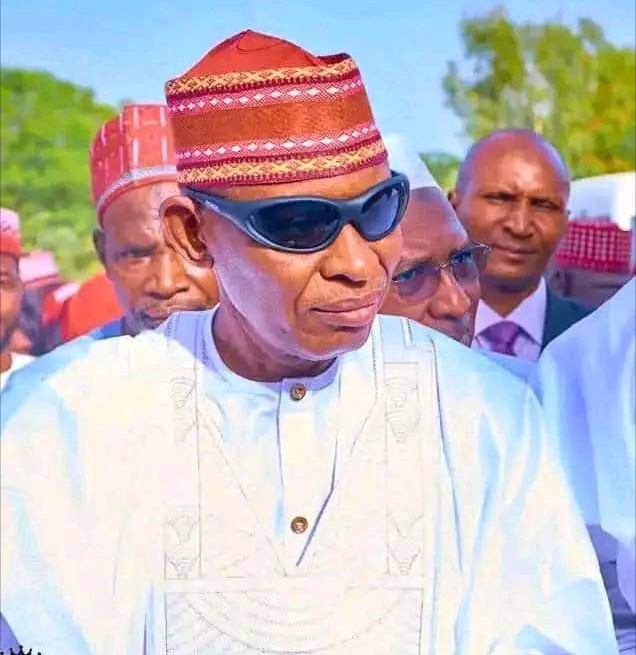
The Kano State Government has directed all civil servants who have attained their statutory retirement age or completed the required length of service to immediately vacate their offices and hand over government property in their possession.
KANO FOCUS reports that the directive was contained in Circular issued on Tuesday by the Establishment Directorate, Office of the Head of Civil Service, Kano State.
The circular, signed by the Permanent Secretary, Establishment, Abba A. Danguguwa, on behalf of the Head of Civil Service, was titled: “Unauthorized Continuance in Service After Statutory Retirement by Civil Servants in Ministries, Departments and Agencies (MDAs) of Government – Call for Immediate Handing Over of Official Documents, Properties.”
The government said it had observed that some civil servants continued to remain in office and operate in official capacities after reaching their statutory retirement period.
According to the circular, such conduct was a “negation to the reputation of the Civil Service of Kano State,” noting that the service had a long-standing tradition of ensuring seamless transition by retiring civil servants.
It described the continued stay in service after retirement as a direct infraction and aberration of relevant provisions of the State Civil Service Rules and other applicable service regulations.
The government stressed that it was legally and administratively untenable for any officer to remain in service or perform official functions beyond the statutory limit.
Consequently, all civil servants who had retired either by age or length of service were directed to immediately exit and hand over all official documents, government property and duties to their immediate subordinates in their respective ministries, departments and agencies.
The circular also directed all Accounting Officers, including Permanent Secretaries and Chief Executives, as well as Directors of Administration and Personnel Management, to ensure strict and immediate compliance with the directive.
It warned that any officer found aiding, abetting or condoning the continued stay of a retired officer in service would face appropriate disciplinary action in accordance with the Civil Service Rules.
The directive takes immediate effect, the circular stated.
News
Nigeria’s Data Demand Surges 47% as Stakeholders Seek Fresh Investment in Digital Infrastructure

Nasiru Yusuf Ibrahim
Nigeria’s data consumption rose by almost 47 per cent year-on-year to about 1.6 million terabytes in July 2026, highlighting growing pressure on the country’s digital infrastructure, stakeholders have said.
KANO FOCUS reports that the development was disclosed in a communiqué issued at the end of the Nigeria Digital Connectivity Investment Forum 2026, organised by the Nigerian Communications Commission (NCC) in partnership with Swedfund and Ookla in Abuja.
The forum, held from September 29 to 30 under the theme, “Unlocking Infrastructure Investment through Data, Transparency and Partnerships,” brought together government officials, regulators, investors, development finance institutions, mobile network operators, infrastructure companies and other stakeholders.
The participants said subscriptions were projected to increase from about 195 million currently to 350 million within the next 10 to 15 years, while growing demand from cloud computing and artificial intelligence would put additional pressure on telecommunications networks, data centres and power supply.
According to the communiqué signed by Nnenna Ukoha, Director, Public Affairs Department, NCC, on Sunday, telecommunications and information services contributed 9.72 per cent of Nigeria’s real Gross Domestic Product in the second quarter of 2026.
The participants consequently described digital connectivity as economic infrastructure, stressing its growing importance to trade, productivity and economic growth.
They, however, noted that while mobile broadband coverage had reached about 90 per cent of Nigerians, smartphone ownership remained at about 27 per cent, while broadband penetration stood at 57.4 per cent against a national target of 70 per cent.
The forum identified device affordability, digital skills and trust as major constraints to meaningful connectivity, saying expanding network coverage alone would not be sufficient to close the digital divide.
Participants also identified inadequate power supply and limited middle-mile connectivity as major constraints to further digital infrastructure deployment.
They noted that the high cost of inland connectivity had restricted data-centre and internet service investments largely to major metropolitan areas, calling for energy and connectivity investments to be planned together.
The forum further stressed the need for long-term financing for digital infrastructure, noting that such assets typically have a lifespan of 20 to 30 years and therefore require financing arrangements longer than the conventional five-year bank tenors.
Participants said infrastructure financing in Nigeria had grown from less than N70 billion in 2004 to N19.4 trillion in 2025, but stressed that access to long-term capital would depend on good governance, management capacity and policy predictability.
They also highlighted the impact of state-level policies on telecommunications investment, particularly Right of Way charges and permitting requirements.
According to the communiqué, a pilot of the Nigeria Digital Connectivity Index across 12 states showed that Right of Way reforms translated into fibre growth of between 22 per cent and 95 per cent in states that implemented reforms.
It added that the number of states charging zero Right of Way fees had increased to 12, from seven in December 2024.
The forum called on the Federal Government to accelerate the delivery of Project BRIDGE, the planned 90,000-kilometre national fibre backbone, as part of efforts to address the middle-mile connectivity gap.
It also urged the government to improve the availability and reliability of electricity for digital infrastructure and support financing mechanisms capable of reducing the cost of capital in the sector.
The NCC was urged to sustain reforms aimed at improving investment conditions, including tariff realignment, designation of critical national information infrastructure and engagement with states on Right of Way reforms.
The commission was also asked to publish the first national Nigeria Digital Connectivity Index report, advance open-access and wholesale regulation, and finalise the direct-to-device framework.
State governments were urged to reduce and harmonise Right of Way and site permit charges, adopt the federal model under which fibre operators are responsible for road reinstatement, and reduce permitting timelines.
The stakeholders also called on operators and technology companies to expand shared-infrastructure and neutral-host models to reduce the cost of rural and indoor coverage.
They recommended that investors and development finance institutions provide long-term naira financing for digital infrastructure and link funding to independently verified network performance.
The forum identified several priority actions, including securing funding within six months for community-owned rural networks powered by renewable energy in communities without connectivity.
Other actions include issuing open-access and wholesale regulations, publishing a wholesale rate card, completing broadband mapping, strengthening the Universal Service Fund framework and developing business cases for indoor coverage.
Within 18 to 24 months, participants recommended establishing a financing framework for telecommunications power and developing metro and access fibre through concessions, mapped against existing assets and integrated with Project BRIDGE.
The NCC said it would continue engaging participants and other stakeholders to advance the agreed actions and investment pathways.

“As You Sow, So Shall You Reap”: Imam Reminds Muslims of Divine Justice

Kano Govt Orders Retired Civil Servants to Vacate Offices, Hand Over Government Property

Nigeria’s Data Demand Surges 47% as Stakeholders Seek Fresh Investment in Digital Infrastructure

Kano must make government procurement work for made-in-Kano

Kano Settles N32bn Pension, Gratuity Liabilities, Says Gov Yusuf

Kano leads again as NECO successes rise to 74,413
Kano tops states in 2026 NECO results, Governor Yusuf hails students

INEC holds campus debate on elections, democracy at BUK

Kano Govt Suspends Durbar Processions, Horse Riding in Metropolis

