
News
Dangote Group, Kaduna Chamber, drive local content agenda at 2026 Trade Fair with 10,000 participants


Nasiru Yusuf Ibrahim
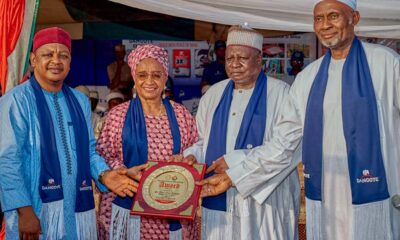
The Dangote Industries Limited and the Kaduna Chamber of Commerce Industry Mines and Agriculture (KADCCIMA) are in strategic partnership to promote local manufacturing in the 47th Trade Fair which is expected to be declared open on February 6, 2026 by President Bola Ahmed Tinubu.

KANO FOCUS reports that the Dangote Group is sponsoring the fair with the theme: From Reforms to Results: Economic Transformation through Sustained Local Content Development.
The fair, according to KADCCIMA, is expected to attract over ten thousand participants.
Speaking to newsmen in Kaduna, President of KADCCIMA, Alhaji Farouk Suleiman said: “Our relationship with Dangote Group is one of strategic partnership built on shared values, industrial growth, local content development and economic transformation.”
According to KADCCIMA, “Dangote Group has consistently demonstrated belief in Northern Nigeria’s economic potential, and KADCCIMA sees the company not just as a sponsor, but as development partner.”
He said the 2026 edition of the fair will focus on business matchmaking between Business to Business(B2B) and Business to Government(B2G), local manufacturing and value addition, investment facilitation, SMES financing, market access, and strategic partnerships with companies like the Dangote Group.
KADCCIMA President said this year’s fair is designed as an economic catalyst to increase trade and commerce, as well as attract investors.
Other areas of focus, he said, include: import substitution through local production, promotion of Made-in-Nigeria goods and stronger private sector-led growth.
He described the Dangote Group as a cornerstone partner in Nigeria’s industrial journey.
“We invite Dangote Group to continue leading from the front, not only as a sponsor, but as mentor, investor and catalyst for small businesses.”
Speaking, Regional Director and Senior Special Adviser to the President of the Dangote Group, Fatima Wali-Abdurrahman, said aside being a sponsor, the conglomerate is a believer in local content development.
She said: “Dangote Group’s commitment to local manufacturing has been demonstrated through its various investments in sugar, cement and petrochemicals, which has contributed to providing jobs and supporting government revenue profile to taxation.”
Mrs. Wali-Abdurrahman said: “The Dangote Group has remained a leading example of how sustained local content investment can transform economies. Through strategic investments in cement production, agriculture, petrochemicals, fertilizer, and petroleum refining, the Group has demonstrated the power of local capacity development.”
A statement signed by the Group Chief Corporate Communication Officer of the company, Anthony Chiejina, said as part of its strategies to boost market share and deepen customers’ loyalty, Dangote Industries Limited (DIL), and other companies under the Group are set to headline the Kaduna Trade Fair with an array of products and innovations.
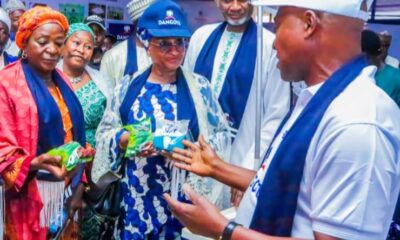
The statement noted that Dangote Cement, Dangote Sugar, NASCON Allied Industries (Dangote Salt), Dangote-Sinotruk, Dangote Peugeot Automobile, and Dangote Fertiliser will participate in the fair, with each business unit set to establish helpdesks to respond to inquiries from prospective customers.
“NASCON is showcasing its full range of products, including salt packs, seasonings, and stew mix, at the trade fair. The salt packs, designed to further strengthen customer appeal, are available in 250g, 500g, and 1kg sizes. The packaging is intended to enhance accessibility and affordability for consumers and other end users. NASCON will also provide an engaging and rewarding experience for visitors to its stand at the Dangote Pavilion,” the statement said.
It added that Dangote Sugar Refinery will present its complete range of products at the fair, with its sales and marketing team available to customers as well as prospective distributors.
“Dangote Cement, a regular participant in the fair, will operate a dedicated desk at the Dangote Group Pavilion. Customers and users of Dangote cement products are encouraged to visit the help desk throughout the fair for product-related inquiries,” the statement noted.
The statement further explained that customers interested in becoming distributors of products from Dangote Group subsidiaries will have the opportunity to receive detailed guidance from company representatives, who will be available to provide information on the requirements and procedures for distributorship.






Nasiru Yusuf Ibrahim
The Kano State Government has directed all civil servants who have attained their statutory retirement age or completed the required length of service to immediately vacate their offices and hand over government property in their possession.
KANO FOCUS reports that the directive was contained in Circular issued on Tuesday by the Establishment Directorate, Office of the Head of Civil Service, Kano State.
The circular, signed by the Permanent Secretary, Establishment, Abba A. Danguguwa, on behalf of the Head of Civil Service, was titled: “Unauthorized Continuance in Service After Statutory Retirement by Civil Servants in Ministries, Departments and Agencies (MDAs) of Government – Call for Immediate Handing Over of Official Documents, Properties.”
The government said it had observed that some civil servants continued to remain in office and operate in official capacities after reaching their statutory retirement period.
According to the circular, such conduct was a “negation to the reputation of the Civil Service of Kano State,” noting that the service had a long-standing tradition of ensuring seamless transition by retiring civil servants.
It described the continued stay in service after retirement as a direct infraction and aberration of relevant provisions of the State Civil Service Rules and other applicable service regulations.
The government stressed that it was legally and administratively untenable for any officer to remain in service or perform official functions beyond the statutory limit.
Consequently, all civil servants who had retired either by age or length of service were directed to immediately exit and hand over all official documents, government property and duties to their immediate subordinates in their respective ministries, departments and agencies.
The circular also directed all Accounting Officers, including Permanent Secretaries and Chief Executives, as well as Directors of Administration and Personnel Management, to ensure strict and immediate compliance with the directive.
It warned that any officer found aiding, abetting or condoning the continued stay of a retired officer in service would face appropriate disciplinary action in accordance with the Civil Service Rules.
The directive takes immediate effect, the circular stated.
News
Nigeria’s Data Demand Surges 47% as Stakeholders Seek Fresh Investment in Digital Infrastructure

Nasiru Yusuf Ibrahim
Nigeria’s data consumption rose by almost 47 per cent year-on-year to about 1.6 million terabytes in July 2026, highlighting growing pressure on the country’s digital infrastructure, stakeholders have said.
KANO FOCUS reports that the development was disclosed in a communiqué issued at the end of the Nigeria Digital Connectivity Investment Forum 2026, organised by the Nigerian Communications Commission (NCC) in partnership with Swedfund and Ookla in Abuja.
The forum, held from September 29 to 30 under the theme, “Unlocking Infrastructure Investment through Data, Transparency and Partnerships,” brought together government officials, regulators, investors, development finance institutions, mobile network operators, infrastructure companies and other stakeholders.
The participants said subscriptions were projected to increase from about 195 million currently to 350 million within the next 10 to 15 years, while growing demand from cloud computing and artificial intelligence would put additional pressure on telecommunications networks, data centres and power supply.
According to the communiqué signed by Nnenna Ukoha, Director, Public Affairs Department, NCC, on Sunday, telecommunications and information services contributed 9.72 per cent of Nigeria’s real Gross Domestic Product in the second quarter of 2026.
The participants consequently described digital connectivity as economic infrastructure, stressing its growing importance to trade, productivity and economic growth.
They, however, noted that while mobile broadband coverage had reached about 90 per cent of Nigerians, smartphone ownership remained at about 27 per cent, while broadband penetration stood at 57.4 per cent against a national target of 70 per cent.
The forum identified device affordability, digital skills and trust as major constraints to meaningful connectivity, saying expanding network coverage alone would not be sufficient to close the digital divide.
Participants also identified inadequate power supply and limited middle-mile connectivity as major constraints to further digital infrastructure deployment.
They noted that the high cost of inland connectivity had restricted data-centre and internet service investments largely to major metropolitan areas, calling for energy and connectivity investments to be planned together.
The forum further stressed the need for long-term financing for digital infrastructure, noting that such assets typically have a lifespan of 20 to 30 years and therefore require financing arrangements longer than the conventional five-year bank tenors.
Participants said infrastructure financing in Nigeria had grown from less than N70 billion in 2004 to N19.4 trillion in 2025, but stressed that access to long-term capital would depend on good governance, management capacity and policy predictability.
They also highlighted the impact of state-level policies on telecommunications investment, particularly Right of Way charges and permitting requirements.
According to the communiqué, a pilot of the Nigeria Digital Connectivity Index across 12 states showed that Right of Way reforms translated into fibre growth of between 22 per cent and 95 per cent in states that implemented reforms.
It added that the number of states charging zero Right of Way fees had increased to 12, from seven in December 2024.
The forum called on the Federal Government to accelerate the delivery of Project BRIDGE, the planned 90,000-kilometre national fibre backbone, as part of efforts to address the middle-mile connectivity gap.
It also urged the government to improve the availability and reliability of electricity for digital infrastructure and support financing mechanisms capable of reducing the cost of capital in the sector.
The NCC was urged to sustain reforms aimed at improving investment conditions, including tariff realignment, designation of critical national information infrastructure and engagement with states on Right of Way reforms.
The commission was also asked to publish the first national Nigeria Digital Connectivity Index report, advance open-access and wholesale regulation, and finalise the direct-to-device framework.
State governments were urged to reduce and harmonise Right of Way and site permit charges, adopt the federal model under which fibre operators are responsible for road reinstatement, and reduce permitting timelines.
The stakeholders also called on operators and technology companies to expand shared-infrastructure and neutral-host models to reduce the cost of rural and indoor coverage.
They recommended that investors and development finance institutions provide long-term naira financing for digital infrastructure and link funding to independently verified network performance.
The forum identified several priority actions, including securing funding within six months for community-owned rural networks powered by renewable energy in communities without connectivity.
Other actions include issuing open-access and wholesale regulations, publishing a wholesale rate card, completing broadband mapping, strengthening the Universal Service Fund framework and developing business cases for indoor coverage.
Within 18 to 24 months, participants recommended establishing a financing framework for telecommunications power and developing metro and access fibre through concessions, mapped against existing assets and integrated with Project BRIDGE.
The NCC said it would continue engaging participants and other stakeholders to advance the agreed actions and investment pathways.
Nasiru Yusuf Ibrahim
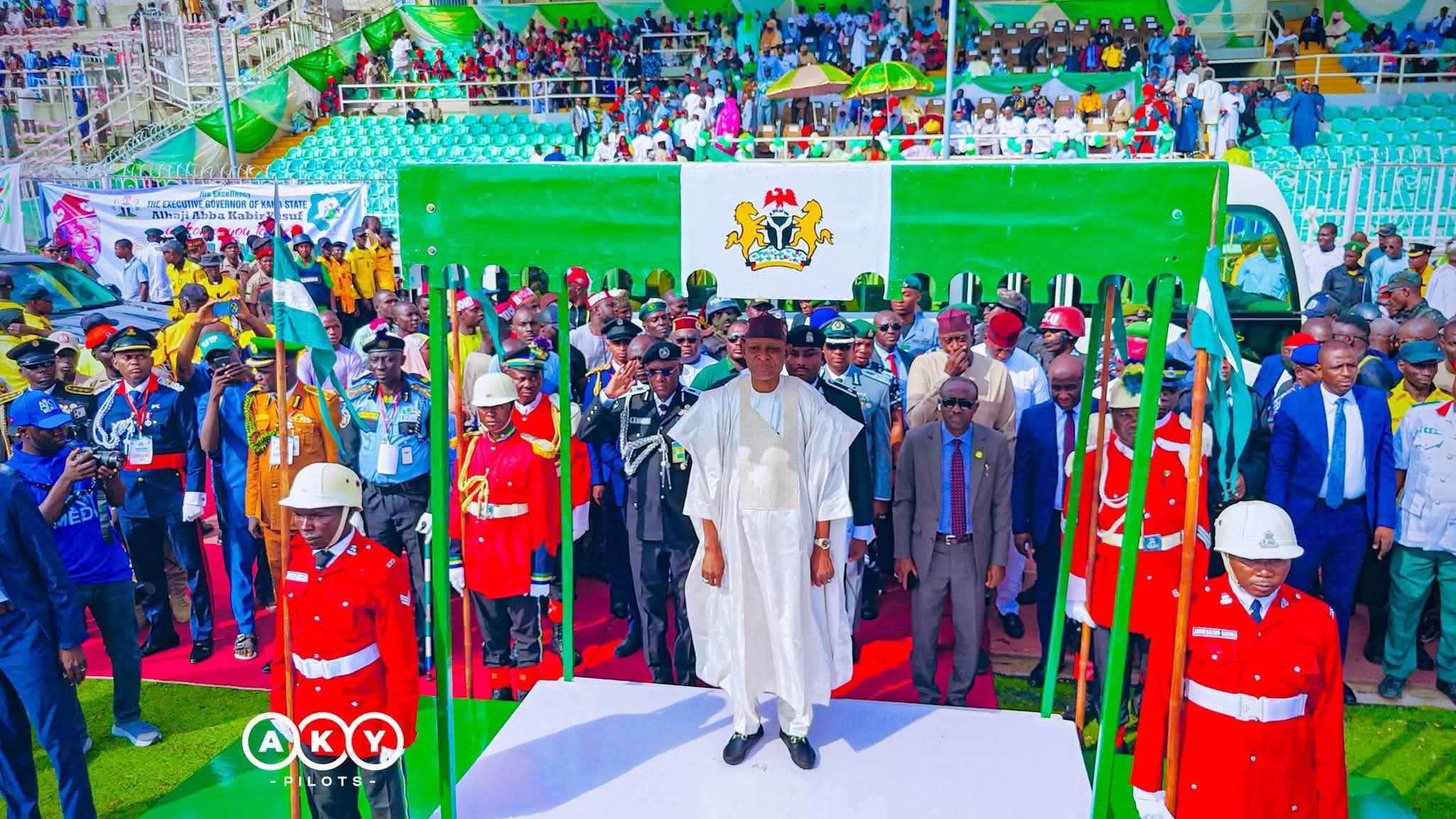
Kano State Governor Abba Kabir Yusuf says his administration has settled approximately N32 billion out of the N48 billion inherited backlog of gratuities and related liabilities owed to retirees in the state.
KANO FOCUS reports that Gov Yusuf disclosed this on Thursday while addressing residents at the 66th Independence Anniversary celebration held at the Sani Abacha Indoor Stadium in Kano.
The governor said the government had also sustained the regular payment of monthly pensions while increasing the minimum monthly pension from N5,000 to N20,000.
He said the welfare of workers and pensioners remained a priority of his administration, citing timely payment of salaries, improved remuneration and measures aimed at strengthening the public service.
According to him, the state has maintained the practice of paying workers’ salaries on or before the 25th of every month while implementing the N71,000 minimum wage for civil servants.
Gov Yusuf also said his administration was sponsoring public servants for professional training, including programmes at the Administrative Staff College of Nigeria (ASCON), to strengthen their administrative and leadership capacity.
He reaffirmed the government’s commitment to building a professional and motivated workforce, while ensuring that the contributions and sacrifices of serving workers and retirees were recognised and treated with dignity.

Kano Govt Orders Retired Civil Servants to Vacate Offices, Hand Over Government Property

Nigeria’s Data Demand Surges 47% as Stakeholders Seek Fresh Investment in Digital Infrastructure

Kano must make government procurement work for made-in-Kano

Kano Settles N32bn Pension, Gratuity Liabilities, Says Gov Yusuf

Family Planning: Experts Urge Nigeria to Remove Barriers to Contraceptive Access

Kano leads again as NECO successes rise to 74,413
Kano tops states in 2026 NECO results, Governor Yusuf hails students

INEC holds campus debate on elections, democracy at BUK

Kano Govt Suspends Durbar Processions, Horse Riding in Metropolis

