
Opinion
Reminiscence: Working with El-Rufai in the FCT

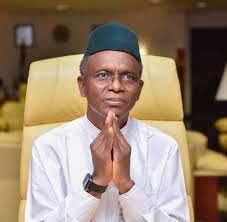
By Dr. Auwalu Anwar
Since his voluntary but spectacular return to the country from Cairo on 12 February 2026 and subsequent incarceration by the agents of Emperor Bola Ahmed Tinubu, the story of Malam Nasir Ahmad El-Rufai (NAE) has been narrated differently by many interest groups, including his acquaintances, friends, human rights activists, journalists, lawyers and politicians. However, what I found conspicuously missing in all the narratives that I came across is, an objective analysis of his character as an administrator by someone who worked closely with or under him in any of the three public places he administered, namely: Bureau of Public Enterprises (BPE), Federal Capital Territory (FCT) and Kaduna State. For instance, the common remarks about his style of leadership that presented him either as a mere sinner or a revered saint, without making any attempt to go beyond the smokescreen of such moral categorization were both irrelevant and unhelpful for the proper understanding of his essential nature as an administrator or a public servant.
How did NAE, for instance, conceive, protect or violate the trust given to him when he served as Director General, BPE; Minister of the FCT or Governor of Kaduna State? How did he recruit and relate with his political appointees, who were answerable to him? What was the extent of his distance or interference in running the day-to-day affairs of the MDAs under his jurisdiction; but especially in the implementation of their capital projects? This write-up aims to frankly answer these crucial questions, with particular reference to my experiences working with and under him in the FCT.
I first came across NAE in 1998 when a mutual friend, Malam Bashir Yusuf Ibrahim, invited me to the inaugural meeting of an All-Nigeria Elite Group known as the Abuja Initiative or simply AI, in Abuja. NAE was then working as an economic adviser and member of the Programme Implementation and Monitoring Committee under General Abdulsalami Abubakar. Because of the activities of AI and my relationship with Bashir, our paths continued to cross at that time.

With the formation of the Peoples’ Democratic Party (PDP) and the emergence of General Olusegun Obasanjo as President, NAE was appointed Director General of the BPE. I later became Special Adviser (Political) to the Speaker, House of Representatives, the purposeful and selfless Rt. Hon. Ghali Umar Na’Abba in February 2000. When NAE established a steering committee on Competition and Anti-Trust in the BPE, he appointed me as one of the members. It was an influential committee with many respected persons including Alhaji Aliko Dangote, Comrade Adams Oshiomhole, Professor Charles Soludo, Madam Oby Ezekwesili, Hajiya Maryam Uwais and Mr. Asue Ighodalo, constituting the membership.
In 2003, on his appointment as Minister of the FCT, NAE met with all categories of staff and audited all the operational organs of the institution. To his dismay, he discovered that civil servants had all the time to lazy around as much as they wanted for two reasons: firstly, they had thirty-five years to stay in the service; they could also live up to sixty years before retirement. As such, most of them had no motivation for initiative, innovation, or even commitment to the responsibilities for which they were employed.
To change the trajectory, he thought of creating mandate secretariats, which would operate like state ministries and appoint secretaries, who would serve as commissioners. He compiled all his findings, the audited reports of all the sectors and his vision for a way forward into a comprehensive document. He shared copies of the documents with Bashir, Asue and my humble self to study for a week, with the request that we should all think of suitable individuals who would be invited to assist him in running the new structure.
A week later, we met him to discuss the document. He asked whether we did find capable people to operate the new structure? I nominated one of our mutual friends to be invited to manage the Education Secretariat. He explained that he had me in mind for that sector if I had no objection. I responded that I would prefer to help him in any capacity in the Area Councils in order to handle the political aspect of his job.
NAE then and now, has been anything but a consummate politician. His two tenures as one of the best ever governors in Kaduna State and current status as one of the national leaders of the ADC in Nigeria have not significantly altered his apolitical DNA. He is seen as too crude and impatient to strictly adhere to the conventional diplomatic hypocrisy, or should I say ethical due process, constituting the foundations of professional politics in Nigeria. In other words, he is regarded more as a novice or a misfit among the practitioners of professional politics across the country.
NAE proposed to appoint Asue as Executive Secretary of the Federal Capital Development Authority (FCDA), but he politely rejected the offer on the excuse that their newly established Chamber was in its embryonic stage and needed his full-time participation in its management to take off properly.
He also proposed to appoint Bashir to serve as Secretary for Transportation but the latter indicated his preference to stay at the background as an unofficial adviser. Of course, Bashir was Special Assistant to the President on Conflict Resolution working directly in the presidency at the time.
The five mandate secretariats created by NAE were: Agriculture & Rural Development; Education; Health & Human Services; Social Development and Transportation. He refused to invite many people who either lobbied him or on whose behalf he was lobbied for any kind of appointment in the FCT. However, he strongly lobbied individuals whom he believed would help him achieve his set objectives to kindly agree to be appointed as secretaries.
For instance, I witnessed his conversation with one of the ladies he invited to be appointed. She strongly complained to him that her current salary was much more than what she would be earning by serving as secretary in the FCT. He ultimately convinced her that she would serve the nation at a higher level even if her renumeration would be lower in the FCT. She took up the appointment anyway.
I reminded NAE of Rt. Hon. Nnaemeka Maduagwu, one of the members of AI, who was a former Speaker in Imo State and suggested that we should invite him to manage the Transportation Secretariat. This was after he had informed us that he had some people in mind for the remaining three secretariats. He mandated me to contact Emeka and convince him to come on board. In fairness to NAE, since he was appointed Minister, he had put members of AI on notice that he would invite some of us to make sacrifice by working in the FCT.
When I contacted Emeka in his Law Office in Garki, Abuja and informed him that the Minister wanted to work with some of us whether he would be interested; he responded by saying, “It depends on the kind of assignment he has in mind for me.” At that point, I explained the assignment to him and he became excited having once chaired House Committee on Transportation in Imo. I collected his CV and he was subsequently appointed Secretary for Transportation.
Ms. Bolanle Onagoruwa was the Secretary for Social Development; Hajiya Amina Bala Zakari was the Secretary for Health & Human Services; while Alhaji Waziri Ahmadu served as Secretary for Agriculture & Rural Development. All those engaged as secretaries were first appointed special assistants to the president and then posted to their respective secretariats in the FCT.
I served as Secretary for Education from April 2004 to February 2006. I had seven directorates under my watch, namely: Agency for Mass Education; FCT College of Education, Zuba; Finance and Administration; Education Resource Centre; Department of Policy and Implementation; Secondary Education Board and Universal Basic Education Board. In the Education Secretariat, we were always engaged with issues of procurement and supplies. This was because, unlike in other sectors, the dividing line between capital and recurrent expenditures in the delivery of our services was, somewhat, very slim. For instance, the purchase of instructional materials and teaching aids, the printing of school records, the provision of school feeding and sports materials, and the continuous activities of the inspectorate department did sometimes overlap between capital and recurrent in their budgetary classification and allocations.
Undoubtedly, for the twenty months I served as education secretary, there was not a single day when NAE introduced any company or anyone to be awarded contract of any kind, whatsoever. He had also never indicated interest in anything other than the genuine development of the sector by following best practices.
When the Universal Basic Education policy became operational, the law stipulated that no public school would charge a dime for its services and all the needed facilities in such institutions would be provided by the government. At that time, NAE’s wife and First Lady of the FCT, Hajiya Hadiza El-Rufai, was running an NGO school belonging to the FCT Orphanage in which some token fees were paid by the pupils. When I called the Minister’s attention and suggested that we either take over the school and provide all its needs or totally withdraw our teachers from the institution. He instructed that we take over the school immediately. Nevertheless, I also went to Hadiza and discussed the issue with her and she surrendered the school in compliance with the extant rules.
I was redeployed to the Agriculture & Rural Development Secretariat in February 2006 and I stayed there till December. ARD was not as busy or as wide as the Education Secretariat. However, there were two incidents that further revealed the essential character of NAE to me as his subordinate. Not long after I assumed duty, there was a request to buy fish food from the staff in charge of the fish pond in the Minister’s house, which I approved.
A few weeks later, another request was made for the same purpose. By some instincts, I suspected mischief in the submission. So, I requested for an expert in fisheries from the federal Ministry of Agriculture to come and assess the actual requirements of the fish pond in the Minister’s residence. After the exercise, the result indicated that, what was approved in the first instance could last up to six months under normal circumstances. The person in charge of the fish pond was made to explain and refund the amount he stole in the previous submission. He was also warned and redeployed elsewhere. Unknown to me, it was considered a taboo in the past to query any submission made from the Minister’s house; and that was what emboldened staff who were privileged to work there, in any capacity, to misbehave and get away with it.
In the year 2006, we bought fertilizer worth Eight-Hundred-Million Naira (N800,000,000) without NAE tempering with or directing the process to favour particular individuals for pecuniary interest. When I discussed what was obtained in the FCT, on the procurement and sale of fertilizer with some of my colleagues, State Commissioners for Agriculture, during our Annual General Meeting, it sounded to them as if I was speaking Mandarin. Many of them confessed to me that, as commissioners, they were only allowed to sign documents to fulfil procedural rituals but were not in any way involved in the implementation of the budgetary allocations of their ministries. That was a preserve of Their Excellencies, the State Governors.
I was transferred to the Health & Human Services Secretariate in December 2006 and I stayed there till July 2007 when another friend of ours, Dr. Aliyu Modibbo Umar was appointed as the new Minister of the FCT. For the short period I was in Health and Human Services Secretariat, another opportunity provided itself which further consolidated my experience of the impeccable integrity of NAE as an excellent administrator and a prudent manager of public resources.
We had an emergency to renovate staff quarters across many hospitals in order to provide accommodation for trainee doctors on their housemanship programme. There wasn’t enough time to strictly follow procurement processes in undertaking the project. Thus, the secretariat was mandated to supervise the work through direct labour. A committee was established under my chairmanship with the Directors of Audit, Finance, Treasury and a representative of the Executive Secretary of the FCDA as members. The required fund to execute the assignment was released to me upfront. I handed it to the Head of Department in my office, Alhaji Mohammed Maikasuwa Mohammed, who put it in a safe in the office and kept all the keys with him. Expectedly, NAE, who did not show any personal interest in the bigger projects that were executed in my previous secretariats, had also not looked our way.
Having narrated my experiences of NAE relating to budgetary allocation and project implementation under his watch, I want to briefly comment on his attitude to his subordinate staff. I have described the dignified manner in which he recruited people to serve as secretaries in the FCT. Because NAE does not have inferiority complex, he always searches for and gets individuals whom he believes are accomplished in their own respects to help him succeed. He once informed me that all the people he appointed as secretaries were capable of serving, effectively, as minister in the FCT. He looks for and supports the emergence of the best possible material in positions of responsibility. He used to be that focused until, probably, recently in choosing his successor in Kaduna State.
At the point of appointing us secretaries, he sat with each of the nominees for a chat during which he discussed his mission and vision for a new FCT. He would also, in turn, ask his nominee what his or her expectations were on the assumption of duty. It was in one of such question-and-answer sessions that one of us raised the issue of the prospect of getting lower renumeration, than what she was currently earning, if she agreed to accept his offer and join the FCT.
When I sat with NAE prior to accepting his offer, I requested three things from him as follows: that he should permit me to always tell him what I felt he should hear not necessarily what he might like to hear; that we should relate with one another as employee and his boss during office hours rather than friends, and; that he should call my attention immediately, if I ever did anything wrong. He conceded to all my requests but emphasized that he would not be as formal as my former boss, Rt. Hon. Ghali Umar Na’Abba, even during office hours.
Honestly, I can always proudly declare that, NAE is an excellent administrator, who stood by his subordinates and supported them no matter what uneasy decisions they took or genuine mistakes they made in the execution of their mandates. It is very ironic, therefore, to know that NAE is today languishing in detention on sundry allegations of abuse of office and corruption and is being investigated under the supervision of Tinubu compliant regulatory agencies.
It should be understood that, nobody is absolving NAE from any allegation of misdeeds but we insist for due process of law to be strictly followed in the investigation. His fundamental rights and human dignity must be respected.
At any rate, I am not denying the possibility of NAE falling short of the expected standards as a human being. However, I doubt the credibility of his traducers who are pointing their uncleanaccusing fingers at him. All the allegations of corruption against NAE, for which he is being persecuted, are not the real reasons for his continued detention but a smokescreen. He is persecuted for being in the opposition. It is NAE today and it may be my turn or your turn tomorrow.
The preponderant perception in Nigeria today is, if truly Tinubu and his agencies are looking for corrupt Nigerians, including former governors and former ministers to investigate and prosecute, they do not have to look far beyond the APC and the Presidency itself. The general opinion is that, in these two institutions, there are more than enough certified criminals, including drug barons, money launderers, bribe takers in both foreign and local currencies with documented evidence publicly available online, who are more deserving to be investigated and prosecuted than him. Members of the criminally-minded APC and functionaries of its disgracefully non performing administration should go after themselves if they genuinely desire to cleanse Nigeria from the economic, political and insecurity misfortunes they inflicted on the country. Period!
However, the best lesson to learn from the travails of NAE is that, in Nigeria today, the greatest tragedy is to support APC and President Tinubu to stay in power beyond 2027. NAE did all he could through fair and foul means to mobilise, galvanise and ensure the victory of APC and candidate Tinubu in both the primary and the general elections in 2023 but only to end up today struggling hard to stay alive with the requisite human dignity as a Nigerian citizen.
The recent shameful charade in the name of APC presidential primaries have set the tone which indicates that the federal government has lost all hopes in Tinubu winning any election in a free and fair contest, not even in Lagos. Apparently, APC and Tinubu are determined to stay in power by perfecting the machinery of rigging. This is why the actual membership of the party, which is lower than three million, was inflated to seven million and presented as eleven million, who were claimed to have voted for him in the recent exercise. Who is fooling who?
No political party can survive in governance through blackmail, intimidation or election malpractice. Whoever wants peace must prepare for war as a pre-condition. No political party has the monopoly of violence. In psychiatric rehabilitation facilities around the world, only two categories of inmates are chained: the haves, who are fermenting trouble; and the have-nots, who are determined to sustain or restore peace and stability at all costs. A word is enough for the wise. Na kwance ba ya tsoron faduwa.
Those persecuting NAE today should be wary of tomorrow. Nigeria is a wonderful country and an unpredictable society. We have once witnessed a curious transition of its leadership from prison to presidency. Who knows, we may still witness a more likely transition from presidency to prison. Only time can tell.
In 1979, following the June 4th Revolution, Flight Lieutenant Jerry John Rawlings and the Armed Forces Revolutionary Council executed three former Ghanaian Heads of State: Generals Akwasi Afrifa (1969–1970); Ignatius Kutu Acheampong (1972–1978); and Frederick Akuffo (1978–1979) by firing squad on charges of corruption and economic treason. What those Generals did to the economy of Ghana is child’s play in comparison to what the current APC administration of Bola Tinubu is doing to the Nigerian economy. Muna gani, muna ji, muna kuma saurare.
Is NAE a perfect administrator without any blemish at all? No! There is no such person walking the earth today. Certainly, he has his strengths and weaknesses as a person. His commitment to excellence in administration is visible in his genuine and selfless search for a team of skillful and talented individuals to handle appropriate portfolios in the management of public institutions. He goes out of his way to do whatever will benefit and promote his subordinates. His loyalty to his friends is never in doubt as attested by many observers. For instance, in 2004, he nominated me to serve on the proposed Economic Monitoring Team of the federal government prior to my appointment as Secretary for Education in the FCT.
In 2008, he came to Nigeria from the UK, purposely to attend the public presentation of my anthology: Gadar Zare at Arewa House in Kaduna. In 2010, I visited him in Dubai to inform him of my interest to participate in the gubernatorial contest of the Congress for Progressive Change (CPC) in Kano. He listened to me attentively and responded by saying, he had been contacted by some people in government and asked to nominate someone to serve as federal commissioner in the Independent National Electoral Commission (INEC). In addition, he informed me that my name was among the two names he had in mind for the position. He gave me the option to choose between serving in INEC and joining the CPC. Unfortunately, I followed my heart and abandoned the prospect of becoming a national commissioner in INEC. This is the vintage NAE for his friends.
Honestly, I am not in a position to comment truthfully on NAE’s stewardship in Kaduna State. I did not visit him more than seven times in his eight-year tenure as the Governor (2015–2023). This was including my presence at his swearing-in ceremony in 2015 and participation at the Panel Discussion on “Against the Grain: Modern Literature in Hausa,” at Kaduna Book and Art Festival, KABAFEST in July 2017. Notwithstanding, I do not believe that his essential nature as a credible public servant has dramatically changed for worse.
Our friend is still an accused and could be proven innocent of all the allegations and spurious charges labeled against him by his opponents and friendly enemies in power. What we, his friends and family members, require, is an impartial and credible legal process that is capable of delivering justice for the innocent. Not justice for sale to the highest bidder.
Part of NAE’s weakness is his consuming appetite to always stick to the literal meaning and interpretation of laws. He is always ready to apply extant rules and regulations in solving problems, sometimes, without due regard to the attendant moral or social consequences of his actions on the most vulnerable in society. Most of his actions as a Minister or a Governor, which attracted people’s outrage were legally appropriate but could also be culturally, morally, or socially reprehensible.
NAE is, undoubtedly, a competent and intelligent person. He is an achiever and a performerby all standards. He plans well and ahead of time in whatever he does. He does not compromise quality and cost effectiveness in the execution of his projects. Nevertheless, he needs to be schooled in native intelligence and wisdom. He has been accused by many people, including his admirers and well-wishers of putting his words before his thoughts, which sometimes leads him to avoidable embarrassment or falling into dangerous traps. There is a consensus on this.
Finally, I want to use this opportunity to offer my condolences to NAE and other members of the El-Rufai clan for the death of our beloved mother, Hajiya Umma El-Rufai, on 27 March 2026 in Cairo. May Allah forgive her mistakes and reward her good deeds with Janatul Firdaws. May Allah guide those she left behind and give them the fortitude to bear the loss. Amin.
Dr Auwalu Anwar is a former lecturer at University of Maiduguri.


Hashim Yusuf Hassan
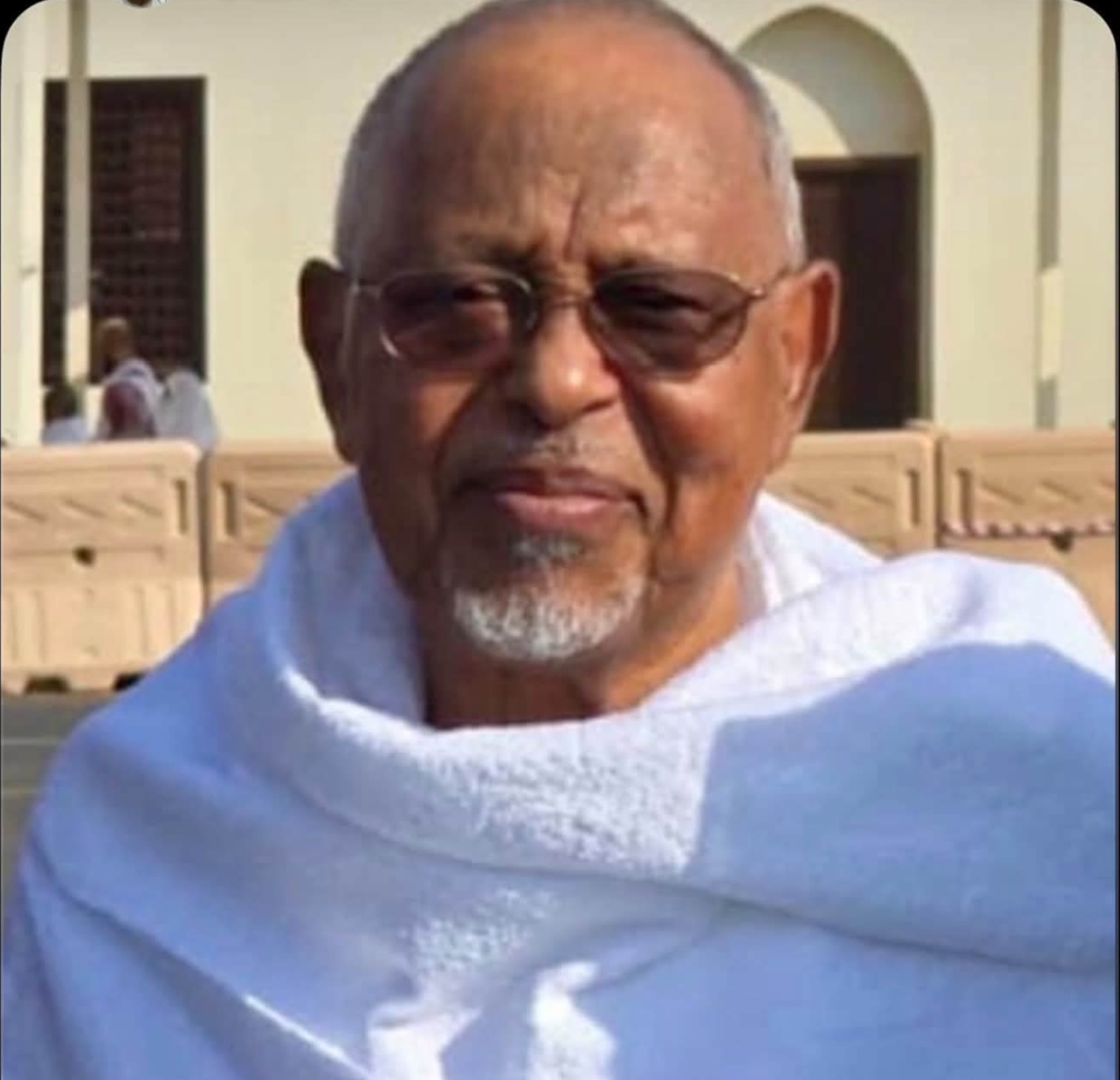
It is strange how the world keeps turning. The sun still rises, the seasons still change, and people continue to go about their daily lives. But there is now a quiet space in my world, a silence where your voice used to be. It is a silence that has taught me more about love and loss than words could ever express.
I still find myself reaching for my phone to tell you something, seek your advice or simply hear you say, “Don’t worry, it’ll be alright.” I still see you in the most unexpected places—in a particular shade of blue in the sky or in the way someone leans back in their chair. For a fleeting moment, it feels as though you are still here. Then the moment passes, and the ache reminds me that you are no longer with us.
But here is the truth I am learning to live with: you are not truly gone. You are woven into the very fabric of who I am. I am the person I am today because of the lessons you taught me, not just through your words but also through the way you lived. You taught me what quiet strength looks like. You taught me that integrity means doing the right thing, even when no one is watching. You taught me how to be strong, but, more importantly, you taught me how to be kind.
When I look in the mirror, I see your eyes. When I hear my own laughter, I sometimes hear yours. When I stand up for something I believe in, I feel your hand on my shoulder. You remain the compass that guides me and the voice in my head that says, “You can do this.” You are the reason I know what it feels like to be truly and unconditionally loved.
I will not pretend that I have no regrets. I wish I had called you more often. I wish I had listened more. I wish I had told you “I love you” one more time, or a thousand more times. I wish you could see all that I have accomplished and the person I have become. But I choose to believe that, somehow, you know. I choose to believe that you are proud of me.
Grief, I have learned, is simply love with nowhere to go. And my love for you is an ocean. Now that you are gone, it has nowhere to land, so it washes over me, sometimes in gentle waves and sometimes in a tide that threatens to pull me under. It is the price of having loved you so deeply, and it is a price I would gladly pay a million times over.
Thank you, Baba, for everything, for the laughter, the lessons, the protection and the love. You were my first hero, my protector and my safe place. Even now, you remain my anchor.
I miss you more than words can ever express. I will carry you with me in every step I take, in every choice I make, and in every moment of joy and sorrow. I will strive to live a life that would make you proud. I promise.
Allah Ubangiji Ya yi maka rahama.
Your son, forever and always.
Hashim Yusuf Hassan.
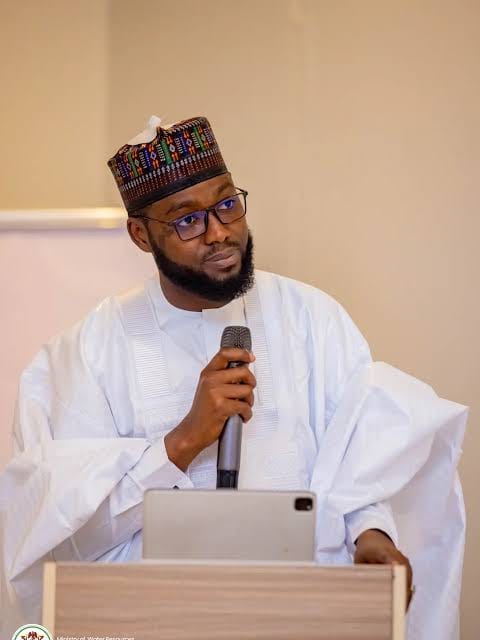
By Dr Dahir M. Hashim
Outgoing Commissioner for Environment and Climate Change and Commissioner for Water Resources, Kano State.
Looking back on my time at the Kano State Ministry of Environment and Climate Change, one of the achievements I value most is the growing recognition of environmental protection as a shared responsibility and a critical component of public health, community wellbeing, livelihoods and the future of our state.
Over time, environmental issues became more prominent in public discourse, with more residents participating in government programmes, supporting interventions and demanding accountability. This growing public engagement remains one of the most rewarding aspects of our work.
For this, I am deeply grateful to the people of Kano State.
My journey at the ministry began on January 6, 2025, when His Excellency, Governor Abba Kabir Yusuf, entrusted me with the responsibility of leading the Ministry of Environment and Climate Change.
I assumed office at a time when the sector faced significant challenges. Public facilities had deteriorated, existing policies required updating, enforcement mechanisms were weak, and frontline workers were owed outstanding payments. However, the governor recognised the enormous potential of the ministry and provided the political backing and institutional support needed to begin the process of rebuilding it.
Rebuilding environmental infrastructure
One of the areas where we recorded significant progress was the restoration of government-owned tree nurseries. Eight previously non-functional facilities were fully rehabilitated, restoring the state’s capacity to produce seedlings locally and sustainably.
Building on the administration’s three-million-tree planting programme in 2024, the initiative expanded to five million seedlings in 2025 and ten million in 2026. Significantly, all the seedlings were raised in government-owned nurseries.
Beyond the impressive numbers, the achievement represented the revival of public infrastructure and the restoration of the state’s capacity to sustain its environmental programmes without depending entirely on external sources of seedlings.
We also prioritised the restoration of the Kano State Pollution Control Laboratory. The facility was renovated, equipped and recommissioned, providing the state with renewed scientific capacity to test and monitor pollution, generate environmental data and strengthen regulatory enforcement.
To consolidate these efforts, we operationalised the Environmental Pollution Control Law and developed the Environmental Pollution and Waste Control Regulations, providing a stronger legal and institutional framework for environmental protection.
Improving waste management and flood control
At the Refuse Management and Sanitation Board (REMASAB), we introduced reforms aimed at improving the coordination of waste collection, evacuation and disposal. These interventions made waste management operations more organised and responsive, supporting the evacuation of approximately one million metric tonnes of waste.
We also restored the Dorayi Compost Plant to operation, reviving its capacity to convert organic waste into useful compost. Beyond addressing waste disposal challenges, the facility offers opportunities for investment, employment and the development of a circular economy.
Recognising the recurring threat of flooding in several communities, we undertook drainage construction, clearance and erosion-control interventions across flood-prone areas.
The stormwater harvesting intervention in Toranke and the development of the Kano State Drainage Master Plan were particularly important components of our broader strategy to strengthen flood management and move towards more sustainable urban drainage planning.
Our approach was not limited to responding to immediate environmental challenges. We also sought to establish a framework for long-term resilience and better management of the state’s environmental resources.
Restoring public parks and recreational spaces
Another area of progress was the rehabilitation of public parks and recreational facilities.
We restored four public parks, with additional facilities undergoing similar interventions. Parks that had suffered years of neglect were given new management arrangements and clearer maintenance responsibilities.
These interventions were designed to restore public spaces where families could relax, children could play and residents could enjoy a healthier urban environment.
The reforms also produced encouraging financial results, with the combined annual revenue generated by the parks increasing from approximately ₦5 million to ₦90 million.
This demonstrated that properly managed public recreational facilities can serve both social and economic purposes while contributing to the state’s revenue base.
Building a stronger policy and climate governance framework
Perhaps one of the most important aspects of our work was the effort to strengthen the policy and legislative foundations of environmental governance in Kano State.
During my tenure, we developed the Kano State Climate Change Policy, alongside its implementation plan and results framework. We also advanced the Climate Change Bill and undertook a review of the state’s Forestry Law, which had remained largely unchanged for more than five decades.
In addition, we developed the Climate Finance Reform Action and Implementation Plan and the Green Bond Framework to position Kano State to attract investment for environmental protection, climate adaptation and sustainable development.
These initiatives were intended to ensure that environmental governance would not depend solely on individual administrations or isolated interventions but would be supported by policies, laws and institutions capable of sustaining progress over time.
Kano State’s third-place finish in the 2026 Climate Governance Performance Ranking and the opportunity to present our work at COP30 in Belém, Brazil, were encouraging milestones.
They demonstrated the potential of consistent institutional support, strategic planning and collective action to improve the state’s standing in environmental and climate governance.
However, such recognition should not be viewed merely as an award or international exposure. It should serve as a reminder of the responsibility to sustain the reforms and deliver tangible benefits to the people.
Putting environmental workers at the centre of reforms
I have always believed that environmental reforms cannot succeed without the commitment and welfare of the people who implement them.
Street sweepers, sanitation workers, environmental inspectors and forest guards constitute the backbone of environmental management. Unfortunately, many of these frontline workers had experienced difficult working conditions and outstanding payment challenges.
With the support of Governor Yusuf, we cleared nine months of salary arrears owed to 2,369 verified street sweepers and doubled their stipends.
We also re-engaged environmental inspectors and forest guards while doubling the stipends of 875 sanitation vanguards.
These interventions were not merely administrative decisions. They were an acknowledgement of the dignity of labour and the indispensable contribution of frontline workers to maintaining a clean, safe and healthy environment.
I remain grateful to these men and women whose daily sacrifices often go unnoticed but whose contributions are essential to the wellbeing of our communities.
A legacy of collective responsibility
As Governor Abba Kabir Yusuf restructures the ministries and appoints a new Commissioner for Environment and Climate Change, my overriding feeling is one of gratitude.
I am particularly grateful to His Excellency for the confidence he reposed in me, the opportunity to serve and the support he provided throughout my tenure. His willingness to listen to proposals and support difficult but necessary decisions made it possible for us to undertake many of the reforms highlighted in this account.
I also appreciate the staff of the ministry and its agencies, community leaders, development partners, civil society organisations, young volunteers, private-sector operators and residents who contributed to our work.
Their participation, constructive criticism, patience and cooperation helped shape our interventions and improve their implementation.
I must emphasise that these achievements are not the accomplishment of one individual. They are the product of collective effort, institutional commitment and the contributions of many people who believed that Kano deserved a cleaner, greener and more environmentally sustainable future.
To the incoming Honourable Commissioner, I extend my congratulations and wish you success in this important responsibility. I also assure you of my willingness to offer any necessary support to sustain the progress already made and advance the environmental agenda of our dear state.
Public service is ultimately about the people and the institutions we build to serve them. Positions may change, and responsibilities may be transferred, but the obligation to contribute to society remains.
Serving Kano State as Commissioner for Environment and Climate Change has been a profound privilege. I leave with gratitude for the opportunity, satisfaction in the progress recorded and the hope that the foundations we have laid will continue to support a cleaner, greener and more resilient Kano.
Thank you, Kano State, for the trust and support.
Dr Dahir M. Hashim is the Commissioner for Water Resources and outgoing Commissioner for Environment and Climate Change, Kano State.

Dr Saleh Adamu Kwaru
Adding a staggering $20.52 billion and €1.05 billion to Nigeria’s debt burden is more than an economic miscalculation; it is a source of heartbreak for a nation already brought to its knees. At a time when millions of citizens are struggling to afford a single meal, grappling with historic inflation and watching their futures slip away, the government’s response appears to be to pile yet another mountain of debt on the country. This raises a painful question for every suffering Nigerian: When will our leaders finally acknowledge the pain their decisions inflict, and when will the bleeding stop?
The timing of this massive loan request is particularly troubling. Seeking to secure huge foreign loans on the eve of intense political activity and election seasons, when public anxiety is high and attention is divided, risks depriving citizens of the robust accountability the country deserves. Rather than looking inward, exercising fiscal discipline and improving public revenue management, the government appears to be rushing to mortgage the nation’s collective future. It feels less like responsible governance and more like a desperate attempt to lock in liabilities before the public can challenge them.
Nigeria’s national debt profile is already a ticking time bomb, placing enormous pressure on every sector of society. Every additional dollar borrowed increases the country’s financial obligations and diverts revenue that could otherwise support schools, equip hospitals and protect vulnerable citizens. Adding more than $20 billion to this burden risks pushing the country closer to the brink of a debt crisis, threatening to leave future generations trapped in a cycle of economic dependence. How much more hardship can ordinary Nigerians endure before the consequences of unsustainable borrowing become overwhelming?
We are repeatedly offered the same promises that these loans will transform electricity, roads, healthcare and education. But good intentions without transparency and accountability are not enough. Where is the visible evidence that previous loans have translated into better living conditions for ordinary Nigerians? Instead of seeing the promised improvements, many citizens continue to grapple with rising poverty while the country’s debt burden grows. When projects fail to generate sufficient economic returns to justify their costs, the burden ultimately falls on ordinary citizens through higher taxes, deteriorating public services and deeper economic hardship.
Before anyone commits future generations to repaying billions of dollars in new loans, the government must look Nigerians in the eye and explain how existing public resources are being managed. Why does borrowing appear to be the easiest option while systemic corruption and inefficiencies in public spending remain major concerns? Nigerians are exhausted by a system that leaves them bearing the consequences of decisions over which they have little control.
The country does not need another mountain of debt built on promises alone. It needs leaders committed to transparency, fiscal discipline, prudent resource management and the welfare of the people they have sworn to serve. Any new borrowing must be justified by clear development objectives, independently verifiable benefits and a credible repayment plan.
Nigeria cannot borrow its way out of every economic challenge. The government must demonstrate that it has exhausted reasonable alternatives, established safeguards against waste and corruption, and put the public interest above political convenience. Without these assurances, further borrowing risks deepening the hardship Nigerians already face and transferring an even heavier burden to generations yet unborn.
Dr Saleh Adamu Kwaru, is former staff of Central Bank of Nigeria.

Nafisah Yusuf Hassan, three others recommended for appointment as Kano high court judges

K-SAFE tracks nearly 1,000 education projects in Kano, seeks procurement monitoring role

GSS Army Day Bukavu Wins Maiden Kano Secondary Schools Tug of War Championship

Gov Yusuf Nominates Spokesperson, Sunusi Bature Dawakintofa as Commissioner

One Year Without Baba: A Son’s Tribute to Alhaji Yusuf Hassan

Indonesian scholar proposes waqf model to reform almajiri education in Nigeria

Veteran NTA manager Dahiru Biso loses wife at 58

Two suspected bandits killed, N10m ransom recovered in Kano

Gov Yusuf Joins APC Leaders at Kaduna Presidential Campaign Flag-Off as Kano Delegation Draws Attention

