
News
BUK Trains Journalists on Satellite Technology to Strengthen Climate Reporting

Nasiru Yusuf Ibrahim
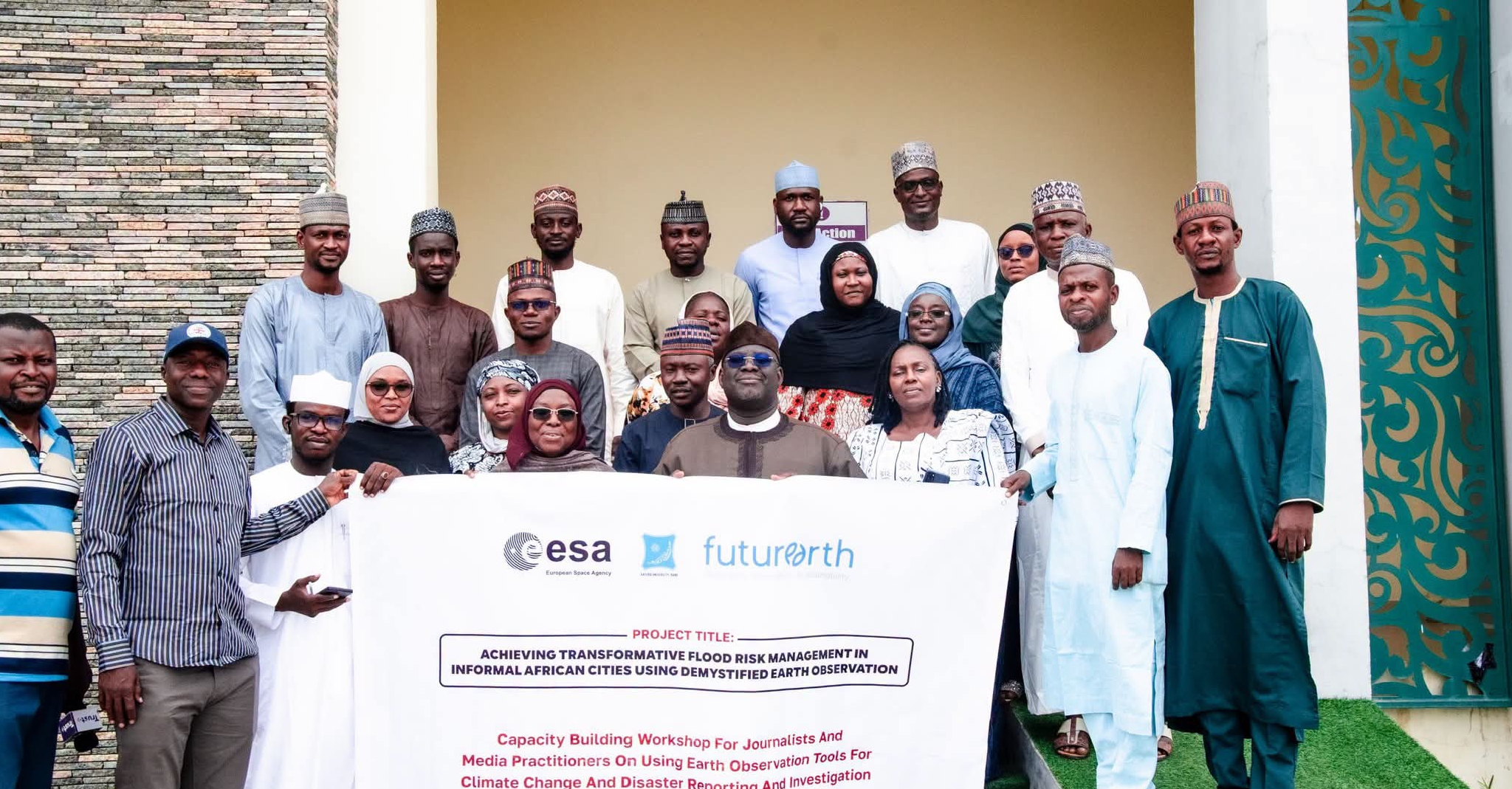
Bayero University, Kano (BUK), has trained journalists and media practitioners on the use of Earth Observation (EO) technologies to improve evidence-based reporting on climate change, disaster risk reduction and environmental sustainability.

KANO FOCUS reports that the capacity-building workshop, held on Monday at the university, brought together journalists, researchers and development partners to equip participants with practical skills in the use of satellite imagery, geospatial data and other Earth Observation tools for data-driven environmental reporting.
Speaking at the opening ceremony, the project team lead, Professor Aliyu Salisu Barau, said the growing impacts of climate change—including flooding, drought, desertification, deforestation, pollution and biodiversity loss—have made science-based journalism increasingly essential.
He said the media plays a critical role in informing the public, shaping policy debates and promoting accountability, stressing that journalists must rely on credible scientific evidence to produce accurate and impactful reports.
“Earth Observation technologies provide reliable, objective and continuously updated information about our changing environment. They enable journalists to verify facts, undertake investigative reporting, produce data-driven stories and communicate complex environmental issues through powerful visual evidence,” Mr Barau said.
He explained that the workshop was designed to introduce participants to practical Earth Observation platforms and geospatial tools for monitoring land-use changes, flooding, drought, water resources and other forms of environmental degradation.
According to him, wider adoption of the technologies by journalists would improve public awareness, strengthen disaster preparedness, enhance environmental accountability and contribute to climate resilience and sustainable development.
Also speaking, the Deputy Vice-Chancellor (Research and Development), Professor Amina Mustapha, described climate change as one of the most pressing development and security challenges confronting Northern Nigeria and the wider Sahel region.
She noted that the shrinking Lake Chad, advancing desertification, deteriorating rangelands and increasingly unpredictable weather patterns continue to threaten livelihoods, food security and economic stability across the region.
Mrs Mustapha urged journalists to devote greater attention to environmental issues affecting Nigeria instead of focusing predominantly on climate disasters in other parts of the world.
“The media serves as the bridge between scientific knowledge and public understanding. You have the responsibility to translate scientific evidence into stories that influence policy, shape public behaviour and hold governments and institutions accountable,” she said.
She also encouraged journalists to embrace investigative and solutions-oriented reporting by documenting the experiences of vulnerable communities and scrutinising the management of environmental and ecological resources.
“Climate change is not merely an environmental issue; it is a development issue, a justice issue and a human security issue. The stories you tell can inspire action, strengthen resilience and drive sustainable development,” she added.
Mrs Mustapha reaffirmed Bayero University’s commitment to supporting journalists through collaboration with its researchers, laboratories and research centres to ensure scientific findings are translated into public knowledge and policy action.
In a virtual presentation, the Research Coordinator and European Space Agency (ESA) Liaison for Future Earth, Freya Muir, highlighted the role of Earth Observation technologies in improving climate modelling, environmental monitoring and evidence-based decision-making.
The workshop, themed “Earth Observation Journalism, Disaster Risk Reduction and Climate Change Communication,” featured practical sessions on the use of satellite imagery, remote sensing and geospatial data for climate and environmental reporting.
Participants described the training as timely and relevant, pledging to apply the knowledge acquired to produce accurate, evidence-based reports while combating misinformation and disinformation on climate change and other environmental issues.






Nasiru Yusuf Ibrahim
The Kano State Government has directed all civil servants who have attained their statutory retirement age or completed the required length of service to immediately vacate their offices and hand over government property in their possession.
KANO FOCUS reports that the directive was contained in Circular issued on Tuesday by the Establishment Directorate, Office of the Head of Civil Service, Kano State.
The circular, signed by the Permanent Secretary, Establishment, Abba A. Danguguwa, on behalf of the Head of Civil Service, was titled: “Unauthorized Continuance in Service After Statutory Retirement by Civil Servants in Ministries, Departments and Agencies (MDAs) of Government – Call for Immediate Handing Over of Official Documents, Properties.”
The government said it had observed that some civil servants continued to remain in office and operate in official capacities after reaching their statutory retirement period.
According to the circular, such conduct was a “negation to the reputation of the Civil Service of Kano State,” noting that the service had a long-standing tradition of ensuring seamless transition by retiring civil servants.
It described the continued stay in service after retirement as a direct infraction and aberration of relevant provisions of the State Civil Service Rules and other applicable service regulations.
The government stressed that it was legally and administratively untenable for any officer to remain in service or perform official functions beyond the statutory limit.
Consequently, all civil servants who had retired either by age or length of service were directed to immediately exit and hand over all official documents, government property and duties to their immediate subordinates in their respective ministries, departments and agencies.
The circular also directed all Accounting Officers, including Permanent Secretaries and Chief Executives, as well as Directors of Administration and Personnel Management, to ensure strict and immediate compliance with the directive.
It warned that any officer found aiding, abetting or condoning the continued stay of a retired officer in service would face appropriate disciplinary action in accordance with the Civil Service Rules.
The directive takes immediate effect, the circular stated.
News
Nigeria’s Data Demand Surges 47% as Stakeholders Seek Fresh Investment in Digital Infrastructure

Nasiru Yusuf Ibrahim
Nigeria’s data consumption rose by almost 47 per cent year-on-year to about 1.6 million terabytes in July 2026, highlighting growing pressure on the country’s digital infrastructure, stakeholders have said.
KANO FOCUS reports that the development was disclosed in a communiqué issued at the end of the Nigeria Digital Connectivity Investment Forum 2026, organised by the Nigerian Communications Commission (NCC) in partnership with Swedfund and Ookla in Abuja.
The forum, held from September 29 to 30 under the theme, “Unlocking Infrastructure Investment through Data, Transparency and Partnerships,” brought together government officials, regulators, investors, development finance institutions, mobile network operators, infrastructure companies and other stakeholders.
The participants said subscriptions were projected to increase from about 195 million currently to 350 million within the next 10 to 15 years, while growing demand from cloud computing and artificial intelligence would put additional pressure on telecommunications networks, data centres and power supply.
According to the communiqué signed by Nnenna Ukoha, Director, Public Affairs Department, NCC, on Sunday, telecommunications and information services contributed 9.72 per cent of Nigeria’s real Gross Domestic Product in the second quarter of 2026.
The participants consequently described digital connectivity as economic infrastructure, stressing its growing importance to trade, productivity and economic growth.
They, however, noted that while mobile broadband coverage had reached about 90 per cent of Nigerians, smartphone ownership remained at about 27 per cent, while broadband penetration stood at 57.4 per cent against a national target of 70 per cent.
The forum identified device affordability, digital skills and trust as major constraints to meaningful connectivity, saying expanding network coverage alone would not be sufficient to close the digital divide.
Participants also identified inadequate power supply and limited middle-mile connectivity as major constraints to further digital infrastructure deployment.
They noted that the high cost of inland connectivity had restricted data-centre and internet service investments largely to major metropolitan areas, calling for energy and connectivity investments to be planned together.
The forum further stressed the need for long-term financing for digital infrastructure, noting that such assets typically have a lifespan of 20 to 30 years and therefore require financing arrangements longer than the conventional five-year bank tenors.
Participants said infrastructure financing in Nigeria had grown from less than N70 billion in 2004 to N19.4 trillion in 2025, but stressed that access to long-term capital would depend on good governance, management capacity and policy predictability.
They also highlighted the impact of state-level policies on telecommunications investment, particularly Right of Way charges and permitting requirements.
According to the communiqué, a pilot of the Nigeria Digital Connectivity Index across 12 states showed that Right of Way reforms translated into fibre growth of between 22 per cent and 95 per cent in states that implemented reforms.
It added that the number of states charging zero Right of Way fees had increased to 12, from seven in December 2024.
The forum called on the Federal Government to accelerate the delivery of Project BRIDGE, the planned 90,000-kilometre national fibre backbone, as part of efforts to address the middle-mile connectivity gap.
It also urged the government to improve the availability and reliability of electricity for digital infrastructure and support financing mechanisms capable of reducing the cost of capital in the sector.
The NCC was urged to sustain reforms aimed at improving investment conditions, including tariff realignment, designation of critical national information infrastructure and engagement with states on Right of Way reforms.
The commission was also asked to publish the first national Nigeria Digital Connectivity Index report, advance open-access and wholesale regulation, and finalise the direct-to-device framework.
State governments were urged to reduce and harmonise Right of Way and site permit charges, adopt the federal model under which fibre operators are responsible for road reinstatement, and reduce permitting timelines.
The stakeholders also called on operators and technology companies to expand shared-infrastructure and neutral-host models to reduce the cost of rural and indoor coverage.
They recommended that investors and development finance institutions provide long-term naira financing for digital infrastructure and link funding to independently verified network performance.
The forum identified several priority actions, including securing funding within six months for community-owned rural networks powered by renewable energy in communities without connectivity.
Other actions include issuing open-access and wholesale regulations, publishing a wholesale rate card, completing broadband mapping, strengthening the Universal Service Fund framework and developing business cases for indoor coverage.
Within 18 to 24 months, participants recommended establishing a financing framework for telecommunications power and developing metro and access fibre through concessions, mapped against existing assets and integrated with Project BRIDGE.
The NCC said it would continue engaging participants and other stakeholders to advance the agreed actions and investment pathways.
Nasiru Yusuf Ibrahim
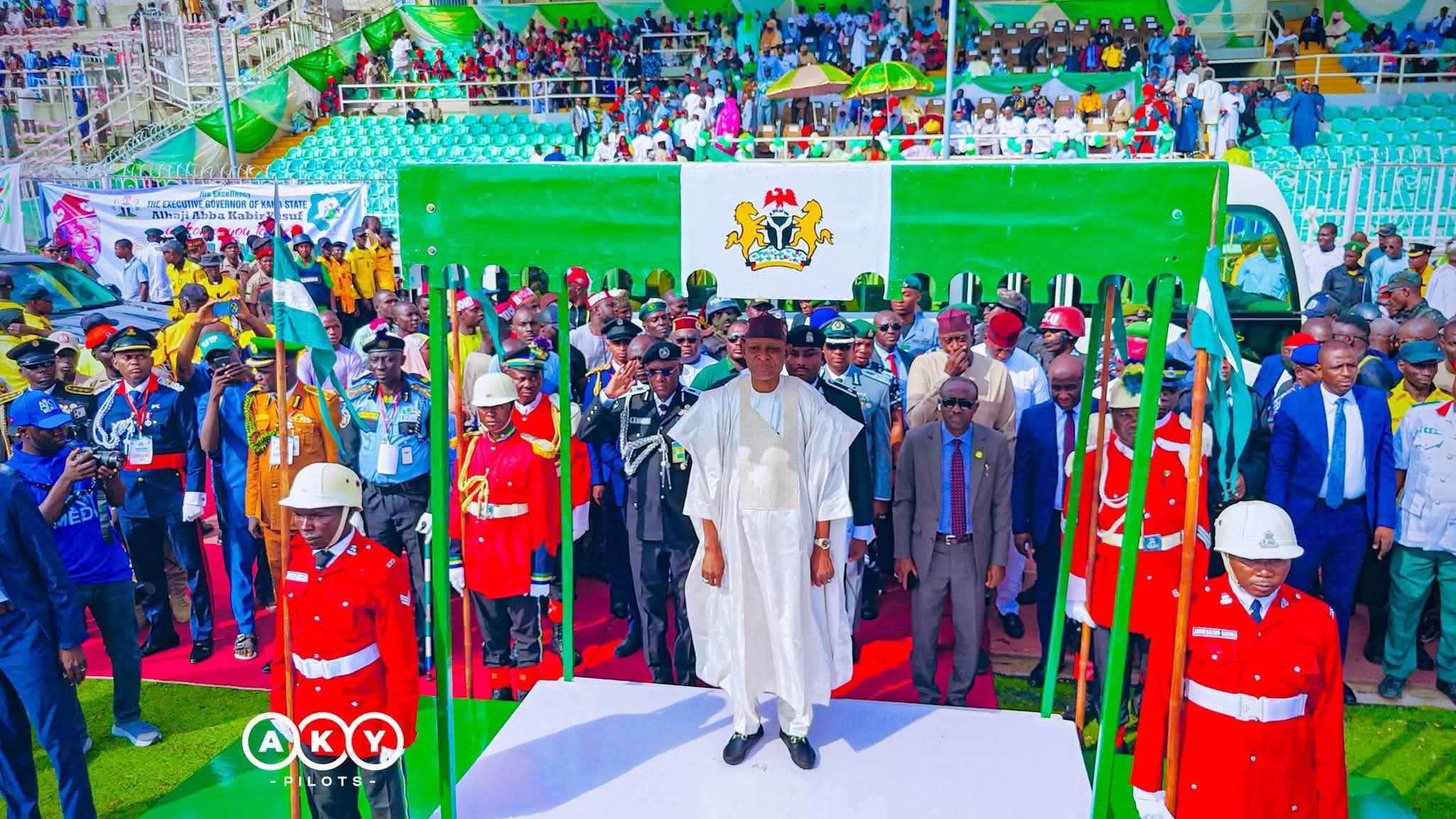
Kano State Governor Abba Kabir Yusuf says his administration has settled approximately N32 billion out of the N48 billion inherited backlog of gratuities and related liabilities owed to retirees in the state.
KANO FOCUS reports that Gov Yusuf disclosed this on Thursday while addressing residents at the 66th Independence Anniversary celebration held at the Sani Abacha Indoor Stadium in Kano.
The governor said the government had also sustained the regular payment of monthly pensions while increasing the minimum monthly pension from N5,000 to N20,000.
He said the welfare of workers and pensioners remained a priority of his administration, citing timely payment of salaries, improved remuneration and measures aimed at strengthening the public service.
According to him, the state has maintained the practice of paying workers’ salaries on or before the 25th of every month while implementing the N71,000 minimum wage for civil servants.
Gov Yusuf also said his administration was sponsoring public servants for professional training, including programmes at the Administrative Staff College of Nigeria (ASCON), to strengthen their administrative and leadership capacity.
He reaffirmed the government’s commitment to building a professional and motivated workforce, while ensuring that the contributions and sacrifices of serving workers and retirees were recognised and treated with dignity.

Kano Govt Orders Retired Civil Servants to Vacate Offices, Hand Over Government Property

Nigeria’s Data Demand Surges 47% as Stakeholders Seek Fresh Investment in Digital Infrastructure

Kano must make government procurement work for made-in-Kano

Kano Settles N32bn Pension, Gratuity Liabilities, Says Gov Yusuf

Family Planning: Experts Urge Nigeria to Remove Barriers to Contraceptive Access

Kano leads again as NECO successes rise to 74,413
Kano tops states in 2026 NECO results, Governor Yusuf hails students

INEC holds campus debate on elections, democracy at BUK

Kano Govt Suspends Durbar Processions, Horse Riding in Metropolis

