
News
NCC, REA Sign Agreement to Expand Digital Infrastructure with Renewable Energy

Nasiru Yusuf Ibrahim
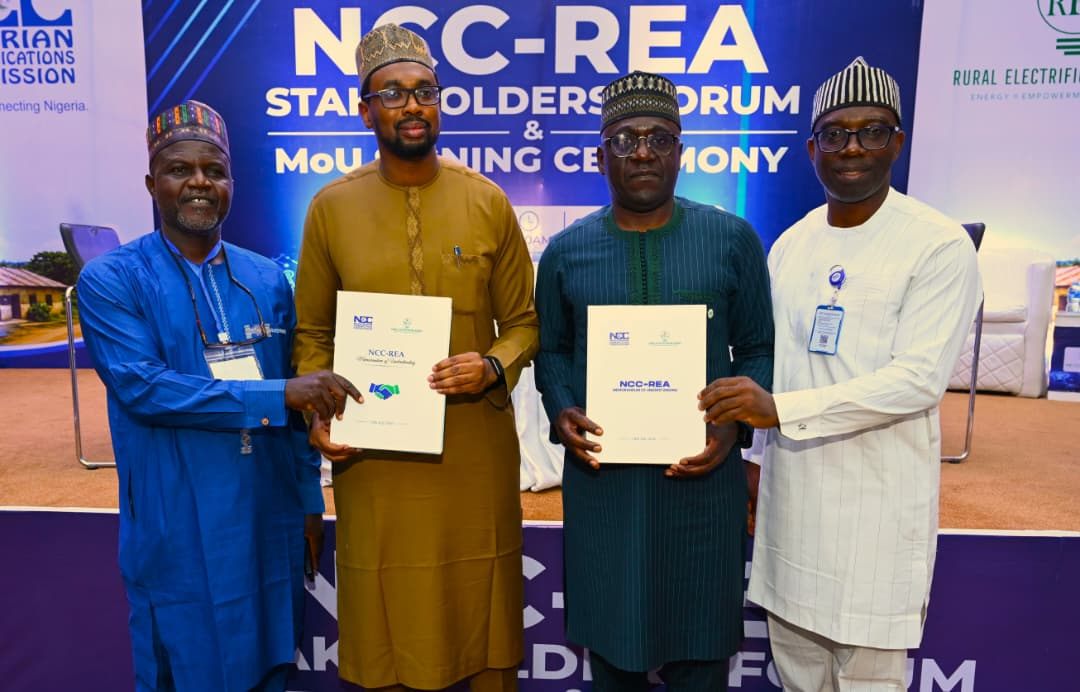
The Nigerian Communications Commission (NCC) and the Rural Electrification Agency (REA) have signed a Memorandum of Understanding (MoU) to accelerate the deployment of digital infrastructure across Nigeria by integrating renewable energy into telecommunications networks.

KANO FOCUS reports that the agreement was signed during the NCC–REA Stakeholder Workshop held at the NCC Annex Office Auditorium in Mbora, Abuja, on Friday.
The workshop, themed *”Unlocking the Energy–Telecoms Nexus for Scalable Digital Infrastructure in Nigeria,”* brought together government officials, telecommunications operators, tower companies, renewable energy developers, financiers and development partners to discuss strategies for expanding connectivity through sustainable energy solutions.
Speaking at the event, the Executive Vice Chairman and Chief Executive Officer of the NCC, Aminu Maida, represented by the Executive Commissioner for Technical Services, Abraham Oshadami, described the partnership as a major step towards achieving inclusive digital connectivity and energy access.
He said reliable electricity and digital connectivity are interdependent and essential for building an inclusive and productive economy.
“Reliable electricity and digital connectivity are not two separate development goals. They are mutually reinforcing foundations of the same objective that produces an inclusive and productive economy,” Mr Oshadami said.
According to him, communities without stable electricity struggle to sustain telecommunications infrastructure, while those without digital connectivity cannot fully benefit from electrification projects.
He explained that the partnership provides a framework for aligning telecommunications and rural electrification programmes through coordinated planning, shared infrastructure and renewable energy solutions.
Under the agreement, the REA will provide geospatial data on existing and planned electrification projects, while the NCC will share information on current and planned projects under the Universal Service Provision Fund (USPF).
Mr Oshadami said the collaboration would enable both agencies to identify areas lacking electricity and telecommunications services and coordinate interventions more effectively.
He added that the partnership would also explore the use of REA’s off-grid renewable energy projects to power telecommunications infrastructure, including base stations and fibre repeater sites.
According to him, the agencies will also examine opportunities to co-locate telecommunications infrastructure on REA-developed energy facilities where technically feasible, a move expected to reduce deployment costs, improve operational efficiency and accelerate connectivity in underserved communities.
The Managing Director and Chief Executive Officer of the REA, represented by the Executive Director of Technical Services, Umar Abdullahi Umar, said Nigeria’s digital economy depends on reliable energy infrastructure.
He noted that renewable energy mini-grids provide a cleaner and more sustainable alternative to diesel-powered telecommunications sites.
“Reliable power and universal connectivity are not competing priorities. They are the same priority, approached from two directions. Where we deliver them together, the cost of each falls and the reach of both extends,” he said.
The workshop also featured presentations by the NCC–REA Collaboration Committee on geospatial analysis, pilot projects and implementation strategies, as well as panel discussions on financing models, regulatory issues and infrastructure planning.
Mr Oshadami urged stakeholders to move beyond expressions of support by identifying practical financing mechanisms, viable commercial models and regulatory measures capable of translating the partnership into sustainable, large-scale projects.
The NCC said the agreement would strengthen collaboration between the two agencies in support of the Federal Government’s digital economy and rural development agenda by improving infrastructure planning, expanding broadband access, promoting renewable energy adoption in telecommunications and delivering resilient digital infrastructure nationwide.




Nasiru Yusuf Ibrahim
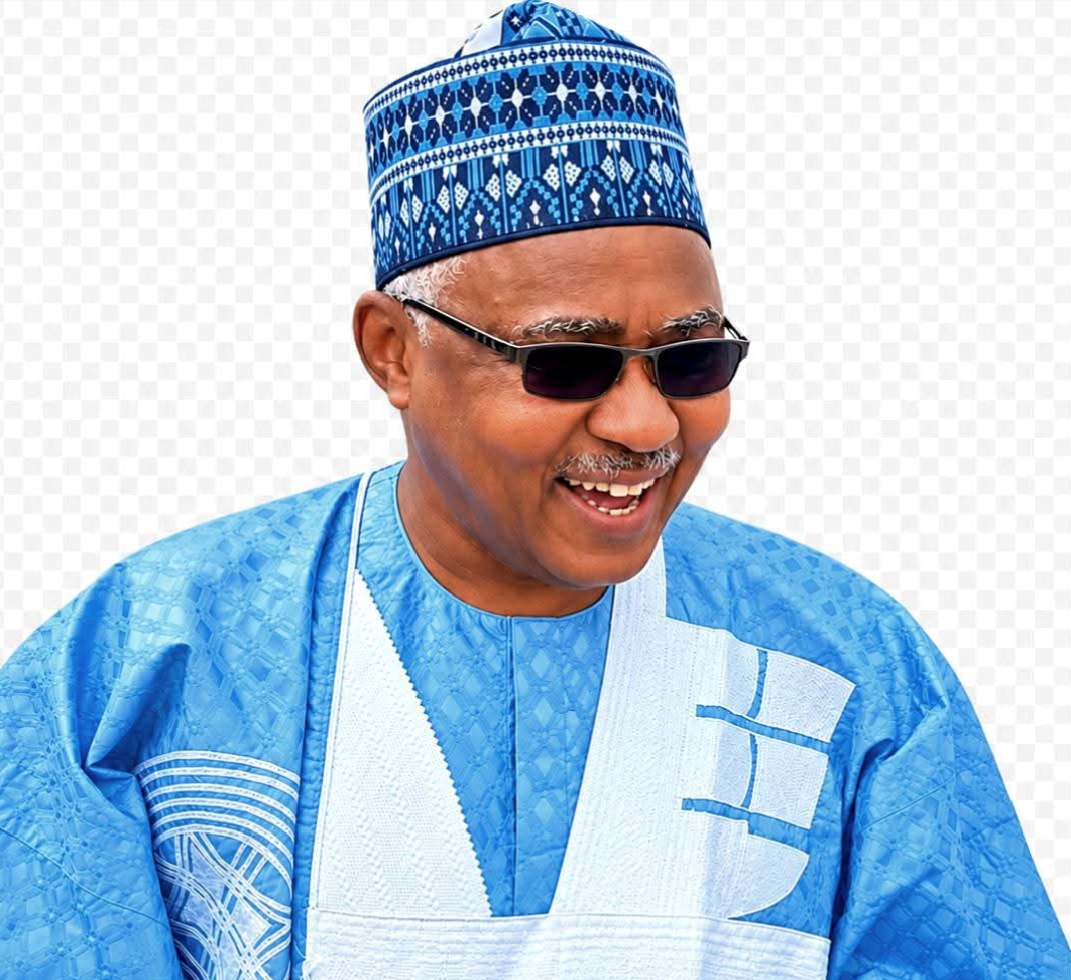
Political allies and loyalists of former Managing Director of the Nigerian Ports Authority (NPA), Arc Aminu Dabo, have begun resigning from the All Progressives Congress (APC) in Kano State following his withdrawal from the ruling party.
KANO FOCUS reports that the supporters, operating under the political group Dabo Alheri Ne, reportedly include members across Kano State’s 44 local government areas.
Barely two days after Dabo announced his resignation from the APC, a prominent stakeholder of the group, Garba Zakiru Dambatta, said members had welcomed the decision and were showing solidarity by submitting their resignation letters to their respective ward party chairmen.
Dambatta, a former APC chairman in Dambatta Local Government Area, said the group’s members were disappointed with what they described as the prolonged marginalisation of Mr Dabo and his supporters within the party.
According to him, despite Mr Dabo’s contributions to the APC and efforts to strengthen the party and manage disagreements among its members, some key stakeholders had continued to sideline him and his loyalists in party activities.
Dambatta reaffirmed the group’s commitment to standing by Mr Dabo’s political decisions and supporting his future political journey.
He also urged the former NPA managing director not to succumb to political pressure or reverse his decision to leave the party.
“This step you have taken, we have the conviction that it is the beginning of a new chapter of goodness in your life,” Dambatta said.
Among the prominent members of the group identified as supporting Mr Dabo’s decision are Abba Rabee’u, a former Senior Special Assistant on Political Awareness; Almustapha Jilani Danmalam, a former Senior Special Assistant on Education; Jamilu Abdullahi Zangon-Mata, a former Senior Special Assistant on Entrepreneurship; and Fahd A. Dabo, a former Special Assistant on Youth Mobilisation.
The individuals reportedly served during the second term of former Kano State Governor Abdullahi Umar Ganduje.
The group also said several other party loyalists and supporters were backing Dabo following his resignation.
However, the statement did not provide the number of members who had formally resigned from the APC or indicate whether the party leadership had responded to the development.

Nasiru Yusuf Ibrahim
Five players of Kano Pillars Amputee Football Club have been invited to the national camp of Nigeria’s Special Super Eagles ahead of the 2026 Amputee Football World Cup in Mexico.
KANO FOCUS reports that invited players are Isah Yusuf, Abba Musa, Habu Friday, Emanuel Betel and Usman Ahmed. They are currently in Abuja with the national team as preparations intensify for the global tournament.
The Team Manager of Kano Pillars Amputee Football Team, Jamilu Uba Adamu, disclosed this in an interview with Ashiru Rabiu Gidan Tudu, Information Officer of the Kano State Sports Commission.
Adamu described the invitation as recognition of the players’ dedication, discipline and outstanding performances.
He expressed confidence that the players would represent Kano State and Nigeria with honour at the championship.
According to him, the call-up also demonstrates Kano Pillars’ commitment to nurturing talented amputee footballers and contributing to the development of the sport in Nigeria.
The 2026 Amputee Football World Cup is scheduled to take place from November 13 to 22 in San Juan de los Lagos, Mexico. A total of 24 countries, including seven African nations, are expected to participate.
The Executive Chairman of the Kano State Sports Commission, Muhammad Tukur Babangida, congratulated the five players on their invitation, describing it as well deserved.
Babangida expressed confidence that they would justify the confidence reposed in them by the national team selectors.
He assured the players of the commission’s continued support and urged them to remain focused, disciplined and committed to making Kano State and Nigeria proud on the international stage.
Nasiru Yusuf Ibrahim
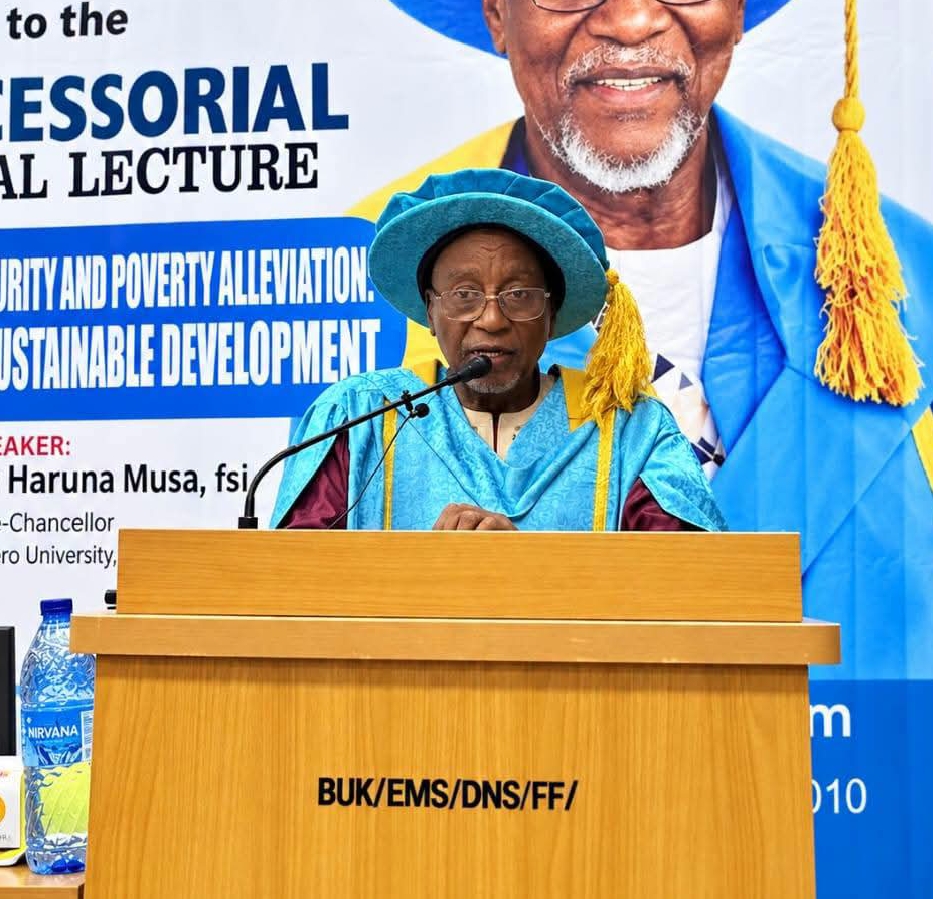
Professor Muhammad Ahmad Makarfi of Bayero University, Kano (BUK), has identified inclusive microfinance as a critical tool for addressing food insecurity and poverty in Nigeria.
KANO FOCUS reports that Prof. Makarfi, of the Department of Agricultural Economics and Extension, made the recommendation while delivering the university’s 64th Professorial Inaugural Lecture on Thursday, October 14, 2026, at the CBN Centre of Excellence.
The lecture, titled *“Innovative Options for Nigeria’s Food Security and Poverty Alleviation: The Microfinance Pathway to Sustainable Development,”* examined how improved access to affordable financing could boost agricultural production and strengthen rural livelihoods.
The professor said that despite Nigeria’s vast agricultural resources, food production and rural livelihoods continued to face challenges, including limited access to affordable finance, insecurity, climate change, inadequate infrastructure and low agricultural productivity.
He argued that expanding access to agricultural finance, particularly for smallholder farmers, would encourage investment, improve productivity and strengthen the country’s food security.
Prof. Makarfi reviewed Nigeria’s agricultural financing policies and interventions, highlighting the need for innovative credit delivery systems that would make funding more accessible, affordable and sustainable for farmers.
He identified microfinance institutions and Islamic finance models as potential avenues for improving access to agricultural credit.
In his recommendations, the professor said sustainable food security and poverty reduction required policies that prioritised increased domestic agricultural production through better access to finance, modern technologies, quality farm inputs and markets.
He also called for stronger microfinance institutions, expanded farmer-friendly financing mechanisms and an enabling environment to attract investment across the agricultural value chain.
According to him, such measures would improve agricultural productivity, enhance livelihoods and accelerate Nigeria’s sustainable development.
Earlier, the Vice-Chancellor of BUK, Professor Haruna Musa, who chaired the lecture, was represented by the Deputy Vice-Chancellor, Academics, Professor Ahmad Muhammad Tsauni.
Prof. Musa commended the lecturer for choosing a topic that addressed critical issues surrounding food insecurity, livelihoods and agricultural development.
The Dean of the Faculty of Agriculture, Professor Aminu Sulaiman, who presented the lecturer’s citation, said Mr Makarfi had published more than 150 local and international publications, contributed 10 book chapters and authored eight books.
Professor Mahmoud Ibrahim Daneji, who represented the Head of the Department of Agricultural Economics and Extension, delivered the vote of thanks.

Dabo’s resignation triggers wave of defections from APC in Kano

Five Kano Pillars Amputee Players Invited to Special Eagles Camp Ahead of World Cup

BUK Professor advocates microfinance to tackle food insecurity, poverty

General Elections 2027: Abba Kabir Yusuf traverses the path to victory
Former NPA MD Aminu Dabo resigns as APC caucus chairman in Dambatta

Kano leads again as NECO successes rise to 74,413
Kano tops states in 2026 NECO results, Governor Yusuf hails students

Kano Govt Suspends Durbar Processions, Horse Riding in Metropolis

ACF begins Dangote Refinery IPO sensitisation campaign in Kano

