
News
Dangote refinery may restrict petrol sales to importing marketers over quality concerns


Nasiru Yusuf Ibrahim
The Dangote Petroleum Refinery and Petrochemicals is considering restricting the sale of Premium Motor Spirit (PMS) to major oil marketers that continue to import petrol into Nigeria, amid concerns over product quality and the integrity of products sold under its brand.

KANO FOCUS reports that the proposed measure could take effect as early as this week, subject to further consultations and possible intervention, according to sources familiar with the refinery’s position.
The development comes amid growing concerns within the refinery over the continued importation of petrol despite increased domestic refining capacity.
Sources said one of the refinery’s major concerns was the alleged blending of imported PMS with products purchased from Dangote Refinery before being distributed to consumers.
The refinery is reportedly worried that such practices could make it difficult to distinguish between petrol supplied directly by Dangote and products subsequently blended or handled by third parties.
“It is difficult to understand why we would invest heavily in producing high-quality petroleum products for Nigerians, only for those products to be mixed with imported products of uncertain quality and the resulting product to be associated with the refinery,” a source familiar with the refinery’s position said.
The refinery has also raised concerns about the country’s quality-control infrastructure, particularly the availability of standard laboratories and the capacity of regulators to independently verify and certify the specifications of imported petroleum products.
The concerns come as Nigeria’s downstream petroleum sector undergoes a major transition from longstanding dependence on imported refined products to greater reliance on locally refined petroleum.
With a refining capacity of 700,000 barrels per day, the Dangote refinery has emerged as a major supplier of refined petroleum products to the Nigerian and international markets.
The refinery says its products meet internationally recognised quality specifications.
The United States Energy Information Administration recently identified the Dangote refinery as a major factor behind a significant increase in Nigeria’s seaborne petroleum product exports.
According to the agency, Nigeria’s seaborne petroleum product shipments averaged 561,000 barrels per day in the second quarter of 2026, compared with an annual average of 79,000 barrels per day in 2023.
The refinery’s jet fuel has also gained traction in the international market, with its products reportedly supplying markets in the United States and Europe.
The possible restriction on petrol sales to importing marketers could further intensify the debate over the future of fuel imports as Nigeria seeks to consolidate domestic refining and reduce dependence on foreign petroleum products.
However, the proposed measure remains subject to consultations and any last-minute intervention by relevant stakeholders.




Ibrahim Khalil
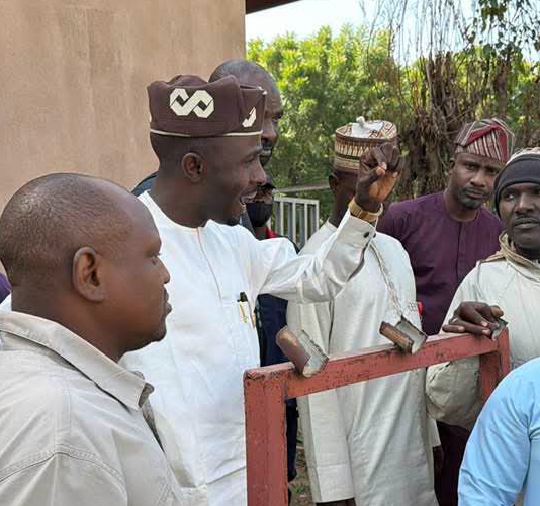
The Kano State Small Towns Water Supply and Sanitation Agency (KASSTOWA) has strengthened security at Joda Waterworks to prevent vandalism, theft and unauthorised access to the facility.
KANO FOCUS reports that the agency disclosed this in a statement issued on Wednesday, following an assessment visit to the waterworks by its interim managing director to evaluate the security situation.
According to the statement, additional security personnel have been deployed to protect the facility and ensure uninterrupted water supply.
The agency said the measure was part of efforts to safeguard critical water infrastructure and protect public assets from potential threats.
It added that the intervention aligned with the commitment of the administration of Governor Abba Kabir Yusuf to protecting government facilities and ensuring the delivery of essential services, in collaboration with the state’s Ministry of Water Resources.
KASSTOWA also emphasised the importance of inter-agency collaboration in strengthening infrastructure protection.
The agency called on community leaders, traditional institutions, youth organisations and residents to remain vigilant, report suspicious activities and cooperate with security personnel deployed to the facility.
It stressed that protecting water infrastructure was a shared responsibility requiring the cooperation of government agencies and host communities.

Nasiru Yusuf Ibrahim
The Kano State Police Command has foiled an alleged kidnapping plot in Gezawa Local Government Area and arrested two 20-year-old suspects over threats to abduct a village head.
KANO FOCUS reports that the suspects, identified as Aliyu Naziru Garba and Bashir Alhasan, were arrested following intelligence-led operations by police operatives attached to the Gezawa Divisional Police Headquarters.
The command disclosed this in a statement issued on Wednesday by its spokesperson, CSP Abdullahi Haruna Kiyawa.
According to the statement, the incident was reported on October 26, 2026, at about 1:30 a.m. by the village head of Bangare, Mallam Idris, who told the police that he had received a threatening phone call from an unidentified person on October 24 at about 9:33 p.m.
The caller allegedly threatened to kidnap him.
Following the report, police operatives launched a follow-up operation, which led to the arrest of the two suspects.
“The suspects have confessed to the commission of the crime,” the statement said, adding that investigations were ongoing and the suspects would be charged to court upon completion.
The Commissioner of Police in Kano State, Ibrahim Adamu Bakori, commended officers of the Gezawa Division for their swift and professional response.
Bakori reiterated the command’s zero-tolerance stance on criminal activities and said the operation aligned with the policing vision of the Inspector-General of Police, Olatunji Rilwan Disu, which prioritises intelligence-led and technology-driven policing, professionalism and proactive crime prevention.
The police urged residents to remain vigilant and report suspicious persons or movements to the nearest police station.
The command also provided the following emergency contact numbers for reporting security concerns: 08032419754, 08123821575 and 09029292926.
Nasiru Yusuf Ibrahim
The Rumfa Old Boys Association, Class of 1984, has commenced a fully funded pilot programme aimed at improving learning outcomes among selected students of their alma mater through a structured three-year academic intervention.
The chapter’s chairman, Alhaji Ahmed Jibril, disclosed this in a statement sent to KANO FOCUS explaining that the programme would provide sustained academic support to students from Senior Secondary School One (SS1) to SS3.
According to him, the initiative, known as the Targeted Academic Grooming Programme, is designed to address learning challenges through evidence-based interventions adapted to the realities of the Nigerian education system.
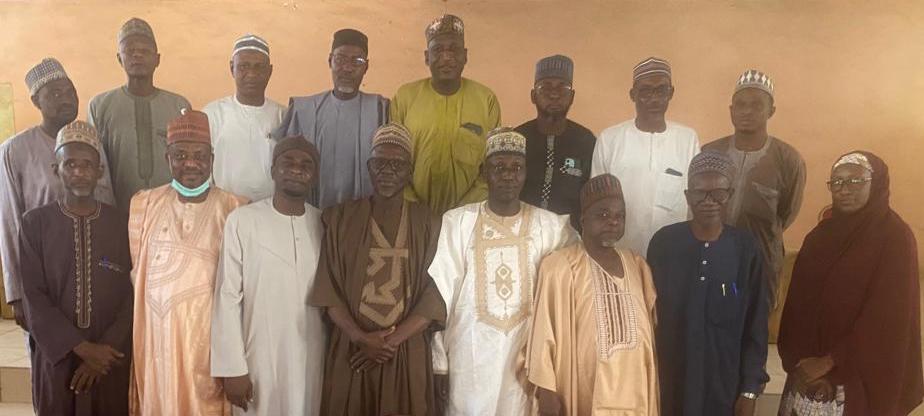
Jibril said the programme had commenced with a review and validation of its work plan organised by the old students, with key stakeholders participating in the exercise.
Those present included representatives of the Rumfa Old Boys Association’s national chapter, the Kano State Ministry of Education, the Zonal Education Office, the School-Based Management Committee (SBMC) and the Parent-Teacher Association (PTA).
The three-year initiative seeks to improve students’ academic performance through targeted teaching, teacher development, counselling, parental engagement and improved learning facilities.
Under the programme, all SS1 students will be observed throughout the academic session, after which an initial cohort of 50 students will be selected based on academic performance, attitude to learning, teachers’ assessments and a structured aptitude assessment.
The programme’s planners envisage that about 40 students may ultimately complete the intervention, with parents’ or guardians’ commitment assessed before enrolment.
In the second year, the selected students will form a dedicated class taught by some of the school’s strongest teachers. They will also receive quality learning materials, counselling support and other interventions to address barriers to effective learning.
Parents will be engaged every term, while the Old Boys Association and the wider community will receive periodic updates on the programme’s progress.
The final year will focus on consolidating students’ academic foundations and preparing them for the West African Senior School Certificate Examination (WASSCE). The programme will include two full mock examinations, while support will be provided for examination registration for students from indigent backgrounds.
At the end of the three-year cycle, the association plans to produce a comprehensive impact report documenting the programme’s achievements and lessons.
The programme is designed as a holistic intervention rather than a conventional remedial class, with emphasis on addressing challenges affecting students, teachers, parents, the learning environment and education support systems.
Its expected outcomes include at least 90 per cent of participating students obtaining five credits in the WASSCE, including English Language and Mathematics.
Other targets include retraining and equipping six subject teachers, refurbishing a dedicated classroom and developing a documented model that could be replicated by the state government or other development partners.
To ensure accountability, the programme will be supervised by a steering committee comprising representatives of the Old Boys Association, the school principal, programme coordinator, a parent representative, a community or traditional institution representative, and an advisory representative of the State Ministry of Education.
The committee will meet quarterly to review monitoring and evaluation data, approve expenditure and address implementation challenges. It will also report to the association’s annual general meeting, while the association reserves the right to commission an independent audit.
The association said the initiative reflects its commitment to giving back to the institution that shaped its members and investing in the academic future of subsequent generations.
It expressed the hope that the programme would establish a sustainable model for improving learning outcomes, strengthening teaching capacity and supporting future students beyond the pilot phase.

Kano water agency strengthens security at Joda waterworks

Kano Police foil kidnap plot, arrest two suspects in Gezawa

Sheikh Masussuka’s killing: why sectarian blame must not replace justice

Rumfa Old Boys Class ’84 launches three-year academic improvement programme

CS-SUNN mourns Niger state television journalist Habiba Alabura

Kano must make government procurement work for made-in-Kano

Indonesian scholar proposes waqf model to reform almajiri education in Nigeria

Nigeria’s Data Demand Surges 47% as Stakeholders Seek Fresh Investment in Digital Infrastructure

Kano Settles N32bn Pension, Gratuity Liabilities, Says Gov Yusuf

