
News
Aliko Dangote Foundation’s social interventions impactful, says MAN

Nasiru Yusuf Ibrahim
Business leaders and media stakeholders in Kano State have commended the Aliko Dangote Foundation (ADF) for what they described as far-reaching and impactful interventions across the state and northern Nigeria.
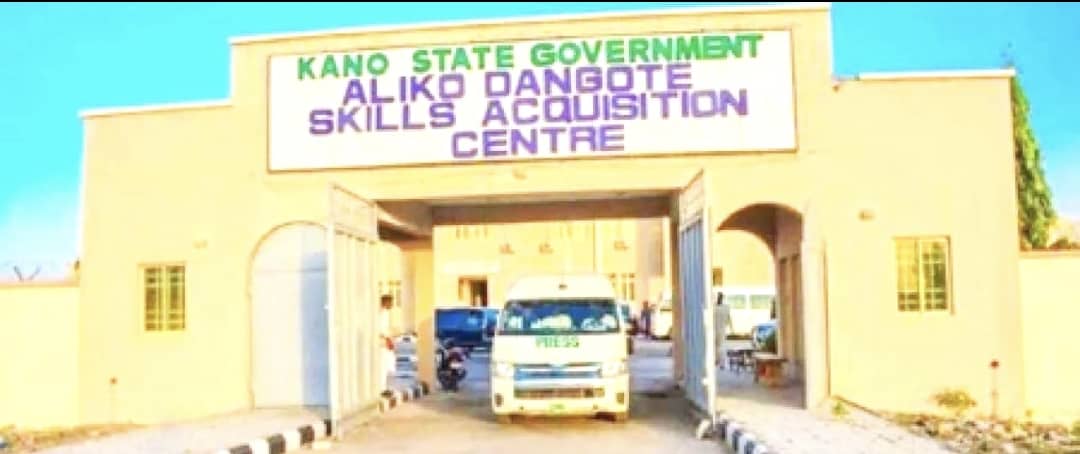
KANO FOCUS reports that the commendation followed the recent signing of a Memorandum of Understanding (MoU) between the Foundation and the Kano State Government on the management of the Aliko Dangote Skills Acquisition Centre in Kano.

Under the agreement, the ADF is expected to take over the management of the skills acquisition centre for a number of years, with the aim of strengthening its operations and impact.
Speaking on the development, the Chairman of the Manufacturers Association of Nigeria (MAN), Kano-Jigawa Branch, Muhammad Bello Isyaku Umar, described skills acquisition as one of the most effective ways of addressing youth unemployment in Nigeria.
He said programmes such as the Aliko Dangote Skills Acquisition Centre could equip young people with practical skills to become entrepreneurs, artisans or employees.
“The emphasis should increasingly be on modern technical, digital and industrial skills,” he said.
Umar noted that Kano remained the economic and commercial hub of northern Nigeria, stressing that the overall impact of ADF interventions in Kano and the North had been significant, broad-based and far-reaching.
“The impact has been significant and broad-based. From healthcare and education to women empowerment, water and poverty alleviation, the Foundation has touched many aspects of people’s lives,” he said.
He added that the interventions were particularly commendable because they complemented government programmes while directly addressing the needs of vulnerable communities.
The MAN chairman also disclosed that the association had benefited from the Dangote Industries Limited’s annual sponsorship of its programmes.
“We sincerely appreciate Dangote Group for this gesture. It demonstrates a strong commitment to Nigerian manufacturing and to the Manufacturers Association of Nigeria,” he said.
According to him, the support was particularly significant to MAN Kano/Jigawa because it strengthened collaboration among indigenous manufacturers, government and major industrial investors.
He said the gesture also sent “a powerful message” to the association’s more than 1,000 members across Kano and Jigawa that Nigerian businesses could support one another in building a stronger industrial economy.
Also speaking, the Managing Director of Radio Kano, Abubakar Adamu, described the Foundation’s intervention in skills development as one of the “single most strategically important areas of partnership for Kano’s future.”
Adamu said Kano’s large youthful population meant that the state could not address unemployment simply by creating more conventional government jobs.
“Kano has a huge youthful population, and the state cannot solve unemployment simply by creating more conventional government jobs. Young people need skills that correspond to actual market demand,” he said.
He noted that one of the strengths of ADF’s interventions was its broad focus across multiple sectors, including health, nutrition, education, livelihoods, women empowerment and community development.
Adamu also commended Dangote Group’s support for Radio Kano during its 80th anniversary celebration, describing the gesture as one that added “dignity and momentum” to the anniversary and demonstrated corporate citizenship.
He cited the Foundation’s intervention at Murtala Muhammad Specialist Hospital as an example of what effective public-private partnership could achieve.
He also mentioned the Dangote Business School at Bayero University Kano, as well as the Foundation’s national food intervention programme launched in Kano in 2025, which targeted one million vulnerable Nigerians with food support.
According to him, the Dangote Micro-Grant Programme, which was launched in Kano, was subsequently expanded nationally.
The stakeholders said sustained collaboration between government and private-sector organisations remained critical to addressing unemployment, poverty and other socio-economic challenges facing Kano and the wider region.









Ibrahim Khalil
The Kano State Small Towns Water Supply and Sanitation Agency (KASSTOWA) has strengthened security at Joda Waterworks to prevent vandalism, theft and unauthorised access to the facility.
KANO FOCUS reports that the agency disclosed this in a statement issued on Wednesday, following an assessment visit to the waterworks by its interim managing director to evaluate the security situation.
According to the statement, additional security personnel have been deployed to protect the facility and ensure uninterrupted water supply.
The agency said the measure was part of efforts to safeguard critical water infrastructure and protect public assets from potential threats.
It added that the intervention aligned with the commitment of the administration of Governor Abba Kabir Yusuf to protecting government facilities and ensuring the delivery of essential services, in collaboration with the state’s Ministry of Water Resources.
KASSTOWA also emphasised the importance of inter-agency collaboration in strengthening infrastructure protection.
The agency called on community leaders, traditional institutions, youth organisations and residents to remain vigilant, report suspicious activities and cooperate with security personnel deployed to the facility.
It stressed that protecting water infrastructure was a shared responsibility requiring the cooperation of government agencies and host communities.
Nasiru Yusuf Ibrahim
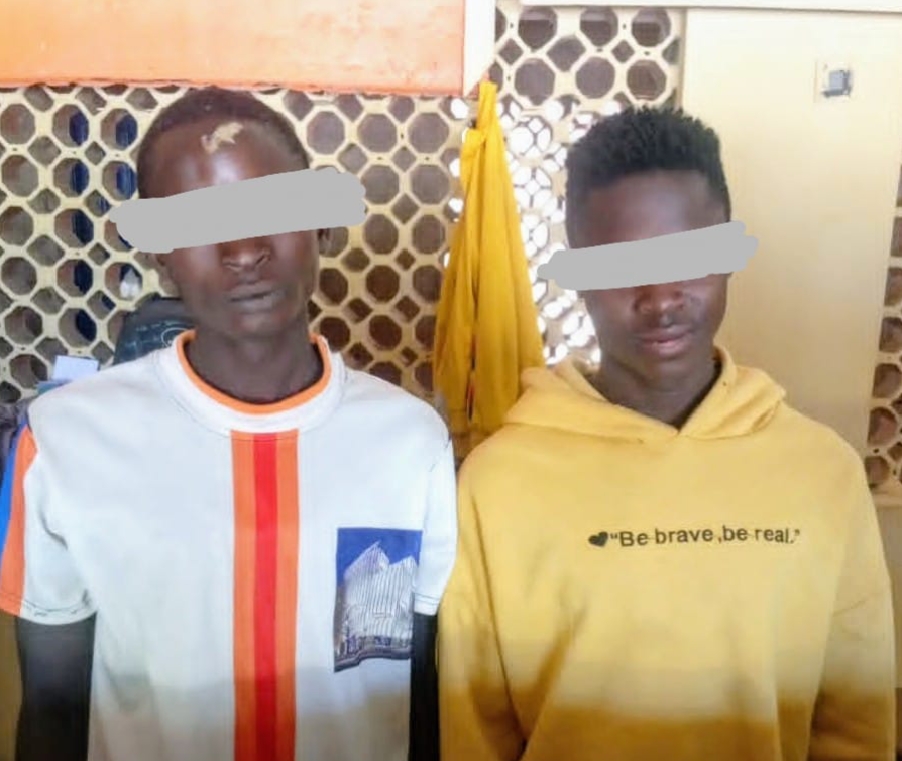
The Kano State Police Command has foiled an alleged kidnapping plot in Gezawa Local Government Area and arrested two 20-year-old suspects over threats to abduct a village head.
KANO FOCUS reports that the suspects, identified as Aliyu Naziru Garba and Bashir Alhasan, were arrested following intelligence-led operations by police operatives attached to the Gezawa Divisional Police Headquarters.
The command disclosed this in a statement issued on Wednesday by its spokesperson, CSP Abdullahi Haruna Kiyawa.
According to the statement, the incident was reported on October 26, 2026, at about 1:30 a.m. by the village head of Bangare, Mallam Idris, who told the police that he had received a threatening phone call from an unidentified person on October 24 at about 9:33 p.m.
The caller allegedly threatened to kidnap him.
Following the report, police operatives launched a follow-up operation, which led to the arrest of the two suspects.
“The suspects have confessed to the commission of the crime,” the statement said, adding that investigations were ongoing and the suspects would be charged to court upon completion.
The Commissioner of Police in Kano State, Ibrahim Adamu Bakori, commended officers of the Gezawa Division for their swift and professional response.
Bakori reiterated the command’s zero-tolerance stance on criminal activities and said the operation aligned with the policing vision of the Inspector-General of Police, Olatunji Rilwan Disu, which prioritises intelligence-led and technology-driven policing, professionalism and proactive crime prevention.
The police urged residents to remain vigilant and report suspicious persons or movements to the nearest police station.
The command also provided the following emergency contact numbers for reporting security concerns: 08032419754, 08123821575 and 09029292926.
Nasiru Yusuf Ibrahim
The Rumfa Old Boys Association, Class of 1984, has commenced a fully funded pilot programme aimed at improving learning outcomes among selected students of their alma mater through a structured three-year academic intervention.
The chapter’s chairman, Alhaji Ahmed Jibril, disclosed this in a statement sent to KANO FOCUS explaining that the programme would provide sustained academic support to students from Senior Secondary School One (SS1) to SS3.
According to him, the initiative, known as the Targeted Academic Grooming Programme, is designed to address learning challenges through evidence-based interventions adapted to the realities of the Nigerian education system.
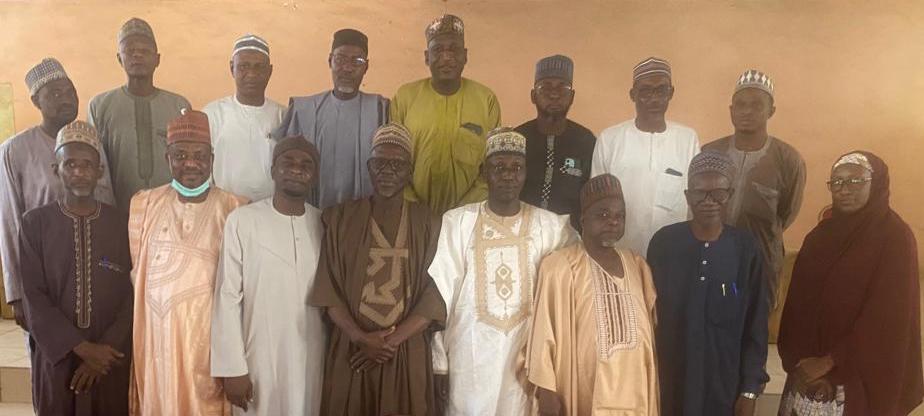
Jibril said the programme had commenced with a review and validation of its work plan organised by the old students, with key stakeholders participating in the exercise.
Those present included representatives of the Rumfa Old Boys Association’s national chapter, the Kano State Ministry of Education, the Zonal Education Office, the School-Based Management Committee (SBMC) and the Parent-Teacher Association (PTA).
The three-year initiative seeks to improve students’ academic performance through targeted teaching, teacher development, counselling, parental engagement and improved learning facilities.
Under the programme, all SS1 students will be observed throughout the academic session, after which an initial cohort of 50 students will be selected based on academic performance, attitude to learning, teachers’ assessments and a structured aptitude assessment.
The programme’s planners envisage that about 40 students may ultimately complete the intervention, with parents’ or guardians’ commitment assessed before enrolment.
In the second year, the selected students will form a dedicated class taught by some of the school’s strongest teachers. They will also receive quality learning materials, counselling support and other interventions to address barriers to effective learning.
Parents will be engaged every term, while the Old Boys Association and the wider community will receive periodic updates on the programme’s progress.
The final year will focus on consolidating students’ academic foundations and preparing them for the West African Senior School Certificate Examination (WASSCE). The programme will include two full mock examinations, while support will be provided for examination registration for students from indigent backgrounds.
At the end of the three-year cycle, the association plans to produce a comprehensive impact report documenting the programme’s achievements and lessons.
The programme is designed as a holistic intervention rather than a conventional remedial class, with emphasis on addressing challenges affecting students, teachers, parents, the learning environment and education support systems.
Its expected outcomes include at least 90 per cent of participating students obtaining five credits in the WASSCE, including English Language and Mathematics.
Other targets include retraining and equipping six subject teachers, refurbishing a dedicated classroom and developing a documented model that could be replicated by the state government or other development partners.
To ensure accountability, the programme will be supervised by a steering committee comprising representatives of the Old Boys Association, the school principal, programme coordinator, a parent representative, a community or traditional institution representative, and an advisory representative of the State Ministry of Education.
The committee will meet quarterly to review monitoring and evaluation data, approve expenditure and address implementation challenges. It will also report to the association’s annual general meeting, while the association reserves the right to commission an independent audit.
The association said the initiative reflects its commitment to giving back to the institution that shaped its members and investing in the academic future of subsequent generations.
It expressed the hope that the programme would establish a sustainable model for improving learning outcomes, strengthening teaching capacity and supporting future students beyond the pilot phase.

Kano water agency strengthens security at Joda waterworks

Kano Police foil kidnap plot, arrest two suspects in Gezawa

Sheikh Masussuka’s killing: why sectarian blame must not replace justice

Rumfa Old Boys Class ’84 launches three-year academic improvement programme

CS-SUNN mourns Niger state television journalist Habiba Alabura

Kano must make government procurement work for made-in-Kano

Indonesian scholar proposes waqf model to reform almajiri education in Nigeria

Nigeria’s Data Demand Surges 47% as Stakeholders Seek Fresh Investment in Digital Infrastructure

Kano Settles N32bn Pension, Gratuity Liabilities, Says Gov Yusuf

