
News
NRHJN honours Ibijoke Sanwo-Olu as Lagos reproductive health champion

Ibrahim Khalil
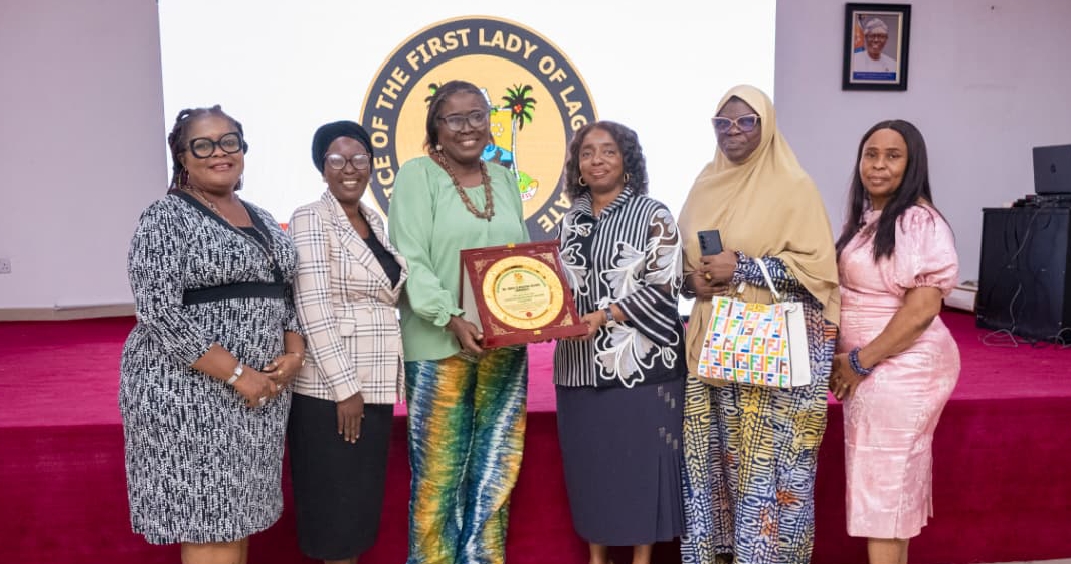
The Network of Reproductive Health Journalists of Nigeria (NRHJN) has honoured the First Lady of Lagos State, Dr Ibijoke Sanwo-Olu, with the title of “Lagos Reproductive Health Champion” for her contributions to maternal and child health and efforts to promote the wellbeing of women and children in the state.
KANO FOCUS reports that the recognition was presented to Dr Sanwo-Olu by a delegation of the network led by its President, Yinka Shokunbi.

According to the network, the award was in appreciation of the First Lady’s commitment to creating safer health spaces for women and advancing the health of children across Lagos.
It also said the honour was intended to encourage her to sustain and deepen initiatives capable of leaving a lasting legacy in reproductive, maternal and child health in the state.
The delegation included NRHJN National Secretary, Sekinah Lawal; Treasurer, Julie Ekong; Assistant Secretary, Lagos State, Angela Onwuzoo; and members Chioma Umeha and Oyeyemi Gbenga-Mustapha.
Receiving the delegation in her office, Dr Sanwo-Olu commended the network for using journalism and media advocacy to draw attention to sexual and reproductive health issues affecting women and girls.
She particularly appreciated the organisation for dedicating its professional skills and media platforms to promoting responsible sexual and reproductive health information.
NRHJN said the recognition formed part of its broader advocacy for stronger attention to the health needs and rights of women and girls.
The 16-year-old media advocacy organisation has members drawn from print, broadcast and online media platforms across 16 states of the federation.
Over the years, the network has established partnerships with national and international organisations to strengthen public understanding and policy attention to reproductive health issues.
Its advocacy areas include family planning, contraception, fertility, maternal and child health, menstrual health, vaccination, human papillomavirus (HPV), adolescent health and other sexual and reproductive health issues.
The network also campaigns for stronger policies, effective implementation and increased government investment in reproductive healthcare, while promoting evidence-based journalism and public awareness.
It has used media advocacy to speak against gender-based violence and other harmful practices, as well as support access to essential reproductive health services.
Dr Sanwo-Olu, a medical doctor, public health physician and administrator, is the first medical practitioner to serve as First Lady of Lagos State.
Before becoming First Lady, she spent 25 years in the Lagos State public health service and rose to the position of Chief Medical Director/Medical Director of General Hospital, Somolu.
She holds a Bachelor of Medicine and Bachelor of Surgery (MBBS) from the University of Lagos, a Diploma in Anaesthesia, a Postgraduate Diploma in Hospital and Health Management, a Master of Public Health (MPH) and a Master of Business Administration (MBA).
She also serves as Chairman of the Committee of Wives of Lagos State Officials (COWLSO) and is listed as an active member of the Medical and Dental Council of Nigeria.
NRHJN said the recognition was aimed at further drawing attention to the need for sustained investment and action on reproductive, maternal and child health, particularly for women and girls who continue to face barriers to accessing essential healthcare services.

Nasiru Yusuf Ibrahim
The Civil Society Scaling-Up Nutrition in Nigeria (CS-SUNN) has identified inadequate funding, shortages of nutrition commodities, delayed budget releases, manpower shortages, climate change, insecurity and food insecurity as major challenges undermining efforts to tackle malnutrition in Kano State.
KANO FOCUS reports that the National Programme Manager of CS-SUNN, Ridwan Awosanya, raised the concerns on Thursday during a media engagement on domestic nutrition financing, calling on the Kano State Government to ensure timely and full release of funds allocated to nutrition programmes.
Mr Awosanya said budgetary allocations often failed to translate into actual spending because the amounts released were significantly lower than those approved.
“If ₦100 has been appropriated, in most cases, the highest amount released would be about ₦45,” he said.
He added that actual expenditure on intended nutrition programmes could be as low as 15 to 20 per cent, despite budget releases of between 45 and 50 per cent.

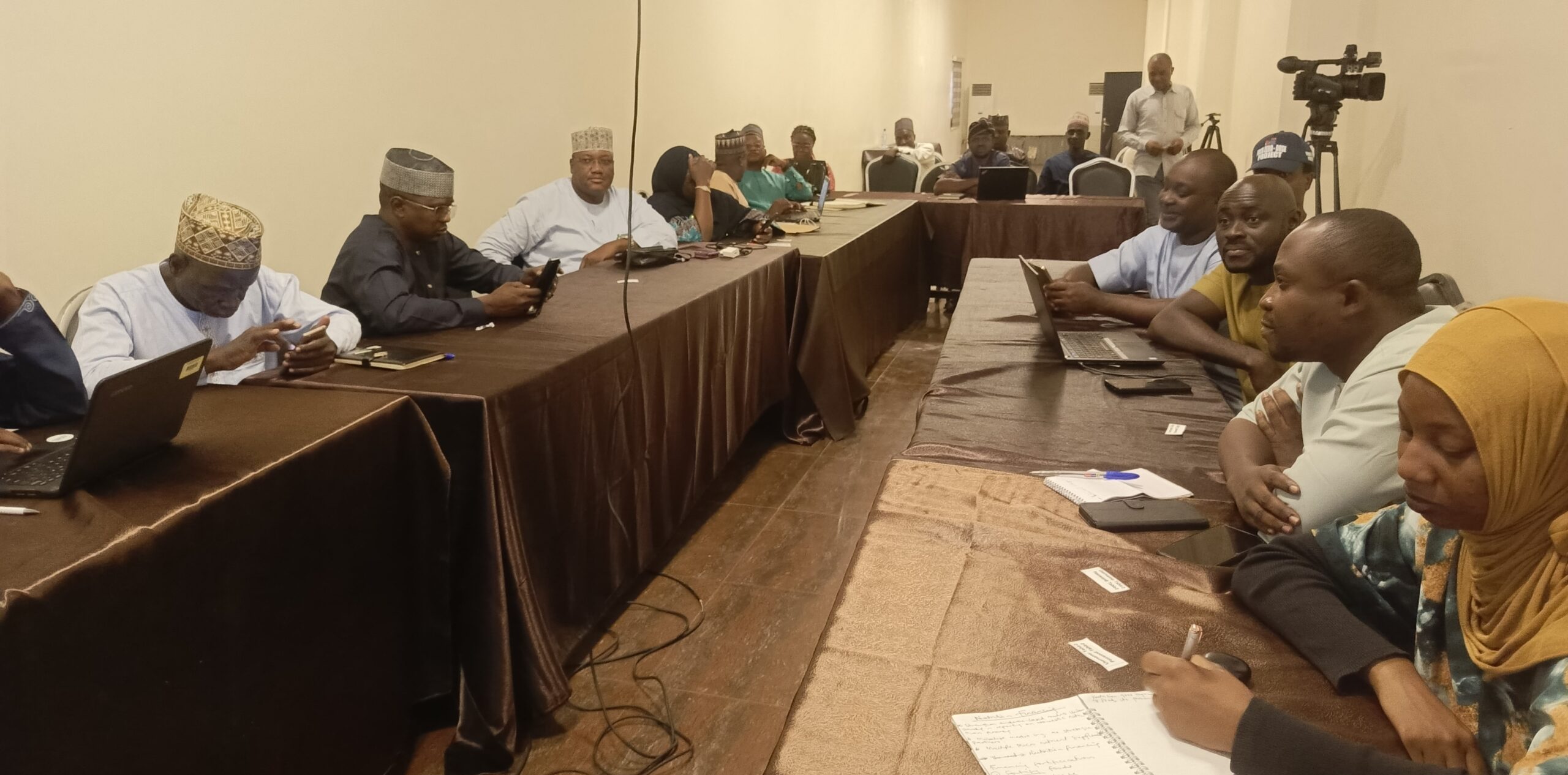
Participants at the occasion
The programme manager urged the government to increase funding for nutrition and ensure that at least 95 per cent of approved allocations were released, with a minimum of 90 per cent utilisation.
“That is what we want, and that is what can change the narrative,” he said.
Mr Awosanya also called on journalists to sustain public attention on nutrition financing rather than report on the issue only occasionally.
He urged the Kano State House of Assembly, particularly its Committee on Food and Nutrition, to strengthen oversight of budget implementation by monitoring the amounts approved, released and spent on nutrition programmes.
Participants at the occasion
He said effective legislative scrutiny was essential to ensure that funds reached intended beneficiaries and delivered measurable results in the fight against malnutrition.
Earlier, CS-SUNN’s Senior Communications Officer, Ms Lilian Okafor, said the media engagement was organised to strengthen collaboration with journalists and promote accountability in domestic nutrition financing.
Ms Lilian Okafor
She said the initiative would also support the development and dissemination of strategic communication materials to sustain advocacy for increased government investment in nutrition programmes.
Speaking at the engagement, the Kano State Coordinator of CS-SUNN, Salman Mohammed Bawan Allah, said the state government had released nearly ₦300 million for nutrition programmes in 2026 following the organisation’s advocacy.
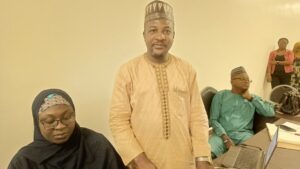
Malam Salman Muhammad Bawan Allah
He said CS-SUNN had been working with the Ministry of Budget and Planning to secure the release of funds for nutrition interventions.
According to him, the organisation’s advocacy seeks to ensure that approved budgetary allocations translate into actual funding, particularly for programmes aimed at preventing malnutrition among children.
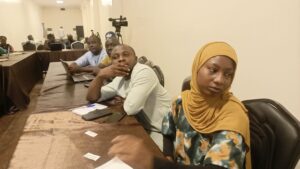
Participants at the occasion
Bawan Allah said CS-SUNN was also taking nutrition awareness campaigns to communities, stressing that the responsibility for tackling malnutrition should not rest with the government alone.
“Tackling malnutrition should not be left to the government alone, as communities also have a responsibility to improve nutrition and protect children’s health,” he said.
He added that the organisation worked with civil society groups through its coalition to promote practical nutrition interventions, including food demonstrations and home gardens.
The engagement brought together media practitioners and other stakeholders to explore ways of improving public awareness, strengthening accountability and keeping nutrition financing a priority in government policies and programmes.
Nasiru Yusuf Ibrahim
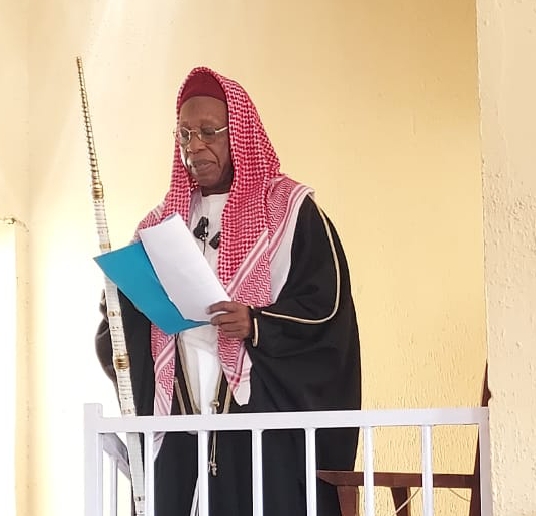
Dr Goni Faruk Umar has urged Muslims to embrace Taqwa in their daily lives, describing it as a foundation of Islam and a key to righteous conduct and success in this world and the hereafter.
KANO FOCUS reports that the Islamic scholar made the call while delivering a Juma’a sermon at the New Juma’a Mosque, Rumfa College, Kano.
In the sermon, Dr Goni Faruk Umar explained the meaning of Taqwa using classical Islamic scholarship, including an account involving Umar ibn al-Khattab and the companion Ubayy ibn Ka’b to illustrate the concept.
According to the account cited in the sermon, Sayyadina Ubayy once asked Khalifa Umar bin Khattab whether he had ever walked along a thorny path. When Khalifa Umar bin Khattab answered in the affirmative, Sayyadina Ubayy asked how he navigated it. Khalifa Umar bin Khattab replied that he gathered his clothes and proceeded cautiously to avoid being pricked.
Sayyadina Ubayy then explained that this was the essence of Taqwa: being constantly mindful of one’s actions and carefully avoiding what displeases Allah.
Dr Goni Faruk Umar said Taqwa should not be limited to acts of worship but should also guide Muslims’ conduct in contemporary society, particularly in their use of digital platforms and social media, control of the tongue, and relationships within the family.
He urged worshippers to exercise restraint in their speech, act responsibly online and uphold their obligations to family members in accordance with Islamic teachings.
The cleric also highlighted the spiritual and worldly benefits of Taqwa, including relief from hardship, ease in personal affairs, forgiveness of sins and increased rewards in the hereafter.
Quoting verses from the Qur’an, he cited Allah’s promise in Surah At-Talaq, verses 2 and 3, that whoever fears Him will be granted a way out of difficulties and provided for from sources they could not have anticipated.
He also referred to Qur’an 65:4–5, which promises ease in affairs, the removal of sins and the multiplication of rewards for those who maintain Taqwa.
The scholar reminded Muslims that worldly life is temporary and that the hereafter is their permanent destination. He therefore urged them to regard Taqwa as the best provision for the journey beyond this life.
Citing Qur’an 2:197, he emphasised that the best provision for the hereafter is Taqwa, urging believers to remain conscious of their responsibilities to Allah.
The sermon also featured prayers and salutations upon Prophet Muhammad (peace be upon him), his family and companions, in accordance with the Qur’anic instruction in Surah Al-Ahzab, verse 56.
Dr Goni Faruk Umar concluded by encouraging Muslims to remain steadfast in faith, follow the guidance of the Prophet and make righteousness a guiding principle in their daily lives.
Nasiru Yusuf Ibrahim
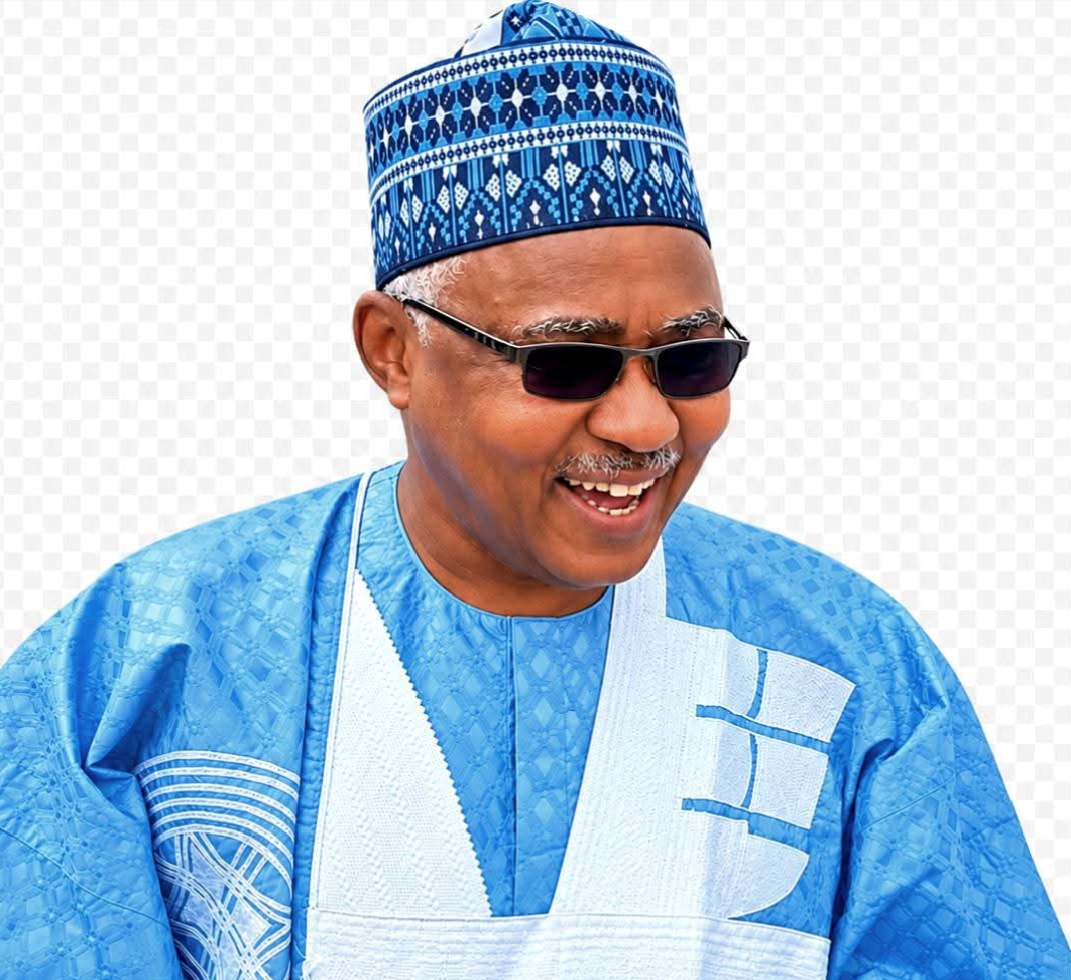
Political allies and loyalists of former Managing Director of the Nigerian Ports Authority (NPA), Arc Aminu Dabo, have begun resigning from the All Progressives Congress (APC) in Kano State following his withdrawal from the ruling party.
KANO FOCUS reports that the supporters, operating under the political group Dabo Alheri Ne, reportedly include members across Kano State’s 44 local government areas.
Barely two days after Dabo announced his resignation from the APC, a prominent stakeholder of the group, Garba Zakiru Dambatta, said members had welcomed the decision and were showing solidarity by submitting their resignation letters to their respective ward party chairmen.
Dambatta, a former APC chairman in Dambatta Local Government Area, said the group’s members were disappointed with what they described as the prolonged marginalisation of Mr Dabo and his supporters within the party.
According to him, despite Mr Dabo’s contributions to the APC and efforts to strengthen the party and manage disagreements among its members, some key stakeholders had continued to sideline him and his loyalists in party activities.
Dambatta reaffirmed the group’s commitment to standing by Mr Dabo’s political decisions and supporting his future political journey.
He also urged the former NPA managing director not to succumb to political pressure or reverse his decision to leave the party.
“This step you have taken, we have the conviction that it is the beginning of a new chapter of goodness in your life,” Dambatta said.
Among the prominent members of the group identified as supporting Mr Dabo’s decision are Abba Rabee’u, a former Senior Special Assistant on Political Awareness; Almustapha Jilani Danmalam, a former Senior Special Assistant on Education; Jamilu Abdullahi Zangon-Mata, a former Senior Special Assistant on Entrepreneurship; and Fahd A. Dabo, a former Special Assistant on Youth Mobilisation.
The individuals reportedly served during the second term of former Kano State Governor Abdullahi Umar Ganduje.
The group also said several other party loyalists and supporters were backing Dabo following his resignation.
However, the statement did not provide the number of members who had formally resigned from the APC or indicate whether the party leadership had responded to the development.

CS-SUNN raises concern over nutrition funding gaps in Kano

Dr Goni Faruk Umar calls on muslims to embrace taqwa in daily life

Dabo’s resignation triggers wave of defections from APC in Kano

Five Kano Pillars Amputee Players Invited to Special Eagles Camp Ahead of World Cup

BUK Professor advocates microfinance to tackle food insecurity, poverty

Kano leads again as NECO successes rise to 74,413
Kano tops states in 2026 NECO results, Governor Yusuf hails students

Kano Govt Suspends Durbar Processions, Horse Riding in Metropolis

ACF begins Dangote Refinery IPO sensitisation campaign in Kano

