
News
2023 Consumer Day: NCC unveils TELCARE desk at Abuja Airport


As part of activities marking 2023 World Consumer Rights Day, the Nigeria Communications Commission, has launched its Telecom Consumer Assistance, Resolution and Enquiries (TELCARE) Desk, in the Arrival Lounge of the Nnamdi Azikiwe Airport Abuja.

KANO FOCUS reports that the TELCARE Desk in Abuja will be a pilot as the commission plan to set up the desk at strategic locations across the country to provide information to telecom consumers.
The EVC, represented by the NCC’s Executive Commissioner, Stakeholder Management, Adeleke Adewolu, Spoke at the 2023 World Consumer Rights Day held in Abuja on Tuesday.
“The TELCARE Desk serves as an additional platform to receive and facilitate the resolution of consumer complaints; provide a means through which consumers and citizens can make inquiries on consumer issues; provide a platform for advocacy on any thematic consumer issue or concerns; to further enhance awareness of the Commission’s activities,” Prof. Danbatta said.
Commenting on the World Consumer Day, Prof. Danbatta, expressed commission’s commitment to the responsible use of the world’s resources, including protecting the environment by supporting the industry to transition to renewable energy.
The Commission unveiled its year-round plan for implementing initiatives for realizing the theme of 2022 World Consumer Right Day, which was “Fair Digital Finance” a year ago.
The EVC noted that in the period between March 15, 2022, and today, the Commission has carried out its mandate in a manner that further strengthened consumer protection while safeguarding the interest of telecom consumers.
He noted that in that period, in addition to continuing to implement the policy that ensured improved access to broadband connectivity, the Commission, through Nigerian Communications Commission’s Computer Security Incident Response Team (NCC-CSIRT) constantly alerted consumers to cyber threats that could have led to the compromise of their financial profile through the execution of malicious codes by threat actors.
The Chief Executive Officer pointed out that the time cashless banking fully took off in late 2022, the connectivity platforms on which electronic transactions ride have become robust to the extent of being able to absorb the surge in demand for cashless transactions.
The NCC’s chief said arising from the successes in implementing initiatives to realize last year’s theme, that the Commission is poised to realize the theme for this year, which is “Empowering Consumers through Clean Energy Transition”.
owards delivering a smooth transition for consumers experiencing a high cost of living as the globe responds to the ongoing energy crisis caused by supply and climate issues and is very relevant given Nigeria’s recent licensing of the 5G spectrum networks, which consume twice as much energy as 4Gs, although they are more energy-efficient per gigabyte.
Speaking on increased demand for energy consumption, Danbatta said with the recent licensing of the 5G spectrum, Nigeria will witness an increased deployment of telecom infrastructure to satisfy the wireless service coverage requirement for 5G services.
He said this anticipated growth in the number of 5G coverage will trigger high demand for data services which will result in increased energy consumption for the network infrastructure especially the Base Transceiver Stations (BTS), Internet of Things (IoT), 5G Customer Premise Equipment (CPEs) and mobile devices for example.
“This requires the industry to look for green and sustainable power solutions required for the connectivity of IoT devices and network optimisation,” he said.
“All over the globe, telecom companies are among the biggest energy users, as a result of the stiff industry competition which causes them to try to satisfy their consumers by providing higher-speed networks. With the rising utility costs, it is critical for companies to reconsider the sustainability of their operations by lowering the operational impact on the environment. This is more so because it has been found that implementing energy efficiency measures could potentially reduce the operating costs of telcos by up to 20%.
“Some of these energy-efficiency measures include the redesign of the Radio Access Networks (RAN) of Base Stations which were initially built to maximise connectivity, not energy efficiency.
“More than 75% of the time, the radio base station resources remain unused because of the hardware components activated at all times to transmit system information and synchronisation and reference signals. Therefore, to avoid waste heat, some of 5G’s newest RAN is equipped with an energy-saving measure allowing for the automatic switching of components. Some other energy efficiency measures can also include the use of renewable energy sources (hydrogen, wind, solar etc.) to supply the energy needed.”
On renewable energy, he said the Commission, as a responsive world-class organization, has been proactive in responding to the realities and challenges posed by the impact of using fossil fuel as a power source in the telecommunications industry. In this regard, the situation in Nigeria is peculiar.
“Owing to the overall energy challenges of the nation, the fifty-four (54) thousand BTS scattered across the country depend on diesel generators with the attendant noise and environmental pollution,” he said
“Some of these BTS operate on diesel generators for 24 hours across seven days of the week in some locations. Therefore, transitioning to a renewable energy source like solar power will significantly reduce the menace of pollution from individually-powered generators. This will be zero carbon emission from the BTS just as noise pollution would be a thing of the past.
Speaking on MNOs and the need for energy-efficient networks, he said that consequently, to minimize the environmental impacts of climate change caused by carbon emissions, telecom network providers need to come up with a modern and more energy-efficient network.
“This includes the use of Solar-powered Cells, wireless electricity or a hybrid system to replace higher energy-consuming equipment that will lead to a reduction in capital expenditure (CAPEX) and operational expenditure (OPEX) and by implication, a reduction in service costs to consumers.
“Transitioning to renewable energy is predicted to result in a lower cost of operation as operators will be able to save on the cost of diesel, which accounts for a large chunk of the costs incurred by these licensees.
“The competition that the Commission consistently promotes among industry players has a natural consequence of the savings on the cost of diesel passed on to consumers, which would potentially result in lower prices for services.
“Therefore, I want to use this opportunity to call on MNOs and Original Equipment Manufacturers (OEMs) to come up with innovations in sustainable energy in line with the International Telecommunications Union (ITU) Recommendation ITU-T L.1380 on smart energy solutions for telecom sites’ performance, safety, energy efficiency and environmental impact. This is vital to address the challenges of climate change and environmental degradation.
“In this regard and for the industry stakeholders, especially consumers, to benefit from the advantages of renewable energy, the Commission is working on a policy to encourage the adoption of renewable energy sources by operators. When operational, the Policy will ensure that using clean energy sources for power has the potential to resolve the three key needs of the telecom industry, namely: reduction in diesel usage; expansion of telecom infrastructure to off-grid areas; and reduction in carbon emissions.
He also talked about the collocation and Infrastructure sharing framework, saying the Policy on renewable energy in the telecom sector is an additional layer of other policies that contribute to protecting the environment. In recent years, the Commission introduced a regulatory framework on infrastructure sharing and collocation among the licensees which has encouraged operators to fully maximize their already-deployment infrastructure.
“By sharing infrastructure, some operators do not need to entirely build a telecoms site in an area where another operator had deployed one. With the challenge of inadequate public electricity supply in Nigeria, telecom companies rely on diesel-powered generators to keep their telecom sites live round-the-clock. A regulatory framework such as infrastructure sharing, and collocation is helping in this regard and the Commission has recorded appreciable adoption of this regulation.
“Another regulatory initiative in this regard is NCC’s Type Approval Regulations. For the sake of educating our media stakeholders, Type Approval is an official authorisation by the Commission prior to the use or supply of an Equipment Type in Nigeria. Our Type Approval of devices factors in energy efficiency, among others, which ensures a reduction of power consumption. It also ensures that Radio Frequency devices used in Nigeria operate effectively, without causing harmful interference and otherwise comply with the Commission’s technical requirement prior to importation or marketing.
“The annual tech innovation competitions we organize for young innovators in Nigeria also make considerations for inventions that address the challenges of renewable energy. Some of the entries submitted in this regard are in the process of being commercialized as the innovators are seeking investors to make their discoveries available to the public. The Commission will continue to support research and innovations that contribute to transitioning to renewable energy sources.
On regulations on e-Waste, the EVC said, “Also connected to NCC’s regulatory efforts in dealing with issues of sanitizing our environment is its efforts in 2019 to commence activities that will result in the formulation of a Regulation on E-Waste in Nigeria. Today, the global concern for the regulation of e-waste is two-pronged.
“First, is the acute awareness of the hazardous properties and the potential risk to human health, as well as their capacity to degrade the environment. Secondly, is the business case and vast Potential for wealth creation in recycling e-waste into more benign and productive uses.
“In line with its regulatory mandate and to keep pace with efforts at managing e-waste-related issues, in a manner that reduces cases of indiscriminate burning of electronic devices with the potential for increased carbon emission in the environment, the Commission has been working, with other relevant agencies, to develop a Regulations on E-waste. The Regulations will represent a holistic intervention aimed at providing clarity and delimiting the responsibilities of various stakeholders in the e-waste value chain within the Telecommunications industry. While the proposed Regulations are industry-specific, they, nonetheless, key into other initiatives at national and international levels.
“I wish to state that in the course of the year, the Commission’s Consumer Affairs Bureau (CAB) will sensitize telecom consumers about these interventions aimed at making the environment better for all of humanity. The CAB will carry this out as part of its Consumer Education mandate, with a significant part of this effort dedicated to providing information that equips the consumer to thrive in a world that has embraced digital finance.
“Through its outreach programmes, which have continued to re-tool to reflect existing realities and trends, the CAB will use its consumer-centric initiatives such as the Telecom Consumer Parliament (TCP), Telecom Consumer Town Hall on Radio (TCTHR), Telecom Consumer Conversations (TCC) as well as social media platforms and Consumer Portal to sensitize consumers on how renewable energy benefits them and their role in achieving industry transition to it in the interest of the environment.
“The CAB will develop and produce various consumer education materials such as Flexi and Roll-up Banners, and Handbills, and update its Consumer Handbook to include the message about renewable energy.
Nasiru Yusuf Ibrahim
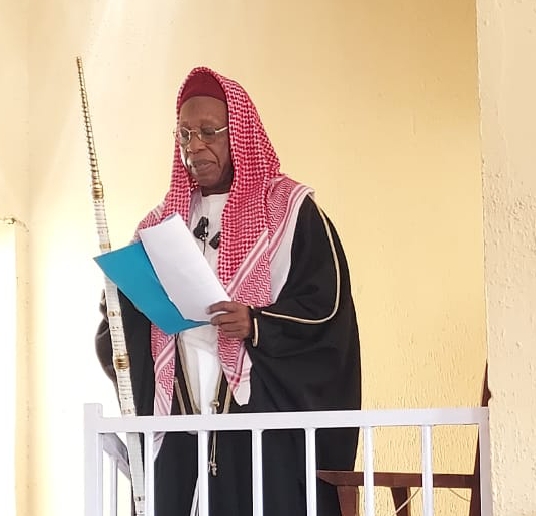
Dr Goni Faruk Umar has urged Muslims to embrace Taqwa in their daily lives, describing it as a foundation of Islam and a key to righteous conduct and success in this world and the hereafter.
KANO FOCUS reports that the Islamic scholar made the call while delivering a Juma’a sermon at the New Juma’a Mosque, Rumfa College, Kano.
In the sermon, Dr Goni Faruk Umar explained the meaning of Taqwa using classical Islamic scholarship, including an account involving Umar ibn al-Khattab and the companion Ubayy ibn Ka’b to illustrate the concept.
According to the account cited in the sermon, Sayyadina Ubayy once asked Khalifa Umar bin Khattab whether he had ever walked along a thorny path. When Khalifa Umar bin Khattab answered in the affirmative, Sayyadina Ubayy asked how he navigated it. Khalifa Umar bin Khattab replied that he gathered his clothes and proceeded cautiously to avoid being pricked.
Sayyadina Ubayy then explained that this was the essence of Taqwa: being constantly mindful of one’s actions and carefully avoiding what displeases Allah.
Dr Goni Faruk Umar said Taqwa should not be limited to acts of worship but should also guide Muslims’ conduct in contemporary society, particularly in their use of digital platforms and social media, control of the tongue, and relationships within the family.
He urged worshippers to exercise restraint in their speech, act responsibly online and uphold their obligations to family members in accordance with Islamic teachings.
The cleric also highlighted the spiritual and worldly benefits of Taqwa, including relief from hardship, ease in personal affairs, forgiveness of sins and increased rewards in the hereafter.

Quoting verses from the Qur’an, he cited Allah’s promise in Surah At-Talaq, verses 2 and 3, that whoever fears Him will be granted a way out of difficulties and provided for from sources they could not have anticipated.
He also referred to Qur’an 65:4–5, which promises ease in affairs, the removal of sins and the multiplication of rewards for those who maintain Taqwa.
The scholar reminded Muslims that worldly life is temporary and that the hereafter is their permanent destination. He therefore urged them to regard Taqwa as the best provision for the journey beyond this life.
Citing Qur’an 2:197, he emphasised that the best provision for the hereafter is Taqwa, urging believers to remain conscious of their responsibilities to Allah.
The sermon also featured prayers and salutations upon Prophet Muhammad (peace be upon him), his family and companions, in accordance with the Qur’anic instruction in Surah Al-Ahzab, verse 56.
Dr Goni Faruk Umar concluded by encouraging Muslims to remain steadfast in faith, follow the guidance of the Prophet and make righteousness a guiding principle in their daily lives.
Nasiru Yusuf Ibrahim
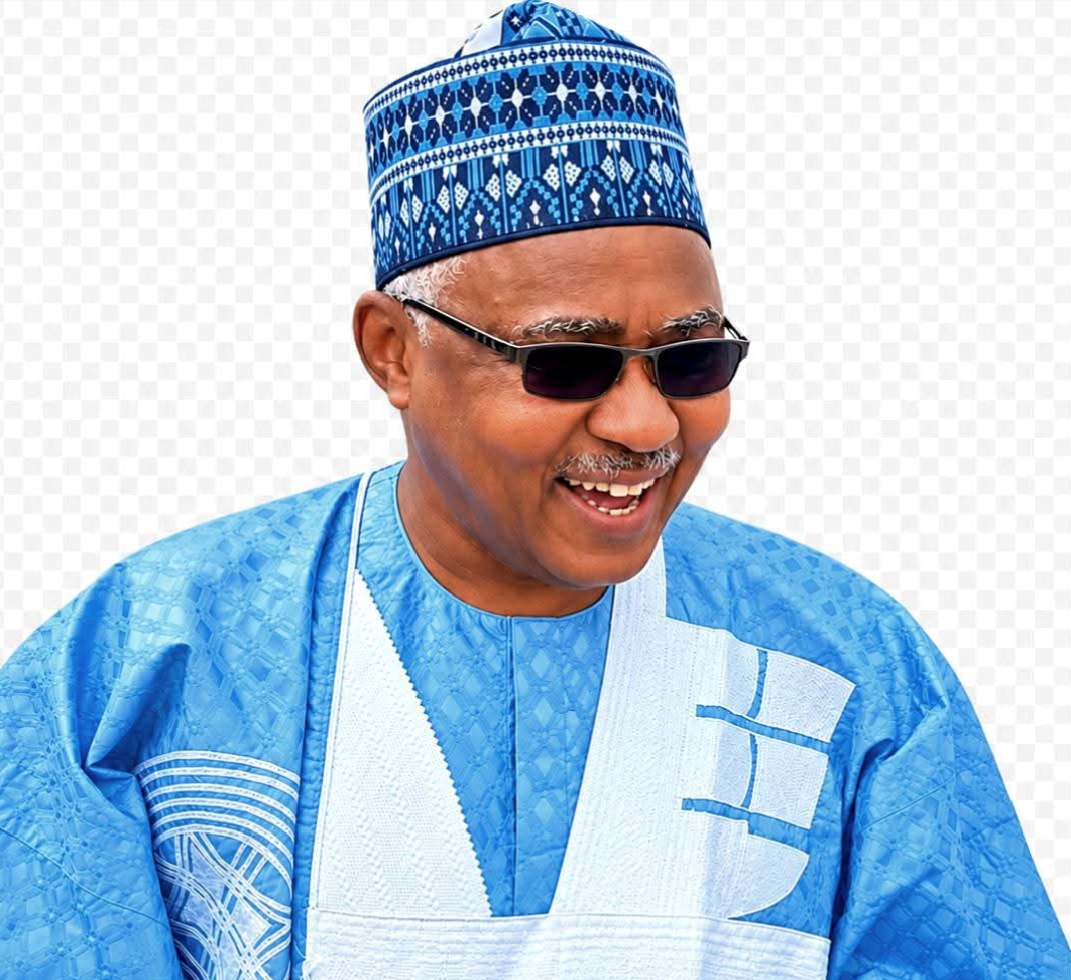
Political allies and loyalists of former Managing Director of the Nigerian Ports Authority (NPA), Arc Aminu Dabo, have begun resigning from the All Progressives Congress (APC) in Kano State following his withdrawal from the ruling party.
KANO FOCUS reports that the supporters, operating under the political group Dabo Alheri Ne, reportedly include members across Kano State’s 44 local government areas.
Barely two days after Dabo announced his resignation from the APC, a prominent stakeholder of the group, Garba Zakiru Dambatta, said members had welcomed the decision and were showing solidarity by submitting their resignation letters to their respective ward party chairmen.
Dambatta, a former APC chairman in Dambatta Local Government Area, said the group’s members were disappointed with what they described as the prolonged marginalisation of Mr Dabo and his supporters within the party.
According to him, despite Mr Dabo’s contributions to the APC and efforts to strengthen the party and manage disagreements among its members, some key stakeholders had continued to sideline him and his loyalists in party activities.
Dambatta reaffirmed the group’s commitment to standing by Mr Dabo’s political decisions and supporting his future political journey.
He also urged the former NPA managing director not to succumb to political pressure or reverse his decision to leave the party.
“This step you have taken, we have the conviction that it is the beginning of a new chapter of goodness in your life,” Dambatta said.
Among the prominent members of the group identified as supporting Mr Dabo’s decision are Abba Rabee’u, a former Senior Special Assistant on Political Awareness; Almustapha Jilani Danmalam, a former Senior Special Assistant on Education; Jamilu Abdullahi Zangon-Mata, a former Senior Special Assistant on Entrepreneurship; and Fahd A. Dabo, a former Special Assistant on Youth Mobilisation.
The individuals reportedly served during the second term of former Kano State Governor Abdullahi Umar Ganduje.
The group also said several other party loyalists and supporters were backing Dabo following his resignation.
However, the statement did not provide the number of members who had formally resigned from the APC or indicate whether the party leadership had responded to the development.

Nasiru Yusuf Ibrahim
Five players of Kano Pillars Amputee Football Club have been invited to the national camp of Nigeria’s Special Super Eagles ahead of the 2026 Amputee Football World Cup in Mexico.
KANO FOCUS reports that invited players are Isah Yusuf, Abba Musa, Habu Friday, Emanuel Betel and Usman Ahmed. They are currently in Abuja with the national team as preparations intensify for the global tournament.
The Team Manager of Kano Pillars Amputee Football Team, Jamilu Uba Adamu, disclosed this in an interview with Ashiru Rabiu Gidan Tudu, Information Officer of the Kano State Sports Commission.
Adamu described the invitation as recognition of the players’ dedication, discipline and outstanding performances.
He expressed confidence that the players would represent Kano State and Nigeria with honour at the championship.
According to him, the call-up also demonstrates Kano Pillars’ commitment to nurturing talented amputee footballers and contributing to the development of the sport in Nigeria.
The 2026 Amputee Football World Cup is scheduled to take place from November 13 to 22 in San Juan de los Lagos, Mexico. A total of 24 countries, including seven African nations, are expected to participate.
The Executive Chairman of the Kano State Sports Commission, Muhammad Tukur Babangida, congratulated the five players on their invitation, describing it as well deserved.
Babangida expressed confidence that they would justify the confidence reposed in them by the national team selectors.
He assured the players of the commission’s continued support and urged them to remain focused, disciplined and committed to making Kano State and Nigeria proud on the international stage.

Dr Goni Faruk Umar calls on muslims to embrace taqwa in daily life

Dabo’s resignation triggers wave of defections from APC in Kano

Five Kano Pillars Amputee Players Invited to Special Eagles Camp Ahead of World Cup

BUK Professor advocates microfinance to tackle food insecurity, poverty

General Elections 2027: Abba Kabir Yusuf traverses the path to victory

Kano leads again as NECO successes rise to 74,413
Kano tops states in 2026 NECO results, Governor Yusuf hails students

Kano Govt Suspends Durbar Processions, Horse Riding in Metropolis

ACF begins Dangote Refinery IPO sensitisation campaign in Kano

