
Opinion
Salat: The Distinction Between Muslim And Non-Muslim

By Imam Murtadha Gusau
In the name of Allah, the Most Gracious, the Most Merciful

All praise be to Allah and peace be upon the Messenger of Allah (Peace be upon him). I bear witness that there is no god but Allah alone who has no partner, and I bear witness that Muhammad is His Servant and Messenger.
Dear brothers and sisters, know that Islam dignified Salat (Prayer) and raised its status as the greatest pillar of Islam after the Kalimatush Shahadah (Testimony of Faith). Ibn Umar (may Allah be pleased with him) narrated that the Prophet (Peace be upon him) said:
“Islam is based on (the following) five (principles): 1. To testify that none has the right to be worshipped but Allah and Muhammad is Allah’s Messenger. 2. To perform the (compulsory congregational) Salat dutifully and perfectly. 3. To pay Zakah (i.e. obligatory charity). 4. To perform Hajj. (i.e. Pilgrimage to Makkah) 5. To observe fast during the month of Ramadan.” [Bukhari and Muslim]
Dear servants of Allah, Salat (Prayer) is the major form of worship that a Muslim offers five times a day regularly. It is an obligation upon a Muslim and a Muslim is to offer no excuse when it comes to offering Salat. The offering of Salat in addition to representing the submission of Muslims to their Lord also has other benefits as well which are highly cherished by every Muslim.
The establishment of Salat is one of the major topics upon which Qur’an has emphasised more than anything else. In the Noble Qur’an Allah Almighty has stressed upon Muslims to learn to offer Salat regularly and with mentions of offering Salat Allah has also mentioned its benefits with it as well.
Although there is no constraint upon a Muslim on how to invoke Allah Almighty, however, Salat (prayer) is the preferred means of doing so as when a person worships Allah he or she develops a connection with Allah and any invocation within that or after that connection is bound to be accepted by Allah more compared to invocation done in any other circumstance. In the Noble Qur’an, Allah Almighty says:
“O you who have believed, seek help through patience and Salat (prayer). Indeed, Allah is with the patient.” [Qur’an, 2:153]
Therefore, a Muslim must use Salats (prayers) as a means of invocation and ask Allah Almighty for help and assistance in any difficulty or worry.
Piety (Taqwah) or righteousness is the prime objective which a Muslim has to achieve in this life. All the instructions, constraints, freedom, rights and education provided by Islam are with the objective that a Muslim becomes pious and moves on the righteous path. In this regard, Salat (prayer) has a great role to play as it promotes Taqwah or piety in the follower. In the Noble Qur’an, Allah Almighty says:
“This is the Book in which there is no doubt, a guidance for those who have Taqwah: who believe in the unseen, and who establish Salat, and spend out of what we have provided for them.” [Qur’an, 2:2-3]
Therefore, in addition to giving charity and believing in the unseen, a Muslim must also establish Salat in order to move towards Taqwah (piety).
Every deed, whether good or bad that a Muslim undertakes in this life, he or she will have to be answerable for it in the afterlife. Although all the deeds get rewarded in the afterlife, however, the actual reward of Salat will truly be realised in the afterlife when Allah Almighty will shower special blessings on that person. In the Noble Qur’an, Allah Almighty says:
“Indeed, those who believe and do righteous deeds and establish Salat (prayer) and give Zakah will have their reward with their Lord, and there will be no fear concerning them, nor will they grieve.” [Qur’an, 2:277]
Therefore, Salat (prayer) is not something that ends in this world, rather the real reward of it will come to surface in the afterlife.
Muslims who realise that Allah Almighty is their Lord and the Giver of everything, they try to develop a relation with Him and wish to stay connected with Him as much as possible so that their relation grows strong. Salat (prayer) can effectively help in achieving so, as Allah says in Qur’an:
“And when you have completed the Salat (prayer), remember Allah standing, sitting, or [lying] on your sides. But when you become secure, re-establish [regular] prayer. Indeed, prayer has been decreed upon the believers a decree of specified times.” [Qur’an, 4:103]
Therefore, performing Salats (prayers) is a means of developing a connection with Allah Almighty and when a Muslim does so five times a day, then the consequent relationship is to naturally grow strong.
Respected Muslim brothers and sisters, shaitan (satan) is an open enemy of believers and all what he tries is to make people go stray from the path of righteousness and go down in the path of oblivion and darkness. Shaitan (Satan) tries to tempt a person in all the possible ways and when a person once listens to him, he gradually lures him or her down further into the pit of darkness. Therefore, seeking protection from shaitan (satan) is also imperative for a Muslim. In the Noble Qur’an Allah Almighty says:
“Shaitan (Satan) only wants to cause between you animosity and hatred through intoxicants and gambling and to avert you from the remembrance of Allah and from prayer. So will you not desist?” [Qur’an, 5:91]
Therefore, not offering prayer is actually falling into the prey of shaitan (satan), whereas those who try to offer and establish prayer are actually resisting his temptation and when these temptations are resisted for long the result is one not falling prey to shaitan (satan) ever again on any forefront.
In life, a Muslim gets exposed to all sorts of environments and people, all of which have a direct impact on the personality of the person. There is no denying the fact that the current plight of the people of the world is miserable where they are more prone towards ills and lewdness compared to goodness, thus if a Muslim starts being like other people, he or she goes down the road of darkness. Thus, in order to prevent one’s self from all the lewdness that is common in the world of today, a Muslim must find refuge in Salat (prayer) as it will help in combating lewdness, as Allah Almighty says in the Noble Qur’an:
“Recite, [O Muhammad], what has been revealed to you of the Book and establish Salat (prayer). Indeed, prayer prohibits immorality and wrongdoing, and the remembrance of Allah is greater. And Allah knows that which you do.” [Qur’an, 29:45]
Therefore, a Muslim must consider Salat (prayer) as an effective weapon when it comes to fighting lewdness and evils of all sorts.
Respected brothers and sisters, Salat (prayer) is an act of worship. It is not a custom. It is not a ritual. It is very special. It has no equal. It has no alternative. There are no excuses, even when you are ill, on a journey or even in a war.
Salat (prayer) is the second and most important pillar of Islam. Salat is a practical sign of obedience to the commands of Allah Almighty. It is the practical proof of our faith (Iman) in Allah and Islam.
Salat is the only distinction between a Muslim and a non-Muslim. Salat reminds you of Allah Almighty, when you get up in the morning, it reminds you three more times when you are busy during the day, and once again before you go to bed.
Salat (prayer) is a direct contact or link between the worshipper and Allah Almighty with no earthly intermediaries. It is the Mi’raj of a believer.
Salat builds a strong defense against evils which exist around us. It is said in the Noble Qur’an that, surely, Salat keeps you away from indecency and evil. This is why the prayer is described as “remembrance” to Allah Almighty.
Salat (prayer) wipes out our sins. Prophet Muhammad (Peace be upon him) once asked his companions: “Tell me if there was a river at the door step of one of you in which you washed 5 times a day would any of your dirt remain?” When he received the reply that none of it would remain he then said “That is like the 5 times Salat, with which Allah Almighty wipes out sins.
Salat (prayer) was the last will of the Prophet (Peace be upon him). As his soul departed he said with his last breaths: As-Salah, As-Salah (Prayer, Prayer).
Salat is the first thing that a person is judged by on the Day of Judgement. If it was good, the rest of all his deeds will be good. But if it was poor, the rest of all his deeds will be poor.
This narration sets a clear declaration as to how we will be judged on the Day of Judgement. We are given a clear message: [get your Salat in good order, and it will take care of the rest… Lose your Salat, and you are in big trouble]; Very simple message, but very powerful, and very direct.
That is how important Salat (prayer) is. It was the first command in Islam, it was the last will of the Prophet (Peace be upon him), and it is the first act that we will be judged by on the Day of Judgement. Therefore, we need to know why it is so important, and how can we uplift our prayers and make our Salat in the manner that will give us the reward in this life and in the hereafter.
The knots “in the rope of Islam” will be undone one by one. Every time a knot is undone, people will adhere strongly to the next. (By undone, we understand that people no longer act by this aspect of Islam). The first knot to be undone is living by the law of Islam, and the last to be undone is Salat. What we take from this Hadith, is that when a Muslim community gives up Salat, it will be the last act in giving up their Islam. We have seen this happening across the world and across the generations. This is also why we see that when a Muslim community wants to hold on to Islam, and wants to be recognised as faithful, people make that extra effort to return to Salat.
In this society, we can look at Salat in Islam as our last line of defence. We hold on to it, we preserve ourselves as Muslims, and Allah willing, we preserve our children and their children and so on, as Muslims. If we lose Salat, Allah forbid, we lose everything, in this life and in the hereafter. That is truly a disaster.
This is what the Noble Qur’an says about those communities who gave up their Salat:
“[But after them there followed future generations who lost the Salats (prayers) and followed after lusts. Soon, then, will they face destruction].” [Qur’an, 19: 59]
The following are just a few more verses from the Noble Qur’an to cast away any further doubts about the rule of establishing Salat in Islam. Allah Almighty says:
“[And establish regular prayer and give Zakah and obey the Messenger, that you may receive mercy].” [Qur’an, 24: 56]
“[And be steadfast in prayer; give Zakah and bow down your heads with those who bow down ‘in worship].” [Qur’an, 2: 43]
“[They are those who, if We establish them in the land, establish regular prayer and give Zakah, enjoin the right and forbid the wrong. With Allah rests the end (and decision) of (all) affairs].” [Qur’an, 22: 41]
Dear brothers and sisters, there should be no doubt in our minds and hearts about the need to establish regular Salats (prayers). It is vital for our present community, and it is vital for our future generations.
We cannot instil in our children the need to establish regular prayers if we do not act as an example. We cannot understate this point. We have to act as an example to our children. We are asked to encourage our children by age seven, and we are asked to enforce prayers by age ten. There is no doubt as to what the instructions are. We are responsible for our children. We may feel happy that we have been able to establish regular prayers ourselves, and that we have preserved Islam in our community for this generation, but what about the next, and what about the one after. There is no room for leniency here, and we need to be very vigilant. Indeed, there is a Hadith that states that between the person and Kufr (wilfully renouncing Allah) is abandoning Salat (prayer) on purpose. This was narrated by Muslim and by Ahmad, and it is also agreed by the Sahabah (Prophet’s Companions).
Respected servants of Allah, Islam encourages the Congregational prayers (Jama’ah prayers). In an agreed Hadith, the Prophet (Peace be upon him) states that the Jama’ah prayers (Congregational prayers) is worth 27 times the prayers of a person by himself. There is always more reward when we pray together.
In another Hadith, the Prophet (Peace be upon him) states that the prayer of the man in Jama’ah is worth 25 times his prayers alone. When he performs good ablution, and leaves his house for the sole purpose of prayers, with every step he takes his status is uplifted, and a sin is forgiven. As he prays, the angels will continue praying for him, saying, Allah bless him and Allah forgive him, until he finishes his Salat. This is the reward for establishing Congregational prayers (Jama’ah prayers).
In another Hadith, the Prophet (Peace be upon him) mentions that if three Muslims are present in a community, they need to establish Jama’ah prayers, or shaitan (satan) will get to them, as we are weakened by being separate, and strengthened by the Jama’ah.
In fact, establishing Congregational prayers (Jama’ah prayers) is a definite Sunnah, to the extent that we are informed in another Hadith, that if we leave the Jama’ah prayers, we are actually abandoning an established Sunnah of the Prophet (Peace be upon him).
The Prophet (Peace be upon him) said who ever attends the Mosque and returns, Allah prepares for him paradise on every occasion he attends and leaves. The Prophet (Peace be upon him) also says when you witness a person that regularly attends to the Mosque for prayers it is a testimony of his faith (Iman). Allah Almighty says:
“[The Mosques of Allah shall be visited and maintained by those who believe in Allah and the Last day, and establish regular prayer].” [Qur’an, 9: 18]
The Prophet (Peace be upon him) said; Shall I guide you to what wipes away the sins and lifts up your status.
The Mosque is the home of every pious person. Allah will look after this person with mercy and guides him along the straight path to paradise.
Dear brothers and sisters, we all know that Salat (prayer) is compulsory, but even with this pillar there are important issues that we need to address.
The most important for us, for the community in anywhere, is that we should encourage ourselves to attend the Mosque for Jama’ah prayers more and more. Not just the Juma’ah prayers, but for most Jama’ah prayers if we can.
There is a great reward when Salat is offered in Jama’ah.
Salat gives us both Worldly and Spiritual benefits. In the congregation, rich and poor, high and low, all stand shoulder to shoulder. It is the best scene of mankind’s equality.
In this Salat all have one intention (Niyyah), one language and identical actions. All kneel together, all go to Sajdah together.
This teaches us the lesson that we, as Muslims, should be united at all times.
People meet with one another in the Congregational prayer (Jama’ah Salah). They know the hardships and worries of one another and try to help each other. New things are known there. Mutual love develops. Circle of friendship is widened. We get an opportunity to perfect our life in the light of others experiences.
While offering Salat in Jama’ah we stand in rows, follow the Imam of Jama’ah and practice obedience to Allah, this forces discipline in us, which is the essential feature of a community’s life.
Our Mosques remain thriving – due to Salat in Jama’ah. It enhances the prestige of Muslims, and the Unity of Muslims affects greatly the enemies.
Allah has put a big reward for Congregational prayer (Jama’ah Salah). Our beloved Prophet (Peace be upon him) has laid great emphasis on Jama’ah Salah.
Therefore we should offer Jama’ah Salah as often as possible. We should also know that if there are more than 10 people in Jama’ah, then nobody can estimate its limitless reward except Allah.
My last point is that we must all strive to maintain and protect our Mosque, for it is this establishment that will hopefully look after our children and their children. Please invest in the Mosque, both financially and with your efforts. This is where our community starts, and this is where we maintain our faith (Iman).
In a nutshell, those who learn and read Qur’an on regular basis are familiar with the importance of Salat (prayer) and how strongly has Allah Almighty emphasised on it and explained its importance to the people in the Noble Qur’an. A Muslim must realise that above anything, Salat is an obligation and every Muslim has to fulfill his or her obligation.
Lastly, I ask Allah, the Most High to grant us success and enable us to be correct in what we say and write.
All praise is due to Allah, the Lord of all creation; may Allah extol the mention of our noble Prophet Muhammad in the highest company of Angels, bless him and give him peace and security―and his family, his Companions and all those who follow him correctly and sincerely until the establishment of the Hour.
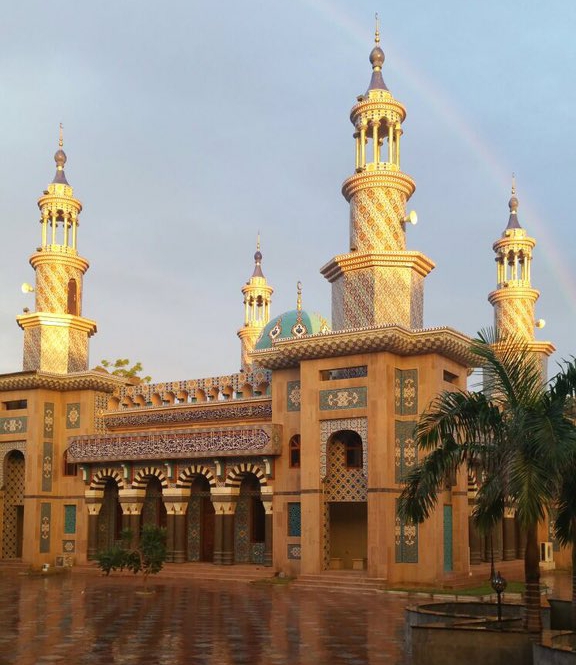
Murtadha Muhammad Gusau is the Chief Imam of Nagazi-Uvete Jumu’ah and the late Alhaji Abdur-Rahman Okene’s Mosques, Okene, Kogi State, Nigeria. He can be reached via: gusauimam@gmail.com or +2348038289761.
This Jumu’ah Khutbah (Friday sermon) was prepared for delivery today, Friday, Shawwal 29, 1444 AH (May 19, 2023)

Comrade Abbas Ibrahim
By all standards, the recent violent invasion of Kano’s bustling GSM Farm Centre Market by suspected political thugs is a dangerous development that must be condemned in the strongest possible terms. What transpired on Monday, April 27, 2026, was not merely an attack on traders and innocent citizens; it was an assault on public peace, economic prosperity, and the very foundations of democratic engagement.
Farm Centre is not just another market. It is one of the largest mobile phone and information technology hubs in Northern Nigeria, attracting traders, investors, and customers from across the country and neighbouring nations. Its vibrancy has made it a critical contributor to Kano’s economy and a symbol of the state’s commercial strength. Any attack on such a strategic economic centre is, by extension, an attack on Kano itself.
The scenes were deeply disturbing. Shops were looted, while vehicles and motorcycles were vandalised, and many innocent people sustained injuries. Traders—many of whom are still struggling to recover from previous devastating fire outbreaks—have once again been thrown into uncertainty, pain, and financial hardship.
Even more troubling is the fact that the Kano Passport Office is located within the vicinity. Such brazen violence near a sensitive federal facility raises serious security concerns and presents an unfortunate image of Kano to both local and international visitors.
Although the politician allegedly linked to the incident has denied involvement, the episode underscores a much larger and more troubling reality: the growing recklessness of political actors and their inability or unwillingness to restrain their supporters.
As the 2027 general elections approach, Kano cannot afford a return to the dark days when political contests were settled through violence, intimidation, and destruction. Democracy thrives on ideas, persuasion, and the ballot—not on thuggery, fear, and bloodshed.
Political leaders must understand that they bear both moral and legal responsibility for the actions of their followers. Silence in the face of violence is complicity, while ambiguity only emboldens criminal elements who exploit political rivalries for personal gain.
While the swift intervention of the police—including the deployment of teargas and the arrest of six suspects—helped restore order, the incident has once again exposed glaring limitations in the security architecture around Farm Centre. The police division is evidently overstretched and unable to respond effectively to large-scale disturbances in such a densely populated commercial area.
This is why the Kano State Government must immediately strengthen the operational capacity of the Kano State Vigilante Group and, more importantly, fully leverage the Kano Neighbourhood Safety Corps.
Established with an initial strength of 2,000 personnel drawn from all 44 local government areas, the Corps was specifically designed to complement conventional security agencies. The law establishing it wisely insulates it from partisan politics, ensuring professionalism, neutrality, and community trust. Under the capable leadership of retired Lieutenant Colonel Aminu Abdulmalik, the Corps possesses the discipline, structure, and local intelligence needed to provide rapid response and preventive security.
The time has come for its strategic deployment to critical economic hubs such as Farm Centre.
Recommendations for Immediate Action
First, all political parties and aspirants must publicly commit to peaceful conduct and take responsibility for the actions of their supporters.
Second, law enforcement agencies must thoroughly investigate the incident and prosecute all those found culpable, regardless of political affiliation.
Third, security presence at Farm Centre should be significantly enhanced through a joint task force comprising the Police, Civil Defence, and the Kano Neighbourhood Safety Corps.
Fourth, the Kano State Government should establish a permanent rapid-response security unit dedicated to protecting major commercial centres.
Fifth, political leaders must invest in civic education, teaching their supporters that elections are contests of ideas, not battles for survival.
Finally, traditional rulers, religious leaders, civil society organisations, and the media must intensify advocacy against political violence and promote a culture of tolerance.
A Test for Kano
Kano stands at a critical crossroads. The state can either allow desperate politicians and criminal elements to drag it backwards or rise above violence and preserve its proud reputation as the commercial heartbeat of Northern Nigeria.
The attack on Farm Centre must serve as a wake-up call. Political ambition must never be allowed to supersede public safety. The livelihoods of hardworking citizens must never become collateral damage in the pursuit of power.
Kano deserves better. Its traders deserve protection. Its democracy deserves maturity.
The journey to 2027 must begin with a firm and collective rejection of political violence in all its forms. Anything less would be a betrayal of the people.
Comrade Abbas Ibrahim writes from Kano and can be reached at abbasibrahim664@gmail.com
Jamilu Uba Adamu
Last week, while writing a tribute to the late Alhaji Ibrahim Galadima, one question kept haunting me: who will fill his shoes?
Kano, with its long tradition of producing great men across every sector—from business and politics to academia and sports—has never failed to replace its icons.
In sports administration, Kano’s roots run deep. At independence, the Premier of the Northern Region, Sardauna of Sokoto, Sir Ahmadu Bello, appointed the late Alhaji Muhammadu Danwawu of Kano as the Northern Region’s sports administrator. Decades later, in 1991, the state produced the Chairman of the Nigeria Football Association, Alhaji Yusuf Garba Ali.
That tradition was sustained by the immense contributions of stalwarts like the late Alhaji Isiyaku Muhammed, the late Alhaji Usman Nagado, and the late Alhaji Abdullahi Abba Yola—men who served the game with distinction and left footprints in administration, mentorship, and institutional growth. Alongside them were other excellent administrators such as Alhaji Tukur Babangida, Alhaji Ibrahim Abba, Dr. Sharif Rabiu Inuwa Ahlan, Bashir Ahmad Maizare, among others.
Now, with the passing of Alhaji Ibrahim Galadima, a pressing question emerges: *who will fill his shoes?*
Galadima was not just an administrator; he was an institution. As a former NFA Chairman, he brought credibility, order, and dignity to Nigerian football during turbulent times. His shoes are large—not merely because of the offices he held, but because of the integrity, courage, and vision with which he led.
Yet, if history is any guide, Kano’s well of leadership has never run dry. From Alhaji Danwawu at independence, to the era of Isiyaku Muhammed and Usman Nagado, through Yusuf Ali in 1991, and down to Galadima in the 2000s, the state has consistently raised men of character to step into moments of transition. The challenge before us is not whether Kano can produce another Galadima, but whether we can create the environment that allows such leaders to emerge and thrive.
The vacuum is real. The legacy is intact. The question remains: who among the next generation will rise to it?
Adamu writes from Kano and can be reached via jameelubaadamu@yahoo.com
Opinion
A Baby in 1956, A Granny in 2026; An Idol in 2096: Abdalla Uba Adamu’s Yesterday is Tomorrow

Prof. Aliyu Barau
Professor Abdalla was barely 11 years old when the 1967 science fiction film, Tomorrow is Yesterday, written by D.C. Fontana, was released. The film explores the possibility of traveling back and forth in time. I chose this caption with the understanding that science has shaped Abdalla’s trajectory in academia. Even as a child, he vigorously pursued science. He would ride his bicycle to the commercial side of Kano to buy books from the Kano-based missionary bookstore—the Challenge Bookshop—whose worn-out structure I once knew along Niger Street.
What exactly happened in 1956, and what connections does he have with that year? This is interesting because some events of 1956 may have shaped Abdalla into who he is today. For instance, anyone close to him knows of his fascination with the Kingdom of Morocco, which gained independence in 1956, just as Sudan did. I am not certain whether the Professor has any strong connection with Sudan; however, I would not be surprised, given his work in neo-Ajamisation scholarship. If you know his passion for popular culture, then you should also know that 1956 marked the rise of Elvis Presley. He made his debut on The Ed Sullivan Show and topped music charts, fueling the rock-and-roll era. If you wonder why Abdalla has ventured deeply into the worlds of media and communication, consider that the world’s first transatlantic telephone cable was commissioned in 1956. And if you admire the way Professor Abdalla writes and speaks English with a Midlands sharpness, you should recall that Queen Elizabeth II visited Kano in 1956. These moments symbolically map his journey through time since his birth in 1956.
Professor Abdalla is already something of a scholarly “grand old figure,” as even the students of his students became professors a few years ago. I often find it difficult to call him merely a professor; he is more of a mallam in the true sense of the word in Hausaland, and even more a mwalimu in the truest sense of Swahililand.
Like him or hate him, Abdalla Uba Adamu remains one of the most genuinely apolitical intellectual vanguards Kano has ever produced. Whether you acknowledge it or not, no position has ever—and will ever—distract him from true scholarship. Agree or disagree, nothing can rob him of his golden joviality. You may tower over him physically, but he will dwarf you intellectually. What is striking about Abdalla’s scholarship is its velocity—like a supersonic missile traveling at Mach 15 (a hypersonic speed roughly equivalent to 18,500 km/h, or 11,500 mph). I have yet to see any of his students come close to matching his intellectual range, even as age and retirement approach him. Allah ya kara lafiya. Truly, in Abdalla, we have a rare scholar.
Personally, I say with confidence that I share a genuine and natural relationship with Professor Abdalla Uba Adamu. With all humility, I can say that this rare scholar holds me in high regard. Whenever I call him and he misses the call, he always returns it, and I leave the conversation uplifted by his humour. Za mu sha hira. I know the people in his good and bad books. Throughout Bayero University Kano, I doubt there is anyone who has taken as deep an interest in my academic progress as Abdalla. I can proudly say I am among the few he trusted to co-author a journal article, even though we come from different disciplines but share common interests. He constantly tracks my progress, often calling to congratulate me: “I have seen your paper on ResearchGate or Google Scholar. I am happy. Please keep working.” Many people do not know how humble and philanthropic Professor Abdalla is, but Allah knows. May Allah reward his hidden deeds and guide him to Jannah. One example is his remarkable act of building a house for a homeless blind man.
In 2006, Professor Abdalla served as the team lead for Celebrating Arts in Northern Nigeria, a project by the British Council and the Prince’s School of Traditional Arts, London. The project culminated in a visit by His Majesty King Charles III, then the HRH Prince of Wales. Abdalla ensured that Nasiru Wada Khalil and I participated fully in the activities, giving us the opportunity to benefit. He stepped aside to create space for us. When the Prince arrived and engaged with us at the British Council, I seized the opportunity to present him with a copy of my book, Environment and Sustainable Development in the Qur’an (with the approval of the British High Commission). I still remember Abdalla telling me, “Kayi daidai; nima da ina da shi, wallahi da na ba shi.” Just imagine—such humility.
At his retirement, social media was filled with tributes celebrating this rare scholar. I am optimistic that by 2096, long after both Abdalla and I are gone, the Hausa world will be idolising and drawing inspiration from his erudition and service to humanity. Even in death, his scholarship will continue to shape the future. One final lesson I have learned from him is that one should be in the university not for money or political positioning. This is a principle he firmly believes in—and one I also uphold.
Abdalla na Allah. Allah ya sa mu cika da imani. Abdalla conquers yesterday and tomorrow.
Prof. Aliyu Barau teaches at
Bayero University, Kano.

Tsakuwa community honours teacher, Nupe man, nine others for development efforts

NCC moves to protect smaller telecom operators, releases draft MVNO business rules

Kano health journalists launch Network to strengthen health reporting, advocacy

NDC House of Representatives aspirant defects to APC in Kano

2027: I will continue distributing job opportunities, says Goro

AGILE Project: Kano awards ₦23.1bn contract for construction of 49 new secondary schools

K-SAFE Co-Chair wins Malala Fund-supported research grant on girls’ education

Max Air reschedules departure date for Kano pilgrims’ Hajj airlift

KASITDA moves to digitise Kano health sector

