
Opinion
Soil, Sweat and Sovereignty: Kano’s New Agricultural Dawn

By: Lamara Garba

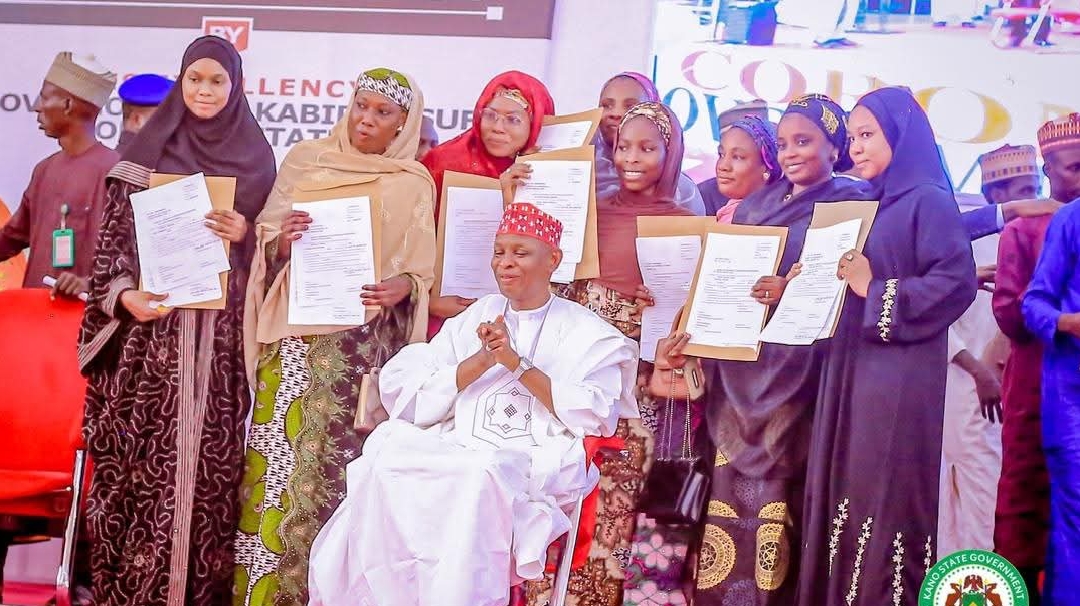
Kano’s destiny has always been tied to the soil. On Monday, 4th August, 2025 that bond deepened as Governor Abba Kabir Yusuf unveiled an army of 1,038 young agricultural extension workers, a new force tasked with reviving farms, feeding families, and fighting hunger across the state.
From the bustling grain markets of Dawanau to the endless farmlands stretching across the savannah, Kano’s lifeblood has always been agriculture. Regrettably in recent years, the song of abundance has been strained by hunger and food insecurity. Nigeria, a country with its growing population, struggles with low productivity, import dependence, and a youth generation detached from farming.
However, Alhaji Abba Kabir Yusuf, the Governor of Kano state has decided to change that narrative.
In a ground breaking ceremony which took place at Coronation Hall, Government House, on Monday, 4th August, 2025 the Governor presented letters of employment to the new recruits under the Kano Agricultural and Rural Development Authority (KNARDA).
The governor who described the exercise as a turning point. “You must shun absenteeism, laziness, misconduct, and any form of corruption. As frontline ambassadors of agricultural transformation, your conduct and commitment will directly influence the success of our efforts to revitalize agriculture and empower rural communities across the state,” he told them.
Alhaji Abba Kabir Yusuf while reaffirming the commitment of his administration towards the development of the state described the new officers “change agents” who will guide farmers with modern practices, connect them to improved inputs, and offer innovative solutions. “We are building a new generation of field workers who will bring modern practices, improved inputs, and innovative solutions to our farms, our cooperatives, and our communities,” he declared.
Indeed, this policy comes at a time when food prices soar nationwide. The National Bureau of Statistics recently reported food inflation above 40% in many areas, threatening millions of households.
For Kano, with its history as the North’s food basket, agriculture is more than an economic sector, it is survival. “This initiative is to enhance food security and raise household incomes,” said State Commissioner of Agriculture, Dr. Danjuma Mahmoud.
Chairperson of the Civil Service Commission, Hajiya Ladidi Ibrahim Garko, called it a “giant stride” in strengthening the state’s agricultural workforce.
For the new recruits, the gesture is life-changing. “We are thankful to the governor for believing in us. We assure you that we will do our best to enhance agricultural production in the state,” said Saminu Sani Garba, who spoke on behalf of the beneficiaries.
Observers and other political analysts say the recruitment could become a model for the nation. While federal promises on agricultural transformation often collapse, Kano’s focus on human capacity stands out. It is not just about distributing fertilizers or importing food, but about training people who can walk with farmers season after season.
With this policy in place, Kano has now become the leading state in Nigeria in terms of extension manpower. More importantly, it has restored dignity to farming by placing knowledge at the center of production.
It should be noted that agriculture, in Kano’s history, is more than economics, it is identity. For centuries, farmers here have endured droughts and floods, built irrigation schemes, and sustained markets that fed nations. Undoubtedly, farming teaches patience, faith, and humility. Perhaps, by investing in extension workers, Governor Yusuf is reviving this philosophy of resilience.
Every seed planted is an act of faith. Every harvest is a lesson in dignity. Perhaps, the 1,038 officers are more than names on a payrollvthey are the hands of change, the bridges between tradition and modernity, the quiet teachers of rural communities.
Therefore, as Kano begins this new journey, one truth stands clear: food security is not charity it is sovereignty.
Therefore, it is gratifying to note that any society that can feed itself certainly, it cannot be enslaved by hunger.
Interestingly, the story of Kano’s agricultural rebirth is still unfolding. But in its first chapter lies a lesson for Nigeria that leadership is not about slogans but about seeds, not about promises but about planting.
To the young officers, the governor’s message lingers: the task is great, but so is the reward. In your hands lies the power to change how Kano eats, how Kano lives, and how Kano dreams.
And so, let the new creed be simple: Every seed is hope. Every harvest is dignity. And every hand that tills the soil tills the future of Kano.
Lamara Garba, is a Political Analysis, writes from Kano

Opinion
State Police in Nigeria: Understanding the true position of the proposed constitutional framework
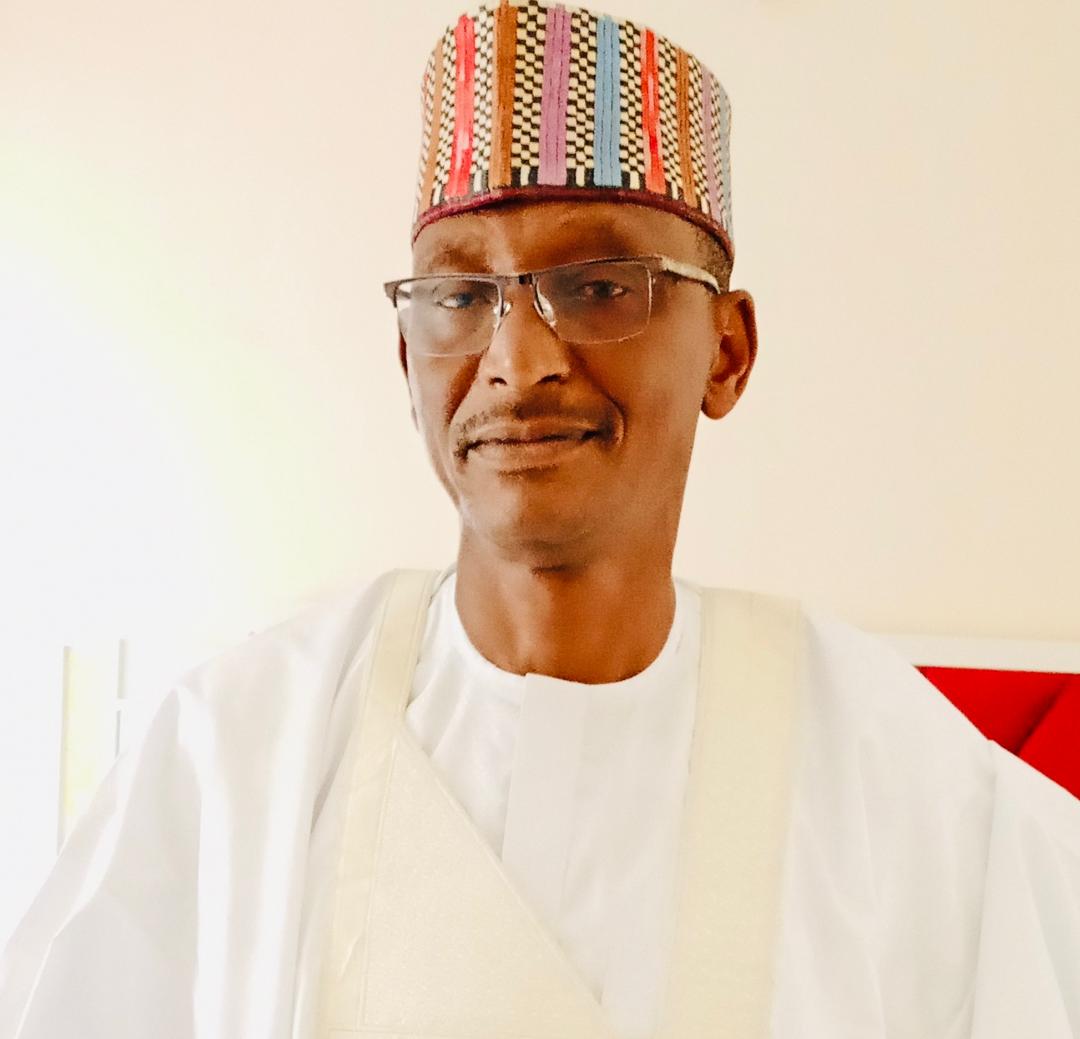
DIG Mohammed Usaini Gumel (Rtd.)
The renewed national debate on state policing has sparked intense discussions. Supporters see it as a solution to Nigeria’s worsening security challenges. Critics, however, fear political abuse and threats to national unity. Given these differing views, it is important to understand the true constitutional position of the current proposals before the National Assembly.
An examination of the *Constitution of the Federal Republic of Nigeria (Sixth Alteration) Bill, 2026 (SB. 1055)*, along with the Policy and Legal Advocacy Centre (PLAC) analysis of the earlier House Bill (HB. 617), shows that the proposed framework is neither a full transfer of policing powers to the states nor a continuation of the current centralized system. Instead, it introduces a cooperative federal policing model.
This model balances state autonomy with national standards and constitutional safeguards.
The first key point is that the Federal Police will not be abolished. The proposal creates a Federal Police Service while allowing State Police Services to operate alongside it. The Federal Police will continue to handle federal responsibilities, including counter-terrorism, cybercrime investigations, border security, organized crime, inter-state offences, and the protection of federal institutions and assets.
It is also important to note that state policing is not compulsory. States that lack the financial or institutional capacity to establish their own police services can continue to rely entirely on the Federal Police Service. In simple terms, the amendment gives states a choice, not an obligation, to establish their own police organizations.
The proposed framework sets strict conditions before a State Police Service can begin operations. A state must pass its own enabling law, establish the required institutions, and obtain certification confirming that it meets nationally defined minimum standards.
These standards will cover recruitment, training, vetting, discipline, firearms management, the use of force, accountability systems, and criminal information management.
One of the most debated issues is the possibility of federal interference in state policing. The Senate Bill addresses this concern by limiting federal intervention to exceptional situations. Such intervention may occur where there is an actual or imminent breakdown of public order. It may also occur if a governor requests assistance, if a State Police Service becomes unable to function, if there is evidence of widespread violations of fundamental rights, or if threats extend beyond state borders and affect national security.
Any federal intervention must be temporary, necessary, and proportionate. It must also be subject to judicial review. The President must authorize it in writing, and notice must be given to the Governor, the State House of Assembly, the National Police Council, and the National Assembly. In addition, such intervention cannot dissolve a State Police Service or suspend democratic institutions, except as permitted under existing constitutional provisions.
The framers of the Bill have also addressed concerns about possible misuse of State Police Services by governors. The proposed safeguards expressly prohibit governors from directing State Commissioners of Police to target political opponents, political parties, associations, or groups outside the provisions of the law.
Commissioners who believe a directive is unlawful or inconsistent with national standards may seek a review through the appropriate Police Service Commission or the courts.
To strengthen institutional independence, the proposed amendments provide security of tenure for both the Inspector-General of Police and State Commissioners of Police. Their removal would require valid reasons, a fair hearing, recommendations from the National Police Council, and approval by a two-thirds majority of the relevant legislature.
These measures reflect widely accepted international standards for democratic policing.
Another important feature of the framework is the clear limitation on federal control over State Police Services. While the National Assembly will establish national minimum standards, it will not exercise routine control over appointments, promotions, transfers, suspensions, dismissals, or operational decisions within State Police Services. The only exception is during constitutionally approved interventions.
This approach preserves state autonomy while ensuring consistent professional and ethical standards nationwide.
The PLAC analysis correctly notes that the proposed model does not create a fully independent state policing system. Instead, it incorporates elements of federal oversight to address concerns relating to funding, accountability, human rights protection, and potential political misuse. The objective is to decentralize policing without weakening national unity or undermining the constitutional order.
Viewed objectively, the proposed amendment seeks to balance local responsiveness with national integrity. It aims to bring policing closer to communities while maintaining safeguards against abuse. It also protects the shared security interests of the Federation.
In essence, Nigeria is not moving toward two competing police systems. Rather, it is moving toward a cooperative federal policing arrangement. This model recognizes the need for local control of security issues while preserving constitutional mechanisms that safeguard democracy, human rights, and national unity.
The success of this initiative will depend not only on constitutional provisions but also on the strength of institutions, adherence to professionalism, and the political will to uphold the rule of law. Like any major reform in a democratic society, state policing should be judged not only by fears but also by the safeguards it contains and the practical benefits it can bring to the security and welfare of Nigerians.
DIG Mohammed Usaini Gumel (Rtd.).
By Jamilu Uba Adamu
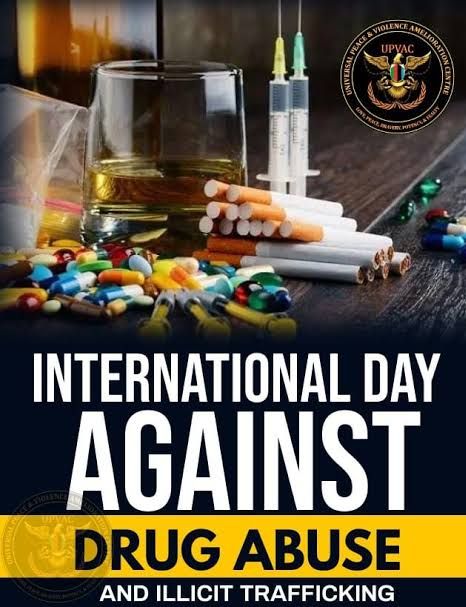
Since 1987, June 26 has been designated by the United Nations as the International Day Against Drug Abuse and Illicit Trafficking—a day set aside to raise awareness about the dangers of drug abuse and its devastating effects on individuals and society. This year’s theme, “The World Drug Problem: Persisting Issues, New Challenges, Innovative Responses,” reminds us that while the fight against drugs continues, our strategies must evolve.
Simply put, the drug problem is still with us. New drugs continue to emerge, and we must respond with innovative solutions, including the use of sports to keep our youths engaged and productive.
Nigeria’s greatest resource is not oil; it is its youth. The energy, creativity, and determination of young people will determine whether we build a stronger nation or lose a generation. One of the most effective tools for channeling that energy positively is sports—but only when it is built on discipline.
Sports is more than playing football on weekends or sprinting on the track. It teaches valuable life lessons. When a young person wakes up at 5:00 a.m. for training, they learn punctuality. When a team loses and returns to train harder, they learn resilience. When eleven players on a pitch follow the instructions of one coach, they learn respect for authority, teamwork, and discipline.
Here in Kano, the effects of drug abuse are both painful and visible. Drug abuse is fueling fadan daba, phone snatching, and other violent crimes across our streets and communities. The truth is simple: idle hands are the devil’s workshop, while busy feet on the pitch have little time for crime or drugs.
Talent without discipline is wasted talent. Many of our youths possess enormous potential, but without discipline, that potential often turns into frustration. Discipline means:
- Self-control — saying “no” to peer pressure, drugs, and violence.
- Consistency — training even when no one is watching.
- Respect — for rules, opponents, coaches, and oneself.
A boxer who cannot control his temper outside the ring will never become a champion inside it. A footballer who skips training will never wear the national jersey. Discipline is the bridge between potential and achievement.
In our communities, we see too many young lives derailed by drugs. The equation is clear: idleness + bad company + lack of purpose = drug abuse. Sports helps break that cycle.
Let us encourage our youths to choose the pitch over the street corner and the “jungle.” Let them choose training over idleness. Let discipline be their guide in life, just as it is in sports.
To parents, schools, and government: invest in sports facilities and mentorship programmes across our 44 Local Government Areas. Every playing field we build in Kano is a prison we may never need. Every disciplined athlete we nurture is a future leader we secure.
If we get this right, Kano, with its vibrant and youthful population, will not only win trophies at national sporting events but will also reclaim its promising young people from the grip of drug abuse and crime.
Mr. Jamilu Uba Adamu is the Officer-in-Charge of Sports, NDLEA Kano Strategic Command.
He can be reached via jameelubaadamu@yahoo.com.
Urges electorate to remain peaceful, prayerful, and law-abiding
By Lamara Garba
The Governor of Kano State, Alhaji Abba Kabir Yusuf, has declared that his political future, including the question of re-election in 2027, rests entirely in the hands of Almighty Allah, stressing that political power is neither a matter of life and death nor something that any individual can permanently give or take away.
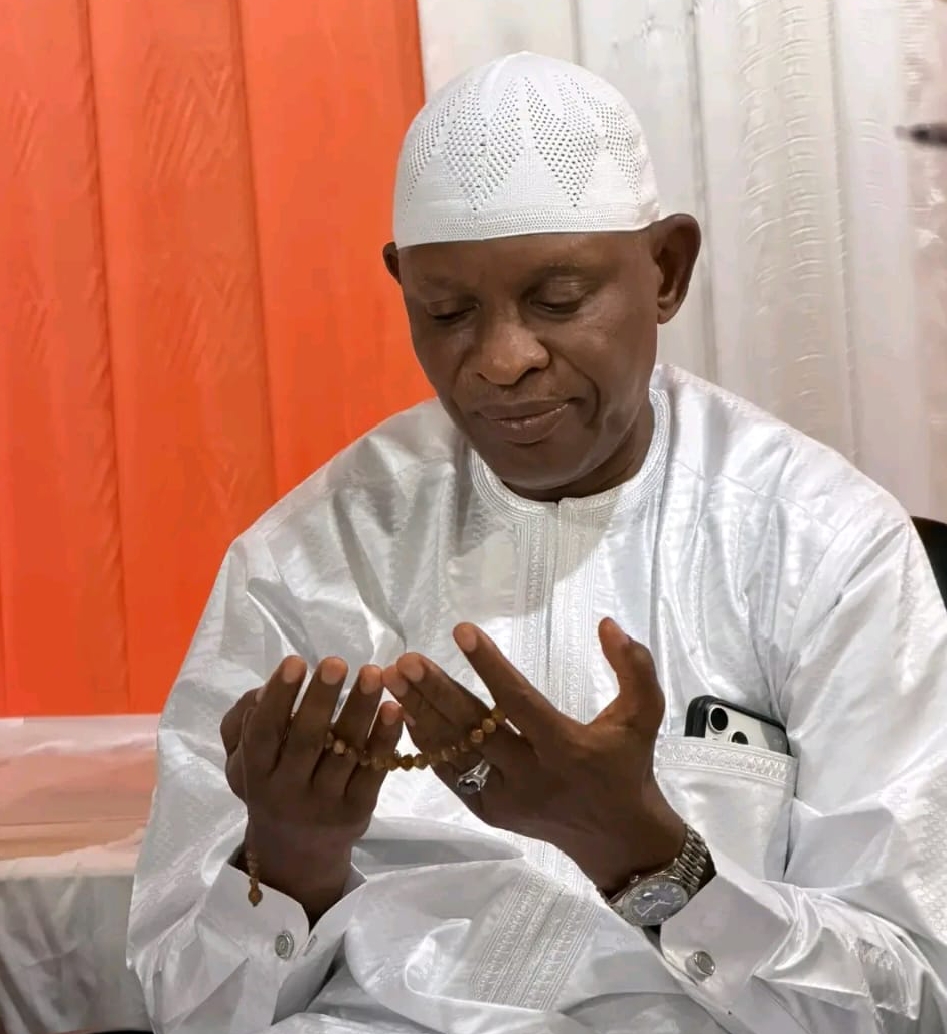
Governor Yusuf made the remarks while addressing Kano pilgrims and Hajj officials in Makkah during a Sallah visit on Wednesday.
Speaking before hundreds of pilgrims, the Governor quoted verses from the Holy Qur’an, reminding the faithful that ultimate authority belongs to Allah alone, who grants power to whom He wills and withdraws it whenever He pleases.
According to him, while politicians and their supporters often become consumed by political calculations and permutations, true believers understand that leadership is a divine trust bestowed by Allah at His appointed time.
“Power belongs to Allah alone. He gives leadership to whom He wills and takes it away from whom He wills. No human being can stop what Allah has destined, and no one can impose what Allah has not ordained,” Governor Yusuf said.
The Governor noted that he remains completely submissive to the will of Allah regarding future political developments, including his possible re-election, insisting that his focus remains on serving the people of Kano State diligently rather than becoming distracted by political anxiety.
He stressed that elective office should never be viewed as a do-or-die affair, adding that public service is meaningful only when carried out with sincerity, the fear of God, and a commitment to the welfare of the people.
“Leadership is not a matter of life and death. What matters most is serving humanity, discharging one’s responsibilities faithfully, and leaving the rest to Allah. Whatever Allah decrees will surely come to pass,” he stated.
Governor Yusuf, however, urged Kano citizens to remain politically conscious and actively participate in the democratic process by ensuring that they possess valid voter cards ahead of future elections.
He called on those whose voter cards require renewal to do so promptly and encouraged eligible citizens who have not yet registered to take advantage of the registration exercise before it closes.
The Governor said voter registration remains a civic responsibility that enables citizens to exercise their constitutional right to choose leaders and contribute to the growth and development of society.
He also appealed to the pilgrims to continue praying for peace, unity, stability, and prosperity in Kano State and Nigeria as a whole.
Observers believe Governor Yusuf’s remarks reflect growing confidence within his administration following what many regard as remarkable achievements recorded over the past three years in education, healthcare, infrastructure development, agriculture, human capital development, and women and youth empowerment.
The Governor maintained that while political debates and speculations may continue, the final decision on who occupies positions of authority rests with Almighty Allah, whose decree cannot be altered by any human effort.

Gov. Yusuf appoints Dr. Aminu Magashi co-chair of Kano anti-drug abuse task force

Gov. Yusuf tasks media on truthful reporting, patriotism

Kano launches free 48-hour emergency treatment scheme for accident victims, other critical cases

K-SAFE hails Gov. Yusuf as Kano tops ECOWAS education spending ranking

Abdulaziz unveils project inspection initiative, trains APC social media inflluencers at Arewa media summit
Kano ranks best in ECOWAS on education spending index
Kano emerges top beneficiary as World Bank rewards states with $27m for reforms

Kano recruits over 16,000 teachers, begins 10-year education reform plan

Kano delegation participates in international labour conference in Geneva

