
News
Former APC governorship aspirant Haske reaffirms commitment to service, youth empowerment


A former governorship aspirant of the All Progressives Congress (APC) in Adamawa State, Abdulrahman Bashir Haske, has reaffirmed his commitment to public service and youth empowerment, declaring that his political aspirations are driven by a desire to create opportunities and improve the lives of ordinary citizens.

KANO FOCUS reports that in a Democracy Day message released on Wednesday, Haske said his journey into public life was not motivated by personal ambition but by a longstanding commitment to entrepreneurship, philanthropy, and community development.
According to him, years of engagement with communities across Adamawa State have exposed him to both the immense potential of the people and the challenges limiting their progress, reinforcing his belief that leadership should focus on delivering tangible benefits rather than mere political rhetoric.
Haske noted that through his support for education, youth entrepreneurship, vulnerable groups, and economic empowerment initiatives, he has consistently demonstrated a commitment to service long before expressing any political ambition.
The businessman and philanthropist also emphasized the need for greater youth participation in governance, arguing that young Nigerians possess the talent, creativity, and energy needed to accelerate national development but remain underrepresented in decision-making processes.
He said leadership should reflect the demographic realities of the country, stressing that young people are not only the leaders of tomorrow but also critical stakeholders in today’s governance.
Speaking on his political engagements within the APC, Haske said he had consistently advocated peaceful participation, unity, and constructive political discourse, particularly during the build-up to the party’s 2027 governorship primary election in Adamawa State.
“Politics should serve as a platform for solutions, not division; for service, not self-interest,” he stated.
The former aspirant maintained that electoral outcomes do not diminish an individual’s dedication to public service, adding that his commitment to the APC remains unwavering and rooted in his belief in progressive leadership, democratic values, and national development.
He urged his supporters, especially young people, not to be discouraged by temporary setbacks, describing political struggles as part of a broader journey toward meaningful change.
Addressing the youth, Haske called on them to become active participants in shaping the future of their communities and the nation by engaging in governance, entrepreneurship, innovation, and civic activities.
He encouraged eligible citizens to register to vote, participate in elections, organize within their communities, and contribute ideas that can drive national development.
According to him, Nigeria’s future depends largely on the energy, resilience, and determination of its young population.
Haske further pledged to remain committed to serving the people of Adamawa State and contributing to Nigeria’s progress, while also supporting the stability and electoral success of the APC.
He expressed optimism that with collective effort, the country could build a future defined by opportunity, inclusion, prosperity, and hope.
“History ultimately honours not those who merely sought power, but those who used their influence to uplift and transform lives,” he said.






Ibrahim Khalil
The Kano State Police Command has arrested eight suspects in separate operations targeting drug peddling and thuggery in Panshekara and Kunchi/Ghari Local Government Area.
KANO FOCUS reports that the command disclosed this in a statement issued on Thursday by its spokesperson, CSP Abdullahi Haruna Kiyawa, on behalf of the Commissioner of Police, Ibrahim Adamu Bakori.
According to the statement, the operations, conducted on September 9, 2026, were part of the command’s intelligence-driven efforts to tackle drug abuse, thuggery and violent crimes across the state.
It said operatives of the Surveillance Team attached to Panshekara Police Division, acting on credible intelligence at about 2:30 p.m., intercepted eight suspects, including a 21-year-old man identified as Samson Yakubu of Samegu Quarters, at a suspected criminal hotspot.
A search of the suspects reportedly led to the recovery of 15 Pregabalin capsules, five Diazepam tablets, 10 Exol tablets and some quantity of dried leaves suspected to be Indian hemp.
The police said the suspects were in custody and undergoing interrogation, while investigations were ongoing to establish the source of the suspected illicit drugs and identify other members of the alleged syndicate.
In a related operation conducted between 1 p.m. and 9 p.m. the same day, operatives of the Kunchi/Ghari Division carried out a coordinated market patrol and raid at Matanfada Market.
The command said the area had been identified as a place where youths allegedly intimidate traders and residents during market sessions.
Five suspects were arrested during the operation. They were identified as Abdullahi Isah of Dustin; Haruna Isah of Daqarawa Village; Habu Badamasi of Dan Taimu Village; Gambo Ya’u of Kura Village; and Abubakar Dahiru of Farau Village.
The police said investigation was ongoing to identify and arrest other suspected accomplices, while exhibits recovered during the operation had been taken into custody as evidence.
CP Bakori commended the operatives for what he described as their professionalism and swift response, assuring residents that the command would sustain its operations against drug abuse, thuggery and other violent crimes.
“In line with the IGP’s policing vision and our mandate to ensure a safe and secure Kano, we will continue to be proactive,” the commissioner said.
“We are sending a clear message to criminal elements that Kano State will not be a breeding ground for their activities.”
The command also appreciated members of the public, community leaders and vigilante groups for providing information that aided the operations.
It urged residents to remain vigilant and report suspicious movements or activities to the nearest police station.
The command said all suspects would be charged to court after the conclusion of investigations.
Nasiru Yusuf Ibrahim
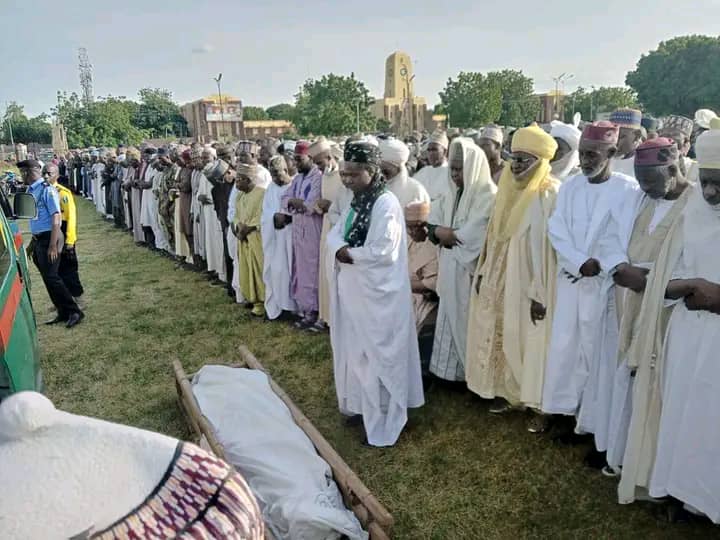
The funeral prayer for the late Shehu Kabir Bayero, Barde Kerarriya of Kano and District Head of Dorayi, was held on Thursday evening at Kofar Kudu, Kano Emir’s Palace.
KANO FOCUS reports that the prayer was led by the Chief Imam of Khamsus Salawati Mosque, Kofar Kudu, Malam Bello, and attended by hundreds of people from different parts of Kano State.
Among those who attended were the Secretary to the Kano State Government, Alhaji Umar Faruk; representative of the Emir of Kano, Matawallen Kano, Alhaji Aliyu Ibrahim Matawalle; Chief of Staff to the Kano State Government House, Dr Sani Wali; as well as district heads and members of the Muslim community.
Shehu Kabir Bayero died in a hospital in Egypt following a period of illness. He is survived by his wives, children and other relatives.
Until his death, the late Bayero served as Commissioner of Police in Gombe and Osun states before retiring from the Nigeria Police Force.
Following his retirement, the late Emir of Kano, Alhaji Ado Bayero, appointed him as the Barde Kerarriya of Kano and District Head of Takai Local Government Area after the death of his father, the late Kabir Bayero, an elder brother of the former emir.
He later served as District Head of Gwarzo.
Due to his wealth of experience in security matters, the current Emir of Kano, Khalifa Muhammadu Sanusi II, subsequently reassigned him as District Head of Dorayi, where he was expected to contribute to the sustenance of peace and security in the area.
The late district head was remembered for his service to the state and his experience in security and traditional administration.
May Allah forgive his shortcomings, have mercy on his soul and grant him Jannatul Firdaus. Ameen.
Nasiru Yusuf Ibrahim
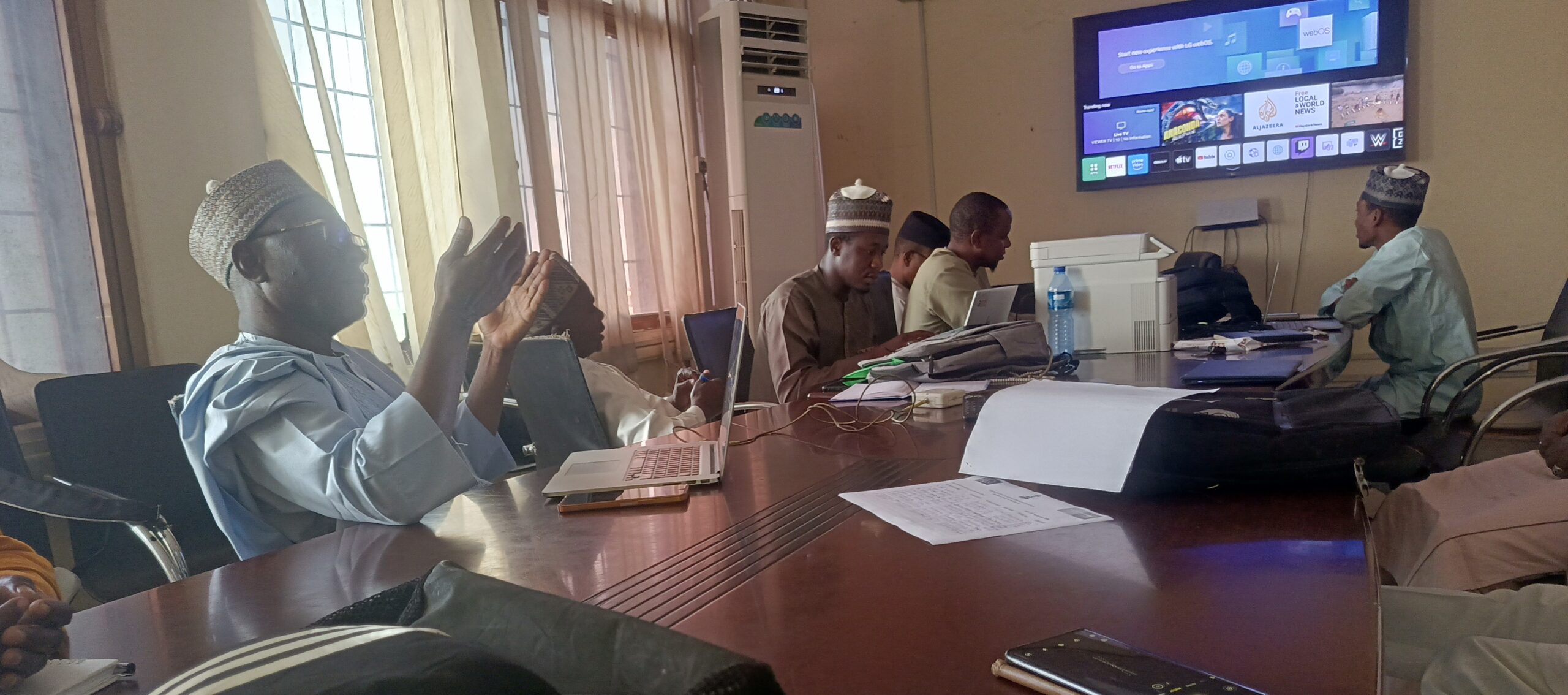
The Kano State Ministry of Education, with support from the United Nations Children’s Fund (UNICEF), has held a planning meeting on the implementation and effective utilisation of the Nigeria Learning Passport (NLP) in the state.
KANO FOCUS reports that the meeting brought together relevant stakeholders from various ministries, agencies and development partners working in the education sector.
According to Malam Naziru Sirajo, deputy director EMIS and statistics in the Ministry of Education, the meeting was aimed at reviewing the current status of the Nigeria Learning Passport in Kano and developing a coordinated plan to strengthen its implementation, content utilisation, course completion, monitoring of learners’ progress and certification.
The Nigeria Learning Passport is a digital learning platform designed to provide Nigerian children and young people with access to curriculum-aligned educational content, including lessons, learning materials and assessments.
The platform is also designed to support learning continuity, including for learners facing limited or intermittent internet connectivity, while providing teachers and education stakeholders with digital resources to complement classroom instruction.
In Kano, the initiative is expected to strengthen awareness and utilisation of digital learning, while building the capacity of master trainers and technical teams to support schools, teachers and learners in using the platform effectively.
The effective utilisation of the Nigeria Learning Passport is expected to expand access to quality digital learning resources, promote independent learning, strengthen digital literacy and support improved learning outcomes and greater equity in access to educational opportunities.

Kano Police Arrest Eight in Drug, Thuggery Raids

Funeral Prayer Held for Late Shehu Kabir Bayero

Kano holds planning meeting on implementation of Nigeria learning passport

Kwankwaso, Gov Yusuf, Amnesty International Condemn Killing of Ibrahim Khalil Dan Shagamu

Kano Police arrest two suspects over death of Ibrahim Khalil Danshagamu

Kano State Out-of-School Children Survey Report 2026: From Evidence to Impact — A Roadmap For Educational Development

Kano schools to resume Sunday for 2026/2027 academic session

From Grade Level 03 to Director: A 35-Year Journey of Resilience and Service

Justice Abdullahi Mahmud Bayero of Court of Appeal Dies in Egypt

