
Headlines
Opinion: Ese Oruru: A Post-Script


Dr. Hakeem Baba-Ahmed
“If you want to know the end, look at the beginning.”–African proverb
A little over four years ago, I wrote the material below in this paper.
It was intended to speak against a national hysteria being fired by our poisonous national patents of ethnic and religious stereotypes and prejudices.
I have since followed this matter even when it threatened to disappear under our penchant for finding new causes to fight over.

Last week, there was a major development around the story.
First, though, please read my comments on the matter.
“Any responsible parent of a girl of fourteen that disappears and is then reported to be with an unknown person hundreds of miles away from home will be beside themselves with worry.
“If they also hear that she has changed her religion and is planning to marry the person responsible for her disappearance, their concerns will deepen.
“They will do everything to trace the girl and utilise every available source of redress and relief to retrieve her and get justice.
“If they meet their daughter, and then encounter difficulties in retrieving her from any quarter, they will raise their voices to the high heavens in protest.
“Everyone who hears the side of the parent’s story will line up in their support.
This is what all Nigerians have done in support of the demand of the parents, relations and the community of 14 year old Ese Oruru for her return to her home in Yenagoa, Bayelsa State from a village in Kano State where she has been for the last few months.
This universal support behind the return of Ese to her home is the only peg on which you could hang some sort of consensus.
Ese’s reported ill-advised elopement with a young man from Kano is presented as abduction, forceful detention, and conversion to Islam in many versions.
Sloppy handling and laxities in the operations of institutions with responsibilities to protect the weak and vulnerable are interpreted in other quarters as high level collusion to violate the fundamental and other rights of a Nigerian minor.
A saga that has been active for months, with many stops and gaps substantially outside public glare suddenly assumed the status of a national scandal with all the trappings and muck of our politics.
A child everyone should look at with responsible sympathy suddenly became the source of the rediscovery of all that is wrong with our politics and other values as a nation.
Ese was, a few months ago, one among millions of Nigerian children from whom you will buy pure water or snacks without a second look.
Today, she is at the center of an almighty row about faith, cultures and damaging politics.
Long after this dust is settled, this child will deal with the effects of our quarrels over her.
Whether she is a victim of childish impetuousness or adult abuse and cynical manipulation is not likely to matter.
Collectively, we would have further injured a child that ought to have been in school learning to be a responsible adult, with the support of her parents and community.
There are quite possibly many angles to this sad story that would have been permanently drowned by indignation and outrage from just about everyone who has scores to settle, or a cause to advance.
A range of persons and interests from the Emir of Kano to all Muslims and many northerners are likely to feel hard done because their status and faith are being portrayed in very bad light.
They will attempt to distance their faith from abduction, forceful conversion or marriage without consent of parents, to no avail.
Palace officials, police and community leaders will roll out all manner of evidence that they played their parts.
No one will care, after the devastating conclusions of social media warriors has reached many ears, galvanising opinions in support of a child who desperately needs to be freed from abduction and forced conversion and impending marriage.
Ese’s sojourn has attracted to the poor child an entire army of sympathisers, many of whom she does not need, and they do not deserve mention.
Minister of women affairs says Ese is a wake up call to improve the protection of women and child rights.
Hashtags in support of Ese’s return have been gaining support in social media.
Traditional and stereotype insults against people, regions and religions are being unearthed, with reminders of child marriages by prominent northerners, the Chibok girls, sponsored pregnancies, commercial baby factories and entire communities living off remittances from prostituting daughters in Europe filling all social media spaces.
In this bedlam, which says more about how we treat each other as adults than how we relate to our young, there are a few islands of sanity.
The governor of Bayelsa State went out of his way to engage governor of Kano State and the Emir of Kano, and publicly commended both for the roles they played in reuniting Ese with her parents.
The Kano Emirate Council released a measured statement distancing the Emir and the Emirate Council from accusations that they colluded in keeping Ese in Kano State, away from her parents.
On the other hand, the legion of shrill joiners piling on sensation and crude opportunism reminds us all that we are stuck in some deep gutters as far as inter-community relations go.
The Nation newspaper screamed an editorial that should lose it a substantial amount of respect.
It said: “The story which was, at press time still developing, has all the evil trappings of molestations, child abuse, sexual deviance, abduction, religious coercion, constitutional violation, a network of shadowy big men manipulating the law…”
This comment will force all people with a hint of civilised humanity to grit their teeth and read the trademark drivel rolled out routinely by Femi Fani-Kayode because it appears that he shares the same space with this newspaper on this matter.
Forgive me for giving this man who clearly needs help a few minutes of your time, but this is part of Fani-Kayode’s contribution on this matter: “The truth is that this is not a love story about two inseparable young people: it is rather a sad and tragic tale about pedophilia, child abduction, kidnapping, human trafficking, slavery, rape, impunity, wickedness, religious bigotry and ritual sex.
“Worse still, it is an unfolding drama at the end of which Emir Sanusi Lamido (sic) may well have a case to answer.
“The truth is that the little girl would have been raped over and over again and she may well have Acquired Immune Deficiency Syndrome (AIDs), Vesico vaginal Fistula (VVF) or some other strange sexual disease by now”.
There must be people who enjoy this type of delusion in print, because newspapers give it space.
But Ese does not need it.
What she needs is a quiet and productive reunification with her family, and a lot of time to sort out deeply personal issues.
What we need as a nation is to move on and find other grounds for a quarrel.
Everyone involved in this sensitive issue should examine their roles, or have them examined by those who police accountability.
Where amends or restitutions need to be made, they must be made.
Ese will develop into an adult and decide what she wants to do with her life.
The best way we can help her reach that stage without further damage is to create appropriate distance between her life and our many preferences and prejudices.”
Since this piece was published, Ese was separated from Yinusa Dahiru (alias Yellow) February 2016 and taken home with a five months-old pregnancy.
She delivered a girl three months later.
Yinusa was arrested and detained in prison custody, and has been on trial until last week when he was sentenced to 26 years in prison.
He had pleaded not guilty to all charges.
A newspaper that had vigorous championed Ese’s case quoted her father as saying that an attempt was made to steal the baby at the Police Officer’s Mess in Yenagoa where mother and child were staying.
The same paper interviewed the father in 2018 during which he said all the promises for scholarship and support made by the Bayelsa and Delta State governments for Ese’s education were not fulfilled.
She is now in SS3, living away from, but being supported only by her father.
In all likelihood, Yinusa will appeal.
But the court of sectional opinion is already split right down the middle.
Champions of Ese’s case who paid for her lawyers hail his conviction as rightful vindication.
His sympathisers say he has been abandoned and betrayed by his own people who, in addition cannot raise their voices at the reported cases of Hausa children routinely stolen and taken to the East, culturally re-processed and converted.
Yinusa and Ese have played their roles as pawns, and they will continue to remind us that in most of our fights, there are no winners.
This, however, does not stop us fighting in filth.

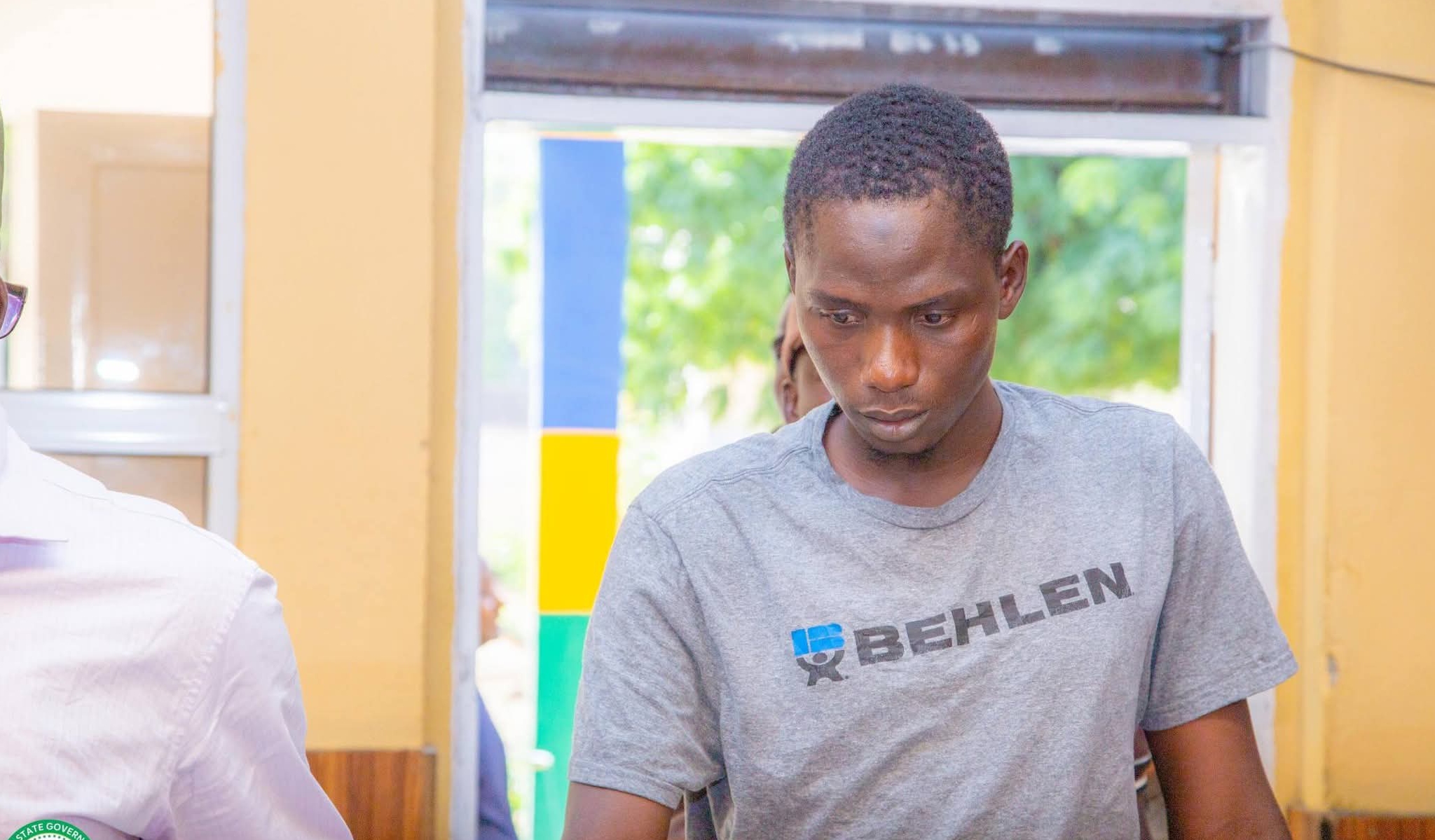
Suspect returned to Kano to face investigation, prosecution
Nasiru Yusuf Ibrahim
The Kano State Multi-Agency Task Force on Drug Abuse and Illicit Trafficking has arrested a suspected gang leader and sponsor, Ishaq Lawan Ibrahim, popularly known as Malam Keya, in Port Harcourt, Rivers State.
KANO FOCUS reports that the 27-year-old suspect, from Yelwa in Dala Local Government Area of Kano State, is accused of sponsoring violent gang clashes that have claimed lives and heightened insecurity in parts of the state.
The task force disclosed this in a statement, saying the suspect was arrested following intelligence-led operations after allegedly fleeing Kano as security operations against gang violence intensified.
According to the statement, operatives tracked him to Port Harcourt and arrested him in an operation led by the task force’s Head of Operations, CSP Bashir Gwadabe. He has since been returned to Kano.
The task force alleged that Malam Keya played a leading role in orchestrating and financing hoodlums involved in violent attacks in Dala and other affected communities.
The areas reportedly affected by the gang violence include Jakara, Madigawa, Yalwa, Sanka, Kul Kul, Dogon Nama, Kukar Bulukiya, Dala, Shatsari and Dandalin Turawa.
Confirming the arrest, the task force chairman, Barr Muhuyi Magaji Rimin Gado, said the operation demonstrated the agency’s determination to pursue suspected sponsors of violence beyond Kano State.
“Let me assure you that those who bankroll violence should know that no distance, and no hiding place, will protect them. This arrest is only the beginning. We will not rest until peace is fully restored,” he said.
The task force said the suspect remained in custody for further investigation and would be prosecuted upon the conclusion of the investigation.
It added that its operations would continue in accordance with the law, with all suspects entitled to due process.
The agency also pledged to sustain efforts to dismantle criminal gangs, identify their alleged sponsors and disrupt drug supply networks linked to criminal activities.
It urged residents, community and religious leaders, parents and youths to support security efforts by reporting suspicious persons and activities, monitoring their neighbourhoods and discouraging young people from being recruited into criminal gangs.
The task force described public cooperation as essential to restoring peace and security across the state.
It also acknowledged the support of the Kano and Rivers state police commands and other law enforcement agencies in the operation.
Nasiru Yusuf Ibrahim
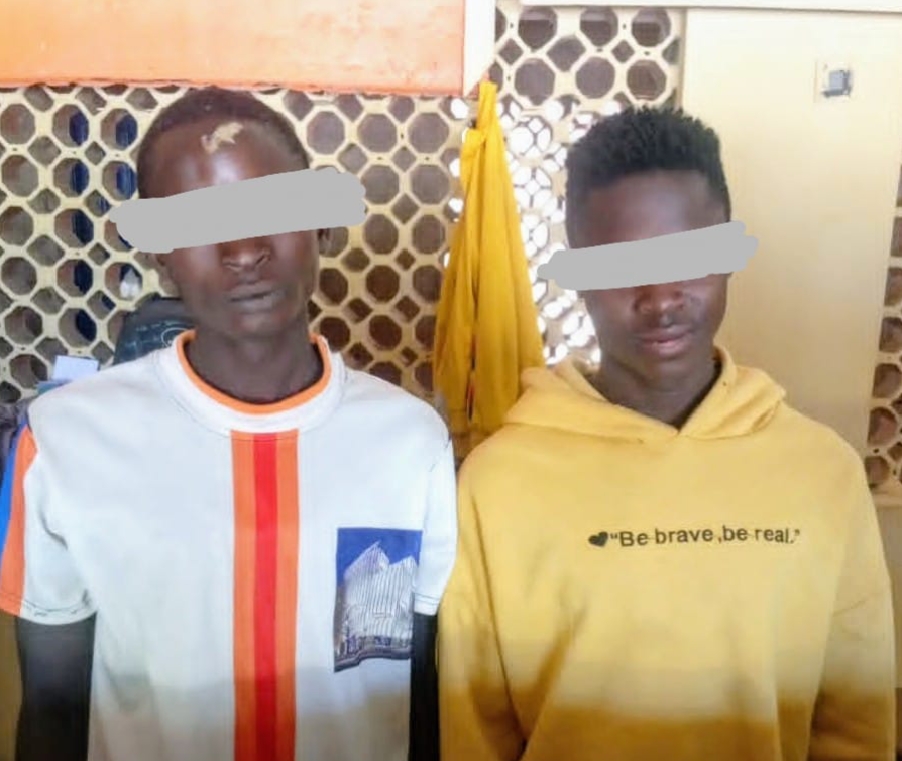
The Kano State Police Command has foiled an alleged kidnapping plot in Gezawa Local Government Area and arrested two 20-year-old suspects over threats to abduct a village head.
KANO FOCUS reports that the suspects, identified as Aliyu Naziru Garba and Bashir Alhasan, were arrested following intelligence-led operations by police operatives attached to the Gezawa Divisional Police Headquarters.
The command disclosed this in a statement issued on Wednesday by its spokesperson, CSP Abdullahi Haruna Kiyawa.
According to the statement, the incident was reported on October 26, 2026, at about 1:30 a.m. by the village head of Bangare, Mallam Idris, who told the police that he had received a threatening phone call from an unidentified person on October 24 at about 9:33 p.m.
The caller allegedly threatened to kidnap him.
Following the report, police operatives launched a follow-up operation, which led to the arrest of the two suspects.
“The suspects have confessed to the commission of the crime,” the statement said, adding that investigations were ongoing and the suspects would be charged to court upon completion.
The Commissioner of Police in Kano State, Ibrahim Adamu Bakori, commended officers of the Gezawa Division for their swift and professional response.
Bakori reiterated the command’s zero-tolerance stance on criminal activities and said the operation aligned with the policing vision of the Inspector-General of Police, Olatunji Rilwan Disu, which prioritises intelligence-led and technology-driven policing, professionalism and proactive crime prevention.
The police urged residents to remain vigilant and report suspicious persons or movements to the nearest police station.
The command also provided the following emergency contact numbers for reporting security concerns: 08032419754, 08123821575 and 09029292926.
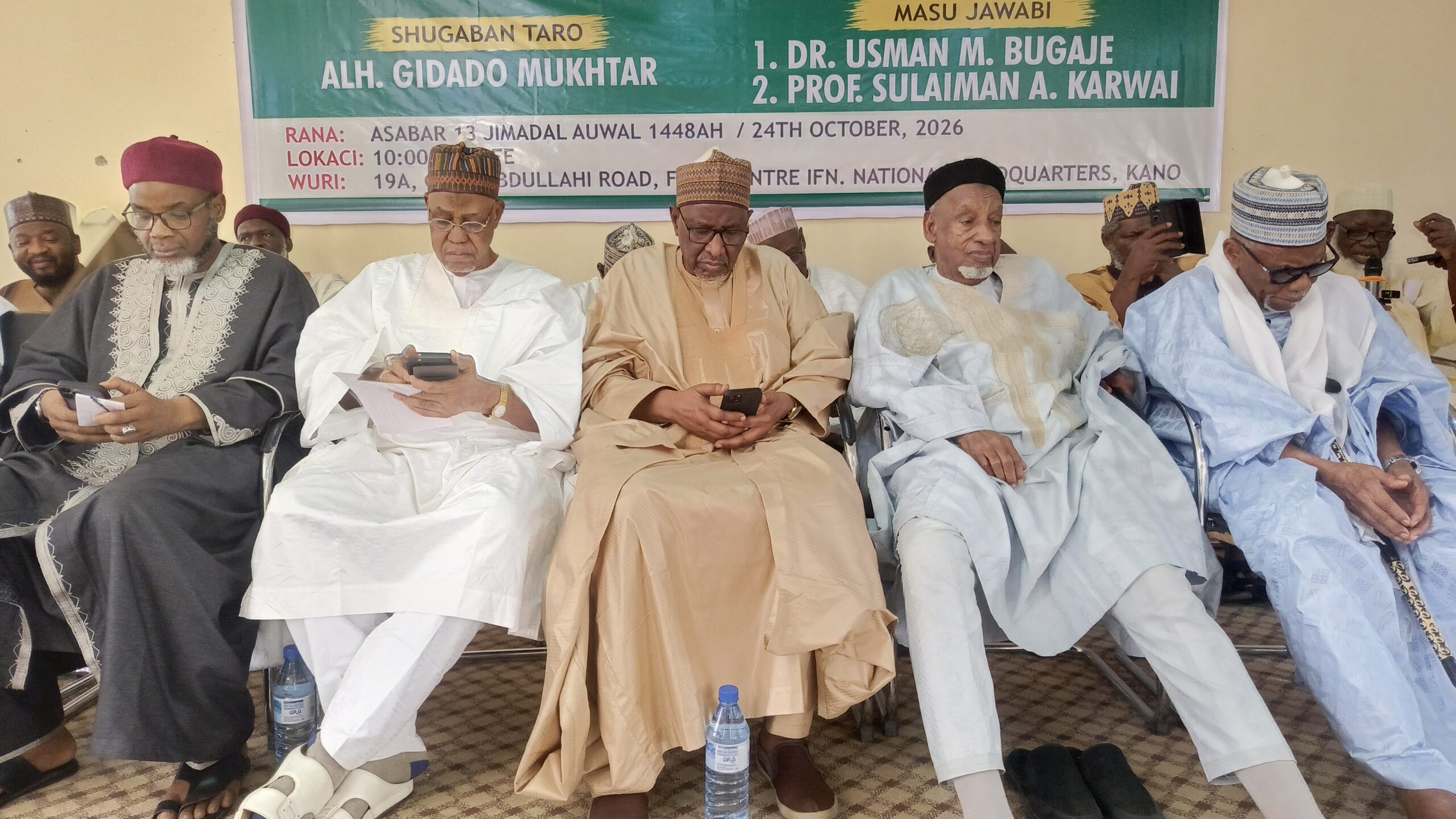
The Eurodite scholar alleges that insurgents continue to exert influence in parts of the North, while the summit calls for stronger security measures and urgent action to address the plight of affected communities.
Nasiru Yusuf Ibrahim
Dr Usman Bugaje, a scholar and political activist, has criticised Nigeria’s political leadership over persistent insecurity in Muslim-majority communities, describing the Muslim-Muslim presidential ticket as a “fraud” allegedly used to win voters’ support without addressing their challenges.
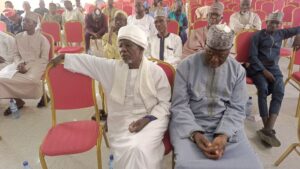
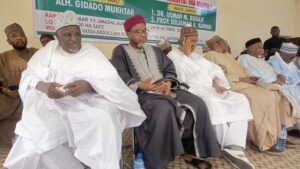
KANO FOCUS reports that Bugaje spoke at a one-day summit organised by the Islamic Forum of Nigeria in Kano on Saturday, with the theme, “Dilemma of Muslims in Nigeria: The Way Forward.”
The summit brought together Islamic scholars, professionals and other stakeholders to discuss insecurity, economic hardship, religious discrimination and other challenges confronting Muslims in the country.
Dr Bugaje argued that the religious identity of political leaders had not translated into adequate protection for Muslim communities, despite the support they received from voters.
He said persistent insecurity and economic hardship raised questions about the benefits of political arrangements built around religious identity.
Citing the security situation in the North-East, Bugaje alleged that Boko Haram insurgents continued to wield influence in communities around Maiduguri, where they reportedly collected taxes and held court sessions to settle disputes among residents.
He also expressed concern over the security situation in Sokoto State, claiming that residents travelling from the state capital to Isa Local Government Area could do so only twice a week with the support of the Joint Task Force (JTF).
The scholar argued that the situation underscored the failure of political representation based on religious identity to guarantee safety and improve living conditions for the people.
He further raised concerns about Nigeria’s dependence on imported medicines, claiming that about 70 per cent of drugs used in the country were imported.
Dr Bugaje said strengthening domestic pharmaceutical production and protecting the country’s territorial integrity were important measures of national independence.
He also warned about drug abuse among young people and women, describing it as a threat to the social and economic wellbeing of Muslim communities.
Earlier, Professor Sulaiman Abdullahi Karwai of Ahmadu Bello University, Zaria, said the Muslim-Muslim presidential ticket did not necessarily represent Muslim interests, arguing that politicians had adopted the arrangement as an electoral strategy because of the large Muslim population in Nigeria.
Prof Karwai lamented the economic hardship facing Nigerians, citing inflation, fuel subsidy removal, exchange-rate changes and tax reforms as factors contributing to the difficulties experienced by citizens.
He also raised concerns about insecurity, including the reported abduction and killing of a professor and a nurse at Ahmadu Bello University, Zaria, as well as what he described as inadequate federal capital projects in Muslim-majority states.
Recalling the late General Sani Abacha’s establishment of the Petroleum Trust Fund (PTF), Karwai said its interventions helped support health and educational institutions amid increases in fuel prices.
The summit’s chairman, Alhaji Gidado Mukhtar, said Nigeria was a multi-religious country in which citizens should be free to practise their faith.
He said the summit was convened to examine challenges confronting Muslims, including insecurity, religious discrimination and persecution.
The National Chairman of the Islamic Forum of Nigeria, General Ahmad Daku (rtd), represented by his deputy, Alhaji Muhammad Tukur Bello, said the meeting was intended to assess the situation of Muslims and identify a way forward.
The forum’s Acting Executive Secretary, Alhaji Dalhatu Muhammad Gwarzo, said the discussions addressed major challenges affecting Muslim communities, particularly banditry, kidnapping and religious discrimination.
Alhaji Gwarzo said the summit called on state governors and members of the National and State Assemblies to remember the plight of affected communities and take concrete steps to address their problems.
He added that the leaders had been urged to act decisively, noting that Allah was aware of the situation confronting the people.
He also called on Muslims and other Nigerians to intensify prayers for divine intervention, while urging Imams to pray for Allah’s guidance and solutions to the country’s challenges and sensitise the Muslim community, particularly during Friday sermons.
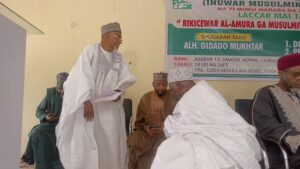
The forum said a committee would be constituted to review the summit’s resolutions and develop an actionable plan for implementation.
In its communiqué, the summit called for stronger security measures, a review of economic policies it said were worsening hardship, fairness in federal appointments, protection of the right to wear hijab and greater cooperation among Muslim organisations.
It also urged Muslim communities and organisations to invest in education, healthcare, economic empowerment and Islamic social finance as part of efforts to tackle poverty and improve human development.

Kano Task Force Arrests Suspected Gang Sponsor ‘Malam Keya’ in Rivers

Kano water agency strengthens security at Joda waterworks

Kano Police foil kidnap plot, arrest two suspects in Gezawa

Sheikh Masussuka’s killing: why sectarian blame must not replace justice

Rumfa Old Boys Class ’84 launches three-year academic improvement programme

Kano must make government procurement work for made-in-Kano

Indonesian scholar proposes waqf model to reform almajiri education in Nigeria

Nigeria’s Data Demand Surges 47% as Stakeholders Seek Fresh Investment in Digital Infrastructure

Kano Settles N32bn Pension, Gratuity Liabilities, Says Gov Yusuf

