
Headlines
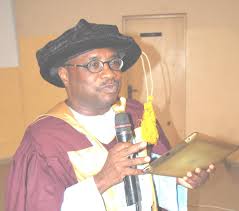
OPINION: Professor Abdallah Uba Adamu – The Ibn Khaldun of our time

By Hassan Auwalu Muhammad
Every area of knowledge has its specialties, and people will rarely have experience in a variety of fields.
For example, it can be difficult for someone who specialized in the area of health to be involved in the area of communications, or for someone who is studying political science to return to health.
However, there are certain types of people upon whom God has bestowed unique abilities, which made them different from their peers and contemporaries.
There are not many of such people, and even if you find them, it is mostly in countries that are advanced in terms of their education and economic growths.

Their research in different fields often allows them to be unlike other people.
Kano State used to be one of the least considered cities in the world as regards the number of people with high level of Western education.
However, after discovering the benefits of it, there are many gifted individuals with an extensive background in research such as Prof. Abdallah Uba Adamu.
Brilliant Student
Prof. Abdallah Uba Adamu (born 25th April 1956 in Daneji, Kano city), in his story as told by all those who had grown up together with him, friends and relatives, testified that since childhood, he has being passionate about researching different areas of knowledge.
His father, the late KANTOMA of Kano, Dr Muhammadu Uba Adamu, was a renowned scholar through whose guidance and inspiration, Prof. Abdallah began his research, which later earned him the respect of being a full-blown researcher in different areas of knowledge.
After graduating from primary and secondary schools, he decided to study medicine but failed to secure admission to the university of his choice, which later forced him to go for B.Sc. in Education, Biology and Physiology in 1979 at Ahmadu Bello University.
He did his National Service at a high school in Umoarkrika, Imo State, before he proceeded to Chelsea College, the University of London where he earned a Master of Arts in Science Education in 1983.
He earned his doctorate from the University of Sussex in 1988 under the sponsorship of the Commonwealth Scholarship Commission.
Youngest Professor
He started teaching as a Graduate Assistant at Bayero University Kano in 1980.
He re-invested himself in the field of research, which led to him becoming a Professor in Science Education in 1997 and also the youngest Professor in Bayero University at the time.
He presented his Professorial Inaugural Lecture in 2004, entitled ‘Sunset at Dawn, and Darkness at Noon: Reconstructing the Mechanisms of Literacy in Indigenous Communities’ in which he explored the use of Arabic alphabet as Hausa language literary devices in Ajami writings.
He proposed what he called ‘Ajamization of Knowledge’ as an alternative educational strategy, for millions of Qur’anic school pupils to acquire contemporary education in a literary script they know, rather than the Latin alphabet.
Professor Adamu was a Fulbright African Senior Research Scholar at the Centre for Studies in Higher Education, the University of California, Berkeley from 1991 to 1992.
While there, he wrote a monograph, Reform and Adaptation in Nigerian University Curricula, published by The Edwin Mellon Press, New York, in 1994, which explores the transfer of educational influence and structures from the United States to Nigeria, and the substitution of the British educational system in Nigeria in the process.
Professor Abdallah Uba Adamu has delivered commissioned lectures at Rutgers State University of New Jersey, New Brunswick (2015); the University of Warsaw, Poland (2012); Institute of Mediterranean and Oriental Cultures; Polish Academy of Sciences Warsaw, Poland (2012); University of Florida (2010), University of Basel, Switzerland (2009); Barnard College, Columbia University, New York (2007); School of African and Oriental Studies, University of London (2006); and Institute of Afrinkanistic, University of Cologne, Germany (2004).
Professor Abdallah Uba Adamu started his study in Media after the emergence of the film industry in Kano State in the 90s.
From that time on, his focus shifted from Education to Communication.
He earned his second professorship in media and cultural communication in 2012, from the Department of Mass Communications Bayero University Kano.
Prof. Abdallah Uba Adamu is the first Nigerian to hold double professorship in two very different disciplines.
He has over 117 publications, most of which were published outside the country.
He had also attended and presented papers in more than 200 conferences and workshops.
In fact he is scheduled for another workshop in the University of Florida in October 2020. He is one of the few Nigerian academics willing to tell the world about the intellectual output through his own independent website at www.auadamu.com.
Computer Pioneer
In the knowledge of computer, Professor Abdallah Uba Adamu is said to be among the first few people with a vast knowledge of computer in Bayero University, Kano.
He was the first person to bring the computer PC 1512 to Kano State in 1988.
With the introduction of the internet, he was the first person to type Hausa words into computer with a hooked top showing the change of meaning from one word to another.
He served also as Director of Management Information System (MIS) in Bayero University Kano.
Although Professor Abdallah has never studied Hausa as a course, his deep knowledge of Hausa literature has led many to wonder whether Hausa was his area of specialization.
Prof. Adamu’s vast knowledge of Geography and Public Administrations made him stand out among the rest.
In the entertainment industry, Professor Abdallah excelled in the field of Hausa Rap, which led to the formation of a musical concert during the British Council era in Kano State.
NOUN VC
The Government of President Muhammadu Buhari has selected Professor Abdallah Uba Adamu as the Vice-Chancellor of the National Open University of Nigeria thanks to his expertise and research.
He assumed office in February 2016, and will leave on 10th February 2020, almost six months from now.
Upon his arrival he realized that the university itself was considered more of a regional than a national institution.
His first move was to nationalize it by ensuring that all the six principal officers of the university come from the six Geopolitical zones of the country.
This is the only university with this administrative structure.
He immediately began a plan to ensure that the Headquarters of the university relocated from Lagos to the Federal Capital Territory, Abuja, despite the threats and challenges he faced.
Without hesitation, he began expanding the new headquarters of the university in Abuja, and in a short period moved from Lagos to Abuja.
He also stopped the outsourcing of students’ portal and facilitation to third party companies and created directorates in the university that handled all these functions, saving the government a huge sum of money.
Successes @ NOUN
Here are a few of the achievements so far made by Professor Abdallah Uba Adamu as the vice-Chancellor of the National Open University of Nigeria (NOUN):
From the very beginning, the first step he made was ensuring the relocation of the university headquarters from Lagos State to the Federal Capital Territory, Abuja.
He has built numerous study centres across Nigeria, especially in the northern part of the country.
He encouraged politicians to use their constituency projects to build the centres.
Due to his persuasion, about 18 were built in Kano, 15 by Distinguished Senator Barau Jibril in his Senatorial District, two by Honourable Aminu Suleiman in Fagge and Kwaciri, and the biggest and most impressive of all, the one by Honourable Mustapha Bala Mai Gidan Ruwa at Dawakin Kudu.
This last one is the biggest and most comprehensive in Nigeria.
In fact, it is better than many universities, yet it is only a study centre.
Other places he fought for study centres include Katsina, Jigawa, Delta, Ondo and Edo States.
Prof. Abdallah has worked hard to employ many young people at the university under the Employment Act, and with the permission of the legal organs of the Government, and many young Nigerians have been employed in different capacities at the university, particularly in Computer Science.
This was before IPPIS stopped employment.
He re-built the University’s FM station in Lagos for the university to broadcast programs like any other FM station in the country.
Before becoming the VC, all students’ books and materials were produced from outside the university, which cost a large amount of money.
However, he later built a university printing press that would provide all the basic things that university students need, which saves the government a lot of money.
He has improved the school’s internet system so that students can read and research information on various subjects easily.
During the Pandemic lockdown, NOUN was the only university conducting online Pen-on-Paper examination using Artificial Intelligence software that detects cheating.
The students did the examinations at home without going to any Study Center.
Professor Abdallah found a Mosque at the National University Headquarters in Abuja already built by the Contractors building the University.
To show his liberal attitude, when the Christian community asked for a place of worship, he allocated lands to Protestant and Catholics for them to build their Churches, but informed them that they have to source the money to build their worship places as it is not government policy to build worship places for either Muslims or Christians.
Even the mosque was built privately by a contractor without any government funding.
Thus one of his greatest efforts was to unite the staff of the university by working together without any discrimination based on race, religion or ethnicity.
He has worked tirelessly with other major universities in the world to improve the academic system at the university he leads.
Prof. Abdallah built a Media Centre for the university at its Jabi Headquarters in Abuja.
Monogamist for life
Professor Abdallah Uba Adamu is a philanthropist, a man of the masses, easy-going, man of his words because no matter what, he will not lie to you about something he cannot do just to impress you.
Above all, he is incorruptible.
In the use of language, both Hausa and English, you can say he is an orator.
When he speaks in the Hausa language, you would assume he cannot speak the English language at all, but when he addresses you in the English language, you would think Professor Abdallah is an English man.
He was crowned NZE OKAA OMEE, a traditional title in the Awene Ezema Olo Kingdom of Ezeagu LGA Enugu state.
Professor Abdallah Uba Adamu will complete his term as vice-chancellor on 10th February 2021 and return to Bayero University Kano and resume duties on 1st March 2021.
He has one wife and four children, and says he is not ready to marry another wife as the one he has, whom he married in 1987 as his first and last wife, is more than four wives.
His children are all grown up, except the youngest who is 13 years. One is a married computer programmer, another a barrister who lives outside the country with her family and the only male is a Businessman.
Hassan Auwalu Muhammad a student of Mass communication at Bayero University Kano can be reached via m.shareef1980@gmail.com



Nasiru Yusuf Ibrahim
Imam Nura Garba Mato has urged Muslims to remain conscious of their actions, saying that divine reward and punishment often correspond to the nature of people’s deeds.
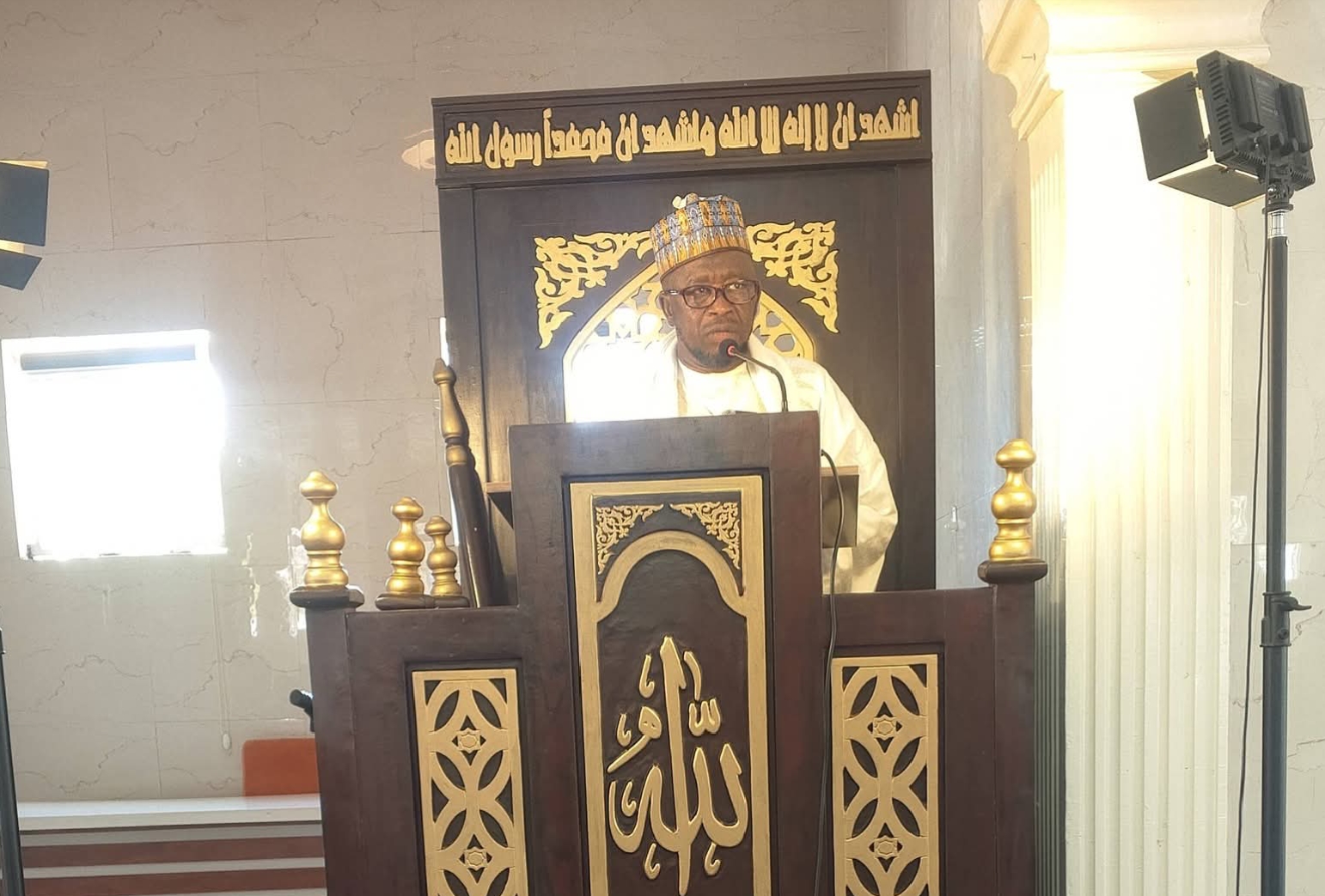
KANO FOCUS reports that the imam made the call while delivering a Friday sermon at Jami’u Ansar wal Muhajirun Jumaa Mosque, Cotton Ginnery Layout, Zawaciki, Kano State.
The sermon, titled “Al-Jazā’u Min Jinsil-‘Amal” (Recompense Is According to the Nature of Deeds), focused on the Islamic teaching that people’s actions have consequences and that good deeds attract divine reward.
Imam Mato said Allah had established enduring principles in human life that do not change, urging Muslims to understand these principles and allow them to guide their conduct.
He explained that one of these principles was that recompense corresponds to the nature of one’s actions, stressing the importance of living righteously and fulfilling one’s responsibilities to Allah and fellow human beings.
The imam called on Muslims to observe *taqwa* (consciousness of Allah), remain steadfast in their faith and follow the teachings and traditions of Prophet Muhammad (peace be upon him).
He also highlighted the importance of helping people in difficulty, easing the burdens of others and showing compassion to fellow Muslims.
Quoting a prophetic tradition, the imam emphasised that whoever relieves a Muslim of a hardship in this world will receive relief from Allah on the Day of Resurrection.
He further explained that whoever conceals the faults of a fellow Muslim would receive Allah’s concealment of their faults on the Day of Resurrection, while those who make things easier for people in difficulty would receive Allah’s assistance in this world and the Hereafter.
The sermon also underscored the importance of supporting others, noting that a Muslim’s relationship with Allah should be reflected in their treatment of fellow human beings.
Imam Mato urged Muslims to reflect on their deeds and recognise that their conduct carries consequences, encouraging them to embrace good actions, assist those in need and uphold the teachings of Islam in their daily lives.
He stressed that Muslims should make righteousness, compassion and service to others central to their lives in pursuit of Allah’s pleasure and success in the Hereafter.
Nasiru Yusuf Ibrahim
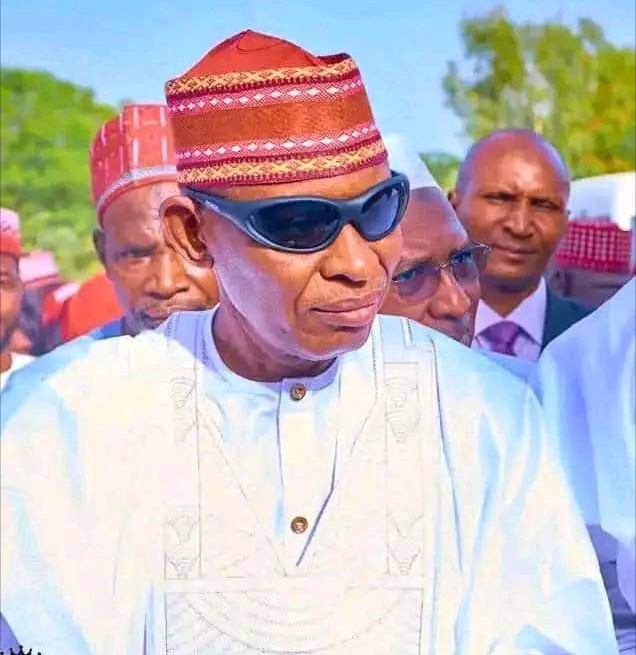
The Kano State Government has directed all civil servants who have attained their statutory retirement age or completed the required length of service to immediately vacate their offices and hand over government property in their possession.
KANO FOCUS reports that the directive was contained in Circular issued on Tuesday by the Establishment Directorate, Office of the Head of Civil Service, Kano State.
The circular, signed by the Permanent Secretary, Establishment, Abba A. Danguguwa, on behalf of the Head of Civil Service, was titled: “Unauthorized Continuance in Service After Statutory Retirement by Civil Servants in Ministries, Departments and Agencies (MDAs) of Government – Call for Immediate Handing Over of Official Documents, Properties.”
The government said it had observed that some civil servants continued to remain in office and operate in official capacities after reaching their statutory retirement period.
According to the circular, such conduct was a “negation to the reputation of the Civil Service of Kano State,” noting that the service had a long-standing tradition of ensuring seamless transition by retiring civil servants.
It described the continued stay in service after retirement as a direct infraction and aberration of relevant provisions of the State Civil Service Rules and other applicable service regulations.
The government stressed that it was legally and administratively untenable for any officer to remain in service or perform official functions beyond the statutory limit.
Consequently, all civil servants who had retired either by age or length of service were directed to immediately exit and hand over all official documents, government property and duties to their immediate subordinates in their respective ministries, departments and agencies.
The circular also directed all Accounting Officers, including Permanent Secretaries and Chief Executives, as well as Directors of Administration and Personnel Management, to ensure strict and immediate compliance with the directive.
It warned that any officer found aiding, abetting or condoning the continued stay of a retired officer in service would face appropriate disciplinary action in accordance with the Civil Service Rules.
The directive takes immediate effect, the circular stated.
Nasiru Yusuf Ibrahim
Kano State Governor Abba Kabir Yusuf says his administration has settled approximately N32 billion out of the N48 billion inherited backlog of gratuities and related liabilities owed to retirees in the state.
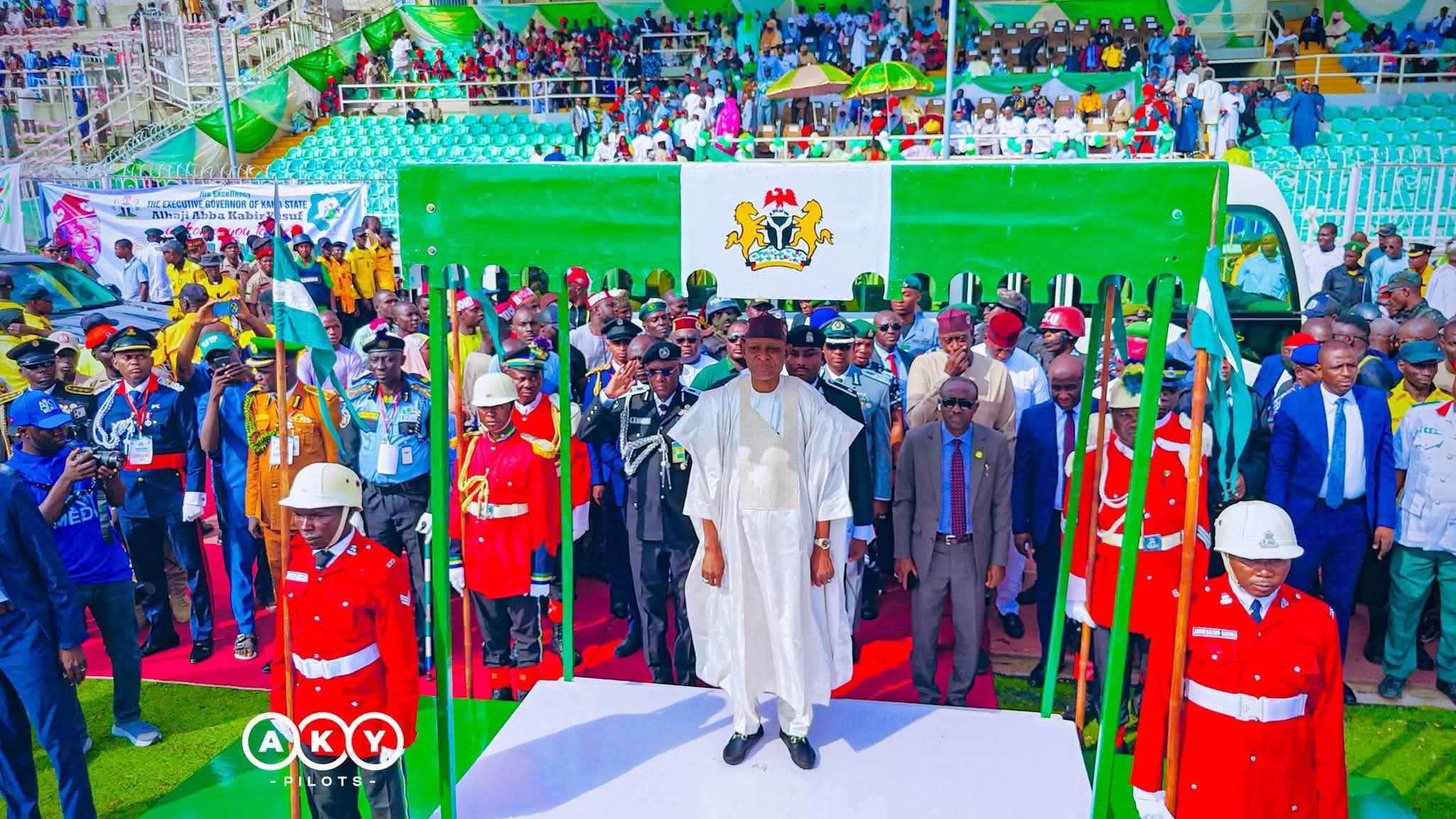
KANO FOCUS reports that Gov Yusuf disclosed this on Thursday while addressing residents at the 66th Independence Anniversary celebration held at the Sani Abacha Indoor Stadium in Kano.
The governor said the government had also sustained the regular payment of monthly pensions while increasing the minimum monthly pension from N5,000 to N20,000.
He said the welfare of workers and pensioners remained a priority of his administration, citing timely payment of salaries, improved remuneration and measures aimed at strengthening the public service.
According to him, the state has maintained the practice of paying workers’ salaries on or before the 25th of every month while implementing the N71,000 minimum wage for civil servants.
Gov Yusuf also said his administration was sponsoring public servants for professional training, including programmes at the Administrative Staff College of Nigeria (ASCON), to strengthen their administrative and leadership capacity.
He reaffirmed the government’s commitment to building a professional and motivated workforce, while ensuring that the contributions and sacrifices of serving workers and retirees were recognised and treated with dignity.

Insecurity, hunger have deepened Northern Nigeria’s distrust of Tinubu, Imam Gusau says

Kano Police return recovered car, motorcycle to owners

JONAPWD Kano to hold leadership election Saturday

“As You Sow, So Shall You Reap”: Imam Reminds Muslims of Divine Justice

Kano Govt Orders Retired Civil Servants to Vacate Offices, Hand Over Government Property

Kano leads again as NECO successes rise to 74,413
Kano tops states in 2026 NECO results, Governor Yusuf hails students

Kano Govt Suspends Durbar Processions, Horse Riding in Metropolis

INEC holds campus debate on elections, democracy at BUK

