
Headlines
How Lack of Equipment Exposes Health Workers To COVID-19 In Kano


When the federal government declared Kano as epicenter of COVID-19 there was no exact figure of health workers affected by the global pandemic in the state.
As in many places ravaged by the pandemic, health workers are in the forefront of the fight against COVID-19 in Kano State.
The high rate of COVID-19 cases in very densely populated metropolitan local government areas of Kano has exposed many health service providers to coronavirus infection.
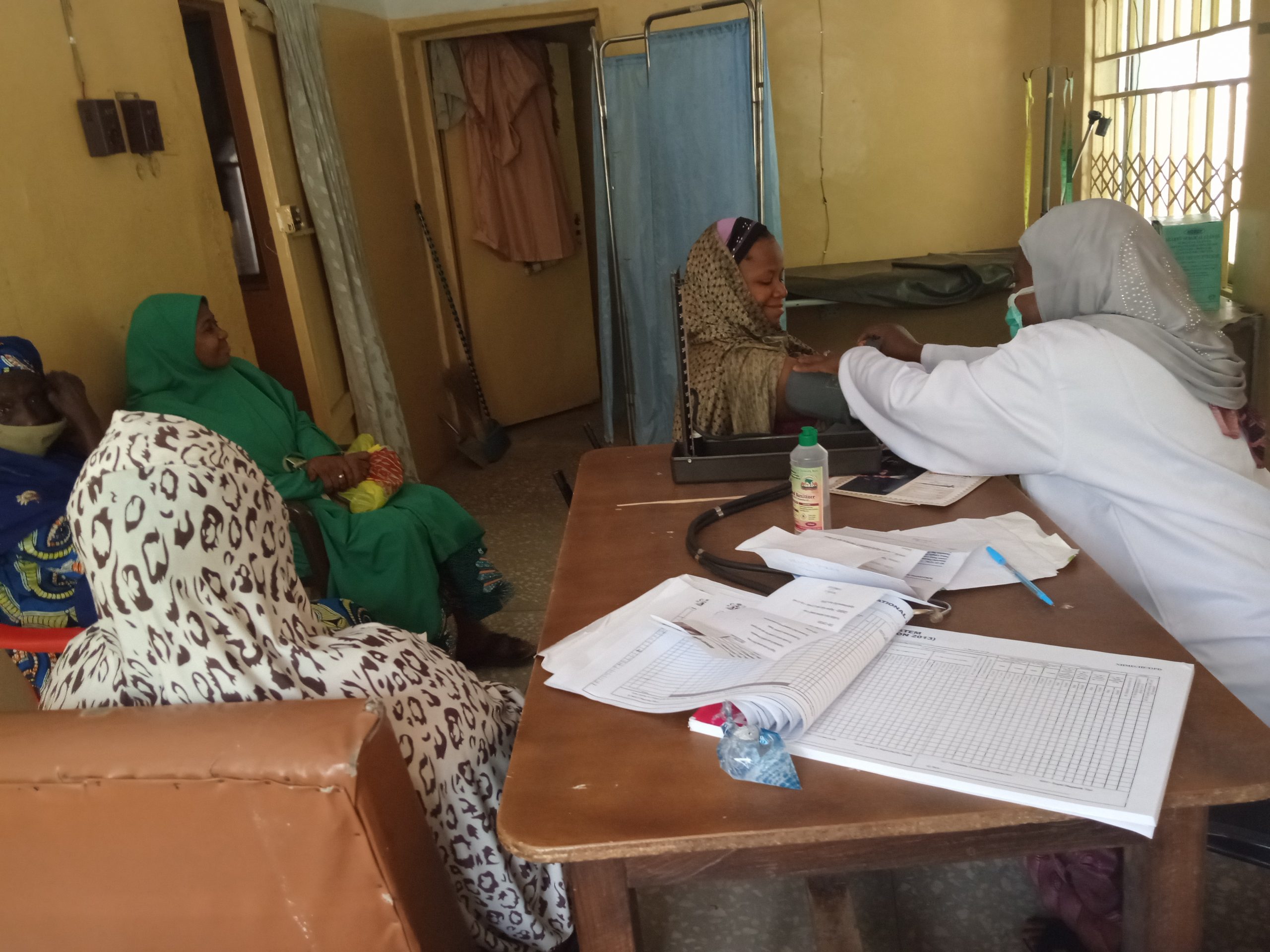
During this reporter’s visit to Panshekara Primary Health Centre in Kumbotso Local Government area amidst COVID-19 pandemic, there was violation of NCDC protocol by health workers and patients.


At the immunisation unit of the health centre, health practitioners were sighted working without hand gloves, while visitors did not use face masks.
The situation was also the same at one of general hospitals in Kano metropolis where a medical doctor on duty was sighted diagnosing patients without hand gloves.
One dead, 64 doctors, 30 nurses test positive for COVID-19 in Kano
The Kano State chairman of the Nigerian Medical Association (NMA), Sanusi Bala told this reporter that 64 doctors had tested positive for the novel coronavirus in the state.
Mr Bala explained that many of the victims were the doctors working at the Aminu Kano Teaching Hospital (AKTH) and other private clinics in the state. He said many of them were infected through normal clinical routines while attending to unsuspected COVID-19 cases.
Mr Bala attributed the high number of COVID-19 infection among medical doctors in Kano to lack of adequate personal protective equipment at the initial stage of the pandemic.
“We have 64 doctors infected. And I think about 30 nurses and a number of medical laboratory scientists were also infected. We lost one senior colleague to the fight. We thank Allah subhanahu wa ta’ala. Apart from the one we lost, the remaining 63 doctors recovered without any hitches.
“Initially, we didn’t have adequate PPE. That was because the number of cases in Kano within a short time kept skyrocketing. They came in large number. And the number of PPE supplied was less than what was required. And there was shortage of training for individuals.
“But Alhamdulillah later, together with the NCDC and the task force, we sat and re-strategised. As I am talking to you, everywhere you go, there is PPE, from the gown, the N-95, boot and all other kits required for people to work. We have less cases now,” he said.

The chairman of Aminu Kano Teaching Hospital’s branch of the Association of Resident Doctors, Abubakar Nagoma, confirmed the revelation of NMA chairman. He said 54 doctors got infected while treating patients who came to the hospital with symptoms that later turned to be COVID-19.
Mr Nagoma said the affected health professionals included resident doctors who were undergoing training and consultant doctors. He attributed the vulnerability of the doctors to non-use of face masks by patients and lack of adequate personal protective equipment for doctors.
He highlighted the deliberate hoarding of information by some patients as one of challenges.
“On our part, we lack protective equipment. And you will see many doctors at accident and emergency unit of the hospital wearing only face masks. This is the only protection we have in addition to hand gloves and hand sanitizer,” he noted. “This is not the standard protection protocol guidelines according to NCDC. If you have any suspected (COVID-19) patient, you are supposed to have boots, suit, face mask, goggles, cap and face shield. These are what is obtainable in the developed world and this is the recommendation of the National Centre for Disease Control. To be sincere we don’t have them on ground. We don’t have complete protective suit.
“Another thing, a lot of patients coming from various places within Kano, don’t come with face mask. And some of them will present their pre-existing medical condition, and subsequently the symptoms of COVID-19 start manifesting. To some extent, sometimes patients conceal information until after series of diagnosis, then you find symptoms of COVID-19. You are already exposed by then. It is unfortunate we are working in a very constrained environment.
“Then there is the issue of the number of patients. There are lots of patients coming to the hospital. And they don’t use any barrier that will serve as protection between you and them.
“We have made so many requisitions to the hospital to ensure constant provision of all the necessary protective equipment. In fact, we even went to the extent of threatening the hospital that we will stop diagnosing patients if this equipment is not available. But you know as healthcare providers we cannot fold our arms watching our patients dying. We are always seeing patients whether with or without the supply of what we requested. We are still pushing for this to be available. Even the hospital management are complaining they have yet to be supplied by the federal government. What we have has already been exhausted.”
Fifteen additional health workers tested positive for coronavirus while treating patients at the National Orthopeadic Hospital, Dala. Aliyu Kabara, the chairman of the hospital’s branch of Association of Resident Doctors (ARD) confirmed this to this reporter.
Mr Kabara said the 15 infected health personnel included three consultant doctors, nine resident doctors and three nurses that treated asymptomatic COVID-19 patients who came to the hospital for orthopaedic treatment.
“We were the first hospital in Kano to record infected COVID-19 doctors,” he noted. “During the first screening, 15 persons out of 25 samples were positive for COVID-19.”
According to him, the hospital has scaled down operation, and restricted services to emergency cases and inpatients.
On how the doctors got infected, Mr Kabara said they contracted the disease from a female patient who had undergone a surgery.
“When she came back for follow-up, she exhibited some COVID-19 symptoms. Most of the infected doctors are from that unit where this woman was treated,” he said. “We don’t always use personal protective equipment because we don’t have enough. No one will refuse to attend to a patient with life threatening illness and send him back because of lack of personal protective equipment. Some of these patients have COVID-19 beside their known clinical challenges.”
Apart from the doctors, about six members of the Kano State task force on COVID-19 were also infected with the virus. Prominent among them were co-chairman AbdurRazaq Garba Habib, the secretary of the committee Imam Wada Bello, and state commissioner of health, Aminu Tsanyawa.
Cleaner, billing official, 32 other health workers test positive for COVID-19 at AKTH
A total of 34 additional health workers at Aminu Kano Teaching Hospital (AKTH) had contracted the COVID-19 virus at the time of filing this report.
This was revealed by the chairman of the hospital’s branch of the Joint Health Sector Union (JOHESU), Murtala Umar.

Mr Umar listed the infected health workers to include 12 nurses, five medical laboratory scientists, three technicians, two medical record officers, one billing officer, one hospital attendant and one cleaner.
He added that eight members of the union had earlier contracted the coronavirus.
Kano government reacts
Despite health workers outcry of inadequate PPE in public hospitals, Kano State commissioner of health, Aminu Tsanyawa, said the government had taken adequate measures in protecting front line healthcare workers working in response team and those at facilities.
“His Excellency is keen about protecting front line healthcare workers and other healthcare workers that are working in our facilities,” he noted. “His Excellency has come up with the strategies and intervention to ensure that our healthcare workers are protected as they are doing their work of protecting the people of Kano.
“First and foremost is orientation and training at various level of healthcare workers to ensure that those working directly at response team are protected, and to also ensure that those working at facilities providing services are protected.
“They were trained on infection prevention and control (IPC). Many of our healthcare workers were trained to ensure they keep safe. This is one singular intervention that is important in safeguarding our healthcare workers.”
13% of Kano residents tested for COVID-19 were positive
About 13 per cent of Kano residents tested for COVID-19 tested positive for the virus, according to an official report.
The report released by the Kano State Ministry of Health was titled “COVID-19 response update: Kano laboratory overview.”
It indicated that as of June 20, the state had collected 9,103 samples, 8,948 results were retrieved, 155 samples pending and 1,191 confirmed positive cases.

The Kano positive rate is less than the overall for Nigeria where about 19 per cent of tests have come out positive.
The Nigeria Centre for Disease Control (NCDC), which coordinates the COVID-19 testing and treatment across the country, does not, however, provide a regular state by state breakdown of the tests done.
However, over 40 per cent of people who have tested positive for COVID-19 in Nigeria are in Lagos, indicating the state also has the highest number of people tested.
The Kano data
The breakdown of the data by the Kano health ministry showed that from March 20 to April 20, the state collected 1,765 samples and recorded 219 positive cases.
Between April 20 and May 20, the state collected 2,930 samples with 735 testing positive.
Also, between May 20 and June 20, the samples collected doubled to 4,408 while the number of positive cases dropped to 237.
According to the data, the samples were treated at five NCDC designated laboratories with a combined total of 530 testing capacity daily.
The laboratories are Aminu Kano Teaching Hospital with 90 testing capacity daily, Bayero University, Kano (180), 54Gene (90), IFRAN (80) and EHA (90).
Controversial deaths
The update provided on Kano State ministry of health’s twitter handle showed that the total samples collected as of Saturday, December 26, 2020, was 57,484; the confirmed cases were 2,169 with 284 active cases and 1,825 persons have been recovered and discharged.
The twitter handle revealed that so far 60 persons who tested positive of COVID-19 in Kano had lost their lives.
The 60 recorded deaths were separate from the mysterious deaths recorded in the state, about 500 of which were suspected to be from COVID-19.
The northwestern state had in April experienced a spate of about 979 unexplained deaths, including first-class traditional rulers, health workers and academics.
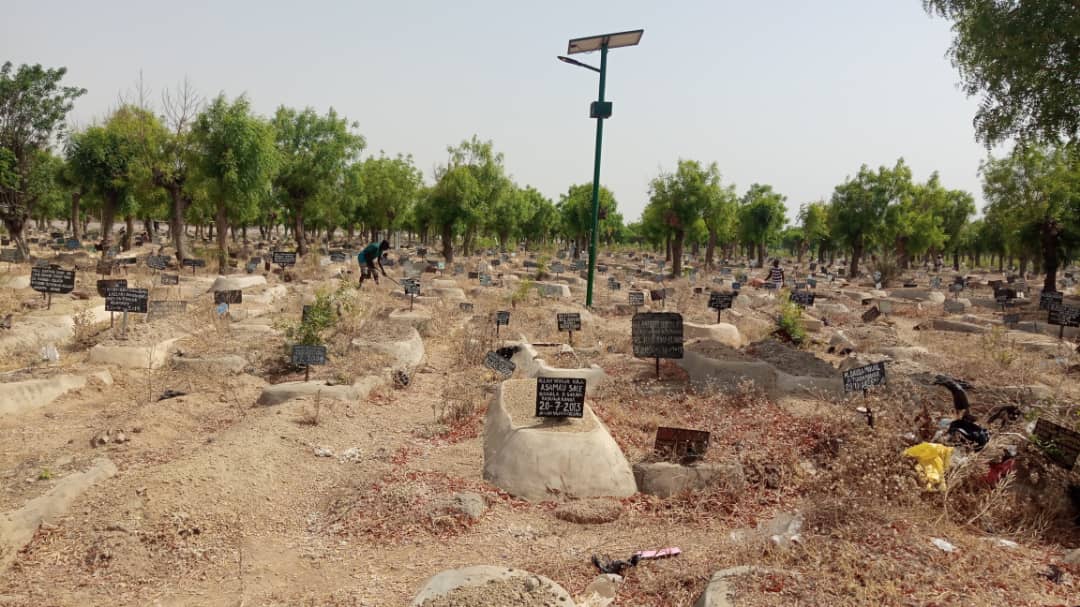
The health minister, Osagie Ehanire, had said about 60 per cent of the “mysterious deaths” recorded in Kano State may have been triggered by COVID-19.
“With regard to unexplained deaths in Kano which occurred in April over a five-week period, the team confirmed that a total of 979 deaths were recorded in eight municipal LGA in the state at a rate of 43 deaths per day,” Mr Ehanire said.
“The peak was in the second week of April. By the beginning of May, the death rate had reduced to 11 deaths per day it used to be.
“The verbal autopsy revealed that about 56 per cent of deaths had occurred at home while 38 per cent were in a hospital.
“Investigation suggests that between 50-60 per cent of the deaths may have been triggered by or due to COVID-19, in the face of pre-existing ailments.”
A verbal autopsy is carried out to find the cause of death when the corpse is not physically available or has been buried.
The Kano government, however, disputed the federal government’s report, saying its findings showed that only about 16 per cent of those strange deaths could have been from COVID-19.
Kano State government findings
Kano State government report was presented to the public at Kano Government House by Mukhtar Gadanya, a Consultant Public Health Physician at Aminu Kano Teaching Hospital AKTH.
Mr Gadanya who read out all parts of the report said: “A retrospective study of mortalities was conducted over two weeks (27th April – 15th May, 2020), across eight metropolitan local government areas (Gwale, Fagge, Tarauni, Kumbotso, Ungogo, Nassarawa, Kano Municipal and Dala).”
According to him, the mortalities in the identified LGAs “were line-listed, which made a provision for the questionnaire to be administered house to house.”
He revealed that, as part the committee’s scientific approach, “mortalities reviewed were for a period of 1 month (1st April to 2nd May 2020).”
“Relatives of those who passed away were interviewed by respective Ward Focal Persons (WFP), using a structured questionnaire into an electronic platform (ODK), he said.
“Data from the questionnaire were reviewed for categorisation into most probable causes of mortality by medical specialists using “two-symptoms’ criteria (at least presence of two of any of fever, cough and shortness of breath).”
According to Mr Gadanya, “an inter-play of various factors contributed to the mysterious deaths, causes this study shed light on. Mortality in community is cyclical and vary by seasons and months.”
Mr Gadanya disagreed with the earlier report by the minister of health saying that, “COVID-19 might have contributed 15.9% of the cases of mortality, but within the limitations of the verbal autopsy method, that cannot provide confirmation.”
He added that, “Some deaths may be related to disruption of medical care and socio-economic activities due to fear of contracting COVID-19, which usually happens during epidemics.
“If the mysterious deaths were COVID-19 related, the deaths could have come more from local governments that have more COVID-19 cases.
“Tarauni Local Government for example, with 100 confirmed COVID-19 cases is the first in pandemic ranking, but in the mysterious deaths it is rated 7th.”
This investigation was commissioned by the African Centre for Media & Information Literacy (AFRICMIL) as part of its whistleblowing initiative under its Corruption Anonymous project supported by the MacArthur Foundation. Published materials do not reflect the views of the MacArthur Foundation.

Nasiru Yusuf Ibrahim
Dr Goni Faruk Umar has urged Muslims to embrace Taqwa in their daily lives, describing it as a foundation of Islam and a key to righteous conduct and success in this world and the hereafter.
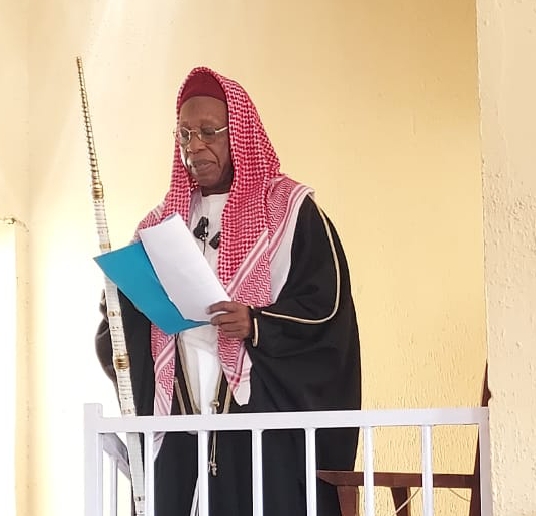
KANO FOCUS reports that the Islamic scholar made the call while delivering a Juma’a sermon at the New Juma’a Mosque, Rumfa College, Kano.
In the sermon, Dr Goni Faruk Umar explained the meaning of Taqwa using classical Islamic scholarship, including an account involving Umar ibn al-Khattab and the companion Ubayy ibn Ka’b to illustrate the concept.
According to the account cited in the sermon, Sayyadina Ubayy once asked Khalifa Umar bin Khattab whether he had ever walked along a thorny path. When Khalifa Umar bin Khattab answered in the affirmative, Sayyadina Ubayy asked how he navigated it. Khalifa Umar bin Khattab replied that he gathered his clothes and proceeded cautiously to avoid being pricked.
Sayyadina Ubayy then explained that this was the essence of Taqwa: being constantly mindful of one’s actions and carefully avoiding what displeases Allah.
Dr Goni Faruk Umar said Taqwa should not be limited to acts of worship but should also guide Muslims’ conduct in contemporary society, particularly in their use of digital platforms and social media, control of the tongue, and relationships within the family.
He urged worshippers to exercise restraint in their speech, act responsibly online and uphold their obligations to family members in accordance with Islamic teachings.
The cleric also highlighted the spiritual and worldly benefits of Taqwa, including relief from hardship, ease in personal affairs, forgiveness of sins and increased rewards in the hereafter.
Quoting verses from the Qur’an, he cited Allah’s promise in Surah At-Talaq, verses 2 and 3, that whoever fears Him will be granted a way out of difficulties and provided for from sources they could not have anticipated.
He also referred to Qur’an 65:4–5, which promises ease in affairs, the removal of sins and the multiplication of rewards for those who maintain Taqwa.
The scholar reminded Muslims that worldly life is temporary and that the hereafter is their permanent destination. He therefore urged them to regard Taqwa as the best provision for the journey beyond this life.
Citing Qur’an 2:197, he emphasised that the best provision for the hereafter is Taqwa, urging believers to remain conscious of their responsibilities to Allah.
The sermon also featured prayers and salutations upon Prophet Muhammad (peace be upon him), his family and companions, in accordance with the Qur’anic instruction in Surah Al-Ahzab, verse 56.
Dr Goni Faruk Umar concluded by encouraging Muslims to remain steadfast in faith, follow the guidance of the Prophet and make righteousness a guiding principle in their daily lives.
Nasiru Yusuf Ibrahim
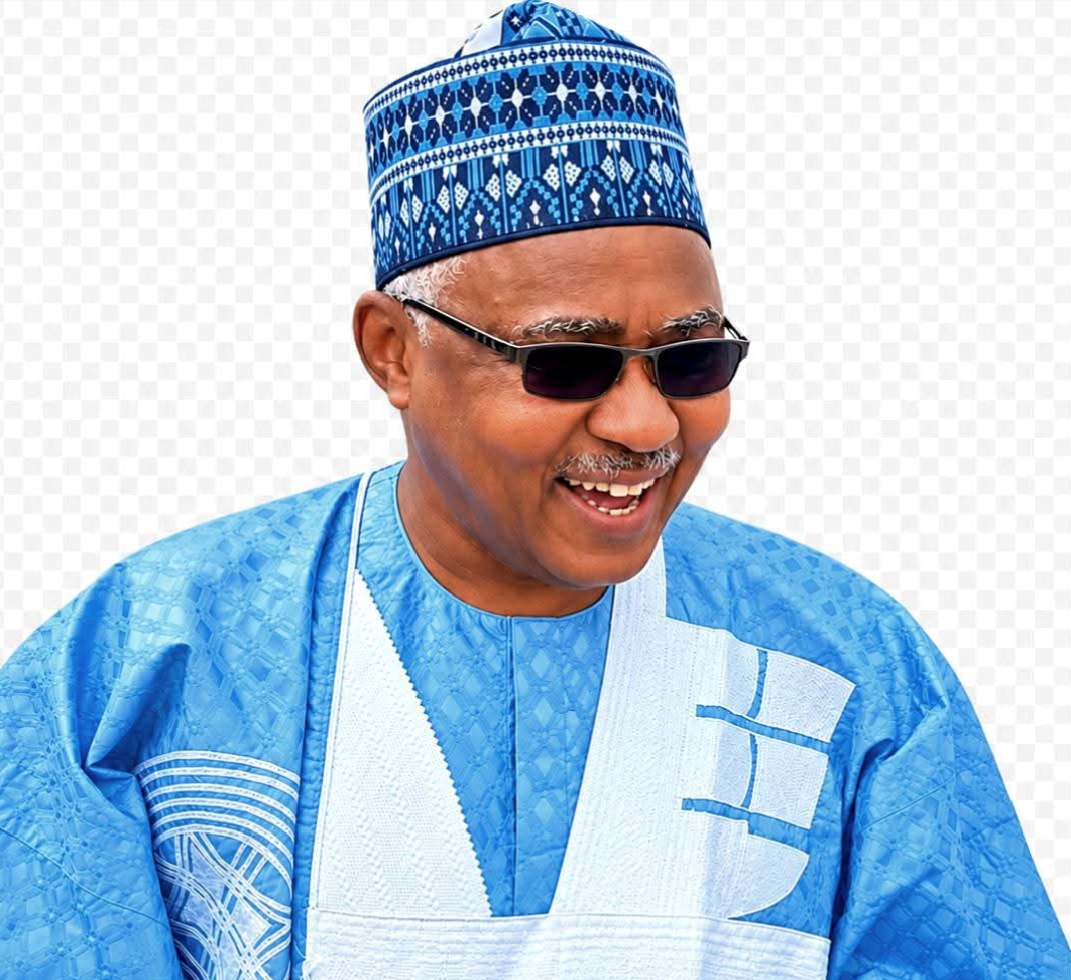
Political allies and loyalists of former Managing Director of the Nigerian Ports Authority (NPA), Arc Aminu Dabo, have begun resigning from the All Progressives Congress (APC) in Kano State following his withdrawal from the ruling party.
KANO FOCUS reports that the supporters, operating under the political group Dabo Alheri Ne, reportedly include members across Kano State’s 44 local government areas.
Barely two days after Dabo announced his resignation from the APC, a prominent stakeholder of the group, Garba Zakiru Dambatta, said members had welcomed the decision and were showing solidarity by submitting their resignation letters to their respective ward party chairmen.
Dambatta, a former APC chairman in Dambatta Local Government Area, said the group’s members were disappointed with what they described as the prolonged marginalisation of Mr Dabo and his supporters within the party.
According to him, despite Mr Dabo’s contributions to the APC and efforts to strengthen the party and manage disagreements among its members, some key stakeholders had continued to sideline him and his loyalists in party activities.
Dambatta reaffirmed the group’s commitment to standing by Mr Dabo’s political decisions and supporting his future political journey.
He also urged the former NPA managing director not to succumb to political pressure or reverse his decision to leave the party.
“This step you have taken, we have the conviction that it is the beginning of a new chapter of goodness in your life,” Dambatta said.
Among the prominent members of the group identified as supporting Mr Dabo’s decision are Abba Rabee’u, a former Senior Special Assistant on Political Awareness; Almustapha Jilani Danmalam, a former Senior Special Assistant on Education; Jamilu Abdullahi Zangon-Mata, a former Senior Special Assistant on Entrepreneurship; and Fahd A. Dabo, a former Special Assistant on Youth Mobilisation.
The individuals reportedly served during the second term of former Kano State Governor Abdullahi Umar Ganduje.
The group also said several other party loyalists and supporters were backing Dabo following his resignation.
However, the statement did not provide the number of members who had formally resigned from the APC or indicate whether the party leadership had responded to the development.
Nasiru Yusuf Ibrahim
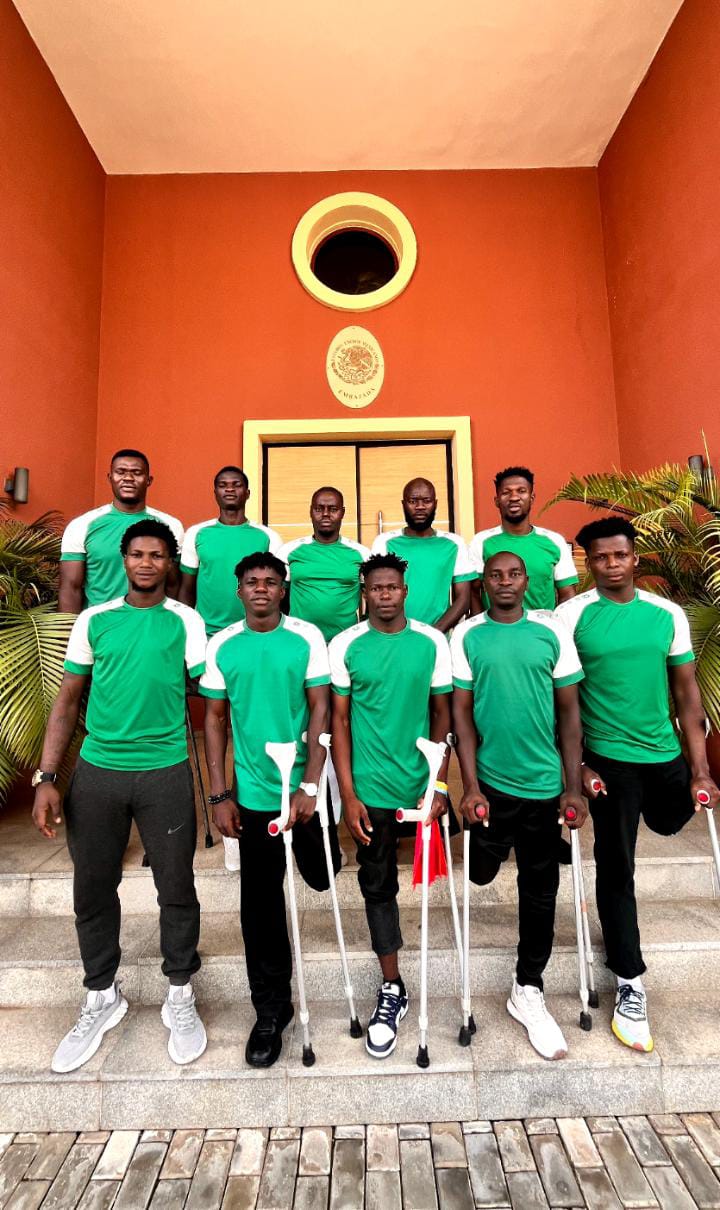
Five players of Kano Pillars Amputee Football Club have been invited to the national camp of Nigeria’s Special Super Eagles ahead of the 2026 Amputee Football World Cup in Mexico.
KANO FOCUS reports that invited players are Isah Yusuf, Abba Musa, Habu Friday, Emanuel Betel and Usman Ahmed. They are currently in Abuja with the national team as preparations intensify for the global tournament.
The Team Manager of Kano Pillars Amputee Football Team, Jamilu Uba Adamu, disclosed this in an interview with Ashiru Rabiu Gidan Tudu, Information Officer of the Kano State Sports Commission.
Adamu described the invitation as recognition of the players’ dedication, discipline and outstanding performances.
He expressed confidence that the players would represent Kano State and Nigeria with honour at the championship.
According to him, the call-up also demonstrates Kano Pillars’ commitment to nurturing talented amputee footballers and contributing to the development of the sport in Nigeria.
The 2026 Amputee Football World Cup is scheduled to take place from November 13 to 22 in San Juan de los Lagos, Mexico. A total of 24 countries, including seven African nations, are expected to participate.
The Executive Chairman of the Kano State Sports Commission, Muhammad Tukur Babangida, congratulated the five players on their invitation, describing it as well deserved.
Babangida expressed confidence that they would justify the confidence reposed in them by the national team selectors.
He assured the players of the commission’s continued support and urged them to remain focused, disciplined and committed to making Kano State and Nigeria proud on the international stage.

Dr Goni Faruk Umar calls on muslims to embrace taqwa in daily life

Dabo’s resignation triggers wave of defections from APC in Kano

Five Kano Pillars Amputee Players Invited to Special Eagles Camp Ahead of World Cup

BUK Professor advocates microfinance to tackle food insecurity, poverty

General Elections 2027: Abba Kabir Yusuf traverses the path to victory

Kano leads again as NECO successes rise to 74,413
Kano tops states in 2026 NECO results, Governor Yusuf hails students

Kano Govt Suspends Durbar Processions, Horse Riding in Metropolis

ACF begins Dangote Refinery IPO sensitisation campaign in Kano

