
Headlines
NCC set to combat e-fraud, standardise regional roaming tariffs


Nasiru Yusuf
The Nigerian Communications Commission (NCC) and other telecoms regulators under the auspices of West African Telecoms Regulators Assembly (WATRA) are set to develop technical and regulatory modalities aimed at combating rising wave of electronic frauds, and standardising regional roaming tariffs in the sub-region.
KANO FOCUS reports that this was the crux of a two-day meeting organised by WATRA in collaboration with the Economic Community of West Africa States (ECOWAS), which started on Tuesday, October 26, 2021 at Rockview Hotel in Abuja.
The meeting, which was attended by representatives of telecoms regulators from countries across West Africa, provided a platform for key participants and stakeholders to deliberate on building a unified market in telecommunications services in West Africa, to combat roaming and cyber-related frauds, and achieve the standardisation of roaming tariffs among ECOWAS member-states.


Addressing stakeholders at the meeting, Executive Vice Chairman of NCC, Umar Garba Danbatta, who is also the Chairman of WATRA, underscored the centrality of the meeting by emphasising that, as businesses move online, the fraudsters are also going digital.
Danbatta, who was represented by NCC’s Director, Technical Standards and Network Integrity, Bako Wakil, said, based on this fact and in order to give West African citizens and businesses the confidence to fully take advantage of the enormous benefits of Information and Communications Technology (ICT), there was a need for regulators to tame and outpace the fraudsters.

“About 75 per cent of trade within ECOWAS is informal, and thus poorly recorded. Therefore, digitising this trade through employing many forms of electronic payments is a significant step towards formalising, governing and boosting intra-ECOWAS trade activities.
“Our ambitions are to formalise informal trade, including agricultural commodities as well as boosting intra-regional trade and this requires us to improve collaboration on combating electronic fraud,” Danbatta said.
Danbatta informed the delegates to the forum that electronic fraud is not just an African or a West African issue but a global phenomenon. He cited studies that revealed 54 per cent of consumers in the European Union said they are most likely to come across misleading/deceptive or fraudulent advertisements or offers on the Internet.
On the regional roaming service, the WATRA Chairman said the Assembly has the vision of a ‘Digital ECOWAS’ where improved sub-regional roaming regulation can help to facilitate an economic integration in the region.
“Our citizens, traders and companies will trade better when they can use their telephones to call contacts in other ECOWAS countries and when they can use their data subscriptions at no extra cost while travelling or doing business within the region. So, reducing and eventually eliminating the cost of roaming will also be a very significant contribution towards boosting trade within the region,” Danbatta said.

The EVC expressed satisfaction at the level of collaboration among national regulatory authorities in the sub-region on the one hand; and between WATRA and ECOWAS, to achieve a common goal, on the other hand, describing such synergy as a great indicator of progress and internalisation of best global practices.
“I am very pleased to see the excellent collaboration and the sharing of workload between the telecommunications body and personnel within ECOWAS and WATRA. Their roles have become complementary and mutually reinforcing-policies legislative frameworks that have been designed at the ECOWAS level, while WATRA does the follow-up work of information-sharing, dialogue and learning dispersal amongst regulatory authorities. It is indeed becoming a well-articulated symphony,” he added.
Earlier in his welcome address, the Executive Secretary of WATRA, Aliyu Aboki, emphasised the value of a trusted digital economy to any nation. He cited a study by Accenture, which concludes that “a trusted digital economy would stimulate 2.8 per cent additional growth for major firms, with the new transactions generated totaling $5.2 trillion of value creation in the economy,” hence, the establishment and operationalisation of national and regional anti-fraud committee.
Aboki commended ECOWAS for “allowing this regional sharing of the enormous task of building Digital ECOWAS to work very well through WATRA, which is a regional manifestation of this collaborative structure”. The WATRA Chief restated that WATRA, as a mechanism for regional regulatory collaboration, will work in unison and ensure its vision is speedily executed by making sure that no nation in the region is left behind.

Speaking at the forum, the Acting Director, Digital Economy and Post, ECOWAS, Raphael Koffi, noted that while e-fraud in the provision of communication services has always been an issue being collectively tackled, variance in termination rates agreed in commercial roaming agreements has also constituted an obstacle to harmonization of roaming tariffs which, he said, collaboration between WATRA and ECOWAS is set to achieve.
Participants at the event were updated on the status of the implementation of the Removal of Surcharges on International Traffic (SIIT) on ECOWAS countries; establishment of a uniform tariff cap for roaming call termination in the ECOWAS region, among others.


Ibrahim Khalil
The Kano State Police Command has arrested eight suspects in separate operations targeting drug peddling and thuggery in Panshekara and Kunchi/Ghari Local Government Area.
KANO FOCUS reports that the command disclosed this in a statement issued on Thursday by its spokesperson, CSP Abdullahi Haruna Kiyawa, on behalf of the Commissioner of Police, Ibrahim Adamu Bakori.
According to the statement, the operations, conducted on September 9, 2026, were part of the command’s intelligence-driven efforts to tackle drug abuse, thuggery and violent crimes across the state.
It said operatives of the Surveillance Team attached to Panshekara Police Division, acting on credible intelligence at about 2:30 p.m., intercepted eight suspects, including a 21-year-old man identified as Samson Yakubu of Samegu Quarters, at a suspected criminal hotspot.
A search of the suspects reportedly led to the recovery of 15 Pregabalin capsules, five Diazepam tablets, 10 Exol tablets and some quantity of dried leaves suspected to be Indian hemp.
The police said the suspects were in custody and undergoing interrogation, while investigations were ongoing to establish the source of the suspected illicit drugs and identify other members of the alleged syndicate.
In a related operation conducted between 1 p.m. and 9 p.m. the same day, operatives of the Kunchi/Ghari Division carried out a coordinated market patrol and raid at Matanfada Market.
The command said the area had been identified as a place where youths allegedly intimidate traders and residents during market sessions.
Five suspects were arrested during the operation. They were identified as Abdullahi Isah of Dustin; Haruna Isah of Daqarawa Village; Habu Badamasi of Dan Taimu Village; Gambo Ya’u of Kura Village; and Abubakar Dahiru of Farau Village.
The police said investigation was ongoing to identify and arrest other suspected accomplices, while exhibits recovered during the operation had been taken into custody as evidence.
CP Bakori commended the operatives for what he described as their professionalism and swift response, assuring residents that the command would sustain its operations against drug abuse, thuggery and other violent crimes.
“In line with the IGP’s policing vision and our mandate to ensure a safe and secure Kano, we will continue to be proactive,” the commissioner said.
“We are sending a clear message to criminal elements that Kano State will not be a breeding ground for their activities.”
The command also appreciated members of the public, community leaders and vigilante groups for providing information that aided the operations.
It urged residents to remain vigilant and report suspicious movements or activities to the nearest police station.
The command said all suspects would be charged to court after the conclusion of investigations.
Nasiru Yusuf Ibrahim
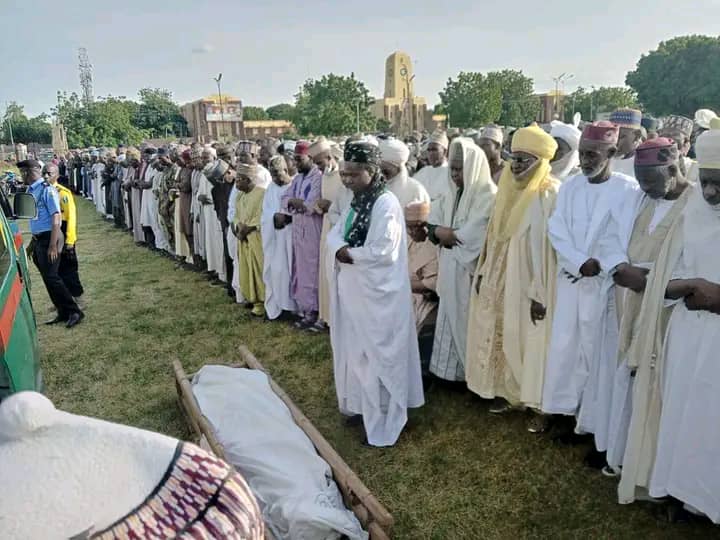
The funeral prayer for the late Shehu Kabir Bayero, Barde Kerarriya of Kano and District Head of Dorayi, was held on Thursday evening at Kofar Kudu, Kano Emir’s Palace.
KANO FOCUS reports that the prayer was led by the Chief Imam of Khamsus Salawati Mosque, Kofar Kudu, Malam Bello, and attended by hundreds of people from different parts of Kano State.
Among those who attended were the Secretary to the Kano State Government, Alhaji Umar Faruk; representative of the Emir of Kano, Matawallen Kano, Alhaji Aliyu Ibrahim Matawalle; Chief of Staff to the Kano State Government House, Dr Sani Wali; as well as district heads and members of the Muslim community.
Shehu Kabir Bayero died in a hospital in Egypt following a period of illness. He is survived by his wives, children and other relatives.
Until his death, the late Bayero served as Commissioner of Police in Gombe and Osun states before retiring from the Nigeria Police Force.
Following his retirement, the late Emir of Kano, Alhaji Ado Bayero, appointed him as the Barde Kerarriya of Kano and District Head of Takai Local Government Area after the death of his father, the late Kabir Bayero, an elder brother of the former emir.
He later served as District Head of Gwarzo.
Due to his wealth of experience in security matters, the current Emir of Kano, Khalifa Muhammadu Sanusi II, subsequently reassigned him as District Head of Dorayi, where he was expected to contribute to the sustenance of peace and security in the area.
The late district head was remembered for his service to the state and his experience in security and traditional administration.
May Allah forgive his shortcomings, have mercy on his soul and grant him Jannatul Firdaus. Ameen.
Nasiru Yusuf Ibrahim
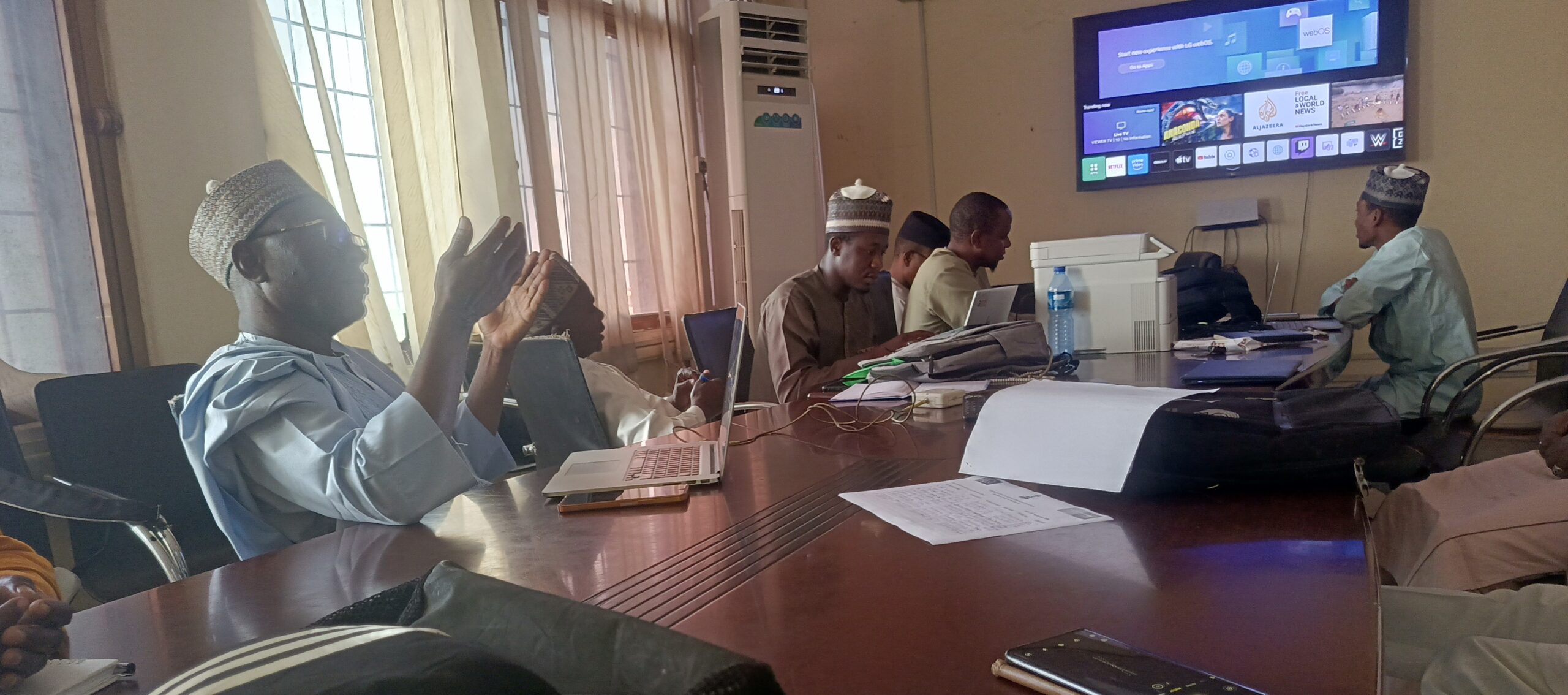
The Kano State Ministry of Education, with support from the United Nations Children’s Fund (UNICEF), has held a planning meeting on the implementation and effective utilisation of the Nigeria Learning Passport (NLP) in the state.
KANO FOCUS reports that the meeting brought together relevant stakeholders from various ministries, agencies and development partners working in the education sector.
According to Malam Naziru Sirajo, deputy director EMIS and statistics in the Ministry of Education, the meeting was aimed at reviewing the current status of the Nigeria Learning Passport in Kano and developing a coordinated plan to strengthen its implementation, content utilisation, course completion, monitoring of learners’ progress and certification.
The Nigeria Learning Passport is a digital learning platform designed to provide Nigerian children and young people with access to curriculum-aligned educational content, including lessons, learning materials and assessments.
The platform is also designed to support learning continuity, including for learners facing limited or intermittent internet connectivity, while providing teachers and education stakeholders with digital resources to complement classroom instruction.
In Kano, the initiative is expected to strengthen awareness and utilisation of digital learning, while building the capacity of master trainers and technical teams to support schools, teachers and learners in using the platform effectively.
The effective utilisation of the Nigeria Learning Passport is expected to expand access to quality digital learning resources, promote independent learning, strengthen digital literacy and support improved learning outcomes and greater equity in access to educational opportunities.

Kano Police Arrest Eight in Drug, Thuggery Raids

Funeral Prayer Held for Late Shehu Kabir Bayero

Kano holds planning meeting on implementation of Nigeria learning passport

Kwankwaso, Gov Yusuf, Amnesty International Condemn Killing of Ibrahim Khalil Dan Shagamu

Kano Police arrest two suspects over death of Ibrahim Khalil Danshagamu

Kano State Out-of-School Children Survey Report 2026: From Evidence to Impact — A Roadmap For Educational Development

Kano schools to resume Sunday for 2026/2027 academic session

From Grade Level 03 to Director: A 35-Year Journey of Resilience and Service

Justice Abdullahi Mahmud Bayero of Court of Appeal Dies in Egypt

