
Opinion
Femi Adesina MUST respect our tears

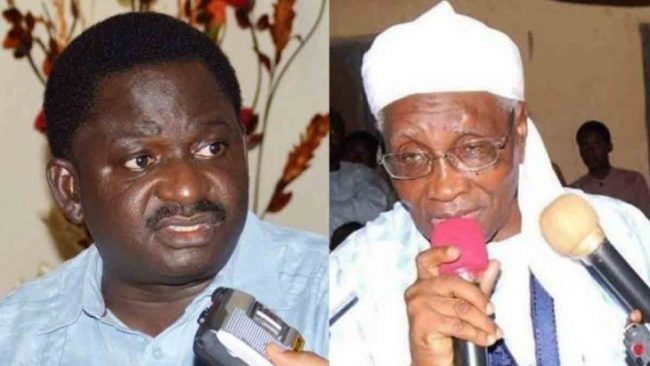
Abba Gwale
It always takes presidential media aides days, weeks or even a month before they respond to some of the issues that need their voice because of their less interest in the matter or their perpetual pretense that they are not aware of the incidents that need presidential attention.
Northern Nigeria has become the epicenter of senseless killings, due to the inability of our leaders to protect the lives and properties of the people that came out en masse to cast their votes for them on Election Day to represent them in various positions as enshrined by the constitution.
Everybody knows that Northern Nigeria is bleeding because of the incessant attacks by bandits, Boko Haram fighters, kidnappers, cattle rustlers, armed robbers and communal conflicts bedeviling our North.
Some of the schools in the affected areas have now become IDP camps.

Bandits chased the community members out of their houses, farms and markets in daylight attacks and our leaders shut their eyes pretending they don’t know what is going on in the region that contributes more than half of the votes which the president got during election.
Femi Adesina’s insensitive expletives to Northern leaders show that the president himself isn’t aware of what is going on in Katsina – his home state – Borno, Zamfara and some parts of Sokoto states.
As a media aide to the president of Nigeria, Femi should be tough-minded, respectful, tolerant and calm when responding to the issues that force somebody or group of people to cry out asking those responsible to save their lives.
Insecurity is real
When something bad happens to people, you should not insult the victims for their reactions; Professor Ango Abdullahi did not deserve Femi’s harsh words just because he condemned his paymaster’s inaction towards the current situation.
Adesina should have put himself in our shoes and imagine he was the victim or nursing the victims and he has that strong voice.
I don’t think he can keep his mouth mute because he is comfortable with the way government is responding to the situation.
The impact and pains are for those who washed and buried the bodies of innocent people that have been killed by confident bandits who sometimes send letters to the prospective target to alert them and subsequently execute the attack without fear of being stopped by the security personnel.
Femi must agree that the constant attacks by bandits and Boko Haram in Northern Nigeria are enough to show that the security situation in the country is bad and people are tired of their flimsy excuses because we never experienced the kind of situation we are in.
Shocking reaction
The Northern Elders Forum (NEF) lamented Buhari’s government over the rate of insecurity in the North and accused it of failing to curtail the situation in a statement, which is not political.
But in his swift reaction, Femi Adesina called Ango a Former Vice-Chancellor, “mere irritant and featherweight” and called the organization “a quasi-organisation” that boasts of no credible membership, and called its leader a general without troops and a paper tiger.
Elders are elders, and they need to be respected.
Tears are tears and Femi Adesina MUST respect our tears.
I am sure he will not treat his people the way he does our elders.
We were “SHOCKED”.
We are from the North, we are the victims, the incapacitated president is our son, but we are dying every day as a result of his inaction, our socio-economic condition is in wayward situation that needs presidential attention which we might not get.
Adesina’s galling and eerie behavior towards our elders and our region is uncalled for and Professor Ango Abdullahi did not deserve those kinds of words from the pseudo-nationalist Adesina because he did not say things that are not correct.
Bandits and Boko Haram have been killing people in hundreds. There are gory pictures on both national dailies and social media platforms of the suffering communities.
Dead bodies litter the ground and new IDP camps are emerging.
Most of the killings are happening to unarmed people that are struggling for their lives in the suburbs.
The victims are farmers and in this rainy season, we need food from the innocent farmers.
Now, we don’t need roads and airports, we only need food and we need to live.
We need a peaceful North – we were in peace – please we need to live.
Abba Gwale, journalist and public affairs commentator writes in from Kano.



If you’ve ever wondered where to experience the best online shopping in Nigeria, you’re not alone. The shift toward digital buying has transformed how Nigerians shop — from fashion and electronics to home appliances and groceries. One of the fastest-rising names leading this change is Nujora.ng, a trusted platform designed to make shopping easier, faster, and more rewarding for both buyers and local sellers.
Why Online Shopping Is Booming in Nigeria
Nigerians are increasingly turning to online shopping for convenience, better prices, and access to products that aren’t always available in local markets. The ease of browsing and comparing prices from your phone has made e-commerce part of everyday life.
With platforms like Nujora.ng, buyers can enjoy smooth transactions, quick delivery, and reliable customer support — all while supporting homegrown businesses.
Why Nujora.ng Is Your Go-To Online Marketplace
When it comes to the best online shopping experience in Nigeria, Nujora offers more than just a place to buy and sell. It’s a growing community marketplace built around trust, affordability, and local connection.
Here’s why shoppers love Nujora:
🛍️ Wide Range of Products: From fashion to electronics, beauty, and home essentials.
🚚 Fast Delivery: Items are delivered quickly from nearby vendors.
🤝 Trusted Sellers: Verified local sellers ensure genuine products.
💰 Affordable Deals: Competitive pricing with no hidden costs.
🌍 Support Local: Every purchase helps small Nigerian businesses grow.
Calling All Local Sellers – Join Nujora Today!
Are you a business owner, vendor, or artisan looking to grow your sales?
Nujora.ng is your opportunity to take your business online without the stress of building a website. Our mission is to empower local entrepreneurs to reach thousands of new customers easily.
Here’s what sellers get when they join:
A user-friendly dashboard to upload and manage products.
Direct access to nearby buyers.
Marketing and visibility support from Nujora’s team.
Secure transactions and fast payouts.
Join Nujora today — the future of online selling is local, and Nujora is here to make it happen.
Visit www.nujora.ng to start selling now.
Final Thoughts
The best online shopping in Nigeria isn’t just about convenience — it’s about connection. With Nujora.ng, buyers get quality and speed, while sellers gain exposure and growth. Together, we’re building a smarter, more inclusive marketplace that keeps commerce local and digital.
Start your journey today at www.nujora.ng — discover amazing deals, support local sellers, and experience Nigeria’s most convenient way to shop online.

Aliyu Isa Aliyu, Ph.D
During my time as the financial secretary of NNPP in Kano state and other political engagements, I saw clearly how many of the so-called fake Kwankwasiyya loyalists behaved. They always came with sweet promises, showing deep respect for Kwankwaso’s leadership and pretending to be his strongest disciples. They claimed they would defend the party’s ideology even with their lives. But the moment they got what they wanted, whether it was an election victory, recognition, or political favour, they slowly pulled away. Their loyalty was never to the Kwankwasiyya movement, but only to their own ambitions. Personally, I never regarded their loyalty, never praised them, and never wasted my time writing about them.
What surprised me most was Kwankwaso’s ability to take all of this without holding any grudges. Time and again, he welcomed them back whenever they were politically stranded. Instead of shutting them out, he gave them another chance, teaching us that leadership is not about revenge but about building bridges, even with those who once betrayed you. Many of us in the party leadership found it hard to understand this level of patience, but over time, I came to see it as part of what makes him a rare politician in Nigeria.
This same cycle has repeated itself in every election season. Politicians who abandoned kwankwasiyya the most critical times would always return in desperation, and Kwankwaso would open the doors again. For him, the bigger picture has always been the growth of the movement and the empowerment of the masses, not the small politics of exclusion. But from my own experience, I have seen both the strength and weakness of this approach. The strength is Kwankwaso’s unmatched generosity and forgiveness, but the weakness is the opportunism of those who treat leadership as a shortcut to power. In 2024, some of them worked tirelessly with all kinds of deceit just to secure tickets for their boys as local government chairmen, but thankfully Madugu Kwankwaso was firm and did not fall into their trap.
Now the time has come for our leader, Senator Kwankwaso, to reflect on his political generosity and take the right stand. It is better to lose an election with true loyalists than to win with those sabbatical politicians who only come for their selfish gains. Nobody can deny that they contributed to NNPP’s growth in Kano, but the truth is that the sacrifices Kwankwaso made for them are far greater than what they have done for him or the movement. Before their defection to NNPP in 2022, there were committed people already vying for those positions, but they were pleaded to step down and hand over the tickets for free. You cannot build a political movement with people who carry two faces. In politics, you are either here or there; there is no middle ground. Kwankwasiyya is not only about winning elections, it is also about discipline and sacrifice. We won clearly in 2019 before the election was declared inconclusive, and we still won in 2023 despite the odds. If Almighty Allah has destined our victory in 2027, no betrayal can stop it, no matter who leaves Kwankwasiyya.
– Aliyu Isa Aliyu, Ph.D
Opinion
A reply to Dan’uwa Rano’s from makafi to awakai: the display of blind plotics and political idolatry
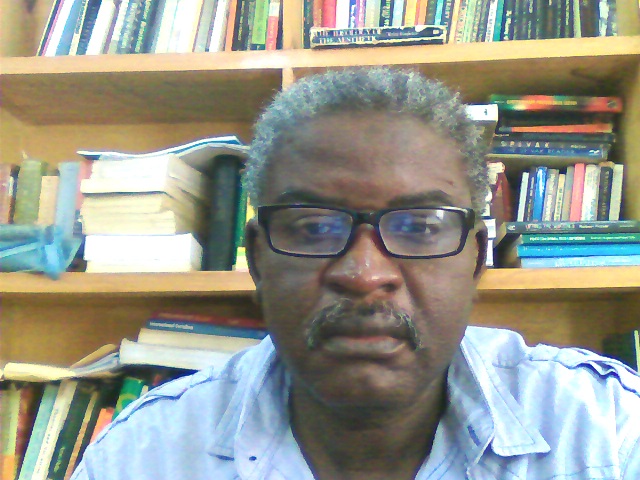
Ibrahim Bello-Kano
I’ve read Danuwa Rano’s post as a trained and professional critic of prose works, both fictional and non-fictional (the kind of writing in which the writer and the narrator are the same person, and in which there is a direct mode of address to the purported reader of the writing, the text). Thus, my response to this post, shared on this platform, is three-fold.
1. The writer, Danuwa Rano, is a well-known member or sympathiser of the APC in Kano and a supporter of an aspiring APC candidate for the position of the Gov. of Kano State, despite his critical yet digressive comment on the Gov of Jigawa, Namadi, Abubakar Rimi, and Aminu Kano, to cite just those three. In my academic field, we train our students in the literary criticism of non-fictional texts to look for the writer’s MOTIVE for writing. Usually, in this kind of writing, the writer does not reveal his motive (which is usually hidden) for writing directly but takes detours, digressions, and other textual strategies of establishing some nuggets of “authenticity”. Just a ploy to deceive the unsuspecting or the gullible reeader, to say the least. If and where the writer is well known, we also seek to read his previous works, including his podcasts, interviews, or open attitudinal-ideological stance in relation to public discourse.
2. We also probe the text for its linguistic “unsaids” or “non-saids”, namely its TONE and the perspectival presentation of events and people (we call this reading or interpretive strategy “symptomatic reading”). It’s interesting that the writer himself reveals that his text was inspired by a previous one critical of Kwankwaso and the Kwankwasiyya movement, written by Auwal Anwar.
3. After a thinly veiled ideological bad faith on the part of Danuwa Rano, he delves into a moralistic discourse, namely that God/Allah has created human beings with dignity and with self-worth, higher than those of the animals such as “goats”; and much more integrative than the blind (“makafi”). But Danuwa Rano is clearly not very educated in how language, in this case Hausa and English, work. In language, in Hausa, we call or regard someone that is a maestro, a highly gifted person, in any vocation or an endeavor, as, or by describing him as “shege” or “maye” in or about something that we admire or value (masterly). Why is that? Language has both DENOTATION and CONNOTATION. In any Hausa dictionary, the denotation of “Shege” would be “bastard” (illegitimate within the marriage-kinship and cultural system). But when used in the context of connotation, “Shege” describes someone with admirable skills, in appreciation of his or her skills, mastery, and distinguished capacities. Alas, this is what Danuwa Rano has missed. So, in every linguistic comminity, symbolism, figuration, and emblematic descriptions are never far away from the symbolic sphere of experience. Here’s another example from the English language. Expressions such as “evil genius” and the Latinate “maestro” exist because symbolisation or figural descriptions are creative, a way of coming into the undecidable space of appreciation and appropriation, including the anxiety about what we denote in the cultural-linguistic game, and in our unconscious.
4. Rather bizarrely and crudely, perhaps even maliciously, Danuwa Rano fails to see, blinded by his ideological moralism, that whenever the Kwankwasiyya people call themselves “makafi” and “awaki” they are, in fact, ENGAGING IN the SYMBOLIC PARODY of their opponents, that is, those who criticise them for being resolute and committed political agents in a certain way. To borrow a metaphor from Michel Foucault, it is the Kwankwasiyya people’s way of “self-presentation” in the political and democratic arena. Indeed, it was the same process at work when the British Workers called themselves “Chartists” (based on their Charter of Demands). But we know that a group of human beings cannot be a List or a Charter. Rather, in language, any group can identify with a colour (“Red” for communists and Marxists; Green for Muslims; or with emblems (the Crescent Moon, The Cross, or the Hammer and Sickle, or just an Effigy; a country’s or a state’s “coat of arms”). Should we assume, then, that the Kwankwasiyya followers are physically, intellectually, or ideologically blind? But if they were, they would not work for someone, Senator Kwankwaso (RMK), that they couldn’t have literally “seen”.
5. Danuwa Rano is such a poor writer, such a poorly educated person on how language and symbolisation actually work, that he mistook a figural statement as intransitively real and factual. What a pity! In fact, I am tempted here to cite the famous argument of the German philosopher, Friedrich Nietzsche, that language as such is only a doxa (opinion) rather than (a) truth (episteme). In this view, language is a kind of rhetoric and thus inherently rhetorical. For example, in the Hausa “Kirari” system, any one can call themselves a lion, a mouse, an elephant, or even a fox, or even, indeed, a “merciless killer”, one who does not and would not spare his enemies. I recall, in my youth, my father admiringly calling my mother “uwar garke” (“the mother of the herd”, his herd) but does that mean she was a cow, the female head of a herd of cows? Certainly not!
6. It is a mark of Danuwa Rano’s ideological project that he mistakes linguistic and symbolic parody for the literal thing. Hence, his weak, unconvincing, and flat moralistic attacks on RMK and the Kwankwasiyya people. The latter are saying that they are deeply committed to their political projects, that they are not the typical political opportunists, fortune chasers, and the “fair weather people” that one finds in the Kano APC. In addition, the Kwankwasiyya “Makafi” are also saying that they see clearly where their principled allegiance lies.
7. If Danuwa Rano were a careful, perceptive thinker or writer of political innuendo, he would have seen something prevalent in the history of Kano since the 18th century, namely the tradition of following religious, sectoral leaders, as seen in the mass of committed followers in Kano of the Tariqa, the Shia, and the Izala, to mention just those three. It’s hard not to find a Kano man or woman that is not openly oriented to those three groups.
8. It is, without a doubt, the same temperament that one still finds in the secular political sphere in Kano. Expecting otherwise in the political sphere of the community is either short-sighted or willful blindness or sheer ignorance, all all three. Or, one might ignore all this in furtherance of his un-stated ideological-political agenda.
9. Let me reiterate a point that I have always argued in public: Senator Rabiu Musa Kwankwaso is, without a doubt, a veritable political leader for many reasons. There is not one politician in Kano today who has the deep and wide charisma as to draw a huge crowd of enthusiastic supporters, with the charm and grace that can score, or in fact has scored, over one million votes in Kano State in the elections. His party’s candidate for Governor scored well over a million votes in the 2023 elections. Even Tinubu lost in Lagos in the 2023 elections (only scored anout 600, 000 votes). For that reason and many others (RMK’s cosmic patience, personal Promesean and Sysipusian endurance, his political sagacity and capacity for brilliant and moving political oratory— the “Ma-a-ha chant”), he is the target of disgruntled enemies, the object of deep malice but that is obscured or hidden as “objective analysis”.
10. But hate him or love him, despite Kwankwasiyya movement or not, one must accept that RMK is simply the modern expression of the new politics that is gripping the imagination of young people and that of perceptive, politically committed intellectuals, those who know what is at stake in the political future of Kano State and Nigeria as a whole.
11. Imagine a political leader, the one whose previously opportunistic followers had deserted when he left office, the man who stayed out of power and elective office for eight years, the man who founded a political party within eight months to the national elections, and yet him and his party swept the board, won virtually all the elective offices, including the Govenorship. I daresay such a man, RMK, is naturally the target of malice, envy, and bruised political egos. Danuwa Rano’s virtuperations on RMK and the Kwankwasiyya movement is one more example of crudely malicious, badly conceived, poorly written attacks on modern Kano’s most successful person and his movement.
Ibrahim Bello-Kano.

BPSR Ranks NCC among Top 3 MDAs in Best Website Performance in 2025

Quality of Service Challenges in Abuja

BEC Ranks NCC Among Top Five Best-Performing Government Agencies in 2025

Dangote Cement commissions 100 Billion CFA Francs Cement Plant in Côte d’Ivoire Cement Plant

