
Opinion
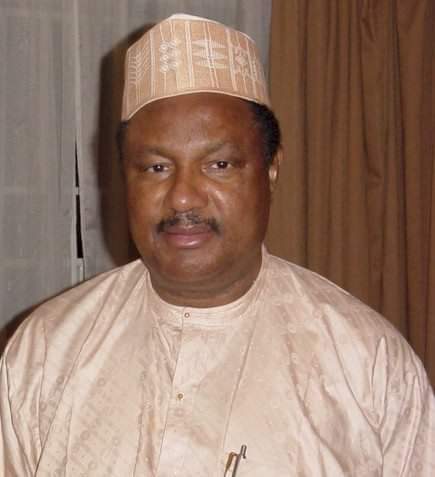
Remembering Abubakar Rimi, the first civilian governor of Kano

Isyaku Ibrahim
Honesty. fearlessness,coupled with hard work and tirelessness were the Sterling trade marks of first civilian governor of defunct Kano Alhaji Muhammadu Abubakar Rimi.
The firebrand politician fondly called Maigida, Limamin Chanji, Na Sa’a maisa’a adon gari one of the most populous progressive politicians of the recent past answered the clarion call twelve years ago on his way home after attending the coronation of emir of Dass in Bauchi state.
The great philosopher Thomas Hobbes once said life without government would be solitary poor, nasty, brutish and short.
This was what the activist fought bitterly during his short span as Chief Executive of old Kano State as he tried to ensure that the governed felt the existence of government.

He done this through the abolishing of draconian laws consisting of cattle and head tax as well as residential fee known as kudin bango.
For those that were in post primary schools during his era, they were given reference books free of charge likewise pocket money on monthly basis while workers salary was increased above that of the federal government students and workers were sent overseas to acquire additional skills in their various fields.
Alhaji Muhammad Abubakar held the record of being the only governor in the history of Kano that all his members of cabinet were University graduates and most of them below forty years of age let alone selected along rivals parties not minding the repercussion of doing so and apart from that the first governor to voluntarily quit the party that brought him to another in the history of the country
As part of his government’s effort to instill decency, across the length and breadth of the society, a land commission of inquiry aimed at curtailing land racketeering and all sorts of abuses associated with its allocation was set up under the process, many lands usurped by the mighty were returned to their original owners.
Categorically Malam Aminu Kano of blessed memory said if a government provides potable drinking water roads and other basic necessities of life to the electorate the chapter has been closed thus,by the virtue of this proclamation, Rimi should be accorded credit as in less than four years he made Kano more than ever before.
Consequentially, Malam Ibrahim Khalil in an interview with ARTV News said Rimi was the best governor in history of Kano as according to him in less than four years he executed projects that his teeming successors are yet to .accomplish.
He maintained that nobody will give information of his bank account both domestic and foreign this was definitely true as even his owned house when he resigned from his seat, was built through obtaining a bank loan.
As Rimi is being commemorated it is our prayers that his actions would continue to be emulated with a view to taking commoners out of the present trepidations.
Ibrahim, is a staff of Abubakar Rimi Television ARTV Kano and can be reached via 0703 024 4199

Prof Ibrahim Bello-Kano (IBK)
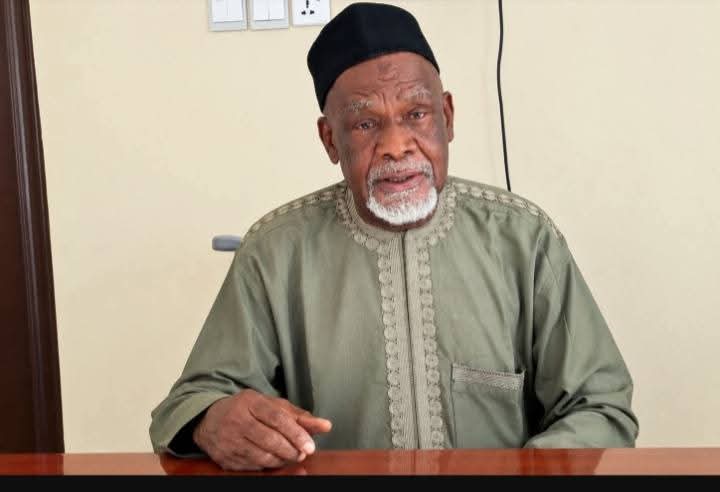
Malam Ibrahim Mu’azzam is arguably the most influential person and university teacher in my academic and intellectual development. Although I studied Sociology rather than Political Science, I audited his courses and attended his lectures throughout my early and later undergraduate years.
One of the qualities that distinguished him then, and which he has retained to this day, is his charismatic personality and the natural attraction he exerts on students through his wide-ranging knowledge, teaching expertise and remarkable ability to inspire intellectual curiosity. Students passionate about ideas and critical thinking were always drawn to his approach to introducing complex concepts to an often bewildered classroom.
Malam Mu’azzam, as we fondly call him, was a magnet for ideas and a model of critical intellectual engagement. In those days, he probably had one of the largest personal libraries or private studies. Scores of undergraduate and postgraduate students trooped to his home, which he moved to after leaving the university quarters.
We marvelled at his extraordinary collection of books spanning numerous disciplines, far beyond his formal academic specialisation and teaching responsibilities. His study contained, and continues to contain, books on a wide range of subjects, including the philosophy of science, theology, education, English, linguistics and, of course, classic and highly acclaimed works in the social sciences, Political Science and Geography.
I still remember an incident in 1988 when Malam and I travelled to the University of Nigeria, Nsukka, for an Academic Staff Union of Universities (ASUU) delegates’ conference. I accompanied him to the university bookshop and watched him purchase books across a variety of academic disciplines. That experience inspired me to follow his example by building a collection of books from different fields—a habit I have sustained to this day.
Despite his formal retirement after a long career at Bayero University, Kano (BUK), Malam remains intellectually active. He continues to work with us at the Ibrahim Mu’azzam Institute of Philosophy, organised by the Centre for Information Technology and Development (CITAD).
His continued engagement is a remarkable testament to his enduring contributions to teaching, critical scholarship and the advancement of knowledge within and beyond the academic community. Malam Mu’azzam’s influence extends far beyond the classroom, inspiring generations of students and scholars to embrace intellectual curiosity, independent thought and lifelong learning.
Prof Ibrahim Bello-Kano (IBK), teaches at Bayero University, Kano.
Mustapha Muhammad
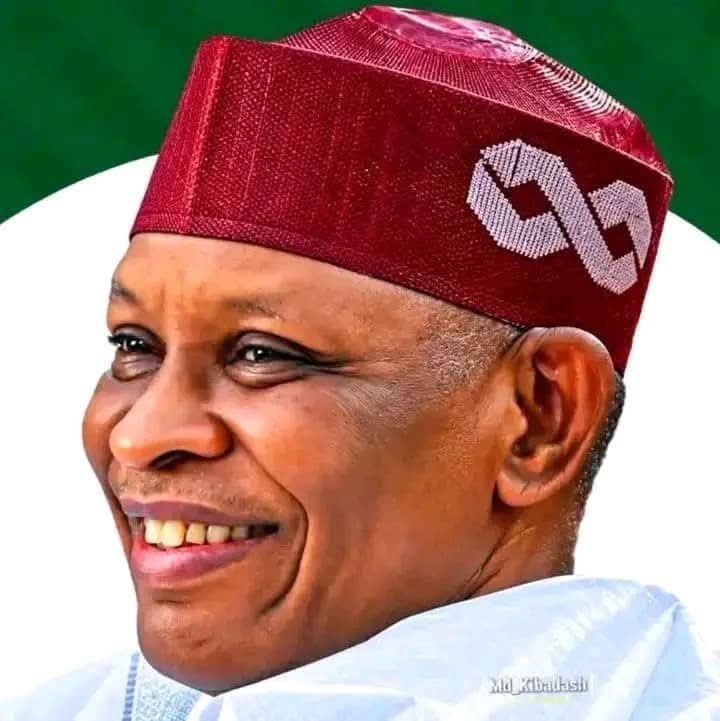
As the 2027 general elections draw nearer, the signs pointing towards a possible victory for Alhaji Abba Kabir Yusuf in his bid for a second term as Executive Governor of Kano State are becoming clearer by the day. The road, once fraught with political obstacles, conflicts, and challenges, appears to be clearing rapidly. Victory is increasingly within sight, God willing.
The foundation of Governor Yusuf’s political momentum rests on his administration’s performance, astute political manoeuvring, successful consensus-building during party primaries, and proactive reconciliation efforts. By bringing key political figures from Kano’s three senatorial districts—South, North, and Central—under one umbrella, coupled with the perceived decline in the influence of the Kwankwasiyya movement following widespread defections to the All Progressives Congress (APC), Governor Yusuf has positioned himself favourably ahead of the forthcoming election.
He stands out among the contenders for the Kano governorship. His political resilience and strategic departure from what he considers the troubled waters of the New Nigeria Peoples Party (NNPP) demonstrate his ability to navigate complex political challenges in pursuit of victory.
Below are some of the key factors driving Governor Yusuf’s political momentum ahead of the 2027 general elections.
Transformative Governance and Administrative Scorecard
Over the past three years, Governor Abba Kabir Yusuf has implemented people-oriented projects and policies aimed at improving the lives of Kano residents across critical sectors.
Educational Revitalisation
Increased budgetary allocation: Funding for education rose from 29.5 per cent in 2024 to 30.5 per cent in 2025 and reached 31.5 per cent in 2026, out of a total state budget exceeding ₦1.47 trillion.
Massive recruitment: Nearly 20,000 teachers, including personnel recruited under the Kano State Better Education for All (BESDA) initiative, were employed to address critical teacher shortages in classrooms.
Infrastructure upgrades: Nearly 400 schools across the state’s 44 local government areas (LGAs) have undergone complete renovation, alongside ongoing construction projects.
Academic excellence: Kano State led national performance rankings in the National Examinations Council (NECO) examinations in 2025 and 2026. In 2026, the state produced 74,413 candidates who obtained at least five credits, including English Language and Mathematics, surpassing Lagos State, with 72,496 candidates, and Oyo State, with 55,543.
Healthcare Modernisation and Pension Delivery
Primary healthcare overhaul: More than 340 primary healthcare centres across the 44 LGAs have been renovated.
Hospital expansion: At least 10 new general hospitals have been constructed in underserved LGAs, while work is ongoing on six additional facilities to ensure that every LGA has a dedicated general hospital.
Modern equipment: Health facilities have been equipped with CT scanners, dialysis units, ultrasound machines, and automated laboratory analysers.
Settlement of pension arrears: Of the inherited ₦48 billion backlog of pension and gratuity liabilities, the administration has disbursed more than ₦32 billion to retirees.
Agricultural Development and Rural Infrastructure
Farm mechanisation and subsidies: The state procured 98 tractors and 48 combine harvesters while introducing a 50 per cent fertiliser subsidy programme across all LGAs.
Irrigation expansion: The rehabilitation of the Watari Irrigation Scheme expanded irrigation coverage by 1,000 hectares, with the aim of boosting year-round agricultural production.
Road networks and urban renewal: Eighteen of the 34 planned five-kilometre rural road projects have been completed, with solar streetlights installed. In addition, 12 of the 24 planned urban renewal road projects, covering approximately 76 kilometres, have been delivered.
Bridge reconstruction: The Kubaraci-Kura Bridge was restored, reopening important economic and transportation corridors.
Empowerment and Skills Acquisition
Social safety nets: Monthly stipends of ₦50,000 are provided to 5,200 women, while grants of ₦150,000 have been distributed to youths across the state.
Entrepreneurship: Twenty-six technical and entrepreneurship institutes have been revitalised to provide practical vocational training and equip beneficiaries with relevant skills.
Political Realignment and Party Unity
Governor Yusuf demonstrated political foresight by defecting to the All Progressives Congress (APC). His decision, in the view of his supporters, was timely and strategically informed by the need to secure his political future.
The subsequent defections from the NNPP by members of the Kwankwasiyya movement have, according to this argument, strengthened the case for his political realignment. The move also positioned him and his supporters within a political platform they consider more advantageous ahead of the 2027 elections.
Furthermore, as the state’s APC leader, Governor Yusuf successfully managed the consensus process during the party primaries, resulting in what supporters described as a “no victor, no vanquished” outcome.
His ongoing reconciliation efforts have also helped bring political stakeholders from Kano’s three senatorial districts together, strengthening the prospect of a united political front ahead of the 2027 polls.
With his administration’s reported achievements, political realignment, and reconciliation efforts, Governor Yusuf’s supporters believe he is well positioned to secure a second term in office.
No doubt, Alhaji Abba Kabir Yusuf, the Executive Governor of Kano State, is traversing the path to victory in the 2027 general elections.
Mustapha Muhammad is the Chief Press Secretary to the Executive Governor of Kano State, Alhaji Abba Kabir Yusuf. He writes from Kano.
Jamilu Uba Adamu
Some people come into our lives and leave an indelible mark that transcends blood relations. Through their honesty, humility, nobility, contentment and disregard for worldly ostentation, they become more than friends or acquaintances; they become second fathers whose wisdom and kindness shape our lives.
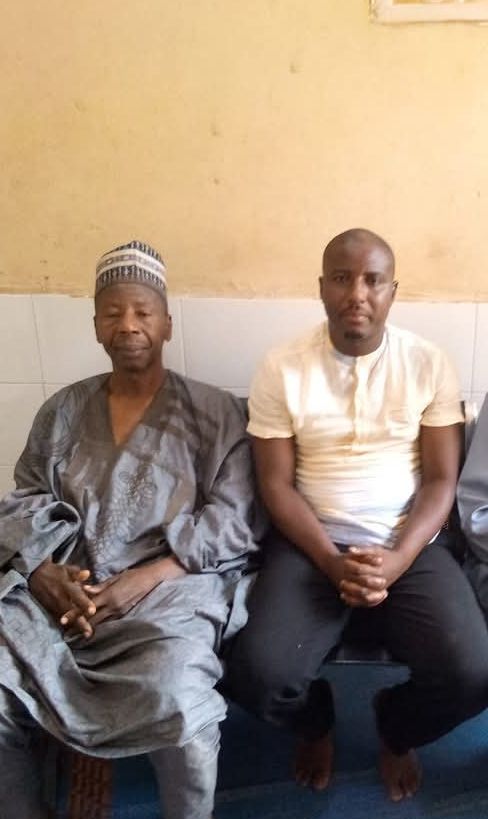
Late Alhaji Bashir Ahmed Maizare was one such rare individual. His death is not merely the loss of a respected sports administrator but the departure of a father figure, mentor and custodian of Kano’s sporting heritage.
A Bond Beyond Blood
My relationship with the late Maizare began through my elder brother, Abdullahi Bayero Uba Adamu, who worked under him at the Kano State Sports Commission. My passion for sports naturally brought me closer to him and strengthened the bond that would eventually develop into a father-and-son relationship.
I vividly remember the day my elder brother escorted me to Maizare’s residence at Kofar Wambai Quarters in Kano and introduced me to him. What began as a simple introduction blossomed into a lasting relationship. From that day, I became a regular visitor to his home, where I found not just a sports enthusiast and administrator but a father figure whose counsel and encouragement meant so much to me.
His home became a place where I could seek guidance, share my concerns and learn valuable lessons about sports and life. He welcomed my questions, listened patiently to my challenges and offered advice without hesitation. His humility made him approachable, while his wealth of experience made his counsel invaluable.
The Shocking News of His Death
I was attending a training course in Jos, Plateau State, when the news of his death reached me. We had just stepped out for a break after a rigorous and exhausting lecture. I switched on my mobile data to check my WhatsApp messages.
Although I belong to several WhatsApp groups, one platform I regularly follow is the Kano Sports Commission group, driven by my enduring passion for sports in Kano.
After attending to some personal messages, I opened the Commission’s group. Almost immediately, I came across a series of condolence messages announcing the death of Alhaji Bashir Ahmed Maizare.
I was stunned. For a moment, I struggled to comprehend what I was reading. Before I could fully process the devastating news, I received a phone call from Malam Haruna Sabga, one of his neighbours at Kofar Wambai Quarters, who confirmed that Maizare had passed away.
The confirmation plunged me into deep sorrow. I felt like crying, my mood changed instantly, and I completely lost my appetite.
It was difficult to accept that someone who had played such a significant role in my life was gone. Beyond the public figure known within Kano’s sporting circles was a man whose personal kindness, encouragement and fatherly affection had touched my life profoundly.
A Mentor Who Believed in My Potential
One of the qualities I will forever remember about Maizare was his unwavering encouragement. He consistently motivated me to participate actively in sporting activities and supported my efforts to contribute to sports development.
His influence and fatherly support recently contributed to my appointment as Team Manager of the Kano Pillars Amputee Football Team and Vice Chairman of the Kano State Tug of War Association.
These appointments represent more than personal achievements to me. They also remind me of the encouragement I received from a man who believed in nurturing others and helping them discover opportunities to serve.
Maizare understood that sports administration was not merely about organising competitions or managing teams. It was also about identifying talent, encouraging young people, sharing knowledge and creating opportunities for others to contribute meaningfully to society.
He was always willing to offer guidance whenever I encountered difficulties. Whenever I faced a challenging situation in sports, he was among the first people I contacted. He would listen attentively and offer practical solutions, never making me feel that my concerns were unimportant.
That willingness to help, even when there was nothing to gain personally, distinguished him as a genuine mentor.
His Contribution to Documenting Kano’s Football History
One of the most enduring aspects of my relationship with the late Maizare was his invaluable contribution to the successful writing of my book, *Takaitaccen Tarihin Wasan Kwallon Kafa a Kano* (A Brief History of Football in Kano).
Documenting the history of football in Kano required access to reliable information, historical accounts and the experiences of people who had witnessed the evolution of the game. Maizare proved to be an invaluable source of knowledge and guidance throughout the process.
He never grew tired of attending to me. He patiently answered my questions and shared insights that helped me navigate the challenges of documenting the history of football in the state.
His support went beyond the ordinary assistance of a friend or acquaintance. He understood the importance of preserving sporting history for future generations and willingly contributed to an effort that would help keep Kano’s football heritage alive.
Looking back, I realise that his contribution to the book was part of a much broader legacy. He was not simply sharing information; he was helping preserve the collective memory of Kano’s sporting community.
More Than a Sports Administrator
Late Alhaji Bashir Ahmed Maizare was more than a sports administrator. He was a school from which others could learn, an archive of sporting memories and an encyclopaedia of Kano’s sports history.
His knowledge, built on years of experience and close association with the sporting community, made him a valuable resource for anyone seeking to understand the development of sports in Kano.
Yet, his greatness was not defined by knowledge alone. His humility, generosity, patience and commitment to youth development made him an exceptional human being.
In a world where positions and titles sometimes create barriers between leaders and those they serve, Maizare remained accessible and approachable. He demonstrated that true leadership is not measured solely by the authority one possesses but also by the lives one touches and the opportunities one creates for others.
His life offers an important lesson to sports administrators and public servants: institutions become stronger when experienced individuals are willing to mentor younger people, preserve institutional memory and pass on knowledge rather than keep it to themselves.
For Kano State, his passing should serve as a reminder of the importance of documenting the experiences of veteran sports administrators and preserving the history of the state’s sporting achievements. When such individuals pass away without their knowledge and experiences being adequately documented, society risks losing an irreplaceable part of its heritage.
A Loss Beyond the Family
The death of Alhaji Bashir Ahmed Maizare is a profound loss not only to his immediate family but also to the sporting fraternity in Kano State and Nigeria at large.
For those who knew him professionally, he was a repository of sports knowledge and experience. For those who benefited from his mentorship, he was a source of guidance and encouragement. For me, he was a father figure whose support and kindness I will continue to cherish.
Although death has taken him away from us, the values he embodied and the lives he influenced remain part of his enduring legacy. His contributions to sports administration, youth development and the preservation of Kano’s football history will continue to inspire those who had the privilege of knowing him.
Personally, I will forever remember him with gratitude. I will remember his patience, his encouragement, his willingness to help and his unwavering belief in the value of sports. Above all, I will remember the fatherly relationship we shared, which was built not on blood ties but on mutual respect, kindness and genuine affection.
May Almighty Allah (SWT) forgive his shortcomings, accept his good deeds, illuminate his grave and grant him Jannatul Firdaus. May Allah also grant his family, friends, colleagues and the entire sporting community the strength and patience to bear this irreparable loss.
Alhaji Bashir Ahmed Maizare may be gone, but his legacy lives on in the people he mentored, the knowledge he shared and the sporting history he helped preserve.
Ameen.
Jamilu Uba Adamu is a sports writer based in Kano.

Malam Ibrahim Mu’azzam: A Teacher of Teachers and a Lifelong Inspiration

Tinubu celebrates Kwankwaso at 70, says political differences won’t affect relationship

Peter Obi celebrates Kwankwaso at 70, hails partnership in service to Nigeria

Gov Yusuf Congratulates Rabiu Kwankwaso on 70th Birthday

Police arrest suspected bandit, recover AK-47 in Kano’s Falgore forest

Kano leads again as NECO successes rise to 74,413
Kano tops states in 2026 NECO results, Governor Yusuf hails students

ACF begins Dangote Refinery IPO sensitisation campaign in Kano

Kano Govt Suspends Durbar Processions, Horse Riding in Metropolis

