
Opinion
Friday Sermon: Paying Zakah, giving charity, helping the orphans, poor and beedy brings love, peace, unity, mercy and blessing to the nation!

By Imam Murtadha Gusau
In the Name of Allah, the Most Beneficent, the Most Merciful
All praise is due to Allah, the Lord of all creation, may Allah extol the mention of our noble Prophet Muhammad in the highest company of Angels, bless him and give him peace and security―and his family, his Companions and all those who follow him correctly and sincerely until the establishment of the Hour.
Dear brothers and sisters! Islam is a religion that gives the message of love, peace and unity. It wants its followers to live in peace, unity and harmony in the world along with people of other religions and assist each other in making the world a better place. It is this moto of making the world a better place and helping others that Islam emphasises on charity.
In Islam, charity holds such a great place that it is an obligation on Muslims in the form of Zakah. In Islam, Zakah is one of the major pillars of Islam, and those who are wealthy enough, for them it is mandatory to give Zakah. However, when it comes to paying Zakah, there are different misconceptions that are prevalent among Muslims. The lines below discuss the importance of Zakah in Islam and the general misconceptions people have regarding it.
In Islam, Zakah is the fourth pillar. Zakah refers to purification in general and purification of wealth in particular, therefore, those Muslims who have wealth over a certain ratio, they are liable to pay Zakah on it and give it to those who are less fortunate and don’t have sufficient means to live their life in a standard way.
Pertaining to the question of Zakah, the skeptic ones ask the question that why do they have to pay from their hard earned money and wealth to the others? The answer to which is as follows:
Besides the fact that Zakah is an obligation and fulfillment of it leads to a Muslim getting reward from Allah Almighty and intentional swerving from it leads to a Muslim receiving punishment from Him, there are other reasons which one can find pertaining to the importance of Zakah.
1. Helps in Building The Society – The first benefit of Zakah is that it helps those in the society who are less fortunate. For example, if one class of society keeps on gathering all the money and does not provide anything to anyone else, then the rest would stay in the same plight and the society would be distributed in sections. Therefore, when the wealthy of the society give Zakah, it means that the ones, who are non-wealthy, get a chance to enjoy a better lifestyle.
2. Circulation of Money – The second thing that Zakah brings to table pertaining to its being an obligation is the fact that it leads to circulation of money. Zakah is a form of charity and any charitable deed means that the money gets out of the hands of the ones who are already filthy rich with it. Thus, this way the money gets out of the circle of a few people and circulates in the whole economy.
3. Develops a Sense of Sacrificing – Thirdly, Zakah also gives and teaches the message of sacrifice. Wealth is perhaps one of the major elements which people love the most. Therefore, when a person gives from his or her wealth, it actually means that he or she loves the order of Allah Almighty more than their personal liking and they are willing to sacrifice the thing they love for the order of Allah the Magnificent. In the Noble Qur’an, Allah Almighty says:
“The alms are only for the Fuqara (the poor), and Al-Masakin (the needy) and those employed to collect (the funds); and to attract the hearts of those who have been inclined (towards Islam); and to free captives; and for those in debt; and for Allah’s cause, and for the wayfarer (a traveler who is cut off from everything); a duty imposed by Allah. And Allah is All-Knower, All-Wise.” [Qur’an, 9:60]
From this Qur’anic verse, the following people who deserve Zakah can be extracted:
1. The Poor – These are the people who don’t have means to live their life properly and live below the line of poverty.
2. The Needy – These people are also poor, however, because of their pride and bashfulness they don’t expose their poverty.
3. The Collectors – These are the people who are given the duty of collection of Zakah from other people, however, they themselves cant afford to live a normal life.
4. The New Converts – People who convert to Islam are also eligible as Zakah recipients as with their conversion to Islam they need assistance and help for a new start in life.
5. To Free Slaves – The money of Zakah can also be spent on freeing the slaves as well.
6. To Help Someone Pay Debt – Those who are in debt and cant afford to pay it off on their own are also eligible for Zakah.
7. In Cause Of Allah – Zakah can also be given to people who strive in the way of Allah, especially in the form of fighting the usurpers.
8. For Travelers – Zakah can also be given to the travelers and wayfarers as they might need the money when it comes to travel arrangements.
Respected servants of Allah! Besides the major misconceptions of Zakah, Muslims often find it difficult to calculate the amount of Zakah liable upon their possessions. There are many ways one can adopt to to calculate the charity amount, however, the one which nowadays seems much reliable is to use a Zakah calculator. Zakah calculators are often especially designed by taking all necessary measurements in control that help in knowing the amount accurately. If you are one looking to calculate the total amount of charity on your personal belongings, you can do so by asking the reliable scholars.
Or you can use one of the popular mobile phone application which you can install in your smartphone to be able to calculate the amount of charity.
Dear brothers and sisters! There are several misconceptions related to Zakah that have become prevalent among Muslims. The lines below address those misconceptions and give the true version of them:
The first misconception that people have pertaining to Zakah is that it is to be paid in the month of Ramadan only. Although Ramadan is a month of being charitable, however, it in no way means that a Muslim must pay Zakah in this month only. Rather, the time when a Muslim becomes liable for paying Zakah, a year from that time is the time frame within which Zakah is to be paid. Therefore, the duration of year is what needs to be kept in mind and not the month of Ramadan for giving Zakah.
Zakah is only and only liable on the Halal earnings of a person, therefore, there is no chance that Zakah can be relied upon as a means of purifying the wrongly earned wealth. Hence, it is only liable on Halal earned wealth and should be paid on it only.
The third misconception related to Zakah is that it is only liable on gold. It is wrong. The gold mentioned in Qur’an and Hadith is as a standard unit of measurement, therefore, anything whether its cash, silver, stocks, livestock, property or another asset that is worth the same amount as the gold mentioned by Islam, it is liable for Zakah.
The general misconception is that it is the husbands who are liable for paying Zakah for the jewelry of their wife. It is wrong and as jewelry is the personal property of the wife, therefore, she must pay its Zakah and if she is unable to do so then she needs to sell the jewelry to pay Zakah or until the jewelry is below the level of being liable for Zakah. However, if the husband is willing to pay Zakah on behalf of the wife, he can do so, but it is not mandatory on the husband.
The other misconception among people is that they think that Zakah is liable only on the wealth that is in excess of the requisite amount of wealth. They believe that the requisite amount gets exempted once one reaches it and anything in excess is Zakah deductible. It is also wrong, and all of the wealth becomes Zakah deductible once one reaches its requisite figure.
Also some Muslims think that they cannot give Zakah to their poor relatives as they are a part of their family. The relatives who are not in blood relation with you such as parents, spouse, children, and siblings, any relative other than that is eligible for Zakah and should be paid Zakah.
In a nutshell, Zakah is a mandatory tenant of Islam and the objective of it is to help the society share the bounties of Allah and give a chance to the unfortunate ones at a better life. Therefore, every Muslim must gain knowledge about Zakah and ensure that it be paid to the deserving people.
Respected brothers and sisters! Sincerely speaking, one of the greatest means of building peace, unity, love and social harmony in Islam is through giving and spending. Allah Almighty said:
“O you who have believed, spend from that which We have provided for you before there comes a Day in which there is no exchange [i.e., ransom] and no friendship and no intercession. And the disbelievers – they are the wrongdoers.” [Qur’an, 2:254]
And Allah Almighty said:
“Those who spend their wealth [in Allah’s way] by night and by day, secretly and publicly – they will have their reward with their Lord. And no fear will there be concerning them, nor will they grieve.” [Qur’an, 2:274]
And spending in the way of Allah Almighty is one of the biggest challenges faced by man due to his love of and concern for wealth. Allah Almighty said:
“And you love wealth with immense love.” [Qur’an, 89:20]
And the Prophet (Peace be upon him) informed about the temptation of wealth:
“Verily, there is a Fitnah (trial) for every nation and the trial for my Ummah (nation) is wealth.” [At-Tirmithi]
And some have become slaves to wealth. The Prophet (Peace be upon him) said:
“Wretched is the slave of the Dinar and the slave of the Dirham.” [Bukhari]
A person who is stingy with what Allah has given him thinks that doing so is better for him and does not pay heed to the Allah Almighty’s words:
“And let not those who [greedily] withhold what Allah has given them of His bounty ever think that it is better for them. Rather, it is worse for them. Their necks will be encircled by what they withheld on the Day of Resurrection. And to Allah belongs the heritage of the heavens and the earth. And Allah, of what you do, is [fully] Aware.” [Qur’an, 3:180]
Dear brothers and sisters! Wealth is a trust that people were entrusted with. Allah Almighty said:
“And spend out of that in which He (Allah) has made you successive inheritors. For those who have believed among you and spent, there will be a great reward.” [Qur’an, 57:7]
These are the ones for whom Allah blesses their wealth and multiplies their reward in the hereafter. Allah Almighty said:
“Who is it that would loan Allah a goodly loan so He may multiply it for him many times over? And it is Allah who withholds and grants abundance, and to Him you will be returned.” [Qur’an, 2:245]
And one of the most important criteria by which a person’s faith (Iman) is measured is charity. The Prophet (Peace be upon him) said:
“And charity is proof (of your Iman/faith).” [Muslim]
And it is a great transaction with Allah Almighty and striving in the sake of Allah with one’s wealth. And in it is salvation for a person from a painful punishment. Allah Almighty said:
“O you who have believed, shall I guide you to a transaction that will save you from a painful punishment? [It is that] you believe in Allah and His Messenger and strive in the cause of Allah with your wealth and your lives. That is best for you, if you only knew.” [Qur’an, 61:10-11]
And whomever wants to nurture and protect his wealth should spend from it for the sake of Allah. Allah Almighty said:
“Say, “Indeed, my Lord extends provision for whom He wills of His servants and restricts [it] for him. But whatever thing you spend [in His cause] – He will compensate it; and He is the best of providers.” [Qur’an, 34:39]
And in the Hadith Qudsi Allah Almighty said:
“Spend and I shall spend on you.” [Bukhari]
And whatever a person spends for the sake of Allah Almighty is what they will find in front of them on the Day of Resurrection. And what remains in his balance will be the procession of the heirs. The Prophet (Peace be upon him) said:
“For whom among you is the wealth of his heirs dearer to him than his own wealth?’ They said: ‘O Messenger of Allah, there is no one among us for whom his own wealth is not dearer to him than the wealth of his heirs. ’The Messenger of Allah said: For indeed his wealth is what he has sent forward, and the wealth of his heirs is what he retained.’” [Bukhari]
Some people incorrectly think that they are the true owner of the wealth. Indeed, the wealth is the wealth of Allah Almighty that he directed to them in a manner that they did not expect. Allah Almighty said:
“And give them from the wealth of Allah which He has given you.” [Qur’an, 24:33]
And through charity Allah Almighty diverts the afflictions, tribulations, and calamities from a person, and from a nation. As the Prophet (Peace be upon him) said:
“Good deeds ward off destructive evil. And the giving charity secretly quenches the wrath of the Lord. And joining the ties of kinship increases the lifespan.” [See Sahih Al-Jami’ of Sheikh Albani]
And charity extinguishes the bad deeds. The Prophet (Peace be upon him) said:
“Charity extinguishes bad deeds committed just as water extinguishes fire.” [at-Tirmithi]
Respected servants of Allah! Indeed spending and giving charity have etiquettes. And from among the most important etiquette is sincerity to Allah Almighty in it. For not having sincerity nullifies and reduces its reward. And some give charity for the sake of showing off, reputation, boasting or bragging. And doing this will result in the severe punishment on the Day of Resurrection. The Prophet (Peace be upon him) said:
“The person with wealth will be brought (in the hereafter)…he will say: ‘I would nurture the ties of kinship and give charity.’ Then Allah will say to him: ‘You have lied.’ And the angels will say to him: ‘You have lied.’ Allah, Most High, will say: ‘Rather, you wanted it to be said that so-and-so is so generous, and that was said.’” [at-Tirmidhi]
And from the etiquettes of giving the obligatory charity (Zakah) is to spend it as prescribed and to not delay it. For if one has to pay Zakah on his wealth or crops or trade, then he must pay it at the proper time. And it is from the pillars of Islam. And the most beloved means of getting close to Allah Almighty is to perform the obligations. So to avoids the wrath of Allah Almighty one should not delay it without an excuse.
And from the etiquettes of the obligatory charity is that he should seek out the truly needy. And not give to those whom he does not know. For the Zakah is not correct unless it is given to those deserving of it. And Allah Almighty explained the different types of categories that qualify for Zakah.
And from the etiquettes is to not nullify the charity through reminders of it or injury. Allah Almighty said:
“O you who have believed, do not invalidate your charities with reminders [of it] or injury as does one who spends his wealth [only] to be seen by the people and does not believe in Allah and the Last Day.” [Qur’an, 2:264]
Rather one should view giving charity as a favour from Allah Almighty because He the Almighty gave him the wealth and blessed him. And saved him from his inner greed. The wise believer views the needy person as the one who has favour over him because he accepted the charity from him and he gave him the chance to gain reward from Allah Almighty. And some of the righteous would say:
“By Allah, I see the poor person as having favour over me. And if Allah Almighty did not make him accept my charity I would have been denied the reward from Allah Almighty”
And from the etiquette of giving charity is to view the charity as a grace of Allah upon him that The Almighty enriched him and did not make him in need of taking charity. Rather He the Almighty made his hand the upper hand and made him the one who gives and not the one who takes. And it is a great grace that requires striving to be grateful through obedience to Allah Almighty and giving plenty of charity. And having compassion for the poor and needy.
And the one giving charity should conceal it as he is able to do so except if there is a clear benefit in publicising it. Allah Almighty said:
“If you disclose your charitable expenditures, they are good; but if you conceal them and give them to the poor, it is better for you, and He will remove from you some of your misdeeds [thereby]. And Allah, of what you do, is [fully] Aware.” [Qur’an, 2:271]
And the Prophet (Peace be upon him) informed that among the seven whom Allah, the Mighty and Sublime, will shade with His shade on the Day of Resurrection, the Day when there will be no shade but His is:
“…a man who gives charity and conceals it, so that his left hand does not know what his right hand is doing.” [Bukhari and Muslim]
And from the etiquettes is that the charity should be from good earnings, that is from lawfully earned wealth. As this is a reason for its acceptance and multiplying its reward. Just as the Prophet (Peace be upon him) said:
“‘No one gives charity from good sources – for Allah does not accept anything but that which is good – but the Most Merciful (Allah) takes it in His right hand, even if it is a date, and it flourishes in the Hand of the Most Merciful (Allah) until it becomes bigger than a mountain and he tends it as anyone of you would tend to his colt (i.e., young pony) or his young (weaned) camel.’” [Muslim]
And from the etiquettes of charity is to spend the best of wealth in charity and not put forth the low quality food or the corrupt wealth. Allah Almighty said:
“O you who have believed, spend from the good things which you have earned and from that which We have produced for you from the earth. And do not aim toward the defective therefrom, spending [from that] while you would not take it [yourself] except with closed eyes.” [Qur’an, 2:267]
And a person has a greater reward from Allah Almighty if he gives charity with something that he loves from wealth, food or clothing. Allah Almighty said:
“Never will you attain the good [reward] until you spend [in the way of Allah] from that which you love.” [Qur’an, 3:92]
Dear brothers and sisters! From the etiquettes of charity is to give priority to relatives if they are in need and they do not have anyone to help them. For their right is greater than that of others. The Prophet (Peace be upon him) said:
“Charity given to the needy is (counted as) charity, and if it is given to relatives it is (counted as) two: charity and nurturing (the ties of kinship).” [at-Tirmidhi and an-Nasa’i]
And the higher the degree of kinship, the greater the reward for the giver of charity.
And from the etiquettes of charity is to not take it back. For it is not permissible to take it back from the one it was given to. The Prophet (Peace be upon him) said:
“The likeness of the one who gives charity then takes it back is that of a dog who vomits then goes back and eats its vomit.” [Ibn Majah]
And from the etiquette of charity is that it is given in a state of health, wellbeing, youth and being in need and fearing poverty. Abu Hurairah (may Allah be pleased with him) narrated that:
“A man came to the Prophet and said: ‘O Messenger of Allah, what kind of charity brings the greatest reward?’ He said: ‘To give in charity when you are healthy and feeling miserly, and fearing poverty and hoping for a long life. Do not wait until the (death rattle) reaches the throat and then say: “This is for so and so,” and it nearly became the property of so and so (the heirs).‘” [Bukhari and Muslim]
And from the etiquettes of giving charity is to give it with a pleasant soul and not to hate giving it. For among the characteristics of the hypocrites is that:
“They do not spend except while they are unwilling.” [Qur’an, 9:54]
And as far as the believers, Allah Almighty praised them that their eyes welled with tears in sadness because they could not find something to spend. Allah Almighty said:
“Nor [is there blame] upon those who, when they came to you for you to take them along, you said, “I can find nothing upon which to carry you.” They turned back while their eyes overflowed with tears out of grief that they could not find something to spend [for the cause of Allah].” [Qur’an, 9:92]
Respected brothers and sisters! Once again, we are reaching out to you to join us in our noble cause to provide daily meals for 3,000 orphans throughout the noble month. As usual, your support will ensure that those orphans, widows and those in need can break their fast with dignity and nourishment. Every donation counts in making a difference in the lives of our brothers and sisters during this blessed, merciful and sacred month. Donate now to help us reach our goal and spread the blessings of Ramadan to those who need it most.
As usual, we sincerely seek your financial support, your help, your assistance, your donation and your contribution about the Ramadan Feeding for our orphans and the students under our care in our Islamic schools. Your support is highly needed for Allah’s sake, FISABILILLAH!
We sincerely solicit for your kind and sincere contribution towards the good and great work of Iftar for our orphans and our students; and the development of our schools and Islamic Center financially, materially and morally.
Our aim and objective always is to have a standard Islamic center and Arabic/Islamic schools for orphans and less privileged children.
We are soliciting also, if you want to pay your this year’s Zakah our great Islamic center is waiting for your kind and merciful gesture. Sincerely, your donation will help distribute iftar food for our orphans and our students.
Remember, the blessed and merciful month of Ramadan will not be the same without our families, but unfortunately this is not a privilege enjoyed by everyone. This is the reason we’re steadfast in planning to provide food for the orphans, widows and students under our care!
We planned to be distributing food package that worth amount up to 3,000 orphans In Shaa Allah, this year.
And your contribution is highly needed as usual. May Allah rewards all your efforts and your good deeds, ameen.
Allah Almighty says:
“If you support the course of Allah, He will support you.” [Qur’an, 47: 7]
The Prophet Muhammad (Peace be upon him) said:
“Whoever relieves his Muslim brother of a hardship from the hardships of this world, Allah shall relieve him of a hardship from the hardships of the Day of Judgement. And whoever makes things easy for a person in difficulty, Allah will ease for him in this world and the Next. Allah is forever aiding a servant so long as he is in the aid of his brother.”
And he (Peace be upon him) said:
“Every act of goodness is considered as Sadaqah.” [Bukhari]
Please donate to our Ramadan iftar food package project. With your support we can provide essential food Items and help alleviate the difficulties and bring ease to the orphans, needy, women and children who have been affected the most by the insecurity, cost of living crisis, inflation and world economic crisis.
Please keep helping the cause of Allah with Allah’s money. Whoever gives for Allah, Allah will give him more. Donate to the Nagazi-Uvete Islamic Center.
This is our account details as follows:
1. Account no. – 0048647196, GTBank
2. Account no. – 1779691620, Access Bank
For more enquiries contact, Imam Murtadha Muhammad Gusau, the director and Imam Of the Center: 08038289761.
And to donate food directly or sallah cows and clothes, etc, contact the following Numbers: 08038289761, 08056557477.
Jazakumullah Khairan as you kindly contribute.
Dear brothers and sisters! Ramadan is a time of reflection, prayer, and, importantly, giving. Among the pillars of Islam, Zakah stands as a testament to our Iman (faith) and commitment to helping those in need, purifying our wealth, and cleansing our souls.
Zakah, is not just a charitable act but a mandatory obligation for those who meet the necessary criteria. It is a means to redistribute wealth in society, ensuring that the less fortunate are cared for, and serves as a reminder of the blessings Allah Almighty has bestowed upon us. Allah Almighty said:
“Take, [O, Muhammad], from their wealth a charity by which you purify them and cause them increase, and invoke [Allah’s blessings] upon them. Indeed, your invocations are reassurance for them. And Allah is Hearing and Knowing.” [Qur’an, 9:103]
Furthermore, the Qur’an warns us about the dangers of neglecting this duty of Zakah.
As many of us choose to fulfill our Zakah during Ramadan, the reward for our good deeds is multiplied.
This Ramadan, let us seize the opportunity to purify our wealth through Zakah, drawing closer to Allah and embodying the spirit of generosity and compassion that defines our Ummah.
May Allah accept our fasts, prayers, and charitable acts, and may He grant us the strength to fulfill our obligations with sincerity and devotion.
I pray, May Allah Almighty make us among those who give charity joyfully, plentifully and freely such that our left hand does not know about what our right hand spends. Indeed, Allah is All Hearing, Answering.
I conclude with this and send prayers of blessings and peace upon our Prophet as our Lord commanded:
“Indeed, Allah confers blessing upon the Prophet, and His angels [ask Him to do so]. O you who have believed, ask [Allah to confer] blessing upon him and ask [Allah to grant him] peace.” Qur’an, 33:56].
Ya Allah, guide us with those whom You have guided, grant us well-being among those You have granted well-being, be an ally to us along with those whom You are an ally to, and bless what You have bestowed upon us, and save us from the evil of what You have decreed. For verily You decree and none can decree over You. He whom You support can never be humiliated. Glory is to You, our Lord, You are Blessed and Exalted.
Ya Allah, We ask You for all that is good, in this world and in the Hereafter, what we know and what we do not know.
Ya Allah, we seek refuge with You from all evil, in this world and in the Hereafter, what we know and what we do not know.
Ya Allah, we ask You for the good that Your servant and Prophet has asked You for, and we seek refuge with You from the evil from which Your servant and Prophet sought refuge.
Ya Allah, we ask You for Paradise and for that which brings one closer to it, in word and deed, and we seek refuge in You from Hell and from that which brings one closer to it, in word and deed. And we ask You to make every decree that You decree concerning us good.
Dear servants of Allah! Indeed, Allah orders justice and good conduct and giving to relatives and forbids immorality and bad conduct and oppression. He admonishes you that perhaps you will be reminded.
Remember Allah, the Great – He will remember you. Thank Him for His favours – He will increase you therein. And seek forgiveness from Him – He will forgive you. And be conscious of Him – He will provide you a way out of difficult matters. And, establish the prayer.
And all praise is due to Allah, Lord of the worlds. May the peace, blessings and salutations of Allah be upon our noble Messenger, Muhammad, and upon his family, his Companions and his true followers.
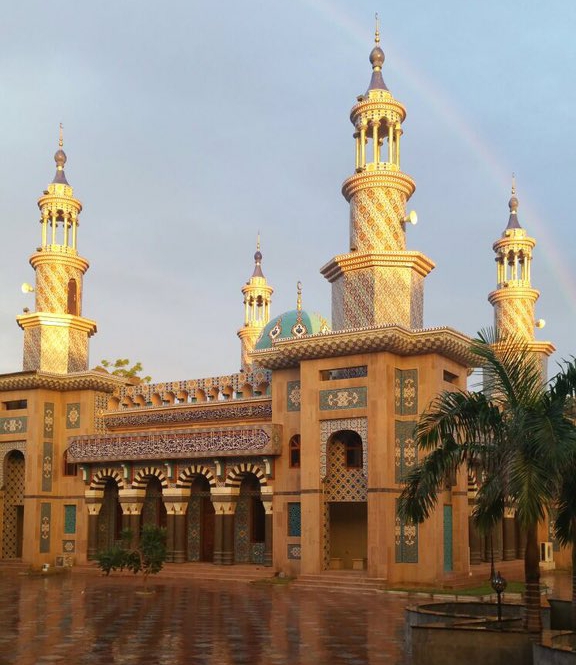
Murtadha Muhammad Gusau is the Chief Imam of: Nagazi-Uvete Jumu’ah Mosque; and Late Alhaji Abdur-Rahman Okene Mosque, Okene, Kogi State, Nigeria. He can be reached via: gusauimam@gmail.com; or +2348038289761.
This Friday sermon (Jumu’ah Khutbah) was prepared for delivery today Friday, 12 Ramadan, 1445 AH (March 22, 2024).
Safiyanu Bichi
When Abia State Governor Alex Otti recently pulled off his shoe and proudly declared, “This is Aba Made,” the gesture went beyond the shoe itself. It offered a simple but powerful demonstration of what deliberate government patronage can do for local industry.
The message for Kano is equally important: where is Made-in-Kano in government procurement?
This is a question Kano can no longer afford to ignore.
For decades, Kano has been one of Nigeria’s important commercial and industrial centres. The state has a long tradition of manufacturing, textile production, leatherwork, furniture making, tailoring, metalwork, food processing and a wide range of small and medium-scale enterprises.
Yet having businesses and skilled artisans is not enough. Local industries need markets, and government procurement is one of the largest markets available in any economy.
The Kano State Government spends billions of naira annually on infrastructure, furniture, uniforms, clothing, construction materials, office equipment, vehicles, signage and other goods and services. The critical question is how much of this expenditure remains within Kano and how much leaves the state.
This is where a deliberate Kano Local Content Policy becomes necessary.
Every major state government project and Bill of Quantities (BOQ) should, where technically and economically feasible, contain a clearly defined local-content component. A target of 40 per cent Kano content could provide a practical starting point.
The idea is not to sacrifice quality or value for money. Rather, it is to ensure that qualified Kano-based businesses are given a fair opportunity to compete for government patronage.
If the government buys furniture from Kano manufacturers, contracts uniforms from local textile and garment producers, procures locally manufactured footwear and leather products, and sources other goods and services from competent businesses within the state, public expenditure can generate a multiplier effect across the local economy.
The money does not simply disappear after a government contract is executed. It circulates.
A furniture company pays its workers. Workers spend their earnings in local markets. Manufacturers purchase materials from other businesses. Transporters earn income. Artisans receive more orders. Businesses expand and potentially employ more people.
In other words, government procurement can become an instrument of economic development.
This is particularly important at a time when Kano needs to create more productive opportunities for its growing population, especially young people.
The state does not have to begin from scratch. Kano already possesses the human capital, entrepreneurial culture and business networks required to support a stronger local-content regime.
What is needed is deliberate policy, transparent implementation and consistent monitoring.
The government could begin by identifying categories of goods and services that can realistically be sourced within Kano. It could establish a database of qualified local manufacturers, contractors, artisans and suppliers, while maintaining clear standards for quality, pricing and delivery.
There should also be safeguards against turning local-content policy into another avenue for patronage. The objective should not be to favour politically connected businesses. It should be to create opportunities for genuine Kano-based enterprises that can meet established standards.
That distinction matters.
A successful local-content policy must combine local patronage with competition, quality, transparency and accountability.
The experience highlighted by Governor Otti offers Kano an opportunity for reflection. A simple act of wearing a locally made product can draw attention to an entire ecosystem of producers, workers and entrepreneurs behind that product.
Kano can create its own version of that story.
Imagine a government school furnished by Kano manufacturers, public institutions using locally produced furniture, uniforms supplied by Kano garment producers, official events showcasing locally produced textiles and leather goods, and government projects deliberately creating opportunities for competent local suppliers.
That would make “Made-in-Kano” more than a slogan.
It would make it part of government’s economic strategy.
Kano has the people. Kano has the skills. Kano has the entrepreneurs. Kano has the markets.
What is required is a deliberate decision to connect government spending with the productive capacity of the state.
Let Kano Government buy Made-in-Kano.
A 40 per cent Kano Local Content target should not be treated as another political promise. It should be the beginning of a measurable procurement policy that keeps more public money within the Kano economy, strengthens local businesses, supports jobs and helps rebuild the productive foundation of the state.
The real question is no longer whether Kano can produce.
The question is whether Kano is ready to buy what Kano produces.
Safiyanu Bichi is a member of the Kano Budget Working Group.
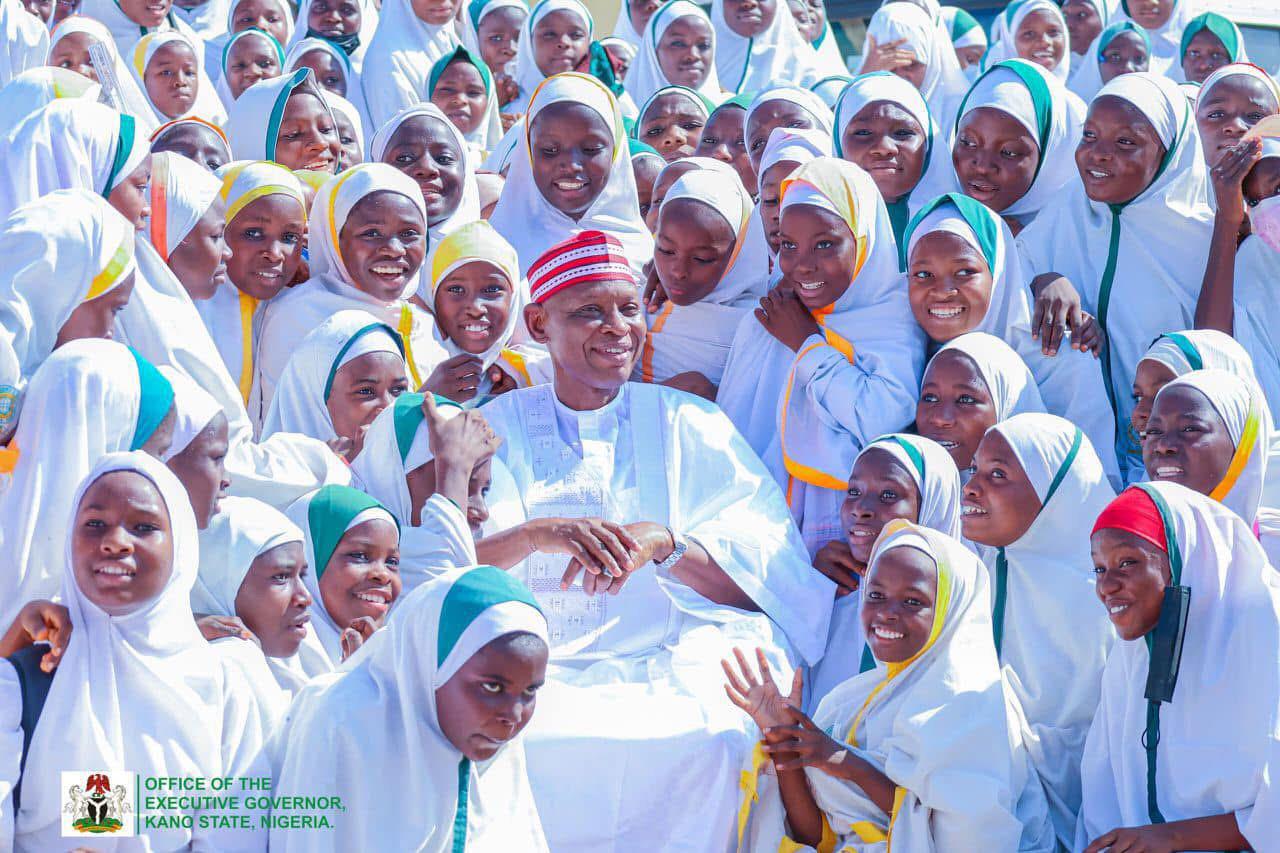
Dr Auwalu Halilu
Kano State has recorded the highest number of candidates nationwide who obtained at least five credits, including English Language and Mathematics, in the 2026 Senior School Certificate Examination (SSCE) conducted by the National Examinations Council (NECO).
The state recorded 74,413 candidates meeting the benchmark, up from 68,159 in 2025. The increase represents 6,254 additional successful candidates, or approximately 9.2 per cent year-on-year growth.
Kano’s 2026 figure placed it ahead of Lagos, which recorded 72,496 candidates, and Oyo, with 55,543 candidates.
The result marks the second consecutive year in which Kano recorded the largest absolute number of candidates meeting the five-credit benchmark, including English Language and Mathematics.
The development provides an important opportunity to reflect on the direction of education in the state. While the figures are significant, the relevant measure here is the absolute number of successful candidates. Kano has one of Nigeria’s largest school-age populations and examination cohorts, meaning that the scale of achievement involves tens of thousands of young people attaining a credential that can open pathways to tertiary education, technical and vocational education, employment and further training.
Educational outcomes are rarely produced by a single intervention. They typically emerge from the interaction of financing, teachers, infrastructure, learning materials, school leadership, assessment, family support, community participation and accountability.
Kano’s recent performance should therefore be viewed within the wider pattern of sustained investment and reform in the state’s education sector.
State of emergency on education
One of the defining decisions of the current administration was the declaration of a State of Emergency on Education in June 2024.
The declaration acknowledged structural challenges including inadequate classrooms, teacher shortages, overcrowding, poor learning environments, large numbers of out-of-school children and shortages of teaching and learning materials.
It subsequently created a platform for accelerated interventions in classroom construction and renovation, teacher recruitment, school furniture, textbooks and learning materials, school uniforms, examination support and broader system strengthening.
Its significance lies not only in individual projects but also in the signal that education has been placed at the centre of the state’s development priorities.
Kano’s budgetary pattern is another indicator of the priority attached to education.
In 2024, education accounted for approximately 29.95 per cent of the state budget. In 2025, the allocation rose to about N168.35 billion, representing roughly 31 per cent of the budget. For 2026, approximately N405.35 billion was allocated to education, again accounting for around 30 per cent of the state’s overall spending plan.
Consistency across successive budget cycles is important because education transformation requires predictable financing. Children remain in school for many years, teachers require continuous professional development, infrastructure needs maintenance and learning reforms take time to mature.
However, budget allocation should not be treated as the final measure of success. Sustainability requires transparent reporting on releases, actual expenditure, procurement, outputs and learning outcomes.
Kano should increasingly publish the full chain from budget commitment to classroom-level impact.
Examination support
For low-income families, examination fees can determine whether a young person completes secondary education with a recognised certificate.
The government’s examination sponsorship therefore represents both an education intervention and a social-protection measure.
In 2025, the state approved more than N3 billion for examination registration support covering approximately 141,000 students across qualifying examinations, including WAEC, NECO, NABTEB and NBAIS. Additional support was provided to eligible students in community and voluntary schools.
In 2026, the intervention expanded substantially, with approximately N4.4 billion committed to examination fees for more than 150,000 students.
By absorbing these costs for eligible learners, government reduces the risk that poverty becomes the final barrier between years of schooling and an examination certificate.
The policy is particularly important in a state with a very large population and significant numbers of economically vulnerable households. Examination sponsorship should therefore be viewed as an equity measure that widens participation and helps ensure that family income does not alone determine access to final certification.
Teachers remain central
Classrooms and learning materials are essential, but teachers remain the human engine of the education system.
Kano has pursued large-scale teacher recruitment and absorption as part of its reforms. In September 2025, the state announced the absorption of 4,315 former BESDA volunteer teachers into permanent and pensionable employment.
In July 2026, appointment letters were presented to 8,588 teachers, comprising 4,900 newly recruited and trained teachers and 3,688 BESDA teachers.
These numbers matter because teacher shortages affect class sizes, subject coverage, instructional time and learning outcomes.
Recruitment, however, must be matched by effective deployment. Rural communities, underserved local government areas, girls’ schools and schools with shortages in English, Mathematics, science and technology subjects require particular attention.
Continuous professional development is equally important. The state’s work around the revised competency-based basic education curriculum should be sustained so that teachers are equipped to develop critical thinking, creativity, digital literacy, entrepreneurship, civic values and problem-solving skills rather than relying mainly on rote learning.
Infrastructure and learning materials
The condition of a school shapes attendance, dignity, safety and concentration. Kano has therefore invested in classroom renovation, construction, furniture and other school-level inputs.
Reported interventions include more than N1.9 billion for the renovation of primary school classrooms and approximately N2.925 billion for additional classroom construction.
In 2024, the government also announced the distribution of 73,800 three-seat desks across the state’s 44 local government areas.
Large-scale provision of school uniforms has complemented these investments. Reports indicated the distribution of hundreds of thousands of uniforms, while a further N1.148 billion was approved in 2025 for free uniforms for Primary One pupils in the 2025/2026 academic session.
These may appear to be simple inputs, but a uniform, desk, textbook or safe classroom can be decisive for a child from a low-income household.
The next challenge is to ensure that infrastructure and materials are equitably distributed, properly maintained and linked to measurable improvements in attendance and learning.
Partnerships remain important
Kano’s education challenge is too large for state resources alone. Sustainable transformation requires effective collaboration with federal institutions, development partners, civil society, communities and the private sector.
UBEC-supported interventions have contributed classrooms and teacher support across the state, while programmes such as the UK-supported Partnership for Learning for All in Nigeria (PLANE), UNICEF, Plan International and Save the Children have supported education planning, foundational literacy and numeracy, teacher development, data generation and teaching and learning materials.
The most sustainable partnerships are those that strengthen government systems rather than create parallel structures.
As externally funded programmes close, Kano will need to institutionalise effective approaches, retain trained personnel, budget for successful interventions and preserve the data and monitoring systems developed through such partnerships.
Beyond the NECO table
The movement from 68,159 successful candidates in 2025 to 74,413 in 2026 represents 6,254 additional young people meeting the five-credit benchmark, including English Language and Mathematics.
These are not merely examination statistics. Each number represents a student, a family, teachers, school leaders and communities.
At Kano’s population scale, even modest improvements in system effectiveness can affect tens of thousands of young people.
Education policy should therefore be understood not only as social-sector spending, but also as human-capital investment, poverty reduction, economic development and social stability.
A young population becomes a demographic dividend only when young people acquire knowledge, skills, values and opportunities.
NECO performance is an important indicator, but examination success should not become the final objective of education.
Kano needs young people who can read with comprehension, use mathematics, think critically, communicate effectively, solve problems, use technology, work collaboratively, create enterprises and participate responsibly in society.
The education strategy should therefore connect basic and secondary education more deliberately with technical and vocational education, tertiary education, entrepreneurship, digital skills, innovation and labour-market opportunities.
The long-term test of education investment is not only how many candidates pass an examination, but how effectively graduates convert education into productive lives and social contribution.
What comes next
The second consecutive NECO achievement also raises questions about how the gains can be sustained and deepened.
Kano should develop a medium- and long-term financing framework that protects education investment while shifting attention from allocation alone to releases, expenditure efficiency and value for money.
The Ministry of Education should publish an annual education performance report by local government area covering enrolment, attendance, retention, transition, completion, learning outcomes, teachers, infrastructure, WASH, school safety, gender, disability inclusion, examinations and financing.
Government should also analyse NECO results beyond absolute numbers by tracking percentage pass rates, local government and school performance, subject-level outcomes, gender gaps, urban-rural differences and year-on-year trends.
Examination sponsorship for indigent learners should be protected, with transparent eligibility criteria and a digital beneficiary database to improve targeting, prevent duplication and track beneficiaries’ progression.
Teacher quality should receive as much attention as teacher numbers through institutionalised continuous professional development, mentoring, classroom observation and data-driven deployment, particularly in underserved rural communities and critical subjects.
There is also a need for incentives for rural teacher deployment, including accommodation, transportation support and career incentives that make difficult-to-reach postings more attractive and sustainable.
Learning should be measured before the final examination. Regular state-level assessments in literacy, numeracy, science and other competencies at key stages can help identify and address learning gaps early.
The state should also establish a preventive maintenance culture involving education authorities, school leadership, School-Based Management Committees and communities so that renovated facilities remain functional.
Action on out-of-school children should be intensified through ward- and household-level data to identify who is out of school, why they are out, where they live and what interventions are required.
Girls’ education should remain a priority through sustained scholarships, re-entry opportunities, safe learning environments, WASH facilities, female teacher deployment and community engagement.
School safety and resilience should also be strengthened through early-warning systems, safeguarding, emergency preparedness, community intelligence and collaboration with relevant security institutions.
Digital education should be expanded through improved access to devices, connectivity, digital learning resources and teacher digital competence, including in rural schools.
Credible technical and vocational education and training pathways should also be expanded to give secondary-school leavers stronger routes into technical education, apprenticeships, entrepreneurship and employable skills.
An education research and innovation hub could further connect government, universities, civil society and development partners to evaluate reforms, generate evidence, test innovations and translate research into policy.
Civil society, professional bodies, the media and platforms such as K-SAFE, CSACEFA, OGP and GEP should also be supported to monitor commitments, expenditure and outcomes constructively.
A story of shared responsibility
The emerging Kano education story is encouraging.
In 2025, 68,159 candidates obtained five credits and above, including English Language and Mathematics, in NECO. In 2026, the number rose to 74,413 — 6,254 additional successful young people in one year.
Behind the figures is a wider pattern of public investment: education receiving around 30 per cent of successive budgets; billions of naira committed to examination sponsorship; thousands of teachers recruited or absorbed; classrooms renovated and constructed; desks, uniforms and learning materials provided; and partnerships strengthened with federal institutions and development organisations.
These investments provide an enabling environment for improved participation and learning outcomes.
At the same time, the NECO result should not be attributed to any single intervention or individual. Students, teachers, parents, school leaders, communities, education agencies, federal institutions and development partners all contribute to educational outcomes.
The stronger lesson is that sustained political prioritisation and public investment can create conditions in which progress becomes possible.
Governor Abba Kabir Yusuf and the Kano State Government deserve recognition for placing education prominently within the state’s development agenda, while teachers, parents, communities and, above all, the students deserve recognition for converting opportunity into achievement.
The second consecutive NECO achievement should therefore send two messages: celebration that progress is being recorded, and responsibility to sustain and deepen that progress.
Kano’s ambition must ultimately be larger than leading a national table in absolute candidate numbers.
It should be a state where every child enters school, every child learns, every learner is safe and included, every teacher is competent and supported, and every young person leaves education with the knowledge, character and skills needed to build a productive life.
Education transformation is not achieved in one budget year, one examination cycle or one administration. It is a generational project.
When a society consistently invests in its children, strengthens its teachers, supports its schools and holds its institutions accountable, it is not merely funding education — it is investing in its future.
Dr Auwalu Halilu, Co-Chair (CSO), Kano State Accountability Forum on Education (K-SAFE).

Lamara Garba
Kano is beginning to speak with a more united political voice. As the 2027 general elections draw closer, politicians who once occupied different political camps are increasingly converging under the banner of the All Progressives Congress (APC), creating a political landscape that is noticeably different from the familiar pattern of fierce rivalry and fragmentation.
The arrival of prominent politicians, former elected officials, party leaders and thousands of supporters from different political backgrounds is therefore more than a routine exercise in political realignment; it signals an emerging consensus around stability, continuity and the search for a broader political platform capable of carrying Kano into its next chapter.
The significance of this development extends beyond the movement of politicians from one party or political group to another. It represents an emerging political convergence and a growing search for unity, stability and a shared vision for Kano. The entry of prominent political figures on Saturday, 5th September 2026, including Senator Rufa’i Sani Hanga and former Governor Kabiru Ibrahim Gaya, alongside other experienced politicians and stakeholders, has added a new dimension to the political equation in the state. Their movement into the APC, together with the reported influx of thousands of new members, suggests that Kano’s political landscape is undergoing a significant realignment as the state prepares for another crucial electoral contest.
Politics is ultimately a game of confidence. Political platforms may change and alliances may evolve, but people are generally drawn towards where they see hope, opportunity and the prospect of a better future. That is why the growing political convergence around Governor Abba Kabir Yusuf and the APC deserves attention. The movement of politicians into the APC is undoubtedly significant, but the more important question is why the political landscape is changing.
One possible explanation lies in the growing public acceptance of Governor Yusuf and the direction of his administration, particularly its emphasis on people-centred policies, human capital development and programmes intended to improve the lives and prospects of citizens.
At the heart of this approach is a simple but profound philosophy: government must ultimately be about the people. The greatest political strength of any leader does not lie only in the number of influential personalities standing beside him, but in the confidence of ordinary citizens who believe that government understands their needs and aspirations. People do not live on political slogans; they live with the consequences of government policies. Parents worry about the education and future of their children, young people seek opportunities to develop their potential, families require access to essential services, while communities expect development that they can see and experience. It is in this relationship between government and the people that Governor Yusuf has sought to build the political foundation of his administration.
The emphasis on people-centred policies and human capital development reflects an understanding that the most valuable resource of Kano State is not merely what lies beneath its soil or the structures that stand above it, but its people. A government that invests in people is investing in the future; a society that educates its children is preparing tomorrow’s leaders; a government that creates opportunities for young people is building hope; and leadership that places human development at the centre of governance is laying a foundation that can outlive any political administration. This is why the question of continuity has become increasingly important as Kano moves towards 2027.
Development is not an event; it is a process. No meaningful policy achieves its full potential overnight. Educational investments require time, human capital programmes require consistency, while development plans need stability of leadership and the patience of the people. The argument for the continuity of Governor Yusuf’s administration must therefore be viewed beyond the narrow prism of political ambition. It is about allowing policies to mature, consolidating development programmes, deepening investments in the people and giving a government that has established a development direction the opportunity to take that journey further. This provides a philosophical foundation upon which the case for a second term can be made.
There is also a broader political significance in the growing convergence of leaders and supporters under the APC. For years, Kano politics has been characterised by intense competition, and political rivalry is not necessarily a bad thing because democracy thrives on choices, competing ideas and different visions for society. However, competition must never become a permanent source of division. The people of Kano deserve an election season that inspires confidence rather than fear, and they deserve political leaders who understand that the collective interest of the state is greater than personal disagreements. The growing unity therefore deserves to be encouraged because the coming together of political leaders with different histories and backgrounds provides an opportunity for Kano to reduce tension and strengthen democratic stability as 2027 approaches.
Kano is too politically important to remain trapped in endless divisions. Its population, commercial influence and political consciousness make it impossible to ignore, and whatever happens politically in Kano often carries consequences beyond its borders. The state therefore requires leadership capable of uniting rather than dividing, inspiring confidence rather than uncertainty, and placing development above partisan bitterness. Governor Yusuf’s growing political acceptance and the expanding support for the APC offer an opportunity to build such a broad political consensus, although political unity must always be accompanied by responsibility.
The arrival of influential politicians and thousands of new supporters should not create complacency. Rather, it should strengthen the determination of the government and the party to deliver more meaningful results. The true measure of political popularity is not the size of the crowd at a rally, but the confidence that remains in the hearts of the people after the political excitement has faded. That confidence must be earned continuously through performance, inclusive governance, accountability and policies that address the real needs of citizens. Governor Yusuf and the APC therefore have an opportunity to present the people of Kano with a compelling argument as 2027 approaches, but that argument should not rest merely on promises. It must rest on performance, policies and the visible impact of governance.
The people will ask what has been achieved, what has changed, what opportunities have been created and what remains to be done. They will ultimately decide whether the journey deserves to continue, and that is the essence of democracy. Yet the growing political convergence in Kano has already provided an important indication of the changing mood. The decision of prominent political figures and thousands of their supporters to come together under one broad political platform reflects a growing belief that unity and continuity may offer Kano a stronger path towards the future.
The coming together of these political forces has also helped to reduce some of the anxieties traditionally associated with election seasons. Where leaders are willing to dialogue, cooperate and place the larger interest of society above personal differences, the political atmosphere becomes more stable. For Governor Abba Kabir Yusuf, however, the greatest task remains governance. Political support can be won, but public confidence must be sustained; a leader must continue to listen to the people, a government must continue to respond to their needs, and development must continue to reach beyond political speeches into the daily lives of citizens.
The strongest argument for a second term will therefore be found not merely in the number of politicians who have joined the APC, but in the number of people whose lives have been touched by the policies and programmes of the administration. That is the true meaning of people-centred governance. As Kano moves towards 2027, the state appears to be entering a new political phase in which the convergence of experienced politicians, the growing support for the APC and the increasing confidence in Governor Yusuf have created a momentum that cannot easily be ignored. But the most important political force remains the people, and they will have the final word.
If the administration continues to deepen its people-centred policies, strengthen human capital development, sustain public confidence and promote political inclusion, then the argument for continuity will become even stronger. The politicians may have found a common umbrella, but the ultimate purpose of politics must remain the welfare of the people. If the emerging unity in Kano is sustained and translated into purposeful governance, then the road to 2027 may become more than a contest for political power; it may become a collective decision about the future Kano wants to build and the leadership it believes should continue that journey.
For Governor Abba Kabir Yusuf and the APC, unity has created an opportunity, but performance must justify it. The political realignment may be gathering momentum, but the enduring question will remain whether that momentum can be converted into better governance, greater opportunity and a more united Kano. In the final analysis, it is the people who will decide, and their verdict will be shaped not simply by political alliances, but by their lived experience of governance.
Lamara Garba, a veteran journalist, writes from Kano.

Insecurity, hunger have deepened Northern Nigeria’s distrust of Tinubu, Imam Gusau says
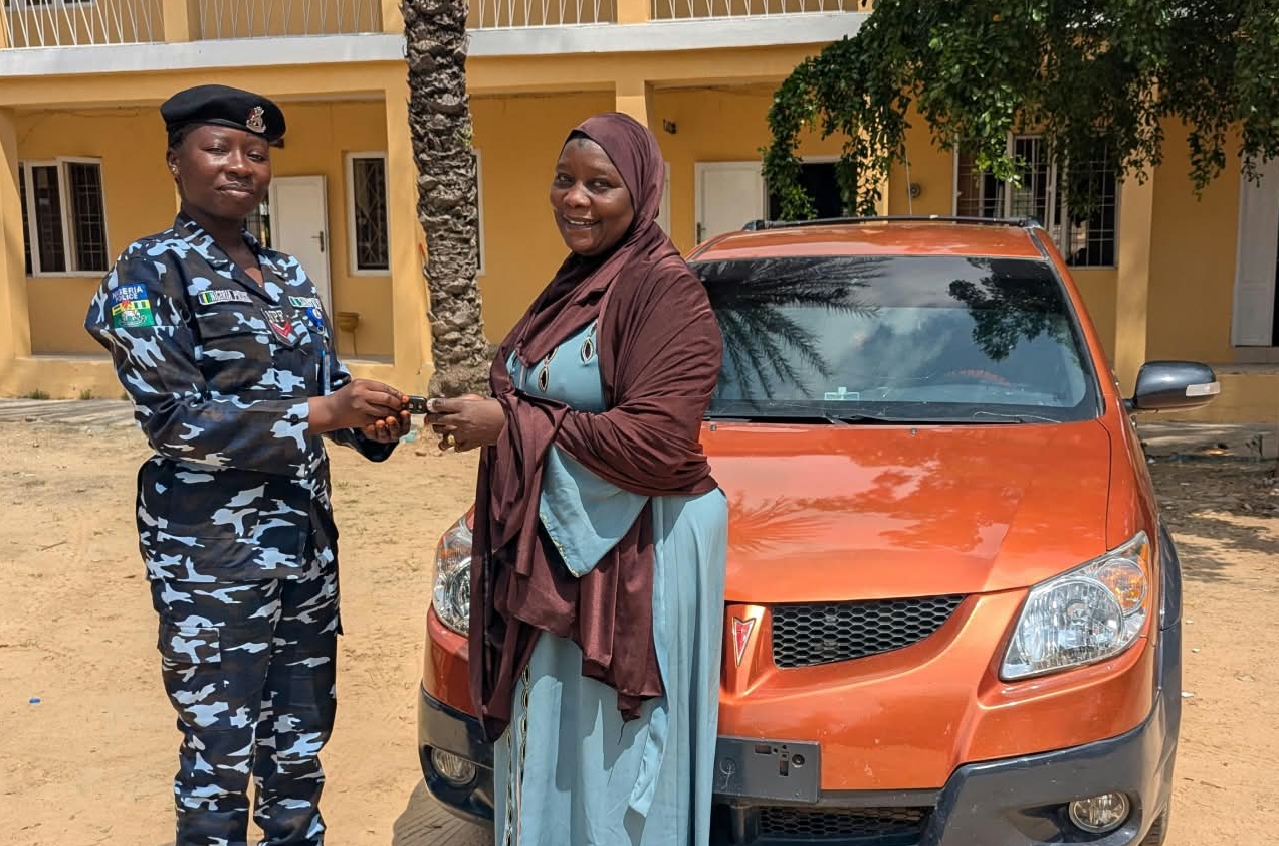
Kano Police return recovered car, motorcycle to owners

JONAPWD Kano to hold leadership election Saturday

“As You Sow, So Shall You Reap”: Imam Reminds Muslims of Divine Justice

Kano Govt Orders Retired Civil Servants to Vacate Offices, Hand Over Government Property

Kano leads again as NECO successes rise to 74,413
Kano tops states in 2026 NECO results, Governor Yusuf hails students

Kano Govt Suspends Durbar Processions, Horse Riding in Metropolis

INEC holds campus debate on elections, democracy at BUK

