
Reports
Sex for Marks: How Kano students are suffering in silence


Mukhtar Yahya Usman
Imagine this for a moment.
Your wife had a miscarriage and died in the process.
While mourning, her phone kept receiving condolence messages from her friends and associates.
As a dutiful husband you read and reply to the messages.

As you browse through her previous chats you become intrigued by a particular conversation with someone named “Sir”.
Reading backward, you gradually come to realize that your wife died of a forced abortion not miscarriage as you thought.
Her reason? She wasn’t carrying your baby. She had been having sex with one of her lecturers who promised to help her pass all her examinations!
Now stop imagining.
This is a true story. It happened at one of the universities based in Kano. The lecturer has been dismissed but the student is dead and her bereaved husband is left to wonder whether her other children are really his offspring.
This is just a single incident of sexual harassment. It may not always lead to death but involves risks of carry-over, spill-over or even expulsion to non-complying students.
“For students to be confident enough to report sexual harassment “the grievance mechanism must be confidential, swift, with minimum errors and must be clearly defined and widely understood”
An investigation by KANO TODAY finds that majority of students being sexually harassed by their lecturers in Kano do not report to authorities, which makes the practice to continue.
According to experts the main reason is that tertiary institutions in Kano do not have clearly-defined, safe, and widely understood complaint mechanisms.
YUMSUK conducts post-UTME in August
Maitama Sule Universtity to start Clinical Sciences
Emir of Kano advocates for teaching in Hausa language
In a recent lecture, Isma’ila Zango, a Professor of Sociology and Director Aminu Kano Centre for Democratic Research and Training (Mambayya House), Bayero University Kano said about 70% of female students in Nigerian tertiary institutions experience a form of sexual harassment.

However, Professor Zango said only about 3% of the victims complain to authorities.
“For students to be confident enough to report sexual harassment “the grievance mechanism must be confidential, swift, with minimum errors and must be clearly defined and widely understood”. He said.
An in-depth analysis of the students’ handbooks issued by Bayero University Kano (BUK), Kano University of Science and Technology Wudil (KUST), Yusuf Maitama Sule University Kano (YUMSUK), as well as Kano State Polytechnic shows that students are not given clear guidance on what to do when they are sexually harassed.
Only YUMSUK has a reference to sexual harassment in its students’ handbook.
In page 115, the university categorized misconduct into three; gross misconduct, major misconduct, and minor misconduct.
Under the category called major misconduct, sexual harassment is mentioned along with “mishandling university property, mutilation and defacing of any library or university book as well as fighting”.
However the penalty for these offences is ‘rustication from the University for Two years’ showing that this statement refers to students who harass other students sexually.
If these institutions are not willing to acknowledge even the possibility of lecturers harassing students in their handbooks are they subtly condoning the practice?

Not so, says the Deputy Vice Chancellor (Academics), BUK, Professor Adamu Tanko.
Professor Tanko said even though there are punishments for lecturers who harass students, it is unfair to state that in a handbook written for students.
He said over the years BUK has dismissed or terminated the appointment of several lecturers and non-academic staff who had harassed their students sexually.
“BUK has a strong committee that investigates allegations of sexual harassment.” He said.
“Any student who is sexually intimidated or violated should report to her Head of Department who will channel the case to the committee”. He added.
He however cautioned that the student must have genuine evidence at hand.
Yusuf Maitama Sule University Kano (YUMSUK)

Like BUK, authorities in YUMSUK say they also have a committee handling cases of sexual harassment.
Vice Chancellor of the university, Professor Mustapha Ahmad Isa told KANO TODAY that complaining students should first report to their Heads of Department.
Thereafter the matter will be handled at several levels up to the governing council, he said.
He urged female students to confidently report any case of sexual harassment without fear of any possible backlash.
Kano University of Science and Technology (KUST) Wudil
At KUST, Vice Chancellor Professor Shehu Alhaji Musa says the university has never recorded a single case of sexual harassment.
Professor Musa said the university too has a committee that is ready to deal with any case of sexual harassment should such an incident happen.
He however assured KANO TODAY that KUST is reviewing its policies and will insert a clearly-defined guideline on sexual harassment in the students’ handbook.

Deputy Registrar Kano State Polytechnic, Garba Ismaila told KANO TODAY that the institution has regulations preventing personal relations between students and lecturers in order to avoid sexual harassment.
Kano state Polytechnic consists of five schools including School of Technology Kano, School of Management Studies Kano, School of Rural Technology and Entrepreneurship Development Rano, School of Environmental Studies Gwarzo, and School of General Studies Kano.
Mr. Ismaila said the Polytechnic has dismissed three lecturers recently and is ready to punish any staff that is engaged in sexual harassment in the future.
He explained that even though sexual harassment is not mentioned in the students handbook, it is one of the topics discussed during matriculation and orientation exercises in the Polytechnic.
The fear is real
However, Professor Zango, who is also a former Dean of Students Affairs at BUK says students have real reasons to fear reporting cases of sexual harassment.
First, there is a danger that the student may not have enough evidence to prove her allegation. This may allow the lecturer to go free and enable him and his friends to wage a vendetta against the student.
Also, the student’s family may caution her against reporting in order not to spoil her chances of marriage if it becomes public knowledge that she has been assaulted sexually.
And in some cases it is the student who finds herself unable or unwilling to study and pass her examinations that tries to seduce the lecturer into a contract of sex for marks.
Professor Zango therefore urged universities and other tertiary institutions to make laws that will empower students to deal with predatory lecturers.
At the same time the law should have a section where lecturers can report students who attempt to seduce them.









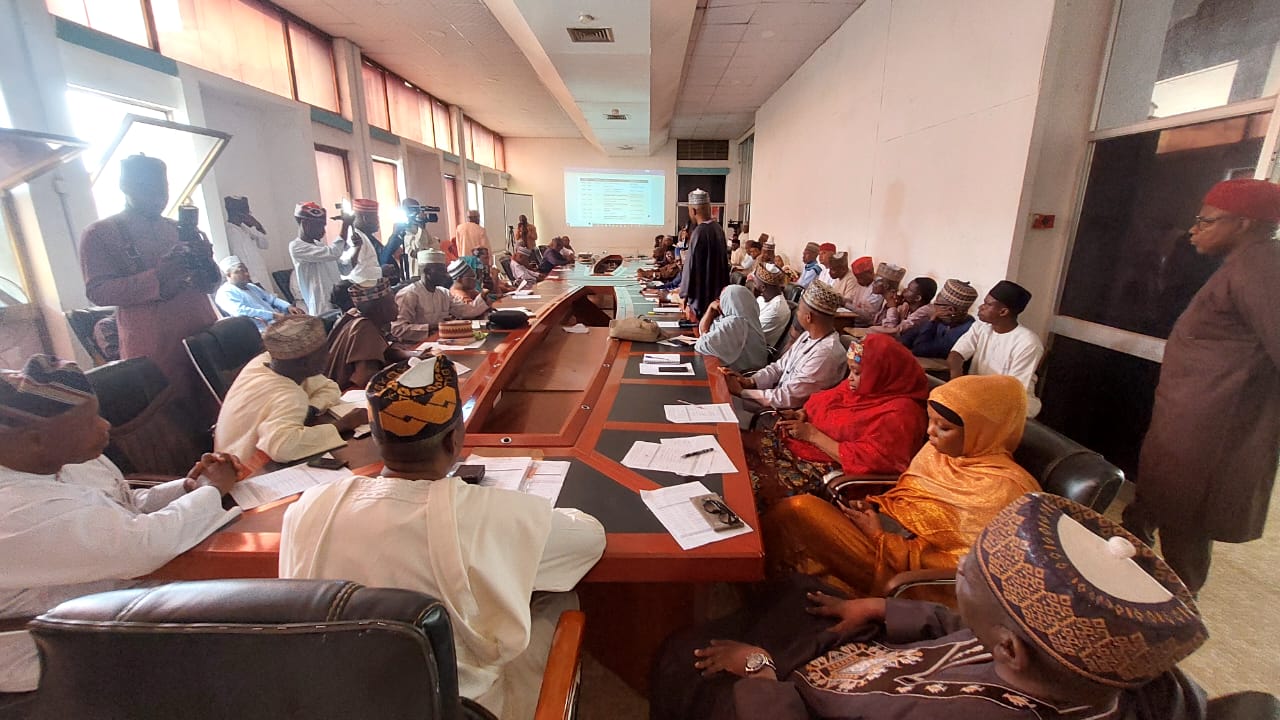
Nasiru Yusuf Ibrahim
Kano State has an estimated 875,593 children aged between five and 18 years out of school, according to a new survey presented on Thursday by the Commissioner for Education, Dr Ali Haruna Makoda.
KANO FOCUS reports that the survey, conducted across the state’s 44 Local Government Areas in March 2026, estimated that 13.34 per cent of the 6.56 million children aged five to 18 in Kano are out of school.
The assessment, described as the first statistically representative survey of out-of-school children in Kano in more than a decade, was conducted by the Kano State Ministry of Education in collaboration with the Partnership for Learning for All in Nigeria (PLANE), with funding from the Foreign, Commonwealth and Development Office (FCDO), and the Kano State Bureau of Statistics.
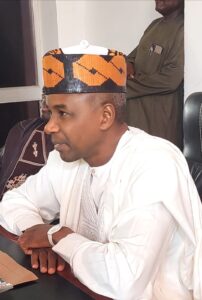
Dr Ali Haruna Makoda.
According to the findings, 6,233, representing 86.67 per cent, of the 7,192 children surveyed were enrolled in school, while 959, or 13.34 per cent, were out of school.
Of the out-of-school children identified, 501 had never attended school, while 458 had previously attended but dropped out.
The report revealed significant disparities across the 44 LGAs, with some recording out-of-school rates of 40 per cent or higher, while others recorded rates below five per cent.
Doguwa LGA recorded the highest rate at 40 per cent, followed by Warawa with 34.69 per cent and Gaya with 33.86 per cent.
The report described the situation in the three LGAs as an emergency-level education exclusion crisis requiring immediate intervention.
Parents support education
The survey also challenged the perception that cultural resistance to formal education was a major factor behind the out-of-school children crisis in the state.
It found that 99.6 per cent of caregivers considered children’s education important or very important, with only eight respondents expressing a negative view of education.
The report consequently identified the crisis largely as a service delivery and equity challenge, rather than a problem of parental attitudes towards education.
“Parents want school for their children; the system is failing to make it accessible, affordable, and of sufficient quality to retain children once enrolled,” the report stated.
Multiple factors responsible
The survey identified five broad categories of barriers to school attendance: family and cultural reasons, school-related challenges, child-related factors, other factors, and financial or economic constraints.
Family and cultural factors accounted for 24.2 per cent of responses, followed by school-related reasons at 23.6 per cent, child-related factors at 21.6 per cent, other reasons at 21.4 per cent and financial or economic factors at 12.6 per cent.
The report recommended a coordinated, multi-sectoral response, stressing that no single intervention could adequately address the scale and complexity of the crisis.
The survey further found that boys constituted 54.2 per cent of the out-of-school population, compared with 45.8 per cent for girls.
It linked the higher proportion of boys largely to the Almajiri/Qur’anic education system and casual labour.
The report also revealed that about 90.9 per cent of parents supported equal education for boys and girls.
The findings are expected to serve as a baseline for monitoring Kano State’s progress towards achieving Sustainable Development Goal 4 on quality and inclusive education through 2030.

Lamara Garba
Poor nutrition remains one of the greatest impediments to national development as it weakens cognitive ability, undermines educational attainment, reduces productivity, and compromises the quality of human capital, Professor Hassana Sani Darma has declared.
Professor Darma made the assertion on Thursday, 9 July 2026, while delivering the 61st Professorial Inaugural Lecture of Bayero University, Kano, at the CBN Centre of Excellence.
Presenting a lecture titled “Rejigging Cognitive, Behavioural and Coordination Functions: Nutrient Supplementation for Neurodivergent Disorders,” the renowned scholar maintained that nutrition is far more than a matter of physical wellbeing, describing it as the bedrock upon which brain development, learning, behaviour, and human performance are built.
The former Vice-Chancellor of Khadija University, Majia, Jigawa State, explained that nutrition is foundational to neurodevelopment as it influences brain structure, neurological function, and overall human capacity from infancy through adulthood.
According to her, neurodivergent conditions are biologically influenced, with nutritional factors playing significant roles in both their development and management.
Professor Darma observed that poor nutrition remains prevalent in Nigeria, yet many of its consequences continue to receive little attention from families, schools, and policymakers.
She noted that developmental disorders, learning difficulties, and behavioural challenges are frequently attributed to poor parenting or ineffective schooling without adequate consideration of the biological and nutritional factors underlying such conditions.
“Behavioural issues and learning difficulties may actually stem from biochemical imbalances caused by deficiencies in essential nutrients,” she said.
According to the professor, providing children with balanced and nutritious diets could substantially reduce many health challenges while improving classroom performance and learning outcomes.
She stressed that there is an inseparable relationship between nutrition and human functioning, noting that inadequate nutrition during the early years of life significantly limits children’s intellectual potential.
Professor Darma explained that children deprived of adequate nutrition during critical stages of growth often exhibit weaker cognitive abilities, poor memory, reduced concentration, and diminished learning capacity.
Rather than overcoming these disadvantages before formal education begins, many continue to lag behind throughout their academic journey, thereby limiting their future opportunities and productivity.
She cited scientific evidence showing that poor nutrition does not merely accompany learning difficulties but actively contributes to poor cognitive development, behavioural disorders, and impaired intellectual performance over time.
The inaugural lecturer further explained that human functioning results from the coordinated interaction of the central nervous system, peripheral nervous system, and musculoskeletal system.
According to her, these biological systems operate as an integrated network responsible for thinking, behaviour, movement, coordination, and adaptation to environmental demands.
She emphasised that the efficiency of these interconnected systems is significantly influenced by nutritional status, particularly during periods of rapid growth and development.
Professor Darma also drew attention to Attention Deficit Hyperactivity Disorder (ADHD), noting that the condition is often misunderstood and wrongly associated solely with poor parenting or ineffective schooling.
She explained that while hereditary factors contribute to ADHD, other influences include maternal smoking, alcohol or drug use during pregnancy, oxygen deprivation during childbirth, prenatal trauma, environmental pollution, allergies, and inadequate nutrition.
The professor disclosed that many children diagnosed with ADHD have one or more nutritional deficiencies which, when properly identified and corrected, can lead to remarkable improvements in attention span, concentration, self-control, and overall behaviour.
She further explained that blood glucose regulation plays an essential role in cognitive performance.
According to her, fluctuations in blood glucose levels directly affect attention, memory, and the speed at which the brain processes information.
While low glucose levels reduce concentration and slow cognitive processing, excessive consumption of processed carbohydrates, highly processed foods, and sugar-sweetened carbonated drinks may result in metabolic disturbances and brain inflammation capable of impairing cognitive functions.
Professor Darma observed that the increasing preference for processed foods, packaged snacks, and soft drinks—often regarded as symbols of affluence, convenience, or modern living—is contributing to poor nutritional outcomes.
She cautioned that these products are typically rich in refined sugars, unhealthy fats, and artificial additives but deficient in the essential nutrients required for healthy brain development, learning, and behaviour.
According to her, replacing wholesome foods with processed meals and sugary beverages may gradually weaken cognitive performance, reduce attention span, impair memory, and increase the risk of nutritional deficiencies, particularly among children and adolescents.
Professor Darma therefore advocated healthy, balanced diets rich in essential nutrients as indispensable tools for improving educational achievement, mental health, and human productivity.
She argued that educational reforms would achieve only limited success if nutrition is neglected, urging governments and educational institutions to integrate nutritional support into learning programmes.
According to her, nutrition should be recognised as a strategic investment in human capital development because healthier children become more productive adults capable of contributing meaningfully to national growth.
She further called on policymakers, healthcare professionals, educators, and development partners to place nutrition at the centre of educational planning, clinical practice, and public health interventions.
Professor Darma maintained that sustainable national development depends on raising a generation of physically healthy, mentally alert, and intellectually productive citizens—a goal that can only be achieved through improved nutrition.
Representing the Vice-Chancellor, Professor Haruna Musa, FSI, the Deputy Vice-Chancellor (Research and Development), Professor Amina Mustapha, said Bayero University places a high premium on research, innovation, and academic scholarship.
She noted that professorial inaugural lectures remain one of the University’s most important academic traditions through which scholars share research findings capable of addressing contemporary societal challenges.
Professor Mustapha commended Professor Darma for delivering a lecture that highlighted the vital relationship between nutrition, education, health, and national development.
She said the lecture demonstrated that improving nutrition is not merely a health intervention but a national development strategy capable of strengthening educational outcomes, enhancing workforce productivity, and improving citizens’ quality of life.
She expressed optimism that the recommendations would stimulate further research, influence public policy, and encourage governments, educational institutions, and development partners to invest more deliberately in nutrition as a foundation for sustainable national development.
The lecture attracted principal officers of the University, members of the academic community, health professionals, researchers, students, and other distinguished guests, who described the presentation as timely, enlightening, and highly relevant to Nigeria’s quest for sustainable human capital development.

By Mukhtar Yahya Usman
Kano State is witnessing a new wave of reforms, projects, and interventions under Governor Abba Kabir Yusuf as his administration pushes forward with ambitious programmes touching nearly every sector of life in the state.
From infrastructure and education to housing policy, emergency relief, and traditional governance, recent months have shown the governor’s determination to deliver on his promises.
Roads and Infrastructure at the Forefront
The administration has invested heavily in roads and urban renewal. In May 2025, over ₦20.3 billion was approved for dualization projects in Bebeji, Tudun Wada, Garun Mallam, Madobi, and Tsanyawa, alongside repairs of storm-damaged public facilities and the construction of a commemorative auditorium.
Shortly after, the governor personally flagged off reconstruction of the 3.6-kilometre Zungeru Road and the Gayawa–Bulbulawa road in Nassarawa Local Government, stressing that the projects were crucial to easing congestion and stimulating economic activity.
Governor Yusuf’s commitment to physical development was recognized at the Africa International Housing Show (AIHS) 2025, where he received the Infrastructure Governor of the Year Award.
Eucation Emergency Yields Results
Education remains at the heart of the Yusuf administration. In May, the governor announced sweeping reforms that included the permanent recruitment of 4,000 BESDA workers, distribution of ₦2.8 billion worth of instructional materials, solarization of 200 schools with 250 computers each, and the hiring of 17,600 security guards for public schools.
These initiatives followed a policy of dedicating 31 percent of the state’s budget to education, earning the governor the Leadership Governor of the Year 2024 Award for Education.
Compassion in Times of Crisis
The Yusuf administration has also shown a compassionate face in moments of tragedy.
After the June 2025 road crash that claimed the lives of 22 Kano athletes returning from a national sports festival, the governor declared a day of mourning and directed that each bereaved family receive ₦1 million and food support.
The gesture drew praise across the state as a humane response to an incident that shocked the nation.
Housing: “Use It or Lose It”
Housing has also come under focus. In March, the governor issued a strong warning to allottees of properties in Kwankwasiyya, Amana, and Bandirawo estates to either occupy their units or face revocation.
He also ordered the restoration of basic amenities in the estates and began discussions with the Federal Mortgage Bank to provide civil servants with easier access to home ownership.
Tradition and Governance
Governor Yusuf’s decision last year to abolish the Bichi and Rano emirates and restore a unified Kano Emirate under Emir Muhammadu Sanusi II continues to shape governance in the state in 2025, with implications for both traditional authority and modern administration.
A Governor Under Spotlight
As 2025 progresses, the strands of Governor Yusuf’s policies are becoming clear: heavy spending on roads, a declared emergency in education, a firm hand in housing, quick relief in crises, and decisive reforms in the traditional institution.
Observers say these efforts reflect both the urgency of the challenges confronting Kano and the governor’s bid to leave a lasting legacy in Nigeria’s most populous state.

Kano Police Arrest Eight in Drug, Thuggery Raids

Funeral Prayer Held for Late Shehu Kabir Bayero

Kano holds planning meeting on implementation of Nigeria learning passport

Kwankwaso, Gov Yusuf, Amnesty International Condemn Killing of Ibrahim Khalil Dan Shagamu

Kano Police arrest two suspects over death of Ibrahim Khalil Danshagamu

Kano State Out-of-School Children Survey Report 2026: From Evidence to Impact — A Roadmap For Educational Development

Kano schools to resume Sunday for 2026/2027 academic session

From Grade Level 03 to Director: A 35-Year Journey of Resilience and Service

Justice Abdullahi Mahmud Bayero of Court of Appeal Dies in Egypt


2 Comments