
News
Tax Tribunal resolves 9 claims worth N10bn in Kano


By Nasir Ibrahim
The Tax Appeal Tribunal, North west zone, has resolved nine out of 13 cases received in 9 months worth over ten billion Naira.
The chairman of the Tribunal Umar Adamu disclosed this on Monday at a one day stakeholders Forum held in Kano.
He said most of the cases were judged in favour of tax payers.
Mr Adamu revealed that within nine months of its existence the tribunal have received thirteen tax cases out of which eleven are from Kano.

He explained that the Tribunal was established in 2010 in accordance with section 59 (1) of Federal Inland Revenue (FIRS) establishment act of 2007 as dispute resolutions centre between the taxpayers and tax authorities.
“The act empowered the tribunal to adjudicate on all tax disputes arising from operations of the various tax laws as spelt out in the fifth schedule to the FIRS establishment act 2007 and personal income tax amendment act 2011.
“The tribunal does not experience technicality inherent in conventional courts. An individual or corporate organizations can lodge his complaint without counsel’s representation if he was wrongly taxed within thirty days from the date on which the demand notice was made or received. However, the tribunal may entertain an appeal after the expiration of the 30 days upon satisfactory proof of the cause of the delay,” Mr Adamu said.
In his address Kano state deputy governor Nasiru Gawuna said, state government would explore avenue provided by the Tax Appeal Tribunal to ensure quick resolution of tax matters in the State.
Mr Gawuna noted that the need for timely and correct payment of tax by all taxpayers is a civic responsibility that should be encouraged at all levels.
” it is clear that all over the world, taxes, levies and charges constitute the most sustainable sources of revenue to Government for executing development projects. Where they are not paid, government has to resolve to legal options of filling cases against defaulters at the tax appeal tribunal for adjudication.
“So, as government uses revenue from tax sources to execute major programmes and projects in the areas of education, health, skills development, agriculture and infrastructure for the well being of the good people of Kano, a high sense of responsibility is developed,” Gawuna stated.
The deputy governor said it is discerning that Kano State government had taken full advantage of the jurisdiction factions of the Northwest panel of the Tax Appeal Tribunal.
Gawuna revealed thst” out of the thirteen cases inherited by the Tribunal after its inauguration on November 5th 2019, records have shown that eleven of the cases came from Kano State Government. Out of the eleven, nine cases have been amicably resolved and settled “.
Mr Gawuna directed the State Internal Revenue Service (KIRS) and Local Government revenue committees to present all unresolved revenue cases to the tribunal.
The deputy governor called on the Stakeholders to actively participate in the interaction to utilise the opportunity provided, adding that the state through its Internal revenue service would embark on sensitization campaign to create awareness on the tax appeal tribunal.
In his remarks, a former president of Institute of Chartered Accountants of Nigeria (ICAN), Ismaila Zakari advised federal government to reduce VAT to less than 5% so as to encourage more organisation to register.
He said if federal government reduced VAT, it would generate more revenue as many organisations not captured may voluntarily come forward to register their companies.
He observed that many companies eligible for VAT payment are not captured in the current system.
The stakeholders forum was attended by trades and professional bodies such as Manufacturers Association of Nigeria (MAN), proprietors of private schools, shareholders, clerics, contractors and management of Kano Inland Revenue Service.

Ibrahim Khalil
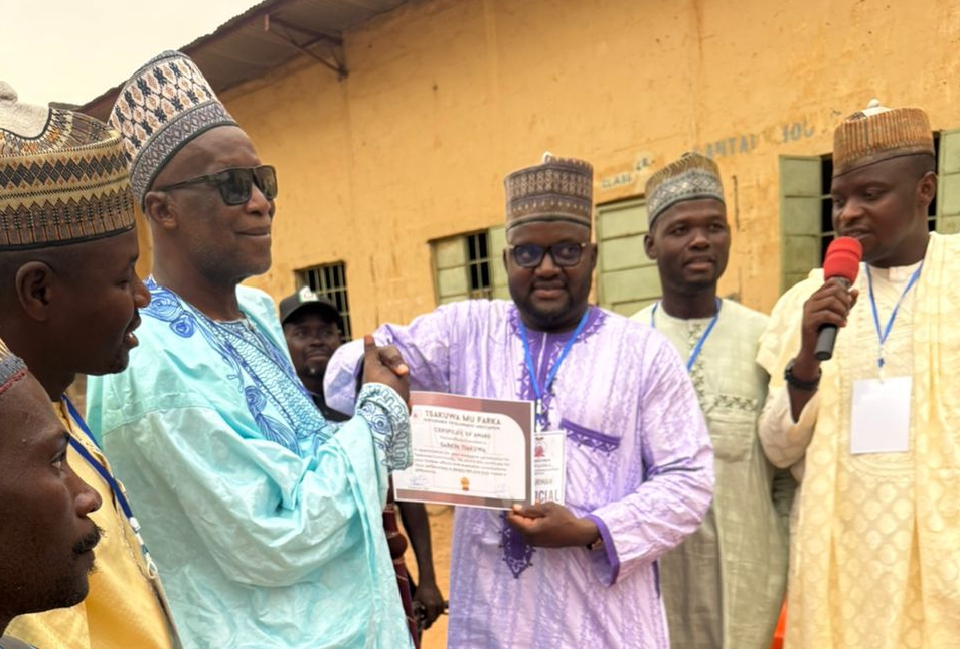
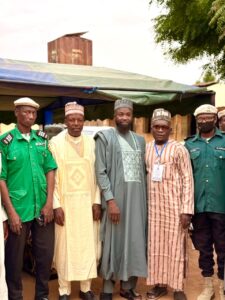
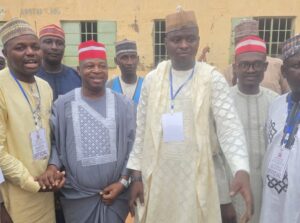
Residents of Tsakuwa community in Dawakin Kudu Local Government Area of Kano State have honoured 11 individuals for their outstanding contributions to the development of the town.
KANO FOCUS reports that the awards were presented during the 6th Annual General Meeting (AGM) of the Tsakuwa Mufarka Sustainable Development Association, held on Sunday at Central Primary School, Tsakuwa.
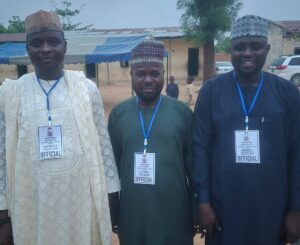
Among those honoured were the traditional ruler of the community, Sarkin Tsakuwa, Alhaji Isma’ila Santali Tsakuwa; the Chairman of the Tsakuwa Mufarka Sustainable Development Association, Alhaji Tasiu Alhassan Tsakuwa; and a retired headmaster of Central Primary School, Tsakuwa, Alhaji Mahmuda Shehu, who continues to offer voluntary teaching services to pupils in the community.
Also recognised was Alhaji Umar Muhammad Banupe, a Nupe businessman who settled in Tsakuwa and has become an integral part of the community. He was honoured for his significant contributions to the town’s development.
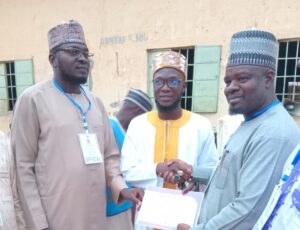
Alhaji Umar Muhammad Banupe receiving a certificate
Other award recipients included the Chairman of the Northwest Development Commission, Professor Shehu Abdullahi Ma’aji (Garkuwan Tsakuwa); the Commander of the Gombe State Hisbah Command, Malam Rabiu Idris; media practitioner Nasiru Yusuf Ibrahim of Abubakar Rimi Television Corporation (ARTV); the founder of Tsakuwa Mufarka Sustainable Development Association, Malam Ibrahim Almustapha Sani; and Sulaiman Salisu Babah, among others.
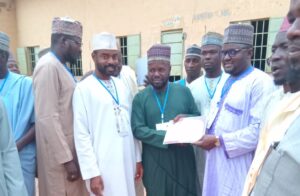
Alhaji Tasiu Alhassan presenting a certificate to Nasiru Yusuf Ibrahim
Speaking at the event, the Sarkin Tsakuwa, Alhaji Isma’ila Santali Tsakuwa, commended the leadership of the association for its commitment to community development and urged members to sustain their efforts toward improving the welfare of residents.
In his remarks, the Chairman of the association, Alhaji Tasiu Alhassan Tsakuwa, said the non-partisan organisation had prioritised interventions in education, security, and healthcare.
He appealed to members of the community to sustain their monthly financial contributions to enable the association to continue implementing development projects.
Earlier, a member of the association, Malam Abdullahi Wagadi, disclosed that the group generated ₦6.56 million through members’ monthly contributions over the past year.
According to him, the association spent ₦3.84 million on allowances for volunteer teachers and vigilantes, ₦564,000 on fencing the Eid prayer ground, and ₦1.255 million on the renovation of the community police outpost.

He further stated that ₦356,000 was spent on supporting Tsakuwa Model Primary School, ₦430,000 on scholarships for students, ₦700,000 on instructional materials, and ₦50,000 on health assistance for vulnerable residents.
Association Raises Over ₦2.1 Million at AGM
A major highlight of the AGM was the fundraising session, during which the association raised ₦2.143 million from philanthropists and community stakeholders.
Leading the donations was Alhaji Umar Muhammad Banupe, who contributed ₦500,000. He was followed by Hon. Mustapha Bala Dawaki, who also donated ₦500,000, while Hon. Abdulmumin Tijjani, popularly known as Mai POS, donated ₦200,000.
Other donors included the Sarkin Tsakuwa, Alhaji Isma’ila Santali Tsakuwa, who donated ₦100,000; the association’s chairman, Alhaji Tasiu Alhassan Tsakuwa, ₦200,000; Professor Shehu Abdullahi Ma’aji Garkuwan Tsakuwa), ₦100,000; and Malam Rabiu Idris, who also contributed ₦100,000.
The event attracted community leaders, stakeholders, and residents who commended the association for its contributions to grassroots development and pledged continued support for its programmes.

Nasiru Yusuf Ibrahim
The Nigerian Communications Commission (NCC) has introduced measures aimed at protecting smaller telecommunications operators from unfair competition by larger industry players through the release of a draft Business Rules framework for Mobile Virtual Network Operators (MVNOs).
KANO FOCUS reports that the Commission has also invited operators and other stakeholders to submit comments and recommendations on the proposed regulations before their final adoption.
According to the NCC, the draft framework is designed to prevent dominant Mobile Network Operators (MNOs) from using pricing strategies or operational delays to frustrate smaller operators and virtual network providers operating within the telecommunications sector.
The Commission noted that the proposed rules would promote fair competition, protect the interests of emerging operators, and strengthen operational standards across the industry.
As part of its stakeholder engagement process, the NCC has requested industry participants and interested parties to submit feedback on the draft framework on or before June 29, 2026.
The Commission also announced plans to hold a public consultation forum on July 9, 2026, where stakeholders’ submissions and recommendations will be reviewed and considered before the final implementation of the rules.
According to the NCC, the new regulations are intended to create a level playing field for all operators, encourage healthy competition, and accelerate growth within Nigeria’s telecommunications industry.
Key provisions of the proposed framework include strict onboarding timelines, fair pricing mechanisms, revenue-sharing arrangements, and mandatory compliance requirements for telecommunications operators.
Under the draft rules, host network operators will be required to acknowledge MVNO connection requests within 10 days and provide feedback on technical readiness within 20 days.
The framework further stipulates that all technical and commercial agreements between host operators and MVNOs must be concluded within 120 days to prevent unnecessary delays in market entry and operations.
To ensure equitable participation in the market, the NCC has also proposed benchmark pricing structures covering data services, voice calls, SMS, and USSD services.
The Commission believes the pricing model will help prevent dominant operators from engaging in anti-competitive practices that could force smaller virtual operators out of the market.
In addition, the proposed regulations introduce a tiered operational framework that clearly defines the scope, responsibilities, and operational boundaries of different categories of operators within the telecommunications ecosystem.
Industry stakeholders are expected to make further contributions to the framework before its final adoption by the Commission.
Nasiru Yusuf Ibrahim
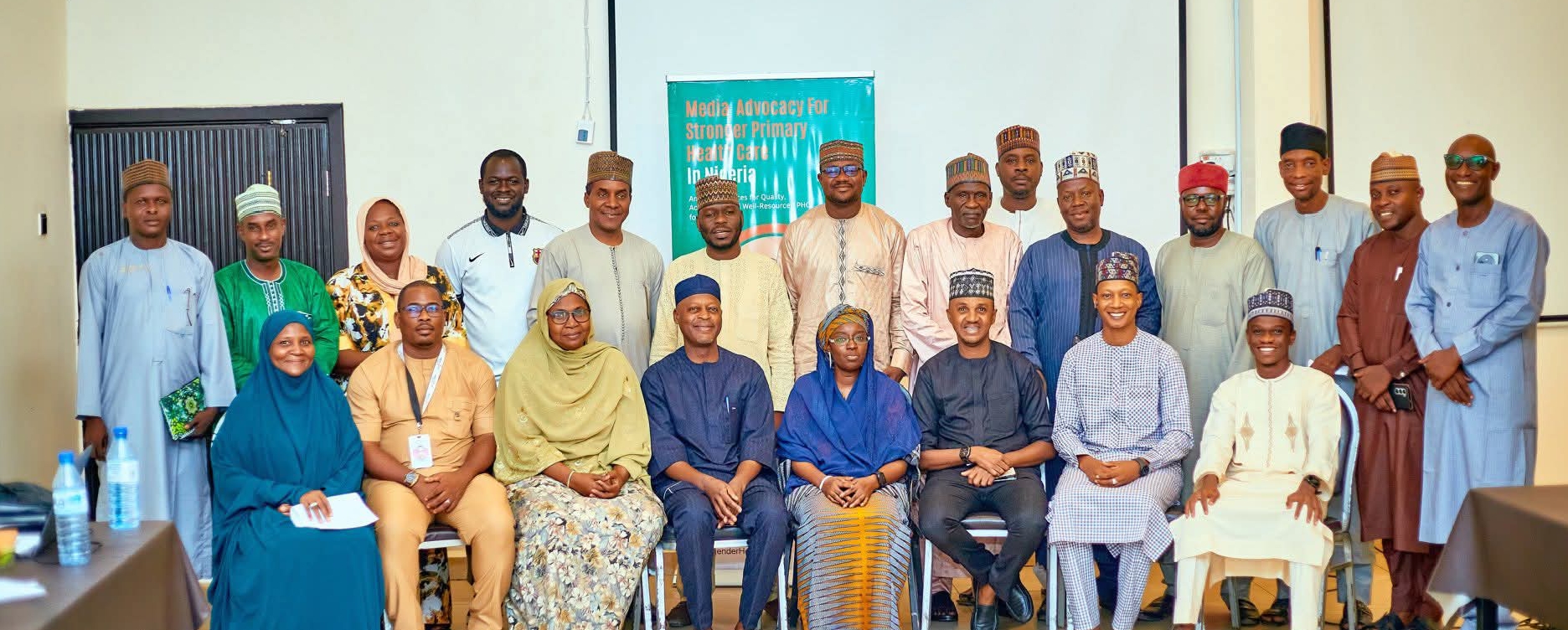
Health journalists in Kano State have inaugurated a new professional body, the Kano Health Journalists Network (KAHJON), aimed at strengthening media reporting and advocacy on Reproductive, Maternal, Newborn, Child and Adolescent Health (RMNCAH) and Primary Health Care (PHC).
KANO FOCUS reports that the network was launched during an Alignment, Coordination, Monitoring and Implementation meeting of media coalitions on gender-responsive RMNCAH and PHC, organised by the International Society of Media in Public Health (ISMPH) in Kano.
During the inauguration, journalists unanimously elected Khadijah Aliyu of Radio Nigeria as Chairperson of the newly established network.
Other members of the executive committee include Mustapha Hodi Adamu of People Daily Newspaper as Vice Chairperson, Abdullahi Hassan of ARTV as Secretary, and Mustapha Salisu of Prime Times as Public Relations Officer.
Speaking at the event, the Programme Director of ISMPH, Mr. Solomon Dogo, said the establishment of KAHJON would help unify existing health reporting groups and improve media coverage of critical public health issues, including polio eradication, nutrition, maternal health, and primary healthcare services.
He congratulated the newly elected executives and expressed confidence that the network would enhance collaboration among media practitioners while strengthening health advocacy efforts in the state.
Dogo noted that similar health journalists’ networks are already operating in Lagos and Kaduna states, adding that development partners remain committed to supporting initiatives that promote public health advocacy.
Also speaking, ISMPH Programme Officer in Kano, Hajiya Sabuwa Yahaya, said the platform would improve coordination among journalists, enhance access to health information, and strengthen evidence-based reporting on health issues.
According to her, the network will also provide a stronger platform for advocacy and engagement with government institutions, development partners, and local communities.
The inauguration ceremony attracted goodwill messages from several development partners, including the Integrated Budget and Policy (IBP), LISDEL, CCSI, SANDHEF, and the Clinton Health Access Initiative (CHAI).
Representatives of the Kano State Ministry of Health, the Drug Management and Consumables Supply Agency, and the Kano State Contributory Healthcare Management Agency also attended the event.
A major highlight of the ceremony was the signing of a Memorandum of Understanding (MoU), which formally established the Kano Health Journalists Network and marked the beginning of a new chapter in health journalism and advocacy in the state.

Tsakuwa community honours teacher, Nupe man, nine others for development efforts

NCC moves to protect smaller telecom operators, releases draft MVNO business rules

Kano health journalists launch Network to strengthen health reporting, advocacy

NDC House of Representatives aspirant defects to APC in Kano

2027: I will continue distributing job opportunities, says Goro

AGILE Project: Kano awards ₦23.1bn contract for construction of 49 new secondary schools

K-SAFE Co-Chair wins Malala Fund-supported research grant on girls’ education

Max Air reschedules departure date for Kano pilgrims’ Hajj airlift

KASITDA moves to digitise Kano health sector

