
Opinion
Hausa Names as Ethnographic Identifiers


Abdallah Uba Adamu
It happened 40 years ago. A friend’s wife in Kano had delivered a bouncing baby boy. My friend chose Maikuɗi as the name for the baby. The families on both sides were having none of this. Maikuɗi was not a name, they argued. But he saw nothing wrong with it – a nice traditional Hausa name. He was adamant. They were adamant. Cue in A Mexican Standoff.
Three days to the naming ceremony, he blinked first, and apparently gave up. With a glint in his eyes, he decided to name the child Ibrahim. A beautiful Hebrew name but cognately shared by both Muslims and Christians (from Abraham, the father of all). Everyone was happy – until it dawned on everyone that Ibrahim was the name of my friend’s father-in-law. Tricky. In Hausa societies, names of parents are never uttered. In the end, everyone ended up calling the boy Maikuɗi! Right now, the boy is a successful international businessman living in the Middle East. Earning serious cash, and living up to his name – which means one born on a lucky day. Or Tuesday.
A few years later, the same friend’s wife gave birth a beautiful baby girl. He decided to name her Tabawa. Objections reloaded. Cue in Dog Day Afternoon. As previously, my friend blinked first. He decided to name her Hajara, another cognate of Hagar, the wife of Abraham. It also happened to be the name of his eldest sister. His mother could not utter it – both the Hausa and Fulani system of cultural relations prohibit mothers from calling the names of their first series of children. In the end, everyone ended up calling the child Tabawa. She is currently a university lecturer and a doctoral student in Nigeria. Living up to her name – which means Mother luck, or the name given to one born on Wednesday (in Kano; in Katsina, it is Tuesday) considered a lucky day. Two children, both lucky in their lives. Their traditional Hausa names became their mascots as they glided successfully through life.
So, why the aversion to Hausa ‘traditional’ names? You can’t name your child Maikuɗi, but everyone will applaud Yasar (wealthy – mai kuɗi?). Or Kamal (perfection). Or Fahad (panther). Or Anwar (bright). Or Fawaz (winner). You can’t name your daughter Tabawa, but it is more acceptable to call her Mahjuba (covered). Or Samira (night conversationist –TikToker?). Name your daughter ‘Dare’, and you are in trouble. Change it to Leila, and you out of it, even though this is an Arabic for ‘dare’ (night).

A lot of the names the Muslim Hausa currently use have nothing to do with Islam. Bearers of such names rarely know their actual meaning or context. They were Arabic, and forced on us by the Cancel Culture that attaches a derogatory ‘Haɓe’ coefficient to anything traditional to the Hausa.
Therefore, I, my friend whose family story I just related and another, decided to get together and be Wokish about traditional Hausa names. Paradoxically, none of us is genetically Hausa (whatever that might mean) – one had roots in north Africa, another had Kanuri heritage, and one had Agadesian and Torodbe roots – but all of us self-identified, with absolute honor and tenacity, as Hausa. None of this ‘Hausa-Fulani’ aberrational nonsense. ‘Hausa-Fulani’ appellation, in my view, is a Nigerian Cancel Culture device to suppress the Fulani culture. The Fulani may have conquered the ruling of the Hausa (except one or two places) and imposed their rule. The Hausa, on the other hand, have linguistically conquered the Fulani. In Kano it is considered anthropological purity to claim Fulani heritage – without knowing a single word of Fulfulde (the Fulani language). Substituting rulers, does not get rid of the general populace who remained what they are.
The third friend then took the task with gusto. He spent over ten years compiling authentic traditional Hausa names that have absolutely nothing to do with ‘Maguzanci’ (the label gleefully and contemptuously attached to any Hausa who is not a Muslim by the Hausa themselves) before Islam in about 1349, at least in Kano). He also collected names that had only a tinge connection to Islam. The end product was a hitherto unpublished list of 1001 authentic, genuine, traditional Hausa names that reflect the cosmology of the Hausa.
Hausa anthropological cosmology reflects the world view and belief system of the Hausa community. based upon their understanding of order in the universe. It is reflected in their naming system – just like any other culture. The Yoruba Muslims, for the most part have retained this attachment to their traditional cosmology. Farooq Kperogi has done a wonderful work on Yoruba naming, although with focus on their adaptation of Muslim names. The failure of the Hausa to do so was, of course, due to the suffocating blanket of Cancel Culture that the Hausa have been suffering for almost 229 years.
Now, let’s look at the names and their categories. The first category I created from the 1001 Names which I edited revolved around Being, Sickness and Death. As noted earlier, the traditional Hausa center their naming conventions on ecological and cosmological observations—using time, space and seasons to mark their births. Based on this, the first naming convention uses circumstances of birth. This category of names is used to refer to the arrival of a child either after another child’s death, death of a parent, sickness of the child immediately after being born or simple structure of the child that seems out of the ordinary. Examples include:
Abarshi. This is derived from the expression, ‘Allah Ya barshi’[May Allah make him survive]. A male child born after series of miscarriages. A female child is named Abarta. A protectionist naming strategy where the child is not given full loving attention after birth until even evil spirits note this and ignore, and thus let him be. Variants include Mantau, Ajefas, Barmani, Ajuji, Barau. Now you know the meaning of Hajiya Sa’adatu ‘Barmani’ Choge’s name – the late famous Hausa griotte from Katsina (1948-2013).
Then there is Shekarau, derived from ‘shekara’, a year. A male child born after an unusually longer period of gestation in mother’s womb. A variant of this name is Ɓoyi [hide/hidden]. A female child is named Shekara. Now you know the meaning of the surname of Distinguished Senator, Malam Ibrahim Shekarau from Kano.
A third example is Tanko. This is a child born after three female children. Variants include Gudaji, Tankari, Yuguda/Iguda/Guda. I am sure you know the famous Muhammed Gudaji Kazaure, Member of the House of Representatives of Nigeria and his media presence in late 2022.
Each of these sampled names reflect a philosophical worldview, reflecting spiritual resignation or slight humor. They therefore encode the traditional Hausa perspective of living and dying as inscribed on the way they name their children.
Names that even the contemporary Hausa avoid because of bad collective memory are those linked to wealth and being owned, or slavery.
Slaves have prominently featured in political and social structure of the traditional Hausa societies, especially in the old commercial emirates of Kano, Zaria, Daura and Katsina. Their roles are clearly defined along socially accepted norms and they are expected to perform given assignments demanded by their masters.
Slaves in Kano are divided into two: domestic and farm-collective. Trusted, and therefore domesticated slaves are mainly found in ruling houses, and are prized because of their loyalty to the title-holder. Farmyard slaves were often captured during raids or wars and are not trusted because of the possibility of escape. They were usually owned by wealthy merchants or farmers and are put to work in mainly farms
Although the institution of slavery as then practiced has been eliminated in traditional Hausa societies, the main emirate ruling houses still retain vestiges of inherited slave ownership, reflected even in the categorization of the slaves. For instance, in Kano royal slaves were distinguished between first-generation slaves (bayi) and those born into slavery (cucanawa).
At the height of slave raids and ownership particularly when owning a slave was an indication of wealth, the names of the slaves often reflect the status of the owner. Examples of these names include: Nasamu (given to first slave owned by a young man determined to become a wealthy man), Arziki (first female slave owned by a man), Nagode (female slave given away to a person as a gift), Baba da Rai (first gift of a male slave to a son by his father), Dangana (male slave of a latter-day successful farmer or trader, although later given also to a child whose elder siblings all died in infancy. The female slave variant is Nadogara), and Baubawa (slaves with different faith from the owner), amongst others.
The changing political economy of Hausa societies since the coming of colonialism has created new social dynamics which included outward banning of slavery. Thus, many of the names associated with slaves and ‘being-owned’ in traditional Hausa societies became disused, unfashionable, or which is more probable, to be used without any idea of their original meaning, it is thought that some record of them may be of value. An example is ‘Anini’, usually a slave name, but later used to refer to a child born with tiny limbs. The ‘smallness’ is also reflected in the fact that ‘anini’ was a coin in Nigerian economy, usually 1/10th of a penny—a bit like the small Indian copper coin, ‘dam’ (from which the English language got ‘damn’, as in ‘I don’t give a damn’).
Further, with the coming of Islam, slave names were eased out and replaced by conventional Muslim names as dictated by Islam, Retained, however, are slave names that also served as descriptors of the functions of the slave, even in contemporary ruling houses. Examples of these slave titles which are rarely used outside of the places include:
Shamaki (looks after the king’s horses and serves as an overseer of the slaves), Ɗan Rimi (King’s top slave official and looks after all weapons), Sallama (King’s bosom friend [usually a eunuch], same role as Abin Faɗa), Kasheka shares the household supplies to king’s wives [usually a eunuch], Babban Zagi (a runner in front of the king), Jarmai (the head of an army), Kilishi (prepares sitting place for the king), amongst others. These names are almost exclusively restricted to the palace and rarely used outside its confines. Cases of nicknames of individuals bearing these names remain just that, but had no official connotation outside of the palace.
The coming of Islam to Hausaland in about 13th century altered the way traditional Hausa name their children and created the second category of Hausa beside the first ‘traditional’ ones. This second category became the Muslim Hausa who abandoned all cultural activities associated with the traditional Hausa beliefs. This was not an overnight process, however, taking it as it does, centuries. Even then, a significant portion of Muslim Hausa material culture remains the same as for traditional Hausa. The point of departure is in religious or community practices which for the Muslim Hausa, are guided by tenets of Islam. Affected in this point of departure is naming conventions. This is more so because Islam encourages adherents to give their children good meaningful names. These names must therefore not reflect anything that counters the fundamental faith of the bearer or reflect a revert to a pre-Islamic period in the lives of the individuals.
However, while predominantly accepting Muslim names, traditional Hausa parents have domesticated some of the names to the contours of their language. For instance, Guruza (Ahmad), Da’u (Dawud), Gagare (Abubakar) Auwa (Hauwa), Daso (Maryam), Babuga (Umar), Ilu (Isma’il), amongst others.
So, here you are. If you are looking for an authentic, ‘clean’ traditional Hausa name, or trying to understand your friend’s traditional Hausa name (or even yours) you are welcome to 1001 Traditional Hausa names.
The list divided into two. The first contains 869 authentic traditional Hausa names. The second contains 132 Arabic/Islamic that the Hausa have somehow domesticated to their linguistic anthropology.
The file is available at https://bit.ly/42HJl97.
Adamu, is a Professor of media and cultural studies, Bayero University, Kano. This was first published on his Facebook account.

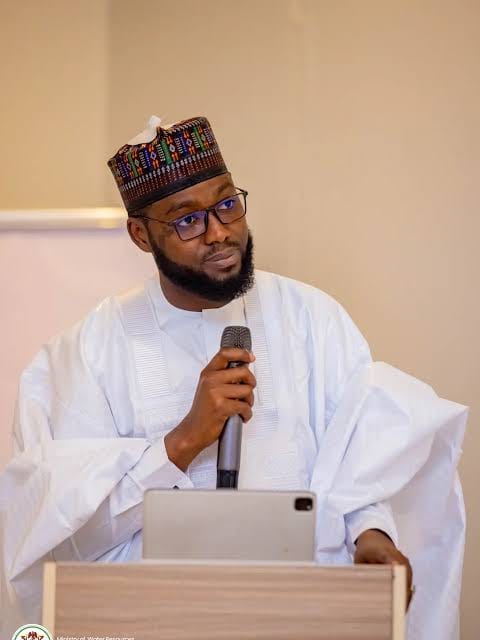
By Dr Dahir M. Hashim
Outgoing Commissioner for Environment and Climate Change and Commissioner for Water Resources, Kano State.
Looking back on my time at the Kano State Ministry of Environment and Climate Change, one of the achievements I value most is the growing recognition of environmental protection as a shared responsibility and a critical component of public health, community wellbeing, livelihoods and the future of our state.
Over time, environmental issues became more prominent in public discourse, with more residents participating in government programmes, supporting interventions and demanding accountability. This growing public engagement remains one of the most rewarding aspects of our work.
For this, I am deeply grateful to the people of Kano State.
My journey at the ministry began on January 6, 2025, when His Excellency, Governor Abba Kabir Yusuf, entrusted me with the responsibility of leading the Ministry of Environment and Climate Change.
I assumed office at a time when the sector faced significant challenges. Public facilities had deteriorated, existing policies required updating, enforcement mechanisms were weak, and frontline workers were owed outstanding payments. However, the governor recognised the enormous potential of the ministry and provided the political backing and institutional support needed to begin the process of rebuilding it.
Rebuilding environmental infrastructure
One of the areas where we recorded significant progress was the restoration of government-owned tree nurseries. Eight previously non-functional facilities were fully rehabilitated, restoring the state’s capacity to produce seedlings locally and sustainably.
Building on the administration’s three-million-tree planting programme in 2024, the initiative expanded to five million seedlings in 2025 and ten million in 2026. Significantly, all the seedlings were raised in government-owned nurseries.
Beyond the impressive numbers, the achievement represented the revival of public infrastructure and the restoration of the state’s capacity to sustain its environmental programmes without depending entirely on external sources of seedlings.
We also prioritised the restoration of the Kano State Pollution Control Laboratory. The facility was renovated, equipped and recommissioned, providing the state with renewed scientific capacity to test and monitor pollution, generate environmental data and strengthen regulatory enforcement.
To consolidate these efforts, we operationalised the Environmental Pollution Control Law and developed the Environmental Pollution and Waste Control Regulations, providing a stronger legal and institutional framework for environmental protection.
Improving waste management and flood control
At the Refuse Management and Sanitation Board (REMASAB), we introduced reforms aimed at improving the coordination of waste collection, evacuation and disposal. These interventions made waste management operations more organised and responsive, supporting the evacuation of approximately one million metric tonnes of waste.
We also restored the Dorayi Compost Plant to operation, reviving its capacity to convert organic waste into useful compost. Beyond addressing waste disposal challenges, the facility offers opportunities for investment, employment and the development of a circular economy.
Recognising the recurring threat of flooding in several communities, we undertook drainage construction, clearance and erosion-control interventions across flood-prone areas.
The stormwater harvesting intervention in Toranke and the development of the Kano State Drainage Master Plan were particularly important components of our broader strategy to strengthen flood management and move towards more sustainable urban drainage planning.
Our approach was not limited to responding to immediate environmental challenges. We also sought to establish a framework for long-term resilience and better management of the state’s environmental resources.
Restoring public parks and recreational spaces
Another area of progress was the rehabilitation of public parks and recreational facilities.
We restored four public parks, with additional facilities undergoing similar interventions. Parks that had suffered years of neglect were given new management arrangements and clearer maintenance responsibilities.
These interventions were designed to restore public spaces where families could relax, children could play and residents could enjoy a healthier urban environment.
The reforms also produced encouraging financial results, with the combined annual revenue generated by the parks increasing from approximately ₦5 million to ₦90 million.
This demonstrated that properly managed public recreational facilities can serve both social and economic purposes while contributing to the state’s revenue base.
Building a stronger policy and climate governance framework
Perhaps one of the most important aspects of our work was the effort to strengthen the policy and legislative foundations of environmental governance in Kano State.
During my tenure, we developed the Kano State Climate Change Policy, alongside its implementation plan and results framework. We also advanced the Climate Change Bill and undertook a review of the state’s Forestry Law, which had remained largely unchanged for more than five decades.
In addition, we developed the Climate Finance Reform Action and Implementation Plan and the Green Bond Framework to position Kano State to attract investment for environmental protection, climate adaptation and sustainable development.
These initiatives were intended to ensure that environmental governance would not depend solely on individual administrations or isolated interventions but would be supported by policies, laws and institutions capable of sustaining progress over time.
Kano State’s third-place finish in the 2026 Climate Governance Performance Ranking and the opportunity to present our work at COP30 in Belém, Brazil, were encouraging milestones.
They demonstrated the potential of consistent institutional support, strategic planning and collective action to improve the state’s standing in environmental and climate governance.
However, such recognition should not be viewed merely as an award or international exposure. It should serve as a reminder of the responsibility to sustain the reforms and deliver tangible benefits to the people.
Putting environmental workers at the centre of reforms
I have always believed that environmental reforms cannot succeed without the commitment and welfare of the people who implement them.
Street sweepers, sanitation workers, environmental inspectors and forest guards constitute the backbone of environmental management. Unfortunately, many of these frontline workers had experienced difficult working conditions and outstanding payment challenges.
With the support of Governor Yusuf, we cleared nine months of salary arrears owed to 2,369 verified street sweepers and doubled their stipends.
We also re-engaged environmental inspectors and forest guards while doubling the stipends of 875 sanitation vanguards.
These interventions were not merely administrative decisions. They were an acknowledgement of the dignity of labour and the indispensable contribution of frontline workers to maintaining a clean, safe and healthy environment.
I remain grateful to these men and women whose daily sacrifices often go unnoticed but whose contributions are essential to the wellbeing of our communities.
A legacy of collective responsibility
As Governor Abba Kabir Yusuf restructures the ministries and appoints a new Commissioner for Environment and Climate Change, my overriding feeling is one of gratitude.
I am particularly grateful to His Excellency for the confidence he reposed in me, the opportunity to serve and the support he provided throughout my tenure. His willingness to listen to proposals and support difficult but necessary decisions made it possible for us to undertake many of the reforms highlighted in this account.
I also appreciate the staff of the ministry and its agencies, community leaders, development partners, civil society organisations, young volunteers, private-sector operators and residents who contributed to our work.
Their participation, constructive criticism, patience and cooperation helped shape our interventions and improve their implementation.
I must emphasise that these achievements are not the accomplishment of one individual. They are the product of collective effort, institutional commitment and the contributions of many people who believed that Kano deserved a cleaner, greener and more environmentally sustainable future.
To the incoming Honourable Commissioner, I extend my congratulations and wish you success in this important responsibility. I also assure you of my willingness to offer any necessary support to sustain the progress already made and advance the environmental agenda of our dear state.
Public service is ultimately about the people and the institutions we build to serve them. Positions may change, and responsibilities may be transferred, but the obligation to contribute to society remains.
Serving Kano State as Commissioner for Environment and Climate Change has been a profound privilege. I leave with gratitude for the opportunity, satisfaction in the progress recorded and the hope that the foundations we have laid will continue to support a cleaner, greener and more resilient Kano.
Thank you, Kano State, for the trust and support.
Dr Dahir M. Hashim is the Commissioner for Water Resources and outgoing Commissioner for Environment and Climate Change, Kano State.

Dr Saleh Adamu Kwaru
Adding a staggering $20.52 billion and €1.05 billion to Nigeria’s debt burden is more than an economic miscalculation; it is a source of heartbreak for a nation already brought to its knees. At a time when millions of citizens are struggling to afford a single meal, grappling with historic inflation and watching their futures slip away, the government’s response appears to be to pile yet another mountain of debt on the country. This raises a painful question for every suffering Nigerian: When will our leaders finally acknowledge the pain their decisions inflict, and when will the bleeding stop?
The timing of this massive loan request is particularly troubling. Seeking to secure huge foreign loans on the eve of intense political activity and election seasons, when public anxiety is high and attention is divided, risks depriving citizens of the robust accountability the country deserves. Rather than looking inward, exercising fiscal discipline and improving public revenue management, the government appears to be rushing to mortgage the nation’s collective future. It feels less like responsible governance and more like a desperate attempt to lock in liabilities before the public can challenge them.
Nigeria’s national debt profile is already a ticking time bomb, placing enormous pressure on every sector of society. Every additional dollar borrowed increases the country’s financial obligations and diverts revenue that could otherwise support schools, equip hospitals and protect vulnerable citizens. Adding more than $20 billion to this burden risks pushing the country closer to the brink of a debt crisis, threatening to leave future generations trapped in a cycle of economic dependence. How much more hardship can ordinary Nigerians endure before the consequences of unsustainable borrowing become overwhelming?
We are repeatedly offered the same promises that these loans will transform electricity, roads, healthcare and education. But good intentions without transparency and accountability are not enough. Where is the visible evidence that previous loans have translated into better living conditions for ordinary Nigerians? Instead of seeing the promised improvements, many citizens continue to grapple with rising poverty while the country’s debt burden grows. When projects fail to generate sufficient economic returns to justify their costs, the burden ultimately falls on ordinary citizens through higher taxes, deteriorating public services and deeper economic hardship.
Before anyone commits future generations to repaying billions of dollars in new loans, the government must look Nigerians in the eye and explain how existing public resources are being managed. Why does borrowing appear to be the easiest option while systemic corruption and inefficiencies in public spending remain major concerns? Nigerians are exhausted by a system that leaves them bearing the consequences of decisions over which they have little control.
The country does not need another mountain of debt built on promises alone. It needs leaders committed to transparency, fiscal discipline, prudent resource management and the welfare of the people they have sworn to serve. Any new borrowing must be justified by clear development objectives, independently verifiable benefits and a credible repayment plan.
Nigeria cannot borrow its way out of every economic challenge. The government must demonstrate that it has exhausted reasonable alternatives, established safeguards against waste and corruption, and put the public interest above political convenience. Without these assurances, further borrowing risks deepening the hardship Nigerians already face and transferring an even heavier burden to generations yet unborn.
Dr Saleh Adamu Kwaru, is former staff of Central Bank of Nigeria.
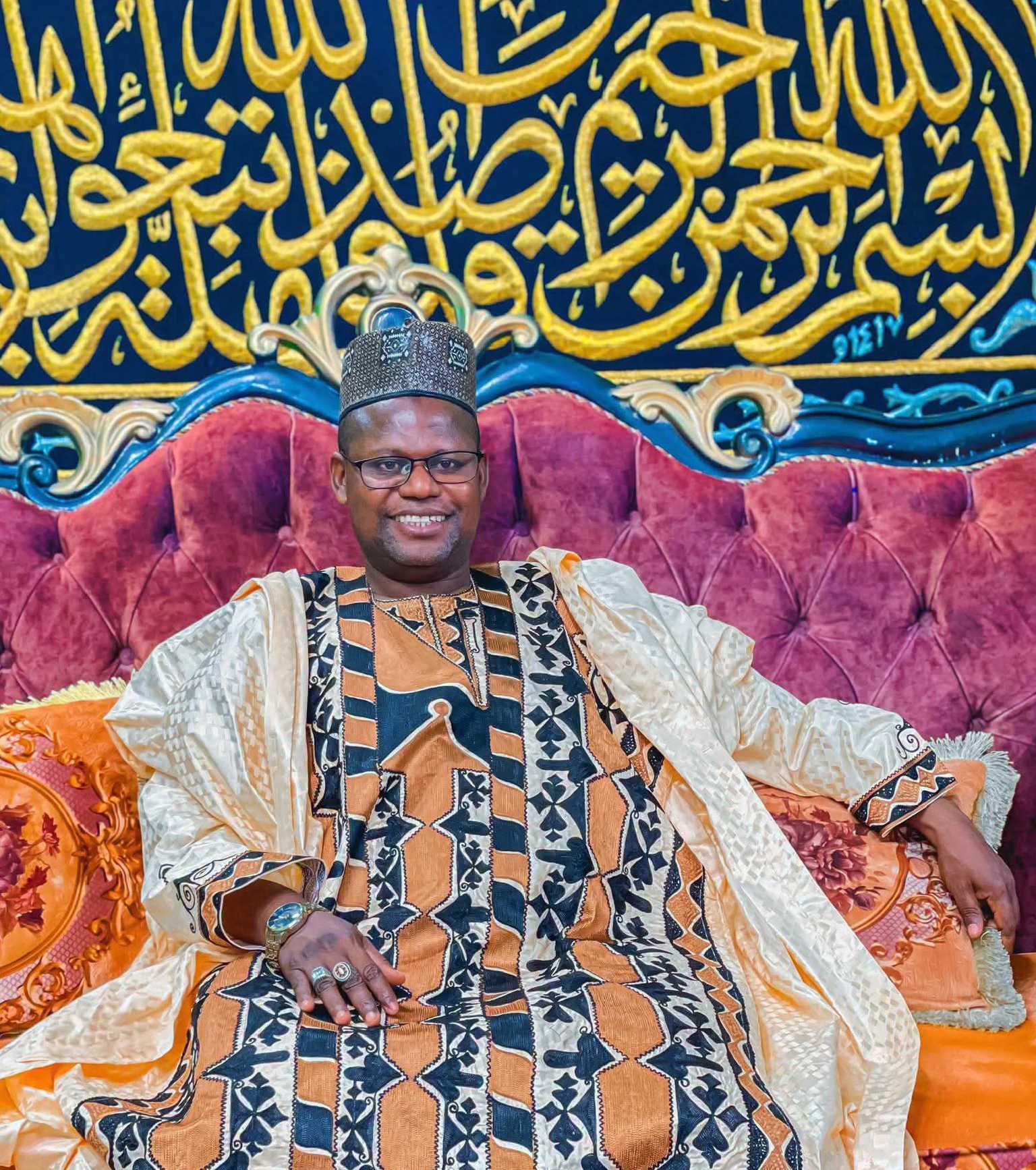
Imam Murtadha Gusau
The killing of Katsina-based Islamic preacher Sheikh Yahaya Ibrahim Masussuka should serve as a warning against the dangers of religious extremism, sectarian hostility and the reckless attribution of blame before investigations are concluded.
Sheikh Masussuka was reportedly shot dead alongside his associate, Adamu Abubakar, by gunmen in Dutsin-Ma, Katsina State, on Monday, October 26, 2026. His death has generated tension, with allegations circulating on social media and among religious circles that members of Ahlus-Sunnah wal-Jama’ah, particularly the Salafiyyah and Izalah movements, were responsible.
Those allegations have been complicated by an audio statement in which the terrorist group Ansaru reportedly claimed responsibility for the killings. The group was also reported to have cited Masussuka’s religious views, advocacy for interfaith dialogue and condemnation of violent extremism among its grievances against him.
These claims must be properly investigated and independently established. However, they underscore an important point: religious disagreements, however intense, must never become a licence for violence, and suspicion must never be mistaken for proof.
The danger of collective blame
Masussuka was a controversial religious figure whose Qur’an-centred teachings, including his rejection of the authority of Prophetic Hadith, brought him into theological disagreements with mainstream Islamic scholars.
In November 2025, he reportedly petitioned the Katsina State Government over alleged insults and threats from members of the Izalah movement. Such a history of disagreement may explain why some people quickly suspected his religious opponents after his killing. It does not, however, establish their responsibility for the crime.
In a society where religious identity can easily become a source of division, the temptation to blame an entire movement for the actions of individuals is dangerous. It can inflame tensions, provoke retaliation and endanger innocent people.
No religious group should be held collectively responsible for a crime without credible evidence. Equally, no individual or organisation should be shielded from investigation merely because of its religious affiliation or public standing.
The appropriate response to the killing is a thorough, impartial investigation that identifies the perpetrators, establishes their motives and brings those found culpable to justice.
The Katsina State Police Command and other relevant authorities must be allowed to carry out their responsibilities without pressure from partisan interests or religious factions. Members of the public, meanwhile, should resist the temptation to spread unverified allegations or mobilise others against people they suspect.
Justice cannot be secured through rumours, online accusations or reprisals. It requires evidence, due process and the courage to accept the outcome of a credible investigation.
Islam’s position on the sanctity of life
As a Muslim, I consider the protection of innocent life a fundamental obligation. The deliberate killing of an innocent person is a grave offence, and no interpretation of religion should be used to justify murder, intimidation or acts of terror.
Allah says in the Qur’an:
“Whoever kills a soul unless for a soul or for corruption done in the land—it is as if he had slain mankind entirely. And whoever saves one—it is as if he had saved mankind entirely.” (Qur’an 5:32)
This teaching places an enormous moral responsibility on every believer. Human life cannot be treated as disposable simply because someone holds a different opinion, belongs to another religious group or challenges a particular interpretation of scripture.
The Qur’an also instructs Muslims to invite people to the way of their Lord with wisdom and good counsel, and to engage them in the best possible manner (Qur’an 16:125).
This principle is particularly important when religious differences become contentious. Disagreement should be addressed through scholarship, dialogue and reasoned argument—not threats, intimidation or violence.
Ahlus-Sunnah wal-Jama’ah, like other Muslim communities, should be judged by the conduct of its adherents and the teachings they uphold, rather than by allegations that have not been established. Those who identify with the Sunnah must demonstrate through their conduct that their commitment to the faith is inseparable from justice, mercy and respect for human life.
At the same time, the rejection of terrorism must be universal. Violence does not become acceptable because its perpetrators claim to defend a religious cause, and no group can acquire immunity from scrutiny by invoking Islam.
Knowledge must defeat extremism
One of the most effective ways of confronting religious extremism is to promote sound Islamic scholarship and responsible religious leadership.
The history of Islam offers examples of scholars who confronted dangerous interpretations through knowledge and dialogue. Abdullah ibn Abbas, a Companion of the Prophet Muhammad (PBUH), is widely remembered in Islamic tradition for engaging the Khawarij, an early extremist group, in theological argument and challenging their interpretations of religious texts.
The lesson is that mistaken beliefs should be confronted with evidence, patience and sound scholarship. Violence against people suspected of holding erroneous views only deepens division and makes peaceful engagement more difficult.
Religious leaders therefore have a special responsibility to ensure that their sermons, teachings and public statements do not encourage hatred or legitimise harm against others. They must distinguish between correcting an idea and attacking the dignity or safety of the person who holds it.
This responsibility extends to social media, where provocative messages and unverified allegations can spread rapidly. Religious disputes that might otherwise remain confined to scholarly discussions can become public confrontations when users circulate inflammatory claims without checking their accuracy.
Muslims should refuse to participate in online campaigns that dehumanise opponents, encourage collective punishment or portray entire communities as enemies. The pursuit of truth requires intellectual honesty, while the defence of religion requires good character.
The Prophet Muhammad (peace be upon him) is reported to have said that a Muslim is one from whose tongue and hand other people are safe. This teaching offers a practical standard by which believers should assess their conduct.
If our words expose innocent people to threats, or our actions endanger their lives, we must examine whether we are truly reflecting the values we profess.
Mercy is not weakness
The distinction between religious conviction and religious intolerance must be clearly understood. A person can hold firmly to a theological position without insulting, threatening or persecuting those who disagree.
Indeed, mercy does not require Muslims to abandon their beliefs. It requires them to uphold those beliefs without violating the rights of others.
The Prophet’s conduct provides a model of restraint and compassion. In a well-known account in Sahih al-Bukhari, a Bedouin urinated in the Prophet’s Mosque, prompting some Companions to react angrily. The Prophet instructed them to leave the man alone and have the affected area cleaned, explaining that people had been sent to make matters easier, not harder.
The lesson is not that wrongdoing should be ignored. Rather, correction should be proportionate, informed and directed towards addressing the problem instead of humiliating or destroying the person responsible.
This approach is relevant to contemporary religious disagreements. A person who expresses a controversial interpretation of Islam should be answered with knowledge and appropriate dialogue. Where conduct violates the law, the authorities should respond through lawful procedures. Neither theological disagreement nor public anger justifies private punishment.
Similarly, allegations of blasphemy, disbelief or deviation must not be treated as permission for individuals to take the law into their own hands. Accusations of this nature can have devastating consequences and must never become instruments for settling personal scores or advancing sectarian interests.
A responsibility shared by leaders and citizens
The killing of Sheikh Masussuka demands more than condemnation. It calls for a collective commitment to prevent further violence.
The police must investigate the killings professionally and pursue those responsible. Religious leaders must calm their followers and reject attempts to exploit the tragedy. Political and community leaders must discourage inflammatory rhetoric, while media organisations and social media users must verify information before publishing or sharing it.
The government should also pay attention to the conditions that allow extremist groups to recruit, intimidate communities and spread violent ideologies. Effective security measures must be accompanied by credible religious education, community engagement and opportunities for young people to seek guidance from knowledgeable and responsible scholars.
Above all, the authorities must ensure that the pursuit of justice does not become a pretext for harassment or reprisals against innocent people.
The killing of one person must not lead to the persecution of another. Nor should the grief of a victim’s family be exploited to deepen divisions within the Muslim community.
Ahlus-Sunnah wal-Jama’ah adherents have a responsibility to reject violence committed in the name of Islam and to demonstrate that their commitment to the Sunnah is reflected in patience, compassion and respect for justice. Other religious communities and ideological groups have the same obligation to reject violence and hold their members accountable for wrongdoing.
The protection of innocent life is not the exclusive responsibility of one sect. It is a shared moral and civic duty.
Justice, not vengeance
The circumstances surrounding Sheikh Masussuka’s death must be established through a credible investigation. If Ansaru’s reported claim of responsibility is substantiated, the group’s involvement must be confronted through lawful security and judicial measures. If evidence implicates any other individuals, they too must answer for their actions.
Until then, Nigerians must resist the urge to turn suspicion into certainty or religious disagreement into collective condemnation.
The true test of religious commitment is not the intensity with which one denounces opponents, but the willingness to uphold truth and justice even when emotions run high. Faith should encourage self-restraint, protect human dignity and inspire people to seek peaceful solutions to their differences.
Nigeria has already paid a heavy price for violence driven by extremism and communal suspicion. The country cannot afford to allow another killing to become a trigger for fresh hostility.
Let the death of Sheikh Yahaya Ibrahim Masussuka strengthen, rather than weaken, our resolve to protect innocent lives, promote responsible religious dialogue and ensure that every allegation is tested against evidence.
Islam must not be used as a cover for terrorism, and religious disagreement must never become an excuse for murder. The path forward is clear: reject extremism, condemn false accusations, protect the innocent and allow justice to take its course.
Imam Murtadha Muhammad Gusau is the Chief Imam of Nagazi-Uvete Jumu’ah Mosque and the late Alhaji Abdur-Rahman Okene’s Mosque, Okene, Kogi State, Nigeria.

NUJ urges Kano residents to support task force on drug abuse

Kano Environment Ministry: The Reforms We Began and the Legacy We Leave

Kano Sports Commission congratulates Waiya on appointment as youth, sports commissioner

Governor Yusuf swears in six commissioners, three advisers, 19 permanent secretaries
Kano Cabinet Reshuffle: Waiya Moves from Information to Youths and Sports Ministry

Kano must make government procurement work for made-in-Kano

Indonesian scholar proposes waqf model to reform almajiri education in Nigeria

Nigeria’s Data Demand Surges 47% as Stakeholders Seek Fresh Investment in Digital Infrastructure

Veteran NTA manager Dahiru Biso loses wife at 58

