
Opinion
Darkness at Noon: Prof. Muhtar Hanif Alhassan, 1954-2024


Abdalla Uba Adamu
It was with heavy heart that I took a phone call that informed me of the passing away of my bosom friend, Prof. Muhtar Hanif Alhassan in a hospital in Cairo on Thursday March 21, 2024. I have been aware of his illness. I and Salisu Ɗanyaro have been monitoring his unfortunately deteriorating health. In the end, the sun sets at noon for an incredibly bright, brilliant, super intelligent unassuming quite genius from Kano, northern Nigeria.
I first met Muhtar in June 1993. He had returned from Sussex University, Brighton, UK after his doctoral studies in 1992, and people kept saying we should meet as we had so much in common—but of course he was much much brighter than I was, or would ever be. Although I also attended the same university, I had finished my PhD (or DPhil as they prefer to name their doctorates) in 1988, so we missed each other, as he came to Sussex a couple of years after I had left.
Our interface was computing. In early 1990s computer technology was making heavy inroads in Kano. Business Centers were being set up. The pioneers were Abacus Computers (Adamu Sufi), City Business Center (Abba Lawan Daneji) and Midtown Business Center (Faruk Ɗalhatu).

Having spent a year at the University of California as a Fulbright Senior African Research Scholar at UC Berkeley, from 1991 to 1992, I came back from the US heavily loaded with a vast amount of shrink-wrapped original software costing thousands of dollars, and a lot of Shareware software (try-before-you buy) on dozens of 5.25 floppies. This gave me a a high vantage position in software useability stakes in Kano and I became the main supplier of software to all and sundry—even establishing my own ‘company’, Tangerine Dream Computer Services.
Despite hungrily devouring dozens of magazines available on computing in those days (PC Plus, PC Magazine, Computer Shopper, PC World, etc.) sold by a cantankerous Lebanese lady, Nadia, in a corner shop near Beirut Road mosque in Kano, I was not a hardware expert. A colleague at Bayero said I should meet Muhtar whom I don’t know, but whom I was told was a genius. We met after Friday prayers one day in June 1993 in BUK. We formed a lifelong partnership. I can proudly proclaim that Muhtar taught me a lot about computers, programming languages and software useability.
Born in Galadanci, Kano city in September 1954, Muhtar was named so by his father, a Qur’anic teacher, at the advice of the father’s friend. Years later, as he related the story to me, he said decided to add ‘Hanif’ to his name officially, thus becoming Muhtar Hanif Alhassan.
He attended Gwarzo Boarding Primary School, a unique experimental primary school in Kano of the period. He finished in 1968, making us contemporaries (although he was a couple of years older than me). His excellence in leaving school certificate examinations earned him a place at Federal Government College Warri, Delta State from 1969 to 1973, one of the first Kano indigenes to have such opportunity. He graduated with distinction. Towards the tail end of his secondary schooling, he applied for a Russian (then as Soviet Union) scholarship. While waiting for the outcome, he was admitted at the School of Basic Studies, Ahmadu Bello University Zaria, the breeding ground of northern Nigerian intellectuals and technocrats where he reconnected with many former Gwarzo Boarding friends such as AbdulRazzaq Ahmad Muhammad-Oumar and Bashir Ka Saidu, forming a trio of highly motivated intellectual young people.
His application to Russia was successful and he was awarded the Foreign Aid scholarship purely on merit. He was placed at the Kyiv State University, Kyiv, Ukraine from August 1974 to September 1975 where he obtained A levels with distinction in Maths, Physics and Chemistry. This merged with his undergraduate studies for two years. His excellent results earned him admission in August 1977 to a Masters degree at the Belarus National Technical University, Minsk, in Electric Drives and Automation with specialization in Industrial Automation. He graduated with very good grades in 1982. Up to his passing away, Muhtar could speak passable conversational Russian.
On his return to Kano after eight years in Russia in 1982, he served his National Service at the Nigerian Mining Corporation, Jos, where he was absorbed after the service year. On a visit to Kano, the late Prof. M.K.M. Galadanci grabbed Muhtar by the hand and took him straight to the Faculty of Technology, Bayero University Kano and introduced him to the Head, Department of Electrical Engineering, then Abubakar Sani Sambo. Abubakar and Muhtar were classmates at SBS. They were both geniuses. Muhtar was immediately employed as an Assistant Lecturer in the Department. In 1989 he was a beneficiary of the last remnants of Kano State government’s scholarship generosity in the era and he was fully sponsored for a DPhil program at Sussex University. Many BUK staff attended the university, including Abubakar Sani Sambo himself. Muhtar finished in his DPhil in 1982, specializing in Control Systems with focus on – Permanent Magnet Synchronous Motors in Position.
Muhtar’s brilliance in computing, robotics and early Artificial Intelligence even in the crude years of the 1980s were clear enough to make Bayero University Kano appoint him the first Director Management Information Systems (MIS) to automate the decision making process in the university from 1993 to 1995.
He was in this position until he was hijacked by Abubakar Tafawa Balewa University (ATBU) Bauchi in 1996 where he was appointed Director MIS and Deputy Director Computing Services and Senior Lecturer in Engineering and Computer Science. While there, he led a team of IT Professionals responsible for establishment of a robust information system for the University. This was solid enough to make Inland Bank Nigeria Plc engage him to automate their operations—becoming one of the first few Nigerian banks to do so in the late 1990s.
In 2004 he was literally hijacked by the then Registrar-General of the Corporate Affairs Commission, Ahmed Almustapha who had just been appointed the RG of CAC, and wanted the best to automate the Corporation. He knew of Muhtar and lost no time in bulldozing Muhtar to transfer his services to CAC. Muhtar served as Director ICT (Information Management System) CAC for seven years, leaving in 2011. While at CAC he led that team that transformed the Commission’s processes from manual to Web based transactions using electronic workflows over a rugged intranet that spans the 36 states of Nigeria. CAC is still benefitting from this innovation.
He went back to academia, this time to Nile University in 2011 becoming the Head of Electronics Engineering Department, and later, the Deputy Vice-Chancellor (Administration). In 2013, he was, once more, headhunted, this time by Prof. Vincent Ado Tenebe, a former colleague of his at ATBU and then the Vice-Chancellor of the National Open University of Nigeria (NOUN). Prof. Tenebe employed Muhtar on December 11, 2013 as a Senior Lecturer in the Department of Computer Sciences in the then School of Science and Technology. He was posted as the Director, NOUN Special Study Centre, Public Service Institute of Nigeria.
However, at Nile University he was due for promotion to Associate Professor, and the University had sent his papers for assessment. The result came back positive and he was duly promoted Associate Professor of Computer science with effect from March 2, 2015, even after had left the university. NOUN therefore merely endorsed this position in January 2016 through another set of positive assessments.
I was appointed the Vice-Chancellor, National Open University of Nigeria in February 2016. When I reported, I was hugely relieved to see that Muhtar was already a staff in the university. Right there and then, I felt more than half of my job would be easy. On taking over, I met a chorus of protests from students about missing results, miscalculation of results, website glitches, etc. The MIS system of NOUN at the time was outsourced to external contractors.
After studying the situation for over three months, I created a brand new Directorate of Management Information Systems (DMIS) and made Muhtar the Director. I gave him only one task: bring back our data. No more outsourcing. And no limit to resources. These were two things Muhtar wanted to truly excel: resources and targets.
And he did deliver. By 2017, and despite howls of protests both from within the university and from the companies feeding fat on NOUN’s huge number of students, Muhtar had come up with a robust MIS system, NOUN Portal StudWare, that withstood a series of hacks.
Within two years, we had cleared all student results backlogs, created an effective internal monitoring mechanism and dispensed with the contractors who were charging the university billions to run a system a dedicated team of just five people could. But then, Muhtar was equivalent to more than 10 people when it comes to coding. It was difficult to see how he could fail, with the following specialties in his belt: Computer-aided analysis of magnetic fields, object-oriented programming solutions to engineering problems, data-driven applications, web based data communications (xml, etc.), Design and simulation of control systems, Computer control, embedded systems, mobile technology, m-business solutions, microcontrollers and microprocessors, near-field communication, digital signal processing, Artificial Intelligence and GIS technology.
Based on his numerous publications and designs (web pages, software applications etc.), NOUN promoted him to Professor of Computer Science in 2021. Yet, once more, he was hijacked by Al-Muhibbah Open University (AOU), Abuja in 2023, leaving NOUN on a leave of absence. As Allah willed it, his stay at AOU was brief before he was afflicted with illness. He was eventually rushed to Cairo for advanced treatment. His situation deteriorated, and on Thursday March 21, 2024, Prof. Muhtar Hanif Alhassan returned to Allah (SWT).
Quiet, unassuming, gentle, but with a laser-sharp brain, Muhtar was not only able to sort computer problems, but also willing to teach others – and in this, he found a willing student in me. We forged a life-long partnership. While I dealt with the marketing of our talents, with focus on software, Muhtar was the ‘engineering’ division, dealing with hardware. We formed a fair of early computer educators in Kano.
Our initial partnership was catalytic in introducing quite a few innovations in Kano computer circles. The main one was the development of a Hausa-language word processor. Muhtar had developed a prototype while on his D.Phil. program at Sussex as a personal side project, and which he named Marubuciya/the writer, giving it a feminine name that would delight feminists. He sought my input on its useability. I then requested Muhtar Yusuf (with the nickname of ‘Banana’ due to his curved shots in playing soccer which he was good at when younger) from the Department of Nigerian Languages with specialization in Linguistics. The three of us started a critical analysis of the word processor – Muhtar was coding, I was testing while Muhtar Banana was proof-reading it from linguistic perspectives. The project started in my living room in campus housing on Sunday November 21, 1993.
The process was a fascinating exercise in translation, as the team wanted a word processor where Hausa typists would easily understand the menus. The team relied on Muhtar Yusuf for input into appropriate equivalency to use. Expressions such as ‘okay’, ‘underline’, ‘italic’, ‘bold’, proved particularly problematic to translate in Hausa as single words, without creating hyphenated equivalents. This would not only be awkward in the spaces provided for coding such expressions, but can become confusing to neophyte computer users when convoluted translations were involved. Without any interest from the university, or any sustainable funding from outside sources, the Marubuciya development team became stuck with a prototype.
I then decided to reach out to City Business Center in the city of Kano to test the prototype. Surprisingly, the operators indicated that they were quite comfortable with the Microsoft Word menu structures and do not wish to learn all over again on another word processor. However, their main challenge was lack of a TrueType font that will capture Hausa language glottal consonants (Ɗ, ɗ, Ƙ, ƙ, Ɓ, ɓ). These were not found on any computer keyboard. That gave me a new assignment – to create the Hausa ‘hooked’ fonts. That was the beginning of the development of ‘rabiat’ and ‘abdalla’ Hausa fonts.
Prof. Muhtar Hanif Alhassan was a genius, pure and simple. He was not loud, he was shy, with a hidden sense of humor (and full of Russian jokes). Unobtrusive, Modest. Team player. He was truly a loss to Kano and northern Nigeria as whole. May Allah (SWT), forgive him, receive him in His Rahama and grant him eternal rest.
Abdalla, is a Professor of media and cultural studies at Department of information and media studies, Bayero University, Kano. This was first published on his Facebook page.

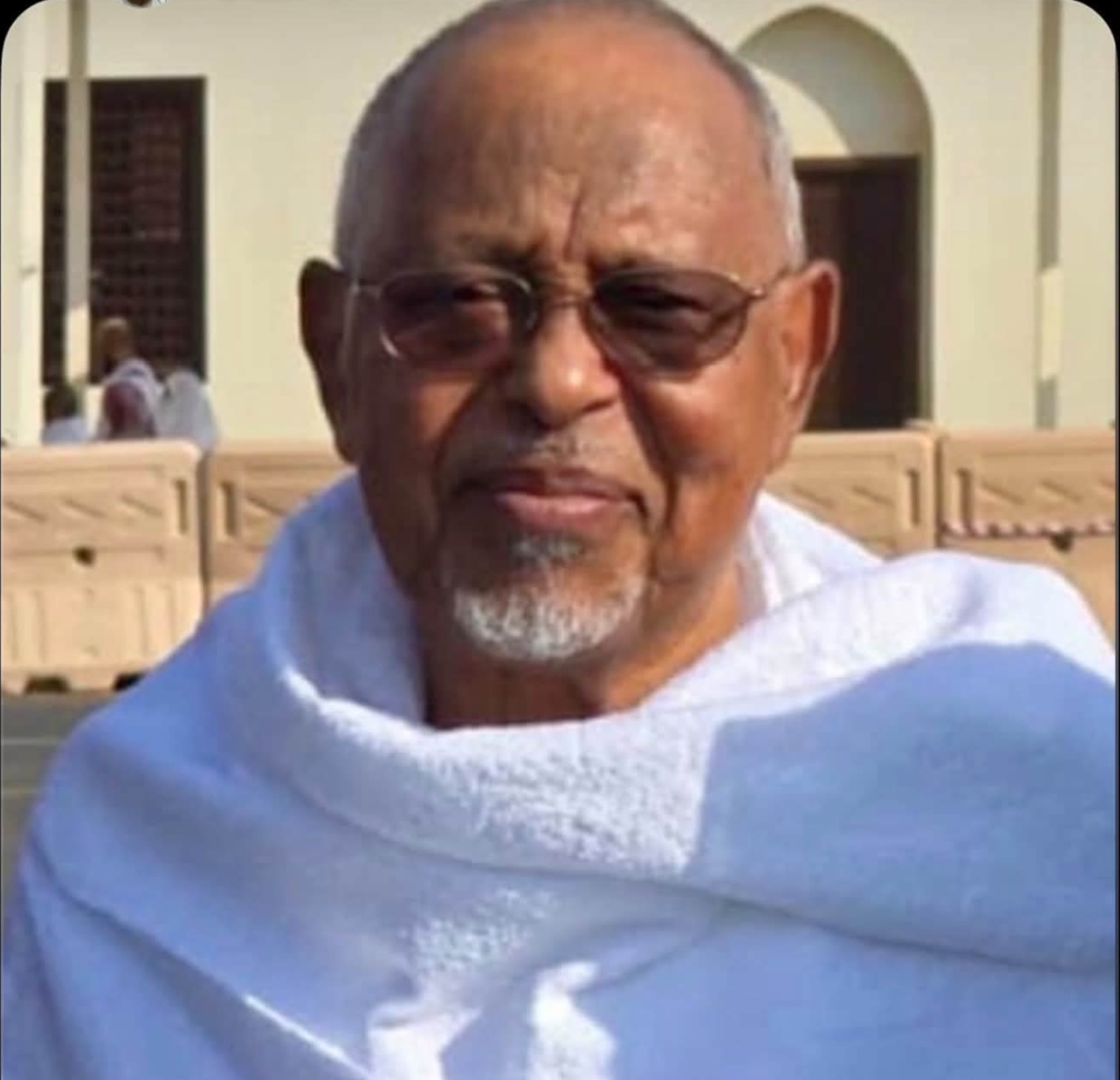
Hashim Yusuf Hassan
It is strange how the world keeps turning. The sun still rises, the seasons still change, and people continue to go about their daily lives. But there is now a quiet space in my world, a silence where your voice used to be. It is a silence that has taught me more about love and loss than words could ever express.
I still find myself reaching for my phone to tell you something, seek your advice or simply hear you say, “Don’t worry, it’ll be alright.” I still see you in the most unexpected places—in a particular shade of blue in the sky or in the way someone leans back in their chair. For a fleeting moment, it feels as though you are still here. Then the moment passes, and the ache reminds me that you are no longer with us.
But here is the truth I am learning to live with: you are not truly gone. You are woven into the very fabric of who I am. I am the person I am today because of the lessons you taught me, not just through your words but also through the way you lived. You taught me what quiet strength looks like. You taught me that integrity means doing the right thing, even when no one is watching. You taught me how to be strong, but, more importantly, you taught me how to be kind.
When I look in the mirror, I see your eyes. When I hear my own laughter, I sometimes hear yours. When I stand up for something I believe in, I feel your hand on my shoulder. You remain the compass that guides me and the voice in my head that says, “You can do this.” You are the reason I know what it feels like to be truly and unconditionally loved.
I will not pretend that I have no regrets. I wish I had called you more often. I wish I had listened more. I wish I had told you “I love you” one more time, or a thousand more times. I wish you could see all that I have accomplished and the person I have become. But I choose to believe that, somehow, you know. I choose to believe that you are proud of me.
Grief, I have learned, is simply love with nowhere to go. And my love for you is an ocean. Now that you are gone, it has nowhere to land, so it washes over me, sometimes in gentle waves and sometimes in a tide that threatens to pull me under. It is the price of having loved you so deeply, and it is a price I would gladly pay a million times over.
Thank you, Baba, for everything, for the laughter, the lessons, the protection and the love. You were my first hero, my protector and my safe place. Even now, you remain my anchor.
I miss you more than words can ever express. I will carry you with me in every step I take, in every choice I make, and in every moment of joy and sorrow. I will strive to live a life that would make you proud. I promise.
Allah Ubangiji Ya yi maka rahama.
Your son, forever and always.
Hashim Yusuf Hassan.
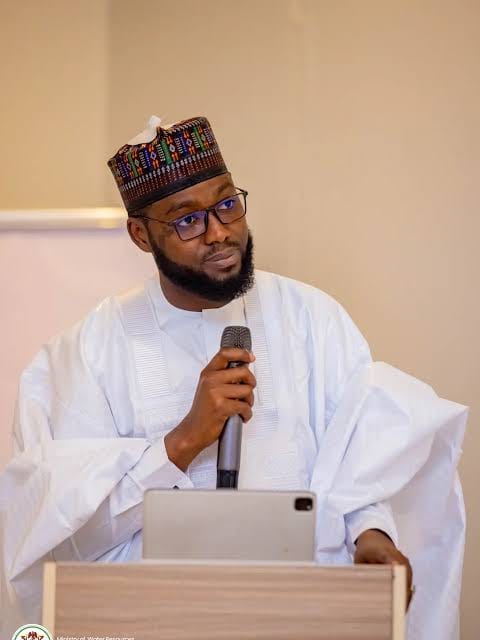
By Dr Dahir M. Hashim
Outgoing Commissioner for Environment and Climate Change and Commissioner for Water Resources, Kano State.
Looking back on my time at the Kano State Ministry of Environment and Climate Change, one of the achievements I value most is the growing recognition of environmental protection as a shared responsibility and a critical component of public health, community wellbeing, livelihoods and the future of our state.
Over time, environmental issues became more prominent in public discourse, with more residents participating in government programmes, supporting interventions and demanding accountability. This growing public engagement remains one of the most rewarding aspects of our work.
For this, I am deeply grateful to the people of Kano State.
My journey at the ministry began on January 6, 2025, when His Excellency, Governor Abba Kabir Yusuf, entrusted me with the responsibility of leading the Ministry of Environment and Climate Change.
I assumed office at a time when the sector faced significant challenges. Public facilities had deteriorated, existing policies required updating, enforcement mechanisms were weak, and frontline workers were owed outstanding payments. However, the governor recognised the enormous potential of the ministry and provided the political backing and institutional support needed to begin the process of rebuilding it.
Rebuilding environmental infrastructure
One of the areas where we recorded significant progress was the restoration of government-owned tree nurseries. Eight previously non-functional facilities were fully rehabilitated, restoring the state’s capacity to produce seedlings locally and sustainably.
Building on the administration’s three-million-tree planting programme in 2024, the initiative expanded to five million seedlings in 2025 and ten million in 2026. Significantly, all the seedlings were raised in government-owned nurseries.
Beyond the impressive numbers, the achievement represented the revival of public infrastructure and the restoration of the state’s capacity to sustain its environmental programmes without depending entirely on external sources of seedlings.
We also prioritised the restoration of the Kano State Pollution Control Laboratory. The facility was renovated, equipped and recommissioned, providing the state with renewed scientific capacity to test and monitor pollution, generate environmental data and strengthen regulatory enforcement.
To consolidate these efforts, we operationalised the Environmental Pollution Control Law and developed the Environmental Pollution and Waste Control Regulations, providing a stronger legal and institutional framework for environmental protection.
Improving waste management and flood control
At the Refuse Management and Sanitation Board (REMASAB), we introduced reforms aimed at improving the coordination of waste collection, evacuation and disposal. These interventions made waste management operations more organised and responsive, supporting the evacuation of approximately one million metric tonnes of waste.
We also restored the Dorayi Compost Plant to operation, reviving its capacity to convert organic waste into useful compost. Beyond addressing waste disposal challenges, the facility offers opportunities for investment, employment and the development of a circular economy.
Recognising the recurring threat of flooding in several communities, we undertook drainage construction, clearance and erosion-control interventions across flood-prone areas.
The stormwater harvesting intervention in Toranke and the development of the Kano State Drainage Master Plan were particularly important components of our broader strategy to strengthen flood management and move towards more sustainable urban drainage planning.
Our approach was not limited to responding to immediate environmental challenges. We also sought to establish a framework for long-term resilience and better management of the state’s environmental resources.
Restoring public parks and recreational spaces
Another area of progress was the rehabilitation of public parks and recreational facilities.
We restored four public parks, with additional facilities undergoing similar interventions. Parks that had suffered years of neglect were given new management arrangements and clearer maintenance responsibilities.
These interventions were designed to restore public spaces where families could relax, children could play and residents could enjoy a healthier urban environment.
The reforms also produced encouraging financial results, with the combined annual revenue generated by the parks increasing from approximately ₦5 million to ₦90 million.
This demonstrated that properly managed public recreational facilities can serve both social and economic purposes while contributing to the state’s revenue base.
Building a stronger policy and climate governance framework
Perhaps one of the most important aspects of our work was the effort to strengthen the policy and legislative foundations of environmental governance in Kano State.
During my tenure, we developed the Kano State Climate Change Policy, alongside its implementation plan and results framework. We also advanced the Climate Change Bill and undertook a review of the state’s Forestry Law, which had remained largely unchanged for more than five decades.
In addition, we developed the Climate Finance Reform Action and Implementation Plan and the Green Bond Framework to position Kano State to attract investment for environmental protection, climate adaptation and sustainable development.
These initiatives were intended to ensure that environmental governance would not depend solely on individual administrations or isolated interventions but would be supported by policies, laws and institutions capable of sustaining progress over time.
Kano State’s third-place finish in the 2026 Climate Governance Performance Ranking and the opportunity to present our work at COP30 in Belém, Brazil, were encouraging milestones.
They demonstrated the potential of consistent institutional support, strategic planning and collective action to improve the state’s standing in environmental and climate governance.
However, such recognition should not be viewed merely as an award or international exposure. It should serve as a reminder of the responsibility to sustain the reforms and deliver tangible benefits to the people.
Putting environmental workers at the centre of reforms
I have always believed that environmental reforms cannot succeed without the commitment and welfare of the people who implement them.
Street sweepers, sanitation workers, environmental inspectors and forest guards constitute the backbone of environmental management. Unfortunately, many of these frontline workers had experienced difficult working conditions and outstanding payment challenges.
With the support of Governor Yusuf, we cleared nine months of salary arrears owed to 2,369 verified street sweepers and doubled their stipends.
We also re-engaged environmental inspectors and forest guards while doubling the stipends of 875 sanitation vanguards.
These interventions were not merely administrative decisions. They were an acknowledgement of the dignity of labour and the indispensable contribution of frontline workers to maintaining a clean, safe and healthy environment.
I remain grateful to these men and women whose daily sacrifices often go unnoticed but whose contributions are essential to the wellbeing of our communities.
A legacy of collective responsibility
As Governor Abba Kabir Yusuf restructures the ministries and appoints a new Commissioner for Environment and Climate Change, my overriding feeling is one of gratitude.
I am particularly grateful to His Excellency for the confidence he reposed in me, the opportunity to serve and the support he provided throughout my tenure. His willingness to listen to proposals and support difficult but necessary decisions made it possible for us to undertake many of the reforms highlighted in this account.
I also appreciate the staff of the ministry and its agencies, community leaders, development partners, civil society organisations, young volunteers, private-sector operators and residents who contributed to our work.
Their participation, constructive criticism, patience and cooperation helped shape our interventions and improve their implementation.
I must emphasise that these achievements are not the accomplishment of one individual. They are the product of collective effort, institutional commitment and the contributions of many people who believed that Kano deserved a cleaner, greener and more environmentally sustainable future.
To the incoming Honourable Commissioner, I extend my congratulations and wish you success in this important responsibility. I also assure you of my willingness to offer any necessary support to sustain the progress already made and advance the environmental agenda of our dear state.
Public service is ultimately about the people and the institutions we build to serve them. Positions may change, and responsibilities may be transferred, but the obligation to contribute to society remains.
Serving Kano State as Commissioner for Environment and Climate Change has been a profound privilege. I leave with gratitude for the opportunity, satisfaction in the progress recorded and the hope that the foundations we have laid will continue to support a cleaner, greener and more resilient Kano.
Thank you, Kano State, for the trust and support.
Dr Dahir M. Hashim is the Commissioner for Water Resources and outgoing Commissioner for Environment and Climate Change, Kano State.

Dr Saleh Adamu Kwaru
Adding a staggering $20.52 billion and €1.05 billion to Nigeria’s debt burden is more than an economic miscalculation; it is a source of heartbreak for a nation already brought to its knees. At a time when millions of citizens are struggling to afford a single meal, grappling with historic inflation and watching their futures slip away, the government’s response appears to be to pile yet another mountain of debt on the country. This raises a painful question for every suffering Nigerian: When will our leaders finally acknowledge the pain their decisions inflict, and when will the bleeding stop?
The timing of this massive loan request is particularly troubling. Seeking to secure huge foreign loans on the eve of intense political activity and election seasons, when public anxiety is high and attention is divided, risks depriving citizens of the robust accountability the country deserves. Rather than looking inward, exercising fiscal discipline and improving public revenue management, the government appears to be rushing to mortgage the nation’s collective future. It feels less like responsible governance and more like a desperate attempt to lock in liabilities before the public can challenge them.
Nigeria’s national debt profile is already a ticking time bomb, placing enormous pressure on every sector of society. Every additional dollar borrowed increases the country’s financial obligations and diverts revenue that could otherwise support schools, equip hospitals and protect vulnerable citizens. Adding more than $20 billion to this burden risks pushing the country closer to the brink of a debt crisis, threatening to leave future generations trapped in a cycle of economic dependence. How much more hardship can ordinary Nigerians endure before the consequences of unsustainable borrowing become overwhelming?
We are repeatedly offered the same promises that these loans will transform electricity, roads, healthcare and education. But good intentions without transparency and accountability are not enough. Where is the visible evidence that previous loans have translated into better living conditions for ordinary Nigerians? Instead of seeing the promised improvements, many citizens continue to grapple with rising poverty while the country’s debt burden grows. When projects fail to generate sufficient economic returns to justify their costs, the burden ultimately falls on ordinary citizens through higher taxes, deteriorating public services and deeper economic hardship.
Before anyone commits future generations to repaying billions of dollars in new loans, the government must look Nigerians in the eye and explain how existing public resources are being managed. Why does borrowing appear to be the easiest option while systemic corruption and inefficiencies in public spending remain major concerns? Nigerians are exhausted by a system that leaves them bearing the consequences of decisions over which they have little control.
The country does not need another mountain of debt built on promises alone. It needs leaders committed to transparency, fiscal discipline, prudent resource management and the welfare of the people they have sworn to serve. Any new borrowing must be justified by clear development objectives, independently verifiable benefits and a credible repayment plan.
Nigeria cannot borrow its way out of every economic challenge. The government must demonstrate that it has exhausted reasonable alternatives, established safeguards against waste and corruption, and put the public interest above political convenience. Without these assurances, further borrowing risks deepening the hardship Nigerians already face and transferring an even heavier burden to generations yet unborn.
Dr Saleh Adamu Kwaru, is former staff of Central Bank of Nigeria.

Nafisah Yusuf Hassan, three others recommended for appointment as Kano high court judges

K-SAFE tracks nearly 1,000 education projects in Kano, seeks procurement monitoring role

GSS Army Day Bukavu Wins Maiden Kano Secondary Schools Tug of War Championship

Gov Yusuf Nominates Spokesperson, Sunusi Bature Dawakintofa as Commissioner

One Year Without Baba: A Son’s Tribute to Alhaji Yusuf Hassan

Indonesian scholar proposes waqf model to reform almajiri education in Nigeria

Veteran NTA manager Dahiru Biso loses wife at 58

Two suspected bandits killed, N10m ransom recovered in Kano

Gov Yusuf Joins APC Leaders at Kaduna Presidential Campaign Flag-Off as Kano Delegation Draws Attention

