
Opinion
Friday Sermon: How Islam Supports And Encourages Girl-Child Education!


By Imam Murtadha Gusau
In the name of Allah, the Most Gracious, the Most Merciful
All perfect praise be to Allah the Lord of the Worlds. May His peace and blessings be upon our Prophet Muhammad and upon all his family and companions.

Dear brothers and sisters! Acquisition of knowledge is sine qua non for all human beings to enable them to have basic information and act according to the principles of the religion. In fact, no religion and no ideology place as much emphasis on education and knowledge as much as Islam does and makes the seeking of knowledge and application of what has been learnt mandatory for both men and women. Thereby, knowledge is one of the indispensable pillars upon which the edifice of Islam has been erected. Notwithstanding, education is a prevalent accusation raised against Islam today and the discrepancy in educational opportunities between men and women in many Muslim countries is often adduced as a primary instance of this.
Respected brothers and sisters! Women and girls have been victims of ruthless power struggles for centuries in all societies and cultures around the world.
Sadly, but truly, many societies including some Muslim societies continue to exercise this patriarchy in different forms such as the denial to education, unequal salaries compared to men in workplaces, forced marriages and prostitution, among many others.
Prophet Muhammad (Peace be upon him) came at a time when the Arab society, like so many patriarchal societies at that time, was rife with abhorrent practices against girls. He preached Islam, liberating women and girls in every walk of life, education being a prime aspect. This sermon examines the facts about the importance of female education in Islam. It does so through referencing verses of the Qur’an, Islam’s noble book, and Hadith, authentic traditions of the Prophet Muhammad (Peace be upon him), along with offering a short glimpse of his wive’s level of education.
Let me start with the first Qur’anic revelation. Allah Almighty says:
“Read in the name of your Lord who created, created man from a clinging form. Read! Your Lord is the Most Generous, who taught by means of the pen; taught man what he did not know.” [Qur’an, 96:1-5]
These Qur’anic verses address humankind to seek knowledge and delve in critical thinking. The emphasis laid in the acquisition of knowledge, in the above Qur’anic verses, surpasses any statement or action denying girls the right to education. Had these Qur’anic verses only been for men, it would be inconceivable to imagine the extent of progression that the society made in a mere twenty-three years — the entire duration of the revelation of the noble Qur’an.
In another verse in the Qur’an, Allah the Most High says:
“(This is) a Book (the Qur’an) which We have sent down to you, full of blessings that they may ponder over its Verses, and that men of understanding may remember.” [Qur’an, 38:29]
It is important to mention that the word “men” in the above Qur’anic verse refers to humankind as it does so in several other places in the Qur’an when Allah addresses humanity. These and other Qur’anic verses inform the readers that engaging in critical thinking is a moral obligation on both men and women. The Qur’an repetitively reminds people to ponder, to think, to analyse, thus using their mind power to contemplate and understand, whilst making no distinction between men and women.
Let me now examine some Hadith, authentic sayings of the Prophet Muhammad (Peace be upon him). He (Peace be upon him) said:
“Seeking knowledge is mandatory for every Muslim.”
And also:
“He who has a girl (daughter) and teaches her good manners and improves her education and then manumits and marries her, will get a double reward; and any servant who observes Allah’s right and his master’s right will get a double reward.”
And also:
“If anyone travels on a road in search of knowledge, Allah will cause him to travel on one of the roads of Paradise. The angels will lower their wings in their great pleasure with one who seeks knowledge, the inhabitants of the heavens and the Earth and the fish in the deep waters will ask forgiveness for the learned man. The superiority of the learned man over the devout is like that of the moon, on the night when it is full, over the rest of the stars. The learned are the heirs of the Prophets, and the Prophets leave neither dinar nor dirham, leaving only knowledge, and he who takes it takes an abundant portion.”
Three important themes around education are emerging in the above Prophetic Hadiths. From the first Hadith we infer that education is not a right but a responsibility on every Muslim, male or female. In the second Hadith, emphasis is laid on the quality of education imparted to the girl and the latter part deals with the encouragement to free slaves (Islam denounced and later abolished slavery). The third Hadith speaks volumes about the superiority of the person who seeks knowledge over the one who does not. The reference here to superiority is to the person who seeks knowledge, man or woman.
We shall now examine information about the intellectual abilities of two wives of Prophet Muhammad (Peace be upon him): Khadijah and Aisha.
1. Khadijah Bint Khuwailid: The first wife of Prophet Muhammad (Peace be upon him), was a wealthy tradeswoman, the richest woman in Makkah at the time, who exported goods as far away as Syria (Sham). To manage her large business, she employed several males and to do so then in Arabia, necessitated that you have a high level of understanding and wisdom.
2. Aisha Bint Abubakar: The youngest wife of Prophet Muhammad (Peace be upon him), was very talented and possessed an incredible memory. As a Muslim scholar, she is credited with narrating more than two thousand Hadith and was noted for teaching eminent scholars. She had a great love for learning and became known for her intelligence and sharp sense of judgment. Her life also substantiates that a woman can be a scholar, exert influence over men and women and provide them with inspiration and leadership. The example of Aisha in promoting education, particularly education of women in the laws and teachings of Islam, is a hallmark in female education in Islam. Because of the strength of her personality, she was a leader in every field of knowledge, in society and in politics.
Dear servants of Allah! Islam advocates educating women and enlightening them about the teachings of religion, as this greatly influences the life of women as well, as those of their children in the future. As Hafiz Ibrahim, the Poet of the Nile said:
“The mother is a school; if she is well-prepared, a noble nation is prepared.”
Besides, the Prophet Muhammad (Peace be upon him) addressed women saying:
“O womenfolk….”
He even specified a day on which he used to address them; when some female Companions said to him:
“Men are always with you. So, specify a day for us.”
He indeed specified a day on which he met them, admonished them and commanded them… [Bukhari and Muslim]
Moreover, the Prophet Muhammad (Peace be upon him) used to urge women to teach each other. For example, he said to Ash-Shifa Bint Abdullah Al-Adawiyyah:
“Teach Hafsah the Ruqyah (protective and healing supplications) for Namlah (Namlah literary means ‘ant.’ It is a skin disease where pustules appear on the side of the body and they are swallowed like ants), just as you taught her writing.” [Ahmad and Al-Hakim]
The mothers of the believers, such as Aisha and Hafsah, used to explain and teach matters of the religion to women. This was also the guidance of other male Companions, for they were keen on teaching their wives and informing them about the teachings of the religion, especially rulings that are specific to women, such as those related to ritual purification, menstruation, postpartum bleeding, prayer, marriage, divorce, breastfeeding, and so on. Some Companions used to hold gatherings of knowledge in their homes in order to teach their children and daughters.
Imam An-Nawawi transmitted on the authority of Qatadah who was a Tabi‘i, that:
“Whenever Anas Ibn Malik completed the recitation of the whole Qur’an, he used to gather his family and supplicate Allah (Du’a).” [Abu Dawud]
On the whole, Islamic scholars were keen on teaching women. History has recorded the biographies of women who were knowledgeable in religion and were taught by their fathers, brothers and husbands. Such men present shining examples in caring for and educating both men and women without discrimination. Life i.e. daily obligations and duties did not divert them from their duty towards their families until their sons and daughters grew into excellent role models in knowledge and piety.
Here, I will mention the biographies of some women who learnt from their fathers and husbands. The purpose of this is to highlight the woman’s position in Islam. Women Islamic scholars were appreciated by Muslim biographers, and therefore, they included them in their classifications of great figures and biographies. It is hoped that this will urge women students to exert their best efforts in learning religion and mastering what is beneficial for them in their scientific and practical lives.
These women scholars specialised in different branches of knowledge at different ages. The names of women Companions have not been included because they are numerous and well-known. Rather, I will mention women from among the Tabi‘is and their successors:
1. Asma’u Bint Asad Ibn Al-Furat
Her father was the Maghrib’s (North-West Africa) famous scholar and judge. She was her father’s only daughter and he used to teach her the noble Qur’an, Hadith and Fiqh. She used to attend her father’s assemblies of knowledge (Halqah) and contribute to debates. When her father was appointed as the army’s commander in order to conquer Sicily, he attained a great victory and besieged the city of Sousse, but was killed there in 213 AH. Asma’u married one of her father’s students whose name was Muhammad Ibn Abu Al-Jawad and who was the head of the Hanafi scholars in Maghrib. Asma’u died in 250 AH. To know more about her biography, please review Ad-Dibaj Al-Mazhab, by Ibn Farhun, page 305, and Faqihat Alimat, by Muhammad Khair, page 29.
2. The Sister of Imam Al-Muzani
She was the sister of the Shafi‘i scholar, Isma’il Al-Muzani, the companion of Ash-Shafi‘i, who died in 264 AH. His sister used to attend the Fiqh lectures of Ash-Shafi‘i. Some of the Shafi‘i scholars used to transmit her Fiqh opinions and her decisions regarding what she believed to be the most preponderant opinions. To know more about her biography, review Tabaqat Ash-Shafi‘iyyah, by Al-Asnawi, Volume 1, page 443.
3. Hafsah Bint Sirin
She was the sister of the noble Tabi‘i, Muhammad Ibn Sirin. She was trustworthy and knowledgeable in Fiqh, as well as in other branches of knowledge. She was a sincere worshipper and one of the most prominent Tabi’i women. She completed the memorisation of the Qur’an at the age of twelve (12), and lived for seventy (70) years. Her brother, Muhammad, used to ask her about what he did not have knowledge about in the Qur’an. Mahdi Ibn Maimun mentioned that she remained in her place of worship for thirty (30) years, and did not leave it except for siesta and answering the call of nature. She died after 100 AH. Her traditions are mentioned in different books of Hadith. To know more about her biography, review Tahzib Al-Kamal, by Al-Mizzi, Volume 35, page 151; and Siyar A’lam An-Nubala, by Az-Zahabi, Volume 4, page 507.
Respected brothers and sisters! below is a very nice story which will In Shaa Allah make you all aware about the importance of women’s education, especially young Muslim girls!
After finishing Salatul Isha’, a Muslim girl sat on her prayer mat to make Du’a. Once she finished making Du’a to her Lord, her mobile phone rang. She picked up saying: ‘Assalamu alaikum wa rahmatullahi wa barakatuhu’. The voice of a young man replied: ‘Wa alaikumus salam wa rahmatullah wa barakatuhu!’ Can I speak to (so and so) please? The Muslim girl said: ‘Sorry brother, you have dialed the wrong number’… Then she hung up. After few minutes, her mobile rang again. She picked it up, it was the young man who called her few minutes ago. He told her: ‘I called again to apologise for disturbing you! You seem to be a good girl! Can I know you better?’ The girl was shocked for few seconds but then she replied: ‘Brother… Fear Allah! you are supposed to be at the Mosque praying Salatul Isha’ but here you are going after girls to flirt with them at night! Here you are disobeying your Lord instead of obeying Him! Shame on you!!!’ After saying these words, she immediately hang up. A few days later, he called her again: ‘Assalamu alaikum wa rahmatullah wa barakatuhu sister, please don’t hang up! I want to apologise again and inform you that I went back to pray all my five (5) daily prayers at Mosque! All praises be to Allah and thank you for waking me up from my neglectfulness! Please, can I know the name of the one through whom Allah guided me? I really need someone like you in my life to strengthen my faith (Iman) and support me to stay on the right path! Please help me sister, may Allah reward you for that!’ She didn’t reply and started to think: ‘Should she accept to help him to stay on the right path? Should she accept that he will be in touch with her from time to time to help him strengthen his faith (Iman)?’ She heard a satanic voice whispering: ‘He is a good guy now! Why are you so worried about it?! Let him call you… you both have pure intention! He really needs you! If you refuse his suggestion, he will go astray and it will be your fault!!’ She was about to tell him her name but suddenly a little voice whispered: ‘Allah is watching you’… You see, it was her conscience and her education which woke her up from making a big mistake! ‘Sorry brother!’ she replied finally: ‘If you are sincere in your repentance then you will find people who are better than me to help you! Even I need someone who will help me to stay on the right path more than you! At Mosque, you will surely find many righteous brothers who would be good company, which will help you to get closer to Allah! Please, if you really fear your Lord now and afraid of His punishment, then do not call this number ever again! Assalamu alaikum wa rahmatullahi wa barakatuhu!’ Then she hang up and she went back to her prayer mat rising her hands to make the following Du’a:
“O Allah, Turner of the hearts, make my heart firm on your religion and save me from the evil of Fitnah, Ameen!”
Conclusively, the take away message in today’s sermon is that Islam promotes education, particularly girl’s education. Had it not been so, the world would not have witnessed the transformation of a society plunged in anarchy and hegemony into one enlightened with critical thinkers and scholars, all in the span of twenty-three years.
Dear brothers and sisters! I pray, may Allah accept our Ibadah (worship) and supplications, May He guide our leaders and provide us with a lasting peace, unity and progress in our beloved country Nigeria, ameen Ya Mujib!
All perfect praise is due to Allah, Lord of the worlds. May the peace, blessings and salutations of Allah be upon our noble Messenger, Muhammad (Peace be upon him), and upon his family, his Companions and his true followers.
Murtadha Muhammad Gusau is the Chief Imam of: Nagazi-Uvete Jumu’ah Mosque; and Late Alhaji Abdur-Rahman Okene Mosque, Okene, Kogi State, Nigeria. He can be reached via: gusauimam@gmail.com; or +2348038289761.
This Friday sermon (Jumu’ah Khutbah) was prepared for delivery today Friday, 11 Jumadal Akhirah, 1446 AH (December 13, 2024).




Opinion
Blowing one’s own trumpet: A 45-year journey in journalism, professional leadership and public service
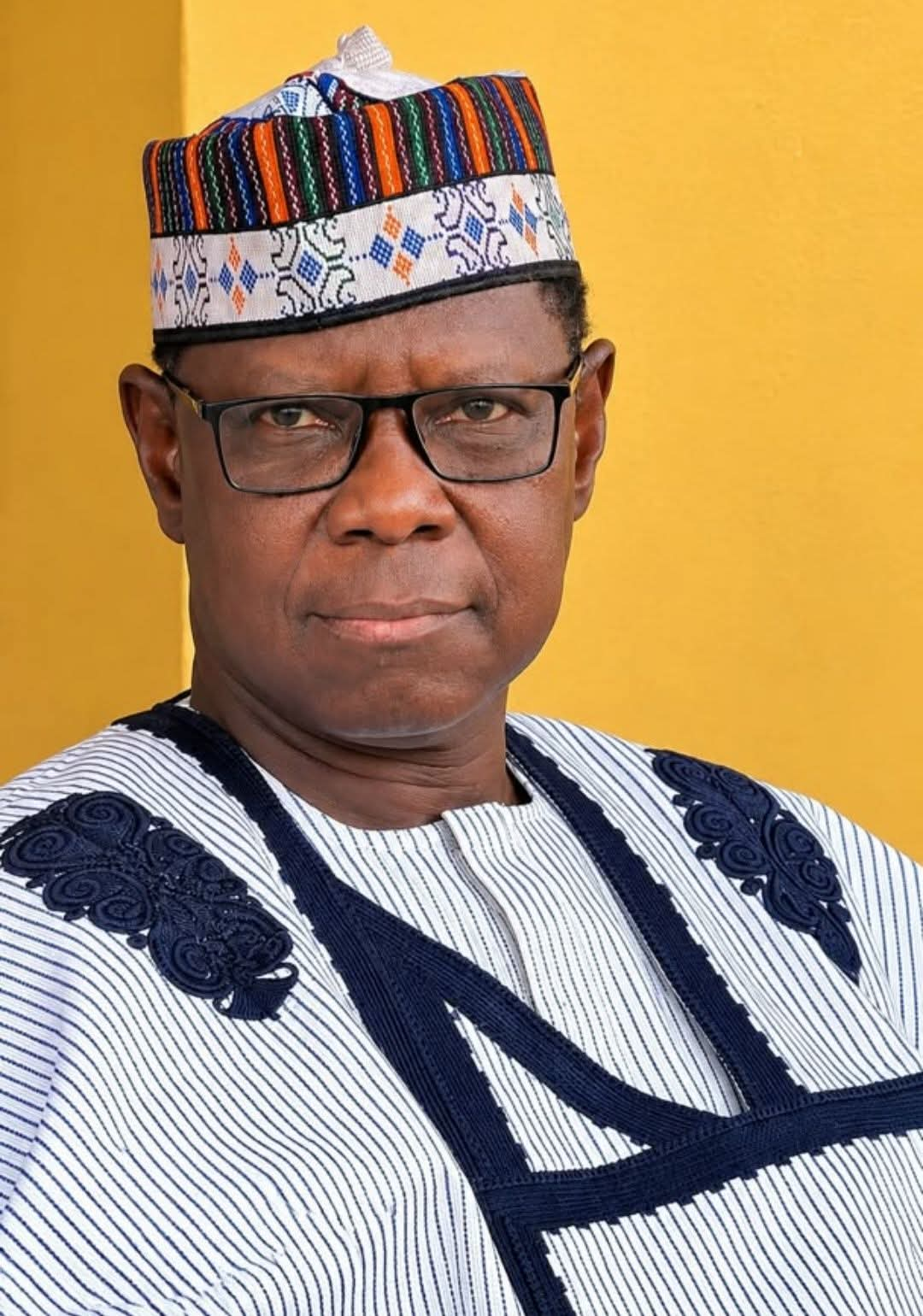
By Baba Dantiye, MON, mni, FNGE
There is a saying attributed to the late Premier of Northern Nigeria, Sir Ahmadu Bello, the Sardauna of Sokoto, that if you do not blow your own trumpet, nobody will blow it for you because others will be busy blowing theirs. I have always found wisdom in that observation. At 65, having spent 45 years in journalism and public service, I believe the time has come to tell my story, put some historical records in perspective and acknowledge, with gratitude, what Almighty Allah has made possible in my life.
On 21 November 1983, I was formally employed as a reporter with the Triumph Publishing Company, Kano, during the administration of Alhaji Aliyu Sabo Bakin Zuwo, with the late Alhaji Sidi Ali Surajo as Managing Director. Forty-three years have since passed. I look back on that date as a defining moment in my professional journey. However, it is important to establish that my journalism career did not begin at Triumph. It had commenced two years earlier, and the experiences I acquired before joining the newspaper were equally significant in shaping the professional I eventually became.
I was only 20 years old when I joined Kano State Television, CTV 67, now Abubakar Rimi Television (ARTV), as one of its pioneer staff members. I was fortunate to be among those selected and sent to the United States for professional training. Upon returning to Nigeria, I was posted to the Research Unit at Government House, Kano, where I worked under Dr Asikpo Essien-Ibok.
That assignment exposed me to government and public administration at a remarkably early stage. Dr Essien-Ibok had been appointed following the brutal assassination of the legendary Dr Bala Mohammed. It remains one of the painful chapters in Kano’s political history that, to date, no arrest has been made in connection with that murder. What a country!
The Research Unit was closely associated with the political and strategic operations of the Governor’s Office. We therefore worked directly within the Governor’s establishment and gained an understanding of government, political administration and policy processes from the inside. This is an important part of my history because, long before many who would subsequently occupy prominent positions in Kano’s political and administrative circles became familiar with Government House, I had already worked there as a young professional.
When Alhaji Sabo Bakin Zuwo assumed office as governor in 1983, one of his early directives was that anyone working in the Research Unit should consider himself dismissed. That brought this chapter of my experience to an abrupt end. Among those who shared that experience were retired Permanent Secretary Dahiru Musa, Bashir Yusuf Ibrahim and another retired Permanent Secretary, Abba Yakubu. Dr Essien-Ibok, who remains an important figure in this part of my professional history, is still alive in Calabar.
I recount these events because my story did not begin with my appointment at Triumph. By the time I joined the newspaper on 21 November 1983, at the age of 22, I had already acquired valuable institutional experience, professional exposure and an understanding of government. My appointment at Triumph was therefore not the beginning of my professional journey but a defining moment in a career that had started two years earlier.
Triumph became the platform upon which much of my professional identity was built. What began as a reporting assignment developed into a career spanning virtually every important aspect of newspaper journalism. Through commitment, discipline, hard work and continuous learning, I rose through the ranks, serving in various editorial capacities, including Editor of Weekend Triumph, Sunday Triumph and Daily Triumph, and eventually becoming Deputy Editor-in-Chief and Head of the Editorial Department.
Those years were invaluable. I experienced journalism from the newsroom floor to the highest levels of editorial management. I learnt that journalism is not simply about gathering and publishing information; it is about responsibility, public interest, accountability and the courage to ask difficult questions.
My professional development was accompanied by academic and specialised training. I obtained a Diploma in Journalism from the London School of Journalism, a Certificate in Broadcasting from the US Graduate School in Washington, DC, and a Diploma in Advanced Mass Communication from Bayero University, Kano, in 1989. I subsequently earned a Master’s degree in Journalism Studies from Cardiff University, United Kingdom, between 2009 and 2010. I have always believed that experience must be complemented by knowledge and that professional advancement should never become an excuse to stop learning.
My involvement in journalism extended beyond the newsroom. I served as General Secretary of the Nigerian Guild of Editors between 2001 and 2003 before being elected President in 2003. I served two terms, from 2003 to 2008. This was a significant period in my professional life, providing me with the opportunity to contribute to journalism and editorial leadership at the national level.
One of the enduring institutional developments associated with my presidency was the establishment of the All Nigeria Editors’ Conference (ANEC), which subsequently became an annual gathering of Nigerian editors and was incorporated into the Guild’s Constitution as a mandatory conference. Today, ANEC remains an important platform for professional engagement, national discourse and reflection on the responsibilities of the media in a democratic society.
I also had the privilege of representing the media, alongside Senator Smart Adeyemi, who was then President of the Nigerian Union of Journalists (NUJ), at the National Political Reform Conference convened by President Olusegun Obasanjo. I subsequently served on the National Steering Committee of Vision 20:2020. These assignments broadened my exposure to national policy discussions, governance, institutional reform and strategic development. They demonstrated that my contributions had extended beyond journalism into wider national affairs. My induction as a Fellow of the Nigerian Guild of Editors (FNGE) further recognised my contributions to the profession.
My transition into government communication and public administration was another important dimension of my career. Between 2012 and 2015, I served as Director of Press and Public Relations to Governor Rabiu Musa Kwankwaso. I subsequently served as Director-General, Media and Publicity, to Governor Abdullahi Umar Ganduje between 2015 and 2016. These appointments placed me at the centre of government communication, strategic information management and public engagement, requiring a combination of journalistic experience, political understanding and administrative competence.
I later moved into the mainstream civil service, serving as Permanent Secretary in different ministries, including Commerce, Industry, Cooperatives and Tourism, and Environment. This progression demonstrated that my experience had extended beyond journalism and political communication into mainstream public administration. I served in the civil service until my retirement in 2018.
But Almighty Allah was not yet done with me.
In 2023, Governor Abba Kabir Yusuf appointed me Honourable Commissioner for Information and Internal Affairs, making me a member of the Kano State Executive Council. For me, this was a remarkable culmination of a journey that had started decades earlier as a young television broadcaster.
Consider the progression: pioneer television staff member; Government House researcher; newspaper reporter; editor; Deputy Editor-in-Chief; General Secretary and President of the Nigerian Guild of Editors; Director of Press and Public Relations; Director-General of Media and Publicity; Permanent Secretary; and, finally, Honourable Commissioner for Information and Internal Affairs.
I consider this a particularly distinctive professional progression. I have traversed journalism, national professional leadership, strategic government communication and public administration, rising through the ranks and accepting increasingly demanding responsibilities. I make this observation not to diminish the accomplishments of others but because my own record deserves to be properly acknowledged and documented.
There is another dimension of my journey that I consider important to acknowledge. Although I was born into a family with a respected background and inherited a name associated with education and journalism through my father, a former teacher and editor, I have had to build my own professional identity and earn my place through personal effort. Whatever I have achieved has come through hard work, determination, professional commitment and continuous learning, coupled with the grace of Almighty Allah.
I have had no godfather to chart my course, influence my career or secure positions for me. I have relied on my abilities, believed in myself, remained focused on my aspirations and worked diligently to earn every opportunity that came my way. My journey is, in many respects, a testament to the value of self-belief, perseverance and the courage to pursue one’s dreams.
I have always believed that a good family name can provide a foundation, but it cannot substitute for personal effort, competence and achievement. One may inherit a name, but one must work to establish one’s own identity and earn recognition on one’s own merits. I am proud of my family heritage, but I am equally conscious that the professional record I have built over the years is my own responsibility and achievement.
There are two further distinctions in my journey that I consider particularly significant: the national honour of Member of the Order of the Niger (MON), conferred on me in 2022, and my admission into the prestigious National Institute for Policy and Strategic Studies (NIPSS), Kuru, where I participated in Senior Executive Course 33 in 2011 and earned the designation mni.
These are not merely titles to decorate a name. They represent national recognition for service and contribution, as well as exposure to strategic leadership, policy formulation and national development. Considered alongside my Fellowship of the Nigerian Guild of Editors, they constitute a combination of professional recognition, national honour and strategic leadership training that I regard as particularly distinctive. Their significance extends beyond Kano and places my professional journey within a wider national context.
At 65, I have reached a point in life where reflection becomes more important than competition. I have occupied offices that many aspire to, participated in institutions that have shaped national discourse and enjoyed opportunities I could hardly have imagined when, as a 22-year-old, I walked into the Triumph newsroom in November 1983.
More importantly, I can look back with a clear conscience. I have sought to maintain a record of service free from fraud, financial impropriety and deliberate abuse of public trust. My professional and administrative record is one I am prepared to defend. Like every human being, I may have made mistakes, but I have never knowingly compromised my integrity for personal enrichment or sacrificed my principles for temporary advantage.
I have experienced the inevitable challenges of professional life: disappointments, disagreements, criticisms and occasions when recognition did not necessarily correspond with contribution. But these experiences have not diminished my appreciation of what Almighty Allah has done for me. I have learnt that one does not need to fight everybody, respond to every provocation or become angry whenever others receive recognition. Life is not a race in which everybody must arrive at the same destination at the same time.
This article is my own modest attempt at blowing my trumpet, not out of arrogance but out of a responsibility to tell my story while I can still give it its full context and meaning. I am a trailblazer in the sense that my career has traversed professional territories rarely combined in one journey. I have risen through the ranks, acquired experience, accepted demanding responsibilities and reached positions of considerable national and state significance. My record should be assessed on its own merits.
If there is one lesson I would like younger journalists, aspiring public servants and today’s generation to take from my experience, it is that they must believe in themselves and never allow their circumstances or humble beginnings to define the limits of their aspirations. Have a vision of what you want to become and remain focused on achieving it. Be determined, work hard, pursue your dreams and never allow temporary setbacks to discourage you. Acquire knowledge, develop your skills, remain disciplined and be prepared to start wherever an opportunity presents itself.
Do not wait for a godfather before you begin to build your future. Do not assume that success comes only through political connections, family influence or privileged access. While guidance, mentorship and support from others are valuable, personal preparation, competence and perseverance remain indispensable. Opportunities may come through people, but it is your responsibility to prove yourself when they do.
Above all, never sacrifice your integrity in pursuit of appointments, recognition or material rewards. Positions are temporary, but character and reputation endure. The greatest satisfaction lies not merely in occupying important offices but in being able to look back and know that you earned your place through honest effort and discharged your responsibilities with a sense of duty.
As I reflect on 45 years in journalism and 43 years since joining Triumph, my overriding emotion is gratitude. I remember the late Sidi Ali Surajo, who presided over Triumph when I joined. I acknowledge Dr Asikpo Essien-Ibok for his place in my early public-service experience. I remember colleagues with whom I shared those formative years, including those who are no longer with us. I also acknowledge the editors, journalists, public officers, mentors, political leaders, friends and family members who contributed to my journey.
Ultimately, my story is not simply about the positions I occupied. It is about the experience accumulated, the institutions served, the contributions made, the people encountered and the values I have tried to uphold.
What more could I reasonably have asked for? From a 20-year-old pioneer television staff member who travelled to the United States for training, to a 22-year-old reporter at Triumph, and eventually to the national leadership of the Guild, the senior civil service and the Kano State Executive Council, Almighty Allah has taken me further than I could have imagined.
I have no reason to fight, envy or become unnecessarily angry with anybody. I have received more than I could have imagined at the beginning of my journey. My remaining responsibility is to preserve my record, share my experience, contribute to society and leave behind a legacy worthy of the opportunities I have enjoyed.
I have travelled a long road, occupied important positions and served in different capacities. I am proud of the journey, grateful for the opportunities and at peace with my record.
Above all, I give all the glory to Almighty Allah, who made it possible.
Alhamdulillah!
Baba Dantiye, MON, mni, FNGE
Former Commissioner for Information and Internal Affairs, Kano State\
Former President, Nigerian Guild of Editors (2003–2008)
Ibrahim Shehu Giwa
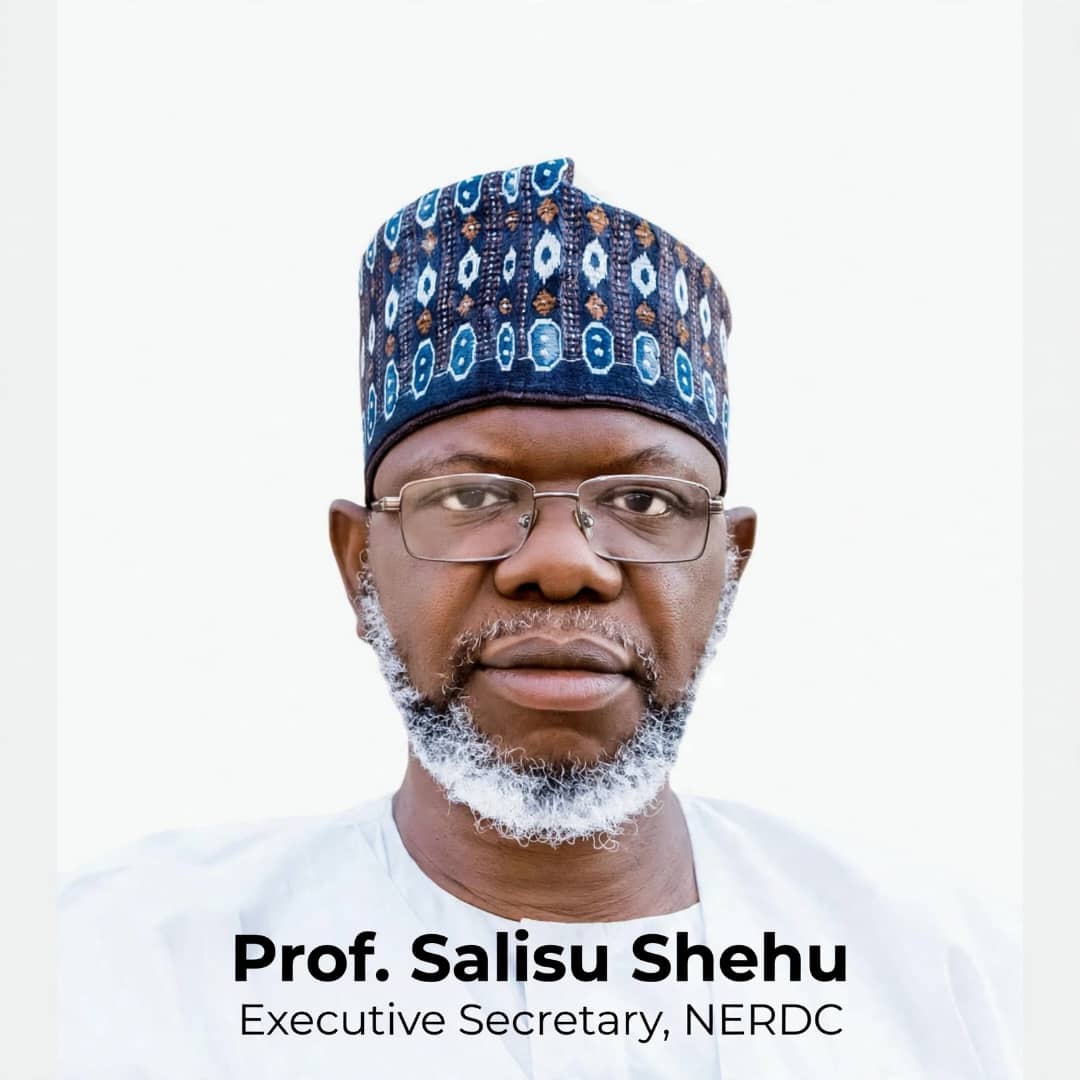
Professor Salisu Shehu, an accomplished professor of Educational Psychology, has come under religious scrutiny following his appointment as Executive Secretary of the Nigerian Educational Research and Development Council (NERDC). Much of the suspicion appears to stem from his authorship of a book on the Islamisation of Knowledge and his association with Islamic organisations.
But before passing judgment on his suitability for the position, it is worth reflecting on Nigeria’s history of public office holders whose religious identities were neither hidden nor treated as automatic disqualifications.
Consider the following examples:
1. Pastor Yemi Osinbajo: An ordained pastor of the Redeemed Christian Church of God (RCCG), who served as Nigeria’s Vice-President from 2015 to 2023, occupying the country’s second-highest political office.
2. Rev. Jolly Nyame: An ordained Christian minister who served as Governor of Taraba State from 1992 to 1993 and again from 1999 to 2007.
3. Rev. Fr. Hyacinth Alia: An ordained Catholic priest who became Governor of Benue State in 2023.
4. Pastor Umo Eno: An ordained Christian minister who became Governor of Akwa Ibom State in 2023.
5. Pastor Ben Akabueze: A pastor of the RCCG who served as Director-General of the Budget Office of the Federation, an institution central to Nigeria’s fiscal administration.
6. Pastor Oluremi Tinubu: An ordained pastor of the RCCG and Nigeria’s First Lady, who occupies an influential public position and has openly supported Christian organisations. In 2025, she reportedly donated seven compressed natural gas (CNG)-powered buses to the Youth Wing of the Christian Association of Nigeria (YOWICAN) to support its activities. She also reportedly donated ₦100 million to the Christian Northern Nigeria Political Forum during Christmas activities in Kaduna.
These are only a few examples. They raise a fundamental question that deserves an honest answer: If a pastor can become Nigeria’s Vice-President, a Catholic priest can govern a state, and a pastor can head an institution central to the country’s budget administration, why should an Islamic scholar’s religious and intellectual background automatically become evidence of his unfitness to lead an educational research institution?
Did Pastor Osinbajo have to renounce his pastoral calling before becoming Vice-President? Was Rev. Fr. Alia required to abandon his priestly identity before governing a state whose population includes Christians and Muslims? Certainly not. Neither should they have been required to do so.
The same standard of fairness should apply to Professor Shehu.
The First Lady’s public support for Christian organisations also raises a question about consistency in how Nigerians judge the relationship between religious identity and public responsibility.
If a prominent Muslim public figure donated seven buses specifically to support Islamic Da’awah activities, would the reaction be equally accommodating, or would allegations of Islamisation dominate the conversation?
This is not an argument against the right of public office holders to support religious causes within the law. Rather, it is a call for consistency and fairness in judging people, regardless of their faith.
Professor Shehu is not an accidental entrant into academia. He holds a PhD in Educational Psychology, has spent decades in university teaching and administration, served as a university vice-chancellor and participated in educational policymaking. These are credentials directly relevant to the responsibilities of NERDC.
The fact that he authored a book on the Islamisation of Knowledge does not, in itself, establish that he intends to impose Islamic teachings on Nigerian schoolchildren. Intellectual engagement with a religious or philosophical subject should not automatically be interpreted as a declaration of intent to use public office to advance that ideology.
Nigeria has had other prominent Muslim scholars in public service. Professor Isa Ali Pantami, who served as Minister of Communications and Digital Economy from 2019 to 2023, faced intense public scrutiny, including criticism of his earlier religious statements. His tenure also witnessed significant developments in the communications and digital economy sectors.
Similarly, Professor Is-haq Oloyede, former Registrar of the Joint Admissions and Matriculation Board (JAMB), earned recognition for reforms in the examination body, particularly in financial accountability, revenue remittances and examination administration. Yet, his public engagements and religious identity have also attracted criticism from some quarters.
The point is not that religious leaders or scholars should be exempt from scrutiny when they occupy public positions. Rather, the same standards of scrutiny should apply to everyone.
The concern arises when some Nigerians appear comfortable with Christian religious figures occupying influential public offices but become suspicious when an Islamic scholar receives a similar appointment, even when his academic and administrative qualifications are relevant to the position.
This double standard does little to promote national unity or strengthen confidence in public institutions.
Professor Shehu’s critics have every right to examine his publications, question his policies and scrutinise his administrative decisions. That is part of democratic accountability. If he uses his position at NERDC to promote religious discrimination, undermine the constitutional rights of citizens or compromise the neutrality of the institution, he should be held accountable.
But such concerns must be established through evidence, not assumptions based on his religious identity or intellectual interests.
Religious affiliation is not misconduct, just as belonging to a religious organisation is not, in itself, proof of bias or incompetence.
Ultimately, Professor Shehu should be judged by his professional competence, integrity, policies and performance in office. The same principle should apply to every Nigerian entrusted with public responsibility, regardless of religion.
**15 November 2026**
Opinion
Rejoinder to Sahara Reporters on the Appointment of Prof. Salisu Shehu as Executive Secretary of NERDC
Ado Sunusi Sabangida
The recent publication by Sahara Reporters concerning the appointment and activities of Professor Salisu Shehu as Executive Secretary of the Nigerian Educational Research and Development Council (NERDC) raises important questions about fairness, accuracy and the standards that should guide public discourse on national institutions.
While media scrutiny of public office holders is essential in a democracy, such scrutiny must be grounded in verifiable facts, balanced reporting and objective assessment. Allegations and insinuations, particularly those touching on religion and national identity, should not be allowed to overshadow evidence or distort public understanding.
Professor Shehu is a scholar, educationist and administrator whose appointment, in my view, should be assessed against his professional qualifications, experience and record of service to the education sector. His leadership of NERDC should equally be evaluated on the basis of institutional performance, transparency, inclusiveness and adherence to established procedures.
One critical issue in the controversy is the development and review of Nigeria’s national curriculum. It is important to clarify that curriculum development is not the personal project of the Executive Secretary or any single individual. It is a structured and collaborative process involving academics, subject specialists, universities, colleges of education, professional bodies, religious organisations and other relevant stakeholders from across the country.
This process is designed to accommodate diverse perspectives and reflect the country’s pluralistic character. It would therefore be misleading to attribute the content or direction of the national curriculum solely to the personal views or religious beliefs of the head of NERDC.
The council’s institutional procedures and safeguards are expected to ensure that curriculum decisions are guided by professional standards, national priorities and the need for inclusiveness. Any allegation that these processes have been compromised should be supported by specific evidence.
It is also necessary to place the religious dimension of the controversy in proper perspective. NERDC, like other national institutions, has been led by individuals from different religious and regional backgrounds. The religious identity of an office holder should neither confer an advantage nor constitute a basis for questioning their suitability for public service.
What matters is whether the individual possesses the competence, integrity and commitment required to discharge the responsibilities of the office impartially.
Similarly, Professor Shehu’s previous engagements with academic and professional organisations, including the International Institute of Islamic Thought (IIIT), should not, in themselves, be interpreted as evidence of religious bias or a lack of professional neutrality. Membership of, or association with, an academic organisation does not automatically disqualify anyone from serving in a national institution.
Like every public office holder, Professor Shehu is bound by the Constitution and the laws of Nigeria to serve all citizens fairly, regardless of their religion, ethnicity or political affiliation. His conduct and decisions in office should be the basis for assessing whether he has upheld that responsibility.
Those who have raised concerns about alleged religious bias in the curriculum are entitled to have their concerns examined. However, such claims should move beyond generalisations and be supported by concrete evidence.
For instance, which specific provisions of the Christian Religious Studies curriculum have been removed, altered or unfairly treated? What sections of the curriculum promote one religion at the expense of another? Are there provisions that compel students to accept beliefs contrary to their faith?
These are legitimate questions that deserve clear, evidence-based answers. A careful examination of the relevant curriculum documents and the processes through which they were developed would provide a more constructive basis for the debate than speculation or social media commentary.
This is not to suggest that NERDC or its leadership should be exempt from criticism. On the contrary, public institutions must remain open to scrutiny, and their decisions should be subjected to legitimate questions from citizens, educators, religious organisations and the media.
However, criticism must be responsible, fair and informed. Unsubstantiated allegations can damage the reputation of individuals, deepen religious suspicion and weaken public confidence in institutions that are expected to serve the entire country.
Nigeria’s education system faces serious challenges, including declining learning outcomes, inadequate infrastructure, teacher shortages and the need to make curricula more responsive to contemporary realities. These issues require sustained attention, professional collaboration and constructive engagement among stakeholders.
The debate surrounding Professor Shehu’s appointment should not distract from these broader priorities. Rather, it should provide an opportunity to strengthen public confidence in NERDC by encouraging transparency, wider stakeholder participation and clear communication about curriculum policies and decisions.
Professor Shehu should be given the opportunity to discharge his responsibilities without being subjected to prejudice based on his religious identity or previous academic affiliations. At the same time, his leadership must remain open to legitimate scrutiny and should ultimately be judged by measurable achievements, respect for due process and the quality of his contribution to national educational development.
At a time when Nigeria needs stronger institutions and greater national cohesion, public debate must be guided by facts rather than assumptions. The media has an important responsibility to hold public officials accountable, but that responsibility must go hand in hand with accuracy, fairness and balance.
Ultimately, what Nigeria needs is an education system that serves every child, irrespective of religious or ethnic background. That objective is best advanced through evidence-based debate, institutional accountability and a shared commitment to national development.

Dangote Salt To Unveil New Seasoning Formulas at 2026 Kano Trade Fair

ABU honours NERDC Executive Secretary Salisu Shehu for contributions to education

Islamic Forum defends NERDC boss, Prof. Salisu Shehu, over allegations surrounding curriculum reforms

WHO, UNICEF commend Kano govt over healthcare projects, 484 tricycle ambulances

Dangote Cement records 60% drop in road accidents, honours 35 drivers

Uganda woos Dangote for $billions oil refinery, fertiliser, salt investments

Governor Yusuf swears in six commissioners, three advisers, 19 permanent secretaries

Gov Yusuf Nominates Spokesperson, Sunusi Bature Dawakintofa as Commissioner

Kano Association of Persons with Disabilities Affirms New State Executive Through Consensus

