
Headlines
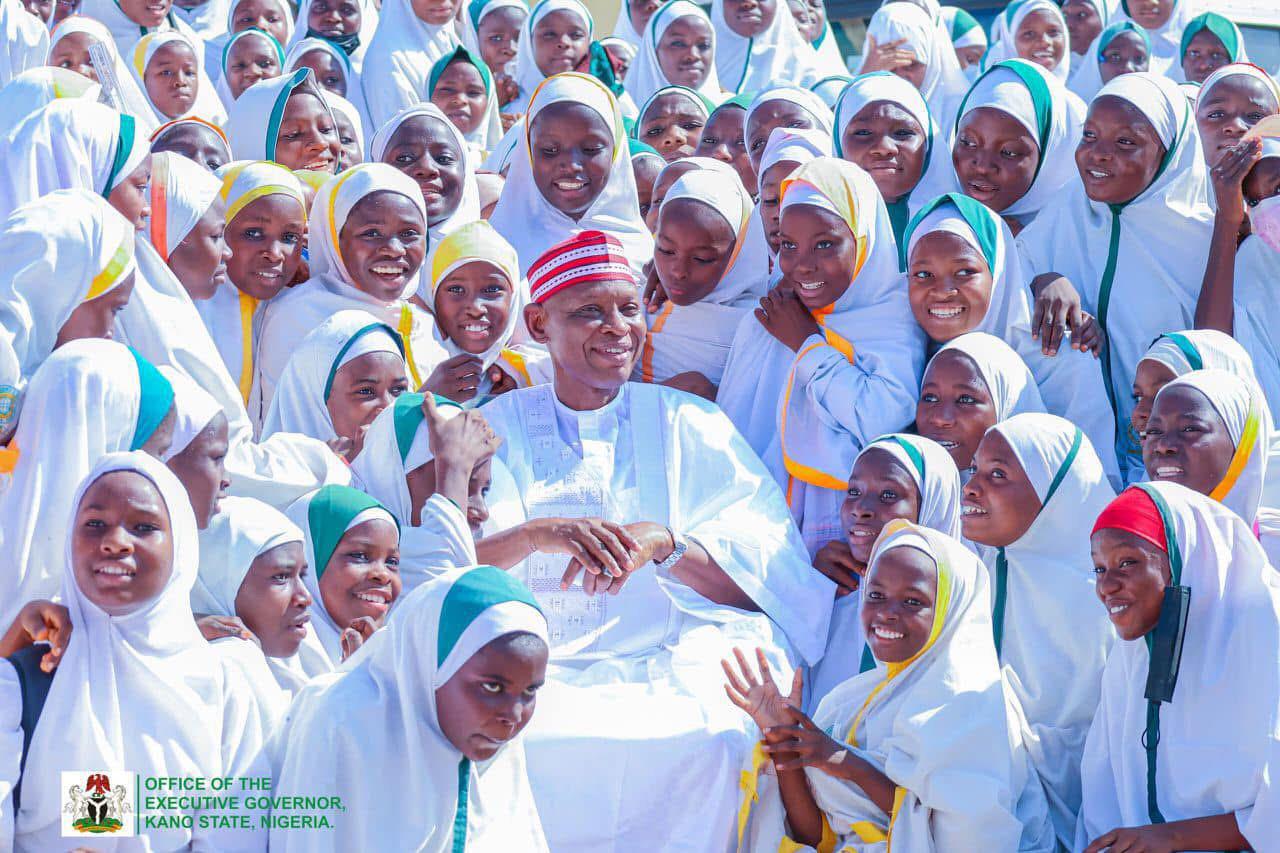
Kano tops states in 2026 NECO results, Governor Yusuf hails students

Nasiru Yusuf Ibrahim
Kano State has emerged as the leading state in the 2026 Senior School Certificate Examination (SSCE) conducted by the National Examinations Council (NECO), according to the state government.
KANO FOCUS reports that the government said 74,413 candidates in Kano obtained at least five credits, including English Language and Mathematics, placing the state ahead of Lagos, which recorded 72,496 candidates, and Oyo with 55,543 candidates.

The development, announced in a statement signed by Sunusi Bature Dawakin Tofa, Director-General, Media and Publicity, Government House, Kano on Saturday, marks the second consecutive year Kano has recorded the highest number of candidates meeting the five-credit benchmark, including English and Mathematics, according to the state government.
Reacting to the result, Kano State Governor Abba Kabir Yusuf commended students, teachers, parents and other stakeholders for what he described as the state’s improved performance.
Yusuf said the back-to-back performance demonstrated that the government’s investment in education was producing measurable results.
He assured residents that his administration would continue to prioritise education through increased funding, improved learning facilities, teacher recruitment and training, scholarships and support for indigent students.
According to the statement, the state government spent more than N4.4 billion in 2026 to sponsor candidates for the Senior School Certificate Examination, particularly students from indigent backgrounds.
The governor said the intervention was aimed at removing financial barriers and enabling students to participate in the examinations under better conditions.
He added that the government’s education interventions went beyond examination sponsorship to include classroom renovation, recruitment and training of teachers, provision of learning materials, uniforms, scholarships and other programmes.
Education has continued to receive one of the largest allocations in Kano State’s annual budgets under the Yusuf administration.
According to the state government, education accounted for about 29.95 per cent of the 2024 budget, while the allocation rose to N168.35 billion, representing about 31 per cent, in the 2025 budget.
For 2026, the government said N405.35 billion was allocated to the education sector, representing about 30 per cent of the state’s N1.478 trillion budget.
Yusuf said the latest NECO performance was part of the broader improvement recorded by Kano students under his administration.
The governor also cited a number of national and international recognitions received by his administration for its education policies and other governance initiatives.
Among the education-related recognitions mentioned by the government were awards from Leadership Newspaper and New Telegraph in 2024, as well as recognition from the Nigeria Union of Teachers.
In 2025, Blueprint Newspaper recognised Yusuf as Governor of the Year for Education, according to the statement.
The government also said the administration received international recognition in London and Paris in 2026 for its education and literacy initiatives.
Yusuf dedicated the latest NECO performance to students, teachers, parents and the people of Kano State, assuring them that his administration would sustain its investment in the sector.
He said the objective was to build an education system capable of equipping young people in the state with the knowledge and skills required for higher education, employment, innovation and leadership.
The statement further said Kano had recorded more than five million schoolchildren in the latest annual school census.






Kidnapped victim freed unharmed in Falgore Forest
Nasiru Yusuf Ibrahim
The Kano State Police Command has reported the killing of two suspected bandits and the recovery of N10 million ransom following the rescue of a kidnapped victim in Falgore Forest, Doguwa Local Government Area of the state.
KANO FOCUS reports that the incident occurred in the early hours of Saturday, when three suspected bandits allegedly emerged from the forest to collect the ransom demanded for the release of a 45-year-old man, Kabiru Aliyu, of Falgore village.
Aliyu was reportedly kidnapped on September 11, 2026, and had spent days in captivity before his abductors secured the N10 million ransom.
According to a statement issued by the Police Public Relations Officer, CSP Abdullahi Haruna Kiyawa, the victim was released unharmed after the suspects collected the money.
However, the suspects were reportedly ambushed by local hunters, popularly known as Yan Bula, while returning to their hideout in Falgore Forest.
The police said two of the suspected bandits were killed during the encounter, while the third escaped with injuries.
The entire N10 million ransom was recovered intact from the deceased suspects, according to the statement.
Preliminary investigations identified one of the suspects as Dogo Isah, a commercial motorcycle operator from Maigwanda village in Kubau Local Government Area of Kaduna State.
The Commissioner of Police in Kano State, CP Ibrahim Adamu Bakori, commended the local hunters for their efforts in complementing the police-led Operation Kukan Kura in tackling kidnapping, banditry and other violent crimes in the Falgore Forest axis.
Bakori also directed the Area Commander, divisional police officers and tactical teams operating in the area to intensify searches to apprehend the fleeing suspect and recover any weapons used by the gang.
The police said the rescued victim had been debriefed, medically examined and reunited with his family.
The command reiterated its commitment to protecting lives and property, urging residents to provide timely and credible information to security agencies to support ongoing operations against criminal elements.
The statement was signed by CSP Abdullahi Haruna Kiyawa, Police Public Relations Officer, Kano State Police Command, on behalf of the Commissioner of Police.
Nura Abdullahi
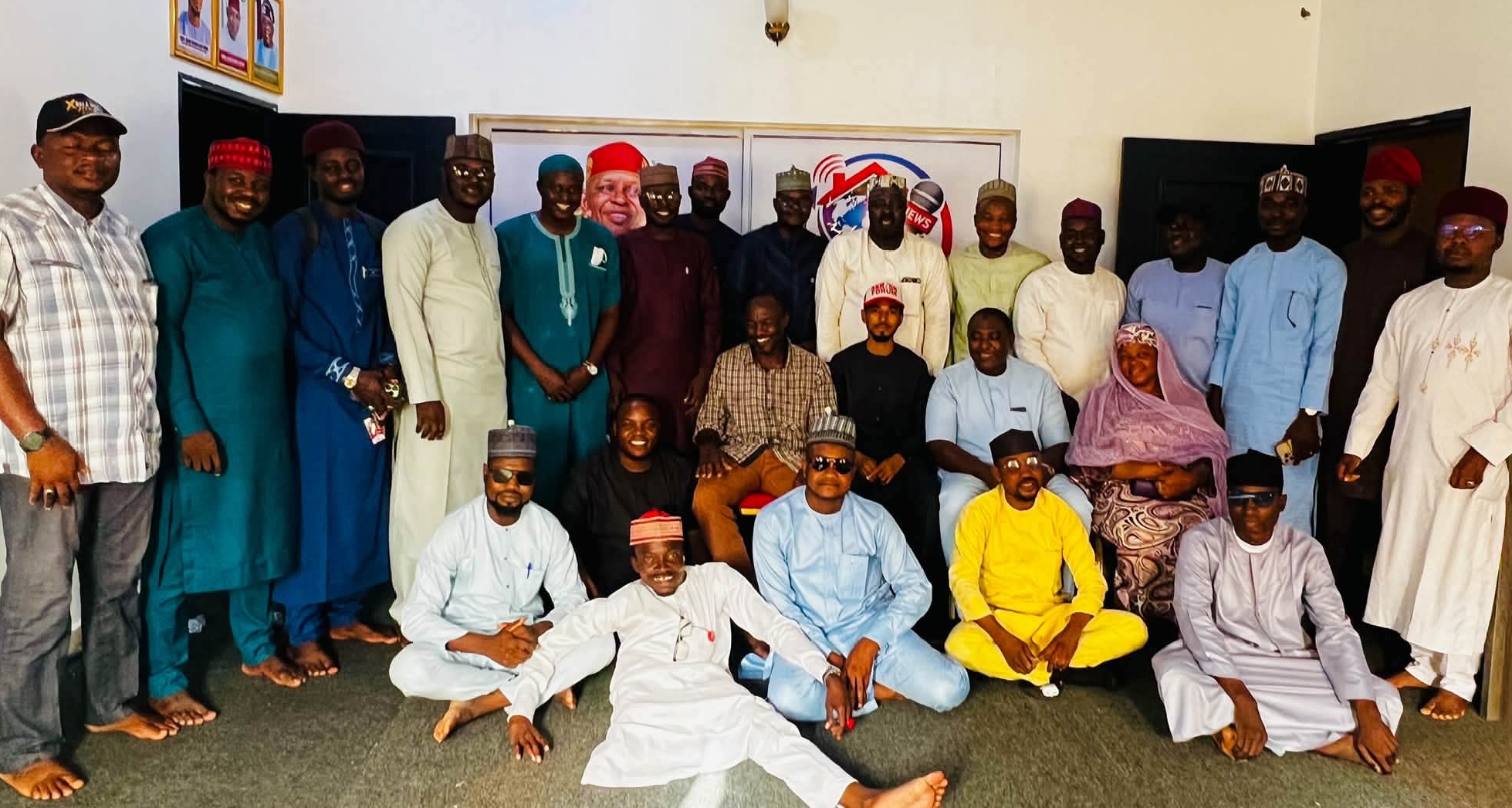
The Senior Special Reporters and Special Reporters, SSR/SR Forum has accepted the apology tendered by the Kano State Chairman of the All Progressives Congress (APC) Youth Wing, Hon. Salisu Yahaya Hotoro, following discussions over his earlier remarks.
KANO FOCUS reports that Amir Abdullahi Kima, Chairman of the SSR/SR Forum, announced the decision in a statement published on his Facebook account on Saturday.
According to Kima, the decision followed a meeting between representatives of the forum, Hotoro and other stakeholders in media-related affairs, during which the APC youth leader apologised for his remarks.
He said Hotoro had also published an apology on his Facebook page.
Kima explained that the forum subsequently convened a special meeting on October 18, 2026, to deliberate on the matter and hear the views of its members before agreeing to accept the apology.
“The forum has accepted the apology tendered by Hon. Salisu Yahaya Hotoro. This means the matter has been laid to rest, paving the way for continued peace, mutual understanding and unity,” the statement said.
The forum urged its members, supporters and well-wishers to exercise restraint and allow the matter to rest, warning against actions that could create division or misunderstanding among stakeholders.
It reaffirmed its commitment to unity and peaceful engagement, as well as its continued efforts to publicise the programmes and activities of the Kano State Government under Governor Abba Kabir Yusuf.
The forum said its activities would continue to be guided by mutual respect, peace and understanding.
Kima also expressed appreciation to individuals who contributed to resolving the disagreement, commending their efforts in facilitating an amicable settlement.
Ibrahim Khalil
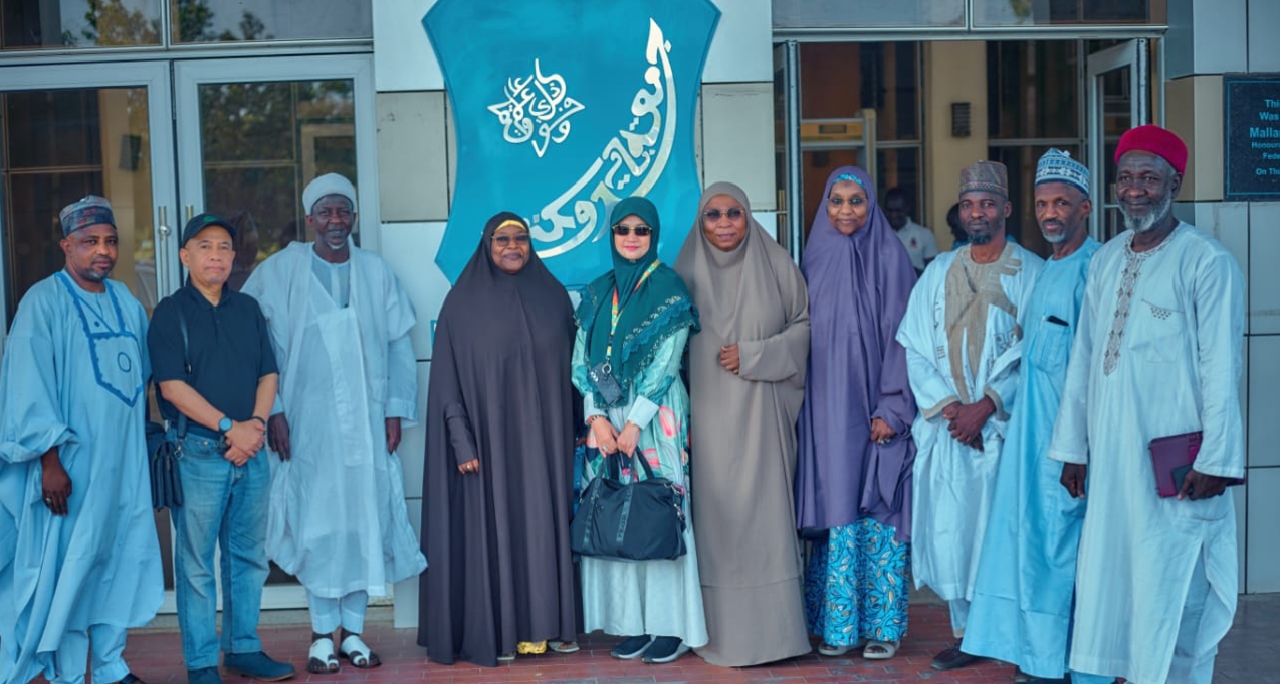
An Indonesian Islamic scholar and philanthropist, Dr Umi Waheedah Bint Abdul Rahman, has called for the adoption of a sustainable Waqf-based model to transform Almajiri education, tackle poverty and equip vulnerable children with vocational and entrepreneurial skills.
KANO FOCUS reports that Waheedah made the call on Friday, while delivering a public lecture titled, “Sustainable Community Empowerment through Waqf: Experiences, Lessons, and Prospects,” at the CBN Centre of Excellence, Bayero University, Kano.
According to a statement by Bayero University Kano’s Director of Public Affairs, Lamara Garba, the scholar shared her experience of establishing Islamic boarding schools in Indonesia that combine free education with vocational training, entrepreneurship and income-generating investments.
She explained that Waqf, an Islamic charitable endowment, could serve as a sustainable economic mechanism for financing education, creating employment and reducing poverty when supported by productive investments and effective management.
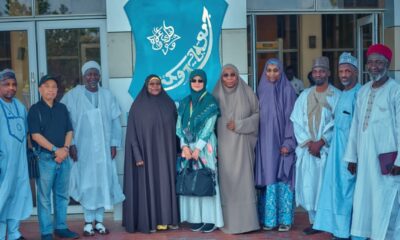
Participants at the occasion
Waheedah recalled that she and her late husband established the free Islamic boarding school initiative in 1998 during a period of economic and social hardship, with the objective of providing disadvantaged children with access to education and essential social services.
The schools provide free education, food, accommodation and healthcare, offering a model for addressing multiple dimensions of poverty while protecting the dignity and future of vulnerable children.
According to her, the initiative had expanded to accommodate approximately 23,000 students by 2010, covering levels from early childhood education to university. Following her husband’s death that year, the programme was streamlined to serve about 15,000 students.
She said taking over the institution presented enormous financial challenges, including accumulated debts and unpaid staff salaries.
To sustain the schools and meet outstanding obligations, Waheedah disclosed that she sold her personal jewellery and vehicles while preserving the Waqf assets that supported the institution.
The experience, she said, reinforced the importance of protecting endowed assets while managing them productively to generate sustainable income.
The institution’s investments include rice fields, rice-processing factories, coffee farms, timber plantations, a bread factory and other agricultural and commercial ventures.
She disclosed that the organisation, which initially operated 25 business units, eventually expanded to 73.
Waheedah argued that Waqf should not be regarded merely as a channel for charitable donations but as an economic system capable of generating the resources required to sustain social services over the long term.
She explained that combining Islamic endowments with social entrepreneurship, sound business management and vocational education had enabled the institution to finance educational services while equipping students with practical skills for independent living.
The model integrates agriculture, food production, energy, water management and waste recycling to reduce operating costs, generate additional revenue and provide practical learning opportunities.
Its businesses include rice processing, noodle production, soya milk manufacturing, farming, fisheries, livestock and poultry production. The organisation also operates a poultry enterprise with 10,000 laying chickens and produces animal feed to support its agricultural activities.
On environmental sustainability, the scholar explained that food waste was converted into larvae for feeding poultry and fish, while discarded plastics, eggshells, sweet wrappers and other materials were recycled into yarn, crafts, ornaments and paving blocks.
The initiative’s philosophy, she said, was captured in its motto: “There’s no trash, but cash.”
Students also participate in producing items such as caps, soap, socks and other goods for institutional use and commercial sale. Some products, including traditional caps known as *kofia*, have reached international markets such as Senegal.
Beyond generating income, the activities expose students to production, marketing, business management and entrepreneurship.
Waheedah said the institution provides vocational training in agriculture, fisheries, sewing, beauty-product production and other trades, enabling learners to combine formal and religious education with practical competencies.
She stressed that the ultimate objective was to prepare young people to become job creators rather than depend solely on paid employment, charitable donations or government assistance.
The scholar urged Nigerian communities, particularly in Northern Nigeria, to adapt the model to local circumstances as part of efforts to address the challenges facing Almajiri education.
She maintained that communities could make meaningful progress without relying exclusively on government intervention by organising their resources, skills and assets around clearly defined development priorities.
Waheedah also disclosed that the organisation receives support from the Central Bank of Indonesia to establish businesses within Islamic boarding schools across the country, particularly in drinking-water production, waste recycling and biogas generation from cow waste.
She expressed interest in promoting similar partnerships in Nigeria to support Almajiri schools through collaboration among financial institutions, universities and Islamic organisations.
Under the proposed arrangement, she explained, financial institutions could provide funding, universities could contribute research and technical expertise, while Islamic organisations could coordinate implementation within their communities.
Earlier, the Vice-Chancellor of Bayero University, Kano, Professor Haruna Musa, represented by the Deputy Vice-Chancellor (Academics), Professor Ahmad Muhammad Tsauni, said the model offered opportunities to address poverty, educational disadvantage, unemployment and other social challenges.
He noted that Nigeria continued to grapple with out-of-school children, youth unemployment, orphanhood and the displacement of vulnerable populations, stressing that Waqf could provide sustainable responses when managed with transparency, accountability and a clear development strategy.
Musa said the university would collaborate with Waheedah by providing postgraduate fellowships for the study of her development model and exploring institutional partnerships to promote research, knowledge exchange and practical application.
He also disclosed that the university had concluded plans to offer the guest lecturer a pro bono appointment to engage with students virtually and share her experience.
The chairman of the occasion, Dr Sirajo Salisu, Managing Director and Chief Executive Officer of Summit Bank Limited, pledged support for outstanding graduates and offered professional mentorship to students.
Salisu said the bank planned to provide automatic employment over the next five years to the best graduating male and female students in Islamic Banking and Finance or Economics, subject to the university’s decision on the selection arrangement.
He also offered to engage voluntarily with undergraduate and postgraduate students every two weeks to share professional experience and prepare them for future career opportunities.
In her contribution, Professor Binta Tijjani Jibril, a former Director of the International Institute of Islamic Banking and Finance, advocated an integrated Almajiri education system that combines Qur’anic instruction with vocational training, entrepreneurship and professional education.
She said school-based enterprises could generate income, reduce operating costs and equip learners with practical skills, while stronger governance and community participation would improve the sustainability of Almajiri institutions.
Jibril also identified digital and financial technologies as opportunities for mobilising resources, strengthening accountability and extending the model to communities with limited resources.
Similarly, the Director-General of Economic and Social Reforms Coordination in Gombe State, Dr Abdullahi Abubakar Lamido, called for practical measures to translate Waqf principles into sustainable solutions for education, healthcare, employment generation and community development.
Lamido noted that Islamic history offered examples of charitable endowments being used to meet public needs, urging individuals, families and communities to organise their charitable contributions around specific development priorities.
The discussions highlighted the potential of Waqf-based investments, vocational education and institutional partnerships to provide a sustainable framework for reforming Almajiri education and expanding opportunities for disadvantaged children in Nigeria.

WHC Solar Trains 300 Solar Artisans, Traders in Kano

Two suspected bandits killed, N10m ransom recovered in Kano

SSR/SR Forum Accepts Kano APC Youth Leader’s Apology

Indonesian scholar proposes waqf model to reform almajiri education in Nigeria

2027 Elections: Kano police assure robust security, urge media to counter fake news

Kano leads again as NECO successes rise to 74,413
Kano tops states in 2026 NECO results, Governor Yusuf hails students

Kano Govt Suspends Durbar Processions, Horse Riding in Metropolis

ACF begins Dangote Refinery IPO sensitisation campaign in Kano

