
Opinion
Reckless driving by security forces in Kano

Bala Nasir
It is very common in Nigeria to hear people talking about military mentality, a statement which means so much to so many people depending on the issue of discussion concerning what in military parlance is referred to as ‘khaki boys’. What all these means in simple terms is disregard to civilians in all ramifications by the khaki boys.
There was this notion of nothing good comes from the civilians, as such they are inferior beings compared to khaki boys. For this therefore, a civilian is equated with little animals or even less to them.
At least this was what used to get into the skulls of military personnel especially during their initial training in the past.
Since violent engagement forms the better part of their training with regards to defending the sovereignty of our country, the military need to be trained in such a way to divest the civilian reasoning and other rational attitudes in them. Hence, the need for them to have a change in their attitude as to reflect the major demand for soldiers.

Also, their mental alertness must be made to come to term with responsibilities of defending the nation that is usually tied to the hierarchy of command as dictated by the rule of engagement.
That could have been the reason they are sometime seen to be acting in a way people consider very rash and aggressive as may be determined by the exigencies of their calling.
This, therefore, is the reason we see them using the road the way they do at times especially in emergency situations like the Boko Haram insurgency we had in the Northern states.
Boko Haram insurgency then was at its peak which eventually put the entire security apparatuses of the country on their toes trying to bring the situation to normalcy.
For that people in the affected parts of the country where made to undergo some security checks at various points which were very uncomfortable to them.
Roads were barricaded for routine security checks and gatherings were usually not allowed and some important places were cordoned all in an effort to safeguard them so as not to allow the insurgents access.
However, with the level of achievement recorded in the fight against insurgents especially in Kano where there has been a drastic drop of activities of the insurgents and their cohorts for some time now.
But even at this, some of the personnel driving security vehicles tend to drive with the exigent apprehension as it was during the peak of Boko Haram activities in the state’s capital.
The situation is so rampant now that not just the Army or police known to be mostly involved in these security issues, other para-military personnel are also behaving as if they too are in emergency that makes it necessary to drive with the reckless abundance they are driving on our roads.
It is now a common site in Kano to see Army or police vehicles driving recklessly blaring siren and forcing other road users off the road just to have their way not minding the consequences of their actions.
There are allegations that even if an accident occurs as a result of their actions they never cared to look back talk less of showing any remorse for what their action caused others.
It beats one why even the para-military personnel also found it necessary to also drive on our roads recklessly knocking other road users off the road without any justification.
But wait, if there is any justification, does that mean it is lawful to cause bodily harm on innocent road users?
In these recent years these reckless drivers have made it a point of duty to put on the blaring sirens on their vehicles with or without any emergency.
The bewildering part of this is when the siren blaring vehicle passes and when you looked at it, it is only the driver inside. That’s to tell you the irresponsibility of these drivers.
The authorities concerned however, do not seem to care about what is going on, because all this long, no one among these reckless drivers has been brought to book for such infractions.
Not even a simple warning has been issued to them by their superiors against such behaviors.
People are suffering in silence coping with the attitude of fast moving and siren blaring vehicles, hoping that the authorities concerned would come to their rescue by putting a stop to it.
Yet, Kano state House of Assembly, though very much aware of it are not making a move to curtail it.
It is high time for the military, police and other para-military personnel to come to terms with reality and make amends in how they drive on our roads.
They should know that this is 21st century world where happenings around the world are seen instantly via modern technology, as such, we cannot be different with other climes in how our military and para-military personnel behave.
It is also the duty of our law-makers to wake up to their responsibility by coming up with enabling laws against such indiscipline being displayed on the roads by the same people paid to protect citizens and their properties.
On their part, the citizens should also come together to work for the stoppage of such immoral attitudes being displayed by the uniformed personnel as we are witnessing in Kano.
Bala Nasir, a journalist and public affairs commentator writes from Kano

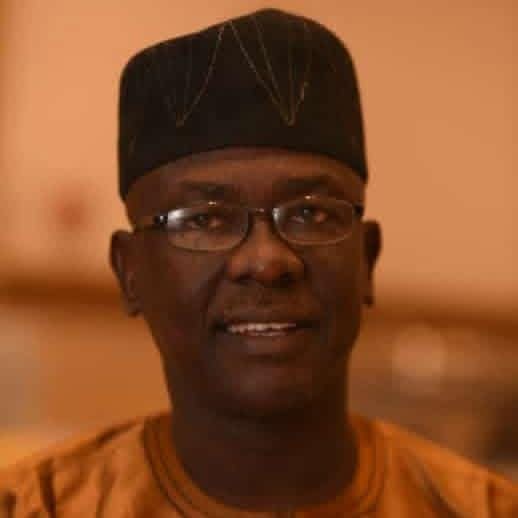
Comrade Abbas Ibrahim
By all standards, the recent violent invasion of Kano’s bustling GSM Farm Centre Market by suspected political thugs is a dangerous development that must be condemned in the strongest possible terms. What transpired on Monday, April 27, 2026, was not merely an attack on traders and innocent citizens; it was an assault on public peace, economic prosperity, and the very foundations of democratic engagement.
Farm Centre is not just another market. It is one of the largest mobile phone and information technology hubs in Northern Nigeria, attracting traders, investors, and customers from across the country and neighbouring nations. Its vibrancy has made it a critical contributor to Kano’s economy and a symbol of the state’s commercial strength. Any attack on such a strategic economic centre is, by extension, an attack on Kano itself.
The scenes were deeply disturbing. Shops were looted, while vehicles and motorcycles were vandalised, and many innocent people sustained injuries. Traders—many of whom are still struggling to recover from previous devastating fire outbreaks—have once again been thrown into uncertainty, pain, and financial hardship.
Even more troubling is the fact that the Kano Passport Office is located within the vicinity. Such brazen violence near a sensitive federal facility raises serious security concerns and presents an unfortunate image of Kano to both local and international visitors.
Although the politician allegedly linked to the incident has denied involvement, the episode underscores a much larger and more troubling reality: the growing recklessness of political actors and their inability or unwillingness to restrain their supporters.
As the 2027 general elections approach, Kano cannot afford a return to the dark days when political contests were settled through violence, intimidation, and destruction. Democracy thrives on ideas, persuasion, and the ballot—not on thuggery, fear, and bloodshed.
Political leaders must understand that they bear both moral and legal responsibility for the actions of their followers. Silence in the face of violence is complicity, while ambiguity only emboldens criminal elements who exploit political rivalries for personal gain.
While the swift intervention of the police—including the deployment of teargas and the arrest of six suspects—helped restore order, the incident has once again exposed glaring limitations in the security architecture around Farm Centre. The police division is evidently overstretched and unable to respond effectively to large-scale disturbances in such a densely populated commercial area.
This is why the Kano State Government must immediately strengthen the operational capacity of the Kano State Vigilante Group and, more importantly, fully leverage the Kano Neighbourhood Safety Corps.
Established with an initial strength of 2,000 personnel drawn from all 44 local government areas, the Corps was specifically designed to complement conventional security agencies. The law establishing it wisely insulates it from partisan politics, ensuring professionalism, neutrality, and community trust. Under the capable leadership of retired Lieutenant Colonel Aminu Abdulmalik, the Corps possesses the discipline, structure, and local intelligence needed to provide rapid response and preventive security.
The time has come for its strategic deployment to critical economic hubs such as Farm Centre.
Recommendations for Immediate Action
First, all political parties and aspirants must publicly commit to peaceful conduct and take responsibility for the actions of their supporters.
Second, law enforcement agencies must thoroughly investigate the incident and prosecute all those found culpable, regardless of political affiliation.
Third, security presence at Farm Centre should be significantly enhanced through a joint task force comprising the Police, Civil Defence, and the Kano Neighbourhood Safety Corps.
Fourth, the Kano State Government should establish a permanent rapid-response security unit dedicated to protecting major commercial centres.
Fifth, political leaders must invest in civic education, teaching their supporters that elections are contests of ideas, not battles for survival.
Finally, traditional rulers, religious leaders, civil society organisations, and the media must intensify advocacy against political violence and promote a culture of tolerance.
A Test for Kano
Kano stands at a critical crossroads. The state can either allow desperate politicians and criminal elements to drag it backwards or rise above violence and preserve its proud reputation as the commercial heartbeat of Northern Nigeria.
The attack on Farm Centre must serve as a wake-up call. Political ambition must never be allowed to supersede public safety. The livelihoods of hardworking citizens must never become collateral damage in the pursuit of power.
Kano deserves better. Its traders deserve protection. Its democracy deserves maturity.
The journey to 2027 must begin with a firm and collective rejection of political violence in all its forms. Anything less would be a betrayal of the people.
Comrade Abbas Ibrahim writes from Kano and can be reached at abbasibrahim664@gmail.com
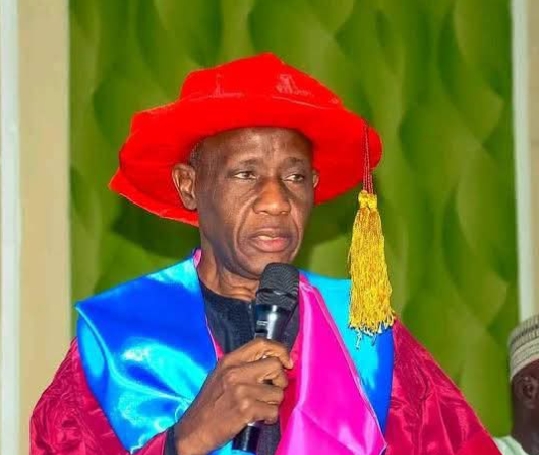
Jamilu Uba Adamu
Last week, while writing a tribute to the late Alhaji Ibrahim Galadima, one question kept haunting me: who will fill his shoes?
Kano, with its long tradition of producing great men across every sector—from business and politics to academia and sports—has never failed to replace its icons.
In sports administration, Kano’s roots run deep. At independence, the Premier of the Northern Region, Sardauna of Sokoto, Sir Ahmadu Bello, appointed the late Alhaji Muhammadu Danwawu of Kano as the Northern Region’s sports administrator. Decades later, in 1991, the state produced the Chairman of the Nigeria Football Association, Alhaji Yusuf Garba Ali.
That tradition was sustained by the immense contributions of stalwarts like the late Alhaji Isiyaku Muhammed, the late Alhaji Usman Nagado, and the late Alhaji Abdullahi Abba Yola—men who served the game with distinction and left footprints in administration, mentorship, and institutional growth. Alongside them were other excellent administrators such as Alhaji Tukur Babangida, Alhaji Ibrahim Abba, Dr. Sharif Rabiu Inuwa Ahlan, Bashir Ahmad Maizare, among others.
Now, with the passing of Alhaji Ibrahim Galadima, a pressing question emerges: *who will fill his shoes?*
Galadima was not just an administrator; he was an institution. As a former NFA Chairman, he brought credibility, order, and dignity to Nigerian football during turbulent times. His shoes are large—not merely because of the offices he held, but because of the integrity, courage, and vision with which he led.
Yet, if history is any guide, Kano’s well of leadership has never run dry. From Alhaji Danwawu at independence, to the era of Isiyaku Muhammed and Usman Nagado, through Yusuf Ali in 1991, and down to Galadima in the 2000s, the state has consistently raised men of character to step into moments of transition. The challenge before us is not whether Kano can produce another Galadima, but whether we can create the environment that allows such leaders to emerge and thrive.
The vacuum is real. The legacy is intact. The question remains: who among the next generation will rise to it?
Adamu writes from Kano and can be reached via jameelubaadamu@yahoo.com
Opinion
A Baby in 1956, A Granny in 2026; An Idol in 2096: Abdalla Uba Adamu’s Yesterday is Tomorrow
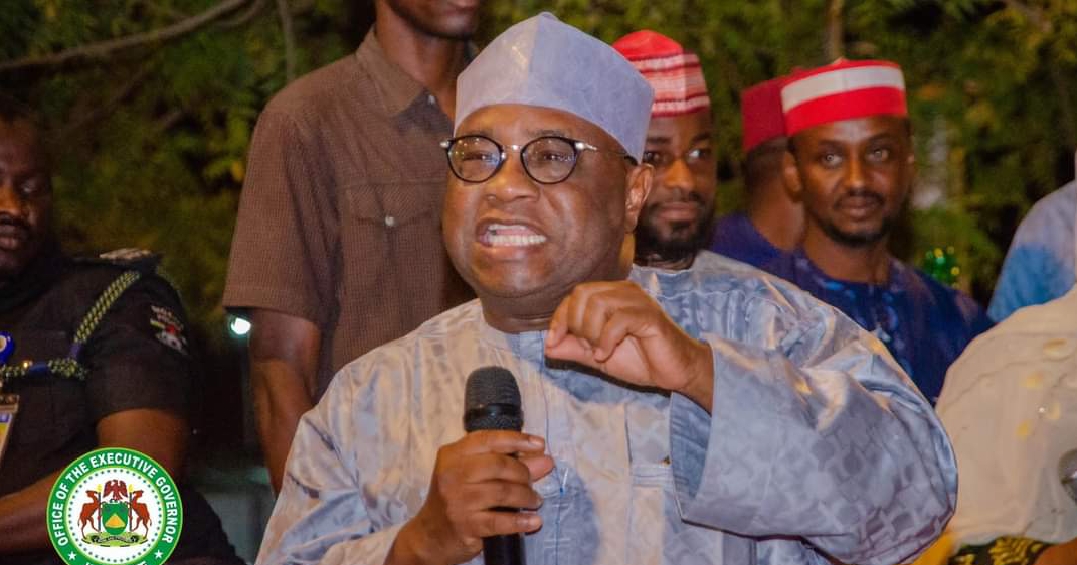
Prof. Aliyu Barau
Professor Abdalla was barely 11 years old when the 1967 science fiction film, Tomorrow is Yesterday, written by D.C. Fontana, was released. The film explores the possibility of traveling back and forth in time. I chose this caption with the understanding that science has shaped Abdalla’s trajectory in academia. Even as a child, he vigorously pursued science. He would ride his bicycle to the commercial side of Kano to buy books from the Kano-based missionary bookstore—the Challenge Bookshop—whose worn-out structure I once knew along Niger Street.
What exactly happened in 1956, and what connections does he have with that year? This is interesting because some events of 1956 may have shaped Abdalla into who he is today. For instance, anyone close to him knows of his fascination with the Kingdom of Morocco, which gained independence in 1956, just as Sudan did. I am not certain whether the Professor has any strong connection with Sudan; however, I would not be surprised, given his work in neo-Ajamisation scholarship. If you know his passion for popular culture, then you should also know that 1956 marked the rise of Elvis Presley. He made his debut on The Ed Sullivan Show and topped music charts, fueling the rock-and-roll era. If you wonder why Abdalla has ventured deeply into the worlds of media and communication, consider that the world’s first transatlantic telephone cable was commissioned in 1956. And if you admire the way Professor Abdalla writes and speaks English with a Midlands sharpness, you should recall that Queen Elizabeth II visited Kano in 1956. These moments symbolically map his journey through time since his birth in 1956.
Professor Abdalla is already something of a scholarly “grand old figure,” as even the students of his students became professors a few years ago. I often find it difficult to call him merely a professor; he is more of a mallam in the true sense of the word in Hausaland, and even more a mwalimu in the truest sense of Swahililand.
Like him or hate him, Abdalla Uba Adamu remains one of the most genuinely apolitical intellectual vanguards Kano has ever produced. Whether you acknowledge it or not, no position has ever—and will ever—distract him from true scholarship. Agree or disagree, nothing can rob him of his golden joviality. You may tower over him physically, but he will dwarf you intellectually. What is striking about Abdalla’s scholarship is its velocity—like a supersonic missile traveling at Mach 15 (a hypersonic speed roughly equivalent to 18,500 km/h, or 11,500 mph). I have yet to see any of his students come close to matching his intellectual range, even as age and retirement approach him. Allah ya kara lafiya. Truly, in Abdalla, we have a rare scholar.
Personally, I say with confidence that I share a genuine and natural relationship with Professor Abdalla Uba Adamu. With all humility, I can say that this rare scholar holds me in high regard. Whenever I call him and he misses the call, he always returns it, and I leave the conversation uplifted by his humour. Za mu sha hira. I know the people in his good and bad books. Throughout Bayero University Kano, I doubt there is anyone who has taken as deep an interest in my academic progress as Abdalla. I can proudly say I am among the few he trusted to co-author a journal article, even though we come from different disciplines but share common interests. He constantly tracks my progress, often calling to congratulate me: “I have seen your paper on ResearchGate or Google Scholar. I am happy. Please keep working.” Many people do not know how humble and philanthropic Professor Abdalla is, but Allah knows. May Allah reward his hidden deeds and guide him to Jannah. One example is his remarkable act of building a house for a homeless blind man.
In 2006, Professor Abdalla served as the team lead for Celebrating Arts in Northern Nigeria, a project by the British Council and the Prince’s School of Traditional Arts, London. The project culminated in a visit by His Majesty King Charles III, then the HRH Prince of Wales. Abdalla ensured that Nasiru Wada Khalil and I participated fully in the activities, giving us the opportunity to benefit. He stepped aside to create space for us. When the Prince arrived and engaged with us at the British Council, I seized the opportunity to present him with a copy of my book, Environment and Sustainable Development in the Qur’an (with the approval of the British High Commission). I still remember Abdalla telling me, “Kayi daidai; nima da ina da shi, wallahi da na ba shi.” Just imagine—such humility.
At his retirement, social media was filled with tributes celebrating this rare scholar. I am optimistic that by 2096, long after both Abdalla and I are gone, the Hausa world will be idolising and drawing inspiration from his erudition and service to humanity. Even in death, his scholarship will continue to shape the future. One final lesson I have learned from him is that one should be in the university not for money or political positioning. This is a principle he firmly believes in—and one I also uphold.
Abdalla na Allah. Allah ya sa mu cika da imani. Abdalla conquers yesterday and tomorrow.
Prof. Aliyu Barau teaches at
Bayero University, Kano.

Kwankwaso commends IGP over probe into Dadiyata’s disappearance

Cameroon telecom regulator visits NCC for benchmarking exercise

Dangote Refinery maintains ex-depot price of PMS

Tinubu congratulates Garo on appointment as Kano deputy governor

Ganduje acknowledges Sanusi II as Emir of Kano, 6 years after dethroning him

Kano SUBEB disowns fake teachers’ recruitment results

Sarkin Fulanin Jaidinawa Abubakar Gwadabe Buhari dies, funeral set for Wednesday

Kano Judicial Commission sanctions Shariah Court Judges, other staff over misconduct

Tinubu nominates Kano’s Rabiu Umar as new NMDPRA chief

