
Opinion
More Catholic than the Pope: Demystifying Nasiru El-Rufa’i’s obsession with power

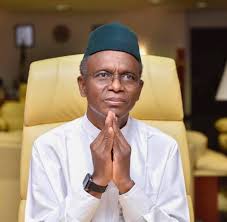
Murtala Uba Mohammed
The famous nineteenth century German Philosopher, Friedrich Nietzsche was quoted to have said: “arrogance on the part of meritorious is even more offensive to us than the arrogance of those without merit: for merit itself is offensive”.
This statement is very relevant to a giant-voiced, small physique governor of Kaduna State Malam Nasiru El-Rufa’i.
No doubt, the Katsina born graduate of the famous Ahmadu Bello University and later University of Harvard and Georgetown University, has achieved much in his life.
In his memoir, The Accidental Public Servant, El-Rufa’i stated that he was very lucky to be among few Nigerians to become millionaires in their twenties.

Indeed, this is a rare blessing in a country where the economy is in the hand of a few, largely aged fellows. Nasiru’s achievement is not only in material sense as he was fortunate to hold some big political offices in the country.
A rare achiever, Governor El-Rufa’i governed some of the most important capitals of the country, Abuja the present administrative capital of Nigeria and Kaduna the capital of the defunct Northern Region.
No license for contempt
However achievement is not a licence to treat people with contempt and disrespect the sensibilities of the general public.
After all, El-Rufa’i should thank Nigeria (of course Nigerians) for the chances he is given continuously.
It is important for him to remember that a country of over two hundred million people is very much blessed with many seasoned administrators and technocrats.
I want him to put at the back of his mind that he is not the only and will never be the most intelligent person ever produced in this country.
Let him be humble and not as arrogant as he presents himself.
El-Rufa’i needs to be reminded that if it was physical strength or might, he would not in any way get closer to the power he is too proud of.
In fact it is very unlikely for a person of his stand to inhale its fragrance or odour as the case may be.
If it is hard-work, many work harder but are not destined to attain for one reason or another.
For someone who grew in a centre of learning like Zaria City, it is easy to be reminded that intelligence is no one’s monopoly.
He should equally be reminded that power is transient and should be treated as such.
Mai Rusau
Although, this is not the first time El-Rufa’i displayed his extremism and to some extent conceited attitude to the service he was entrusted to render, it is only now that it becomes glaring how overzealous he is and how arrogant and indifferent he is to the people of Kaduna.
As the Minister of Abuja, he was nicknamed Mai-Rusau (the demolisher).
In his attempt to restore the Master Plan of Abuja, he demolished many structures worth billions of naira.
Many casual and superficial observers applauded him and perceived the wanton destruction of property as a laudable achievement.
But the ever overzealous governor had done more than what planners of the city expected him to do.
Planning is not, by any stretch of the imagination, as rigid as he thought, because it is always people’s oriented, it allows for restructuring, amendment and accommodation.
A liveable city should have place for the poor and working class, but not for only capitalist-oriented minds.
Dealing with COVID-19
Anyone following the news today can easily understand how passionate the Kaduna State Governor had become in his fight against the Covid-19 pandemic that found its way into Nigeria since early February.
Governor Rufa’i cannot be matched by any governor in his zeal to do all that can be regarded as proactive measure in containing the pandemic.
He is one of the first governors to impose and enforce lockdown as a means of mitigating the transmission of the virus to the barest level.
This is certainly a good measure especially when one considers the strategic location of Kaduna State as the main entry to core northern states via the most important capitals of the country—Lagos, the commercial capital and Abuja the administrative capital—and indeed the two major entries for the spread of pandemic.
This is sound and proactive tactic, and El-Rufa’i should be commended for that.
However, what one may find strange about the governor is the way he cares not about the fate and plight of the poor and the common people.
A good shepherd should be more concerned about his herd. In a state where most of the residents are poor and live through daily earning, it is very insensitive and unwise to lock people for more than one month as he did.
I do not want to talk about whether the palliatives given were sufficient enough to keep the poor or not because no sensible Nigerian will believe our leaders in this kind of situation—glaringly confidence has been eroded.
One will continue to wonder and ask rhetorically: who are his advisers?
It seems he has too much confidence in himself and this has given him a proclivity of the 21st century dictators.
He feels that his view is the only view and his way is the only right path.
It is apparent that the governor remains insensitive and adamant to many calls and advice given by good and concerned citizen of Kaduna State.
Dangerous utterances
Some of the governor’s utterances were dangerous and quietly implied his general feeling towards people’s cause. The governor always wants to say things that are controversial and that will make him perpetually the point of discussion in the public arena.
El-Rufa’i’s attitude to his principals is very undemocratic as he continues to remain adamant to the people’s fate.
It is crystal clear how draconian he sounds especially when it comes to religion.
There is nothing wrong in banning religious gathering to safeguard the life of people and to ensure that the spread of lethal Covid 19 is within government’s control, but that should be done with decorum and respect to religious authority.
When he was canvassing for their support and votes, he treated them with all the respect they deserved.
Among his most annoying action was his press release of May 19th laced with statements that are quite unfortunate for a public office holder of his status.
It is very unprofessional for a governor of one state to engage in direct attack on other state’s decision especially in a matter of national question and jurisdiction.
In his press release, governor El-Rufa’i unnecessarily dedicated three of points to Kano State.
He also appointed himself as a prosecutor and a judge by concluding that the strange deaths of people in Kano State during the height of the pandemic were caused by the Coronavirus and nothing more.
Intellectual arrogance
This statement revealed how intellectually arrogant and naive he is to report what a medical team and the Presidential Task Force on the Coronavirus Pandemic were investigating and yet to compile their reports at the time. Not only that the governor accused his counterpart (the governor of Kano State) of complacency and being economical with truth by concluding that the cause was known by the Kano state government and the medical team but they were manipulating the truth.
The new self-styled Pax-Nigeriana extended his jurisdiction beyond the assigned territory by saying that he would stay at the border to prevent people from Kano and other states from entering the ‘Holy’ Kaduna State.
These and his other utterances, including that of saying the evacuated Almajirai from Kano constitute a larger portion of cases recorded in his state had generated mixed reactions on social media.
The Kano State government also responded to that and youth from the two states engaged in bitter and offensive exchanges.
The divisive and controversial utterances of El-Rufa’i were the causes of the heated exchanges which polarized the youth of the two states at a time they needed to work together in harmony.
In attempt to settle the exchange between the two giant governors, the Daily-Trust newspaper dedicated its editorial of 1st June to this issue.
In the editorial, the newspaper reminded the two executives about their duties which exclude not engaging in unnecessary dispute and altercations over what is considered of critical importance to people’s life.
Health is one of the primary needs of human and it should not be handled with onionskin.
Still pointing fingers
However, it is obvious that El-Rufa’i has not refrained from his usual way of portraying himself as the holiest of the holy.
In a response to a tweet made by one @jibrilibrahim17 on 5th June, El-Rufa’i through his twitter handle, @elrufai opined that some states are deliberately under reporting their Covid-19 positive cases by submitting few sample to test laboratories.
However, he exonerated his state by saying: “FCT, Kaduna and Lagos at least are actively tracing contacts because we want RIGHT numbers of those infected – to test, trace contact and treat them. We want to save lives not have unexplained death.”
Although the governor was not so specific as to what state he was referring in his statement, it is as clear that he was referring to Kano and no more.
Of all states in the country none had the case of unexplained death as Kano. Also, the state (Kano) is reporting few cases since last week which the statement was pointing at.
The foregoing had clearly shown that the El-Rufa’i has neither physical nor social boundary in his dealings.
His way is clearly confrontational and dictatorial.
He considers himself too important and arrogates wisdom to himself.
This has to stop for the respect of constitution and other people’s thoughts, rights and opinions.
It is my humble hope that the governor will adjust and concentrate on his duties while allowing others to discharge theirs.
I will end with a popular saying that respect is reciprocal.
Murtala Uba Mohammed, PhD writes from Department of Geography, Bayero University Kano


Lamara Garba Azare
In Kano State, compassion has found structure. It has found funding. It has found direction. Under the leadership of Governor Abba Kabir Yusuf, healthcare is no longer a privilege negotiated by wealth; it is a right strengthened by policy. What is unfolding across the state is more than reform. It is a moral commitment woven into governance. It is Abba Care.
At the heart of this transformation is the introduction of free antenatal care and free delivery services for pregnant women in public health facilities. For countless families, this single decision has lifted a burden carried in silence for years. Pregnancy, once shadowed by fear of hospital bills, is gradually becoming a journey supported by public responsibility.
A visit to Murtala Muhammed Specialist Hospital in the heart of Kano tells the story better than statistics ever could. The maternity sections are vibrant with activity. Pregnant women arrive daily for routine checks, scans and medical consultations. The waiting areas are filled not with despair, but with expectation. The large turnout reflects renewed trust in government facilities. It demonstrates that when care is made accessible, citizens respond.
The visible reduction in maternal mortality in the state is no accident. It is the natural outcome of access. When women attend antenatal clinics regularly, complications are detected early. When deliveries take place in properly equipped facilities under trained supervision, risks are significantly reduced. Lives are saved quietly, steadily and consistently.
But Abba Care goes beyond maternity services. Through the initiative and the Basic Health Care Provision Fund interventions, free medical services are extended to pregnant women, children under five, sickle cell patients, the elderly aged 65 and above, and persons living with disabilities. It embraces those who often stand at the fragile edges of society. It ensures that vulnerability does not translate into abandonment.
Beyond direct service delivery, the administration has deliberately strengthened and revitalised key health institutions. While the Kano Health Trust Fund and the Drug and Medical Consumables Supply Agency predated the current administration, they have received renewed direction and operational momentum.
When this government assumed office, drug availability in public health facilities stood at below 30 percent. Today, availability has risen to over 95 percent, ensuring that patients who visit government hospitals are far more likely to receive the medicines prescribed to them. That shift has restored confidence in public facilities and reduced the burden of out-of-pocket spending.
Similarly, the Kano Health Trust Fund, once relatively unknown within the system, has emerged as a strong pillar of support across the sector. The Fund provides financial backing to primary, secondary and tertiary health facilities. It supports health-related Ministries, Departments and Agencies and extends assistance to health training institutions. In doing so, it strengthens infrastructure, manpower development and service delivery across multiple levels of care.
Most significantly, the recent establishment of the Kano State Centre for Disease Control has positioned the state as a pioneer in subnational health security, making Kano the first in Nigeria to create such a structure with regulatory authority over communicable and non-communicable diseases. Together, these institutions form a coordinated framework that reinforces the government’s commitment to quality, accessible and resilient healthcare delivery.
Speaking on the mandate of the Centre, its Director-General, Prof. Muhammad Adamu Abbas, described the agency as a defining milestone in the state’s public health journey. He explained that the Centre is designed not only to respond to outbreaks but also to strengthen surveillance systems, coordinate rapid response teams, regulate disease control programmes and deepen community engagement in prevention efforts. According to him, the agency has already undertaken case management activities, public sensitisation campaigns and field investigations in communities where suspected infectious diseases were reported. He reiterated its commitment to preparedness, transparency, scientific evidence and strong collaboration with partners and stakeholders.
Equally reassuring is the Kano State Emergency Medical Services and Ambulance System (KN-SEMSAS). This initiative provides free emergency response and treatment to victims of automobile accidents, gunshot wounds, violent attacks and other critical situations. Pregnant women in distress, patients with hypertension, people living with HIV and individuals battling terminal illnesses are attended to without hesitation over payment. In moments when seconds matter, government intervention becomes the difference between survival and tragedy.
The circle of compassion widens further. Inmates of correctional and rehabilitation homes, as well as elderly residents in Shahuci homes, are also beneficiaries of free medical services. These are citizens who might otherwise be overlooked in policy conversations. Yet under this administration, they are remembered, included and protected.
There is philosophy in this approach. A government reveals its character by how it treats the weakest among its people. When the elderly can access treatment without fear of cost, dignity is restored to ageing. When children under five receive free care, the foundation of the future is strengthened. When persons living with disabilities are covered, inclusion becomes practical rather than rhetorical.
Governor Abba Kabir Yusuf’s leadership style reflects calm resolve. He does not merely speak about compassion; he institutionalises it. Abba Care is not charity. It is structured empathy translated into sustainable intervention. It recognises that public office is a trust and that power must bend toward the protection of life.
Across Kano, families now speak with relief rather than anxiety. A father no longer calculates whether he can afford treatment for his sick child. A mother no longer postpones clinic visits due to registration fees. An elderly citizen walks into a health facility knowing that age has not diminished his worth in the eyes of government.
Healthcare reform may appear technical on paper, filled with acronyms and budgets. On the ground, however, it is deeply human. It is the smile of a discharged patient. It is the cry of a newborn delivered safely. It is the quiet gratitude of a grandmother whose blood pressure is managed without financial strain.
Abba Care represents a broader belief: that development must begin with people. Roads and buildings matter, but healthy citizens matter more. By investing in maternal health, emergency services, chronic illness care and protection for the vulnerable, Kano State is shaping a future anchored in human wellbeing.
Since the introduction of this policy, the impact is visible. Confidence is growing. Trust between government and the governed is deepening.
More importantly, in safeguarding mothers, children, the elderly, the sick and the marginalised, Kano safeguards tomorrow. Abba Care stands not merely as a policy, but as a living reminder that leadership, when guided by humility and compassion, can touch lives in the most profound ways.
Lamara Garba Azare, a veteran journalist, writes from Kano.

Abubakar Shehu Kwaru
There is an adage that behind every successful leader stands a dependable ally—one who offers moral discipline, commitment, ability and an unwavering desire to make meaningful impact. Leadership is rarely a solo endeavour; it thrives on loyalty, sound counsel and shared vision.
It is widely acknowledged that a good leader is one who listens to the views, suggestions and constructive criticism of close associates on matters of socio-economic and political importance. In Kano’s political landscape, one of such tested and proven leaders is Murtala Sule Garo, who has served in various capacities and was presented by the All Progressives Congress (APC) as its deputy governorship candidate in the 2023 elections.
The political milestones recorded by Garo cannot be separated from the dedication, loyalty and strategic support of those around him. Prominent among these trusted allies is Honourable Lamin Sani Kawaji, the current Chairman of the APC Caucus in Nassarawa Local Government Area.
It would not be an exaggeration to describe Honourable Kawaji as one of the key commanders supporting their “grand commander” and youthful political leader, Honourable Garo. For nearly two decades, I have maintained a close and personal relationship with both men, observing firsthand their political evolution and shared journey.
In Honourable Kawaji, I have found an honest and principled leader—hardworking, disciplined, punctual and accountable. He is a man who matches words with action and exemplifies prudence and reliability in public service.
Born and raised in the ancient city of Kano over five decades ago, Kawaji has built an impressive record across various spheres of public life. Despite the inevitable challenges and bottlenecks that accompany political growth, he has remained steadfast—an attribute common to many successful individuals.
Popularly known as “Dan Sani” among admirers, he hails from the respected family of the renowned Islamic scholar, Sheikh Sani Zawiyya of Koki quarters in Kano Municipality. His upbringing laid the foundation for his discipline and commitment to community service.
Honourable Lamin Sani Kawaji was first elected Executive Chairman of Nassarawa Local Government Council in 2013 and was re-elected for a second term in 2016. During his tenure, he initiated policies and programmes that transformed the council, ensuring that residents benefitted from the dividends of democracy.
His administration prioritised improvements in education, healthcare service delivery, infrastructural development, youth and women empowerment, and the creation of a conducive atmosphere for commercial activities. Public service efficiency also received significant attention under his leadership.
Like his political ally and mentor, Honourable Garo, Kawaji also served as the Kano State Chairman of the Association of Local Governments of Nigeria (ALGON), further strengthening his credentials in grassroots governance.
Upon the expiration of his tenure as Executive Chairman, the then Governor of Kano State, Abdullahi Umar Ganduje, appointed him Special Adviser on Local Government and Chieftaincy Affairs. Following Garo’s nomination as the APC deputy governorship candidate alongside Nasiru Yusuf Gawuna in 2023, Kawaji was appointed Commissioner for Local Government and Chieftaincy Affairs to replace him in the ministry.
In that capacity, he performed beyond expectations, consolidating reforms and sustaining administrative efficiency.
Political observers will recall that Garo and Kawaji played significant roles in the APC’s 2019 electoral success, which secured a second term for Governor Ganduje and his deputy.
Today, Honourable Kawaji remains a grassroots politician committed to complementing governance efforts in Kano State, including developmental initiatives under the present administration of Abba Kabir Yusuf.
Indeed, the partnership between Honourable Lamin Sani Kawaji and Honourable Murtala Sule Garo demonstrates the enduring value of loyalty, teamwork and shared political vision. With faith, perseverance and strategic collaboration, their journey in public service continues to reflect the timeless maxim: one with God is always in the majority.
Abubakar Shehu Kwaru is a seasoned journalist who writes from Mandawari Quarters in Gwale Local Government Area of Kano State.
Opinion
2027 begins in Kano: Abba Kabir Yusuf formally received into APC as Tinubu consolidates northern political stronghold

Lamara Garba
From the moment Vice President Kashim Shettima touched down at Malam Aminu Kano International Airport, the ancient city shifted into a different rhythm. The roads leading from the airport were not merely crowded; they were alive. Traders, market women, civil servants, and artisans abandoned their stalls and workplaces for a glimpse of the visiting dignitaries. Young men climbed rooftops and signposts, while elderly men in flowing babbar riga stood shoulder to shoulder with restless students waving party flags.
The chants rolled like thunder along Airport Road, through Fagge quarters, down Murtala Mohammed Way, and into the arteries leading to the city’s historic heart. It was not the choreography of hired enthusiasm; it was organic, loud, and unmistakable.
By the time the convoy approached the iconic Sani Abacha Stadium, the streets had become a river of humanity. The stadium itself seemed too small to contain the emotion that poured into it. In that moment, one truth stood firm: this was no routine political reception. It was a public declaration of belonging — that Governor Abba Kabir Yusuf belongs to the people of Kano, and that the people, in turn, belong to him.
The formal reception of Governor Yusuf by the national leadership of the All Progressives Congress (APC) was described as a homecoming. Yet it felt deeper — almost philosophical. At its highest form, politics is about alignment: of interests, of vision, of destiny. On that day, Kano appeared to signal that its destiny must sit at the table where national decisions are shaped.
Representing President Bola Ahmed Tinubu, Vice President Shettima addressed the sea of supporters with deliberate clarity. Kano, he noted, is too strategic to stand at the margins of Nigeria’s future. His tone carried both political calculation and historical awareness. Kano has always been more than a state; it is a compass. When Kano moves, Nigeria feels it. When Kano speaks, the federation listens.
His remarks were not mere pleasantries. They underscored the significance of Governor Yusuf’s entry into the APC — not as a simple addition, but as the strengthening of a pillar. Kano’s economic vibrancy and political consciousness, he suggested, are integral to the broader national development agenda.
The Chairman of the Progressive Governors’ Forum, Hope Uzodinma, described Yusuf’s defection as a return home. In politics, the language of homecoming is potent; it softens rivalry and reframes past tensions as steps toward reunion. Uzodinma went further, calling Kano the “brain” of Nigerian politics — a metaphor that resonated deeply with the crowd. A brain directs, calculates, and interprets. By that logic, Kano’s alignment with the APC signals direction for the country.
Similarly, the party’s National Chairman, Nentawe Yilwatda, portrayed the moment as an infusion of fresh momentum. He spoke of progressive ideals and shared responsibility, emphasising that the governor’s entry would enrich rather than dilute the party’s character.
Standing like an elder statesman observing the unfolding of history, former National Chairman Abdullahi Umar Ganduje declared the party in Kano stronger and more united than ever. In Kano’s political theatre, unity is currency. His words suggested that previous fractures had been stitched into a single fabric.
Yet beyond the speeches was the quiet but powerful statement made by the crowd itself. No script can manufacture such enthusiasm. Thousands who lined the streets and filled the stadium were not merely witnessing a political transaction; they were affirming their governor. Their presence was a reminder that leadership, ultimately, is validated by followership.
Governor Yusuf balanced gratitude with principle. He pledged that his new political alignment would not compromise his pursuit of fairness and justice. Defections often invite suspicion, but he framed his decision as pragmatic rather than opportunistic — a strategic move to widen the channels through which Kano’s aspirations could be realised.
There was symbolism, too, in the earlier announcement of federal support for Kano’s recovery from recent challenges. The financial backing from the federal government and the governors’ forum was presented not merely as relief but as evidence of partnership. In politics, resources often follow relationships. By stepping into the APC fold, Kano was not simply changing party colours; it was strengthening its access to the levers of federal influence.
What unfolded at the stadium was layered. On the surface, it was a mega rally filled with music, banners, and applause. Beneath that surface, it was a recalibration of political equations ahead of 2027. Kano’s electoral weight can tilt national outcomes. Any party that secures Kano secures more than votes; it secures narrative dominance in the North.
Philosophically, the event underscored a timeless truth about power: it abhors isolation. In a federal system as complex as Nigeria’s, alignment between state and centre often determines the pace of development. The rally conveyed a shared understanding that Kano’s ambitions are best pursued in concert with the ruling party at the national level.
As the sun dipped over the ancient city and the crowds gradually dispersed, one could sense that something had shifted. Kano had spoken — not in whispers, but in waves. Whether history will judge the decision kindly remains to be seen. But on that Monday in February, the message was unmistakable: the political map of Kano had been redrawn, and the ink was still fresh.
Lamara Garba, a veteran journalist, writes from Kano.

Gov. Yusuf mourns former Kano finance commissioner, Prof. Dandago

Abba Care: A Lifeline of Compassion in Kano State
GATCOSA President, Prof. Kabiru Isa Dandago is dead

BUK clinches Northwest 3×3 basketball title at ABU Zaria

Kano rolls out emergency medical services, deploys 20 Ambulances

Lami Maccido, first person to appear on screens of NTA Kano, CTV 67, dies at 72

Kano begins Ramadan food distribution as Gov. Yusuf constitutes feeding committee

Kano Police announce movement restrictions ahead of assembly by-elections

K-SAFE appeals to Kano Executive Council to pass revised education bill

