
Headlines
Nigeria’s democratic backsliding


By Aminu Ali
Freedom of speech is one of the cardinal pillars of democracy and an accelerator of transition to democratic consolidation.
But in Nigeria, free speech is routinely being threatened.
For instance, the incessant and flagrant clampdown on activists, journalists and preachers who are bold enough to call out the downright incompetence, impunity and cluelessness of those who lead them is quite alarming.
Some of them are being harassed and intimidated, others are detained for several months without trial or are being denied bail even after securing an order from a court of competent jurisdiction.

Freedom of expression, rights to lawful assembly and peaceful protest are inalienable as they are guaranteed by the Constitution of the Federal Republic of Nigeria and the United Nations’ Universal Declaration of Human Rights.
Digital identity program will enhance security in Nigeria–Shamsuddeen
Reflections on Nigeria’s Elections
‘Why youth unemployment is rife in Nigeria’
But while pro-government protesters are given the freedom to conduct their rallies, those oppose to its unpopular policies are being suppressed using state security apparatuses.
As Rosa Luxemburg aptly argues “freedom only for the members of the government, only for the members of the Party…. is no freedom at all. Freedom is always the freedom of the dissenters.”
An unrepentant fascist
As Buhari’s government intensifies its efforts to gag dissent, concerns about the shrinking of civic space and heightened risk of democratic regression are becoming more and more pronounced. This is evident in the scale of public outrage that trailed the illegal detention of the organizers of the #RevolutionNow, Omoyele Sowere and Bakare Mandate.
When civil rights are denied, accountability in governance is well-nigh impossible and, consequently, politics of irresponsibility prevails and the nation plunges into dictatorship.
Therefore, Nigerians need to be more vigilant in averting the seeming erosion of civic space and subversion of democratic norms. If we remain acquiescent, despondent or complacent in the face of ceaseless assaults on our civil rights, our rulers will become bolder in wrecking the ideals upon which democracy is built.
In 1983, Major General Buhari (as he was then known) overthrew a democratically elected government.
The military government he formed became notorious for promulgation of draconian and repressive laws, such as the infamous Decree 4, which criminalized dissent.
Nigerians forgave his heinous act and elected him as their civilian president.
Alas, the brazen violations of civil and democratic rights and the wanton disregard for the rule of law under Buhari’s watch give Nigerians the impression that he is an unrepentant fascist.
The overt endorsement of the Social Media Bill by the APC-led government is also a manifestation of its anti-democratic posture. In his inaugural speech in May 29, 2015 president Buhari acknowledged the role played by the social media in securing his election victory.
‘Why Nigerian doctors prefer working abroad’
Surprisingly, however, the government he leads is now unwilling to tolerate the censure his predecessor was subjected to by the same media he praised not quite long ago!
Rule of law under threat
Selective obedience to court order is now a commonplace in Nigeria. Governments swiftly obey orders that suit them while ignoring those that do not.
For example, when the Code of Conduct Tribunal granted an order to President Buhari to suspend the former Chief Justice of Nigeria, Walter Onnoghen, he happily implemented the order.
But when courts ordered for the release of Sowere and the leader of Islamic Movement in Nigeria, El-zakzaky, the same government has blatantly refused to comply!
What this means is that the State has now become a promoter of lawlessness.
The principle of separation of power is increasingly being threatened.
The legislature has been compromised; it is a bunch of yes boys of the Presidency.
Executive bills are being passed by lawmakers without robust debates and, worse still, sometimes even before they are privy to its content.
In essence, the legislature is seemingly a mere rubber stamp.
The judiciary is also not spared: intimidation of judges, disregard for court order and desecration of court are the order of the day. When the independence of these organs is undermined through whatever means, executive recklessness prevails.
Sham elections
The integrity of our electoral process is rapidly diminishing.
As I argued elsewhere, “voter suppression, ballot snatching and stuffing, vote-buying, violence, militarization of polls, among other forms of irregularities and malpractices, have become the defining features of our elections.”
The outcome of polls is not determined by popular vote. Consequently, elections no longer provide opportunities for the electorate to humiliate leaders who have under-performed.
In other words, those who have performed abysmally can secure reelection as long as they have control over security agents and possess money to hire thugs and buy votes.
Politics of brinksmanship is pervasive in Nigeria, largely because holding political offices is the most lucrative occupation, as holders have unfettered access to public purses.
And since we have no viable system of accountability, they brazenly plunder our collective patrimony, often without any serious consequences.
Therefore, struggles to capture and retain political office become a do or die affair.
More worrisomely, this politics of brinksmanship has made democratic consolidation difficult and, worse still, is aggravating democratic backsliding.
Poor economic management adversely effects transition to democratic consolidation.
From the foregoing analyses, one thing is very clear: Nigeria is experiencing what Nancy Bermeo calls democratic backsliding. This is driven by abuse of civil and democratic rights; disregard for the rule of law; weakened independence of the legislature and judiciary; decline in the integrity of electoral process and politics of brinksmanship; poor management of the country’s economy and imposition of unpopular/anti-poor policies, which makes the democracy unbeneficial to the toiling Nigerians.
The dwindling living condition of Nigerians, which is occasioned by imposition of neo-liberal and anti-poor policies, has become horrible.
Withdrawal of subsidies, devaluation of naira, increase in taxes and their attendant consequences on the cost of living, declined investments in social services – such as education, health, portable water and electricity – have not only denied us the dividend of democracy but have deepened the crises that pose existential threat to the country’s corporate existence.
Nigerian universities will never reach world class – IBK
Nigeria is gradually getting enmeshed in debt crisis.
According to the African Development Bank (AfDB), 50% of the country’s revenue goes to debt servicing.
Also, a Premium Times investigation shows that a quarter of the 2020 budget will go to debt servicing.
Yet, Nigerian government has continued to borrow.
It’s unthinkable that while the government claims that it has recovered looted funds, blocked leakages and expanded our revenue base, it has continued to borrow money to carry out its obligations. One of the terrible consequences of this over borrowing is that the county is left with little resources to invest in the provision of essential social services.
From the foregoing analyses, one thing is very clear: Nigeria is experiencing what Nancy Bermeo calls democratic backsliding. This is driven by abuse of civil and democratic rights; disregard for the rule of law; weakened independence of the legislature and judiciary; decline in the integrity of electoral process and politics of brinksmanship; poor management of the country’s economy and imposition of unpopular/anti-poor policies, which makes the democracy unbeneficial to the toiling Nigerians.
Aminu Ali wrote from the Department of Sociology, Bayero University, Kano. He can be reached via email aminuali@yahoo.com

Nasiru Yusuf Ibrahim
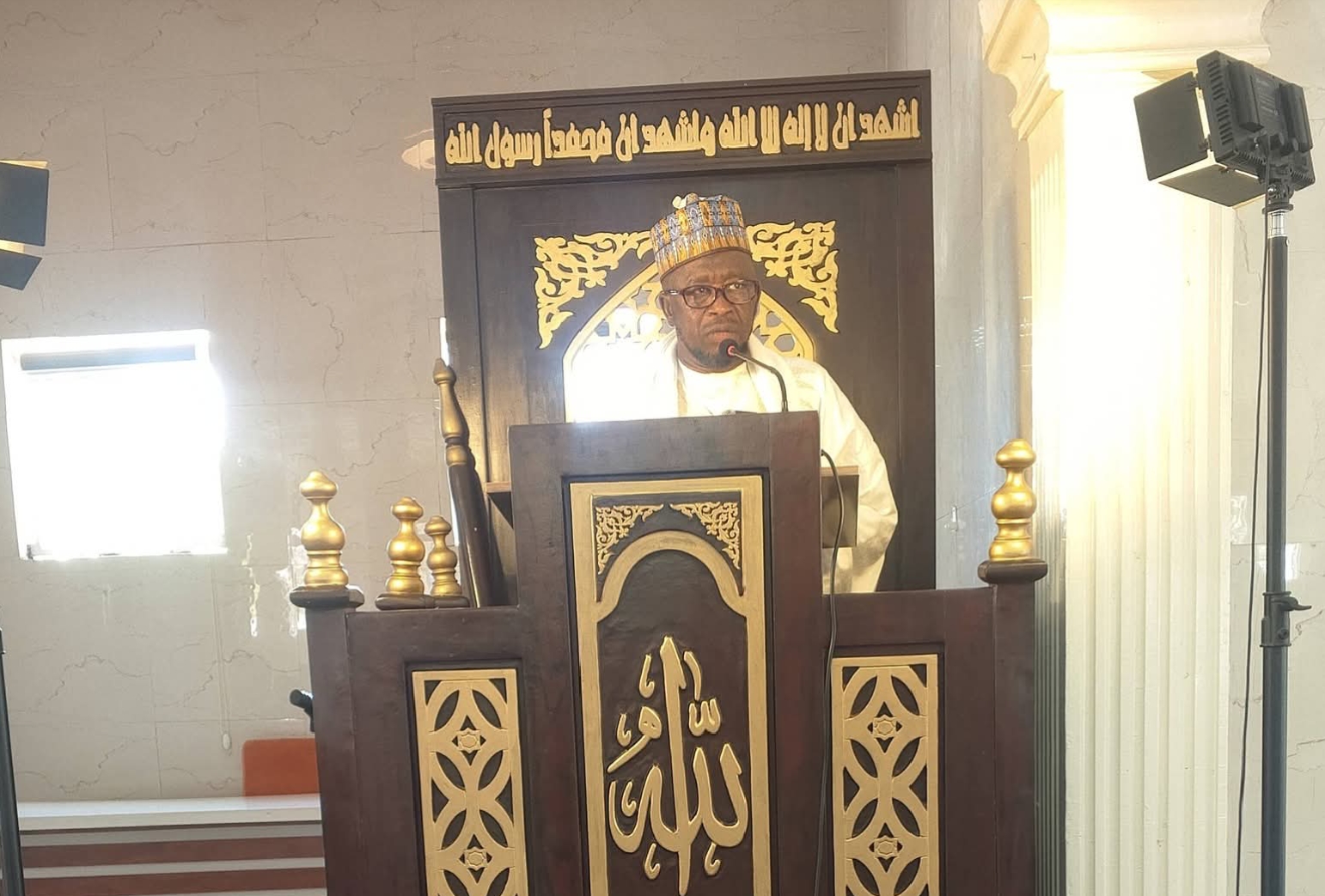
Imam Nura Garba Mato has urged Muslims to remain conscious of their actions, saying that divine reward and punishment often correspond to the nature of people’s deeds.
KANO FOCUS reports that the imam made the call while delivering a Friday sermon at Jami’u Ansar wal Muhajirun Jumaa Mosque, Cotton Ginnery Layout, Zawaciki, Kano State.
The sermon, titled “Al-Jazā’u Min Jinsil-‘Amal” (Recompense Is According to the Nature of Deeds), focused on the Islamic teaching that people’s actions have consequences and that good deeds attract divine reward.
Imam Mato said Allah had established enduring principles in human life that do not change, urging Muslims to understand these principles and allow them to guide their conduct.
He explained that one of these principles was that recompense corresponds to the nature of one’s actions, stressing the importance of living righteously and fulfilling one’s responsibilities to Allah and fellow human beings.
The imam called on Muslims to observe *taqwa* (consciousness of Allah), remain steadfast in their faith and follow the teachings and traditions of Prophet Muhammad (peace be upon him).
He also highlighted the importance of helping people in difficulty, easing the burdens of others and showing compassion to fellow Muslims.
Quoting a prophetic tradition, the imam emphasised that whoever relieves a Muslim of a hardship in this world will receive relief from Allah on the Day of Resurrection.
He further explained that whoever conceals the faults of a fellow Muslim would receive Allah’s concealment of their faults on the Day of Resurrection, while those who make things easier for people in difficulty would receive Allah’s assistance in this world and the Hereafter.
The sermon also underscored the importance of supporting others, noting that a Muslim’s relationship with Allah should be reflected in their treatment of fellow human beings.
Imam Mato urged Muslims to reflect on their deeds and recognise that their conduct carries consequences, encouraging them to embrace good actions, assist those in need and uphold the teachings of Islam in their daily lives.
He stressed that Muslims should make righteousness, compassion and service to others central to their lives in pursuit of Allah’s pleasure and success in the Hereafter.
Nasiru Yusuf Ibrahim
The Kano State Government has directed all civil servants who have attained their statutory retirement age or completed the required length of service to immediately vacate their offices and hand over government property in their possession.
KANO FOCUS reports that the directive was contained in Circular issued on Tuesday by the Establishment Directorate, Office of the Head of Civil Service, Kano State.
The circular, signed by the Permanent Secretary, Establishment, Abba A. Danguguwa, on behalf of the Head of Civil Service, was titled: “Unauthorized Continuance in Service After Statutory Retirement by Civil Servants in Ministries, Departments and Agencies (MDAs) of Government – Call for Immediate Handing Over of Official Documents, Properties.”
The government said it had observed that some civil servants continued to remain in office and operate in official capacities after reaching their statutory retirement period.
According to the circular, such conduct was a “negation to the reputation of the Civil Service of Kano State,” noting that the service had a long-standing tradition of ensuring seamless transition by retiring civil servants.
It described the continued stay in service after retirement as a direct infraction and aberration of relevant provisions of the State Civil Service Rules and other applicable service regulations.
The government stressed that it was legally and administratively untenable for any officer to remain in service or perform official functions beyond the statutory limit.
Consequently, all civil servants who had retired either by age or length of service were directed to immediately exit and hand over all official documents, government property and duties to their immediate subordinates in their respective ministries, departments and agencies.
The circular also directed all Accounting Officers, including Permanent Secretaries and Chief Executives, as well as Directors of Administration and Personnel Management, to ensure strict and immediate compliance with the directive.
It warned that any officer found aiding, abetting or condoning the continued stay of a retired officer in service would face appropriate disciplinary action in accordance with the Civil Service Rules.
The directive takes immediate effect, the circular stated.
Nasiru Yusuf Ibrahim
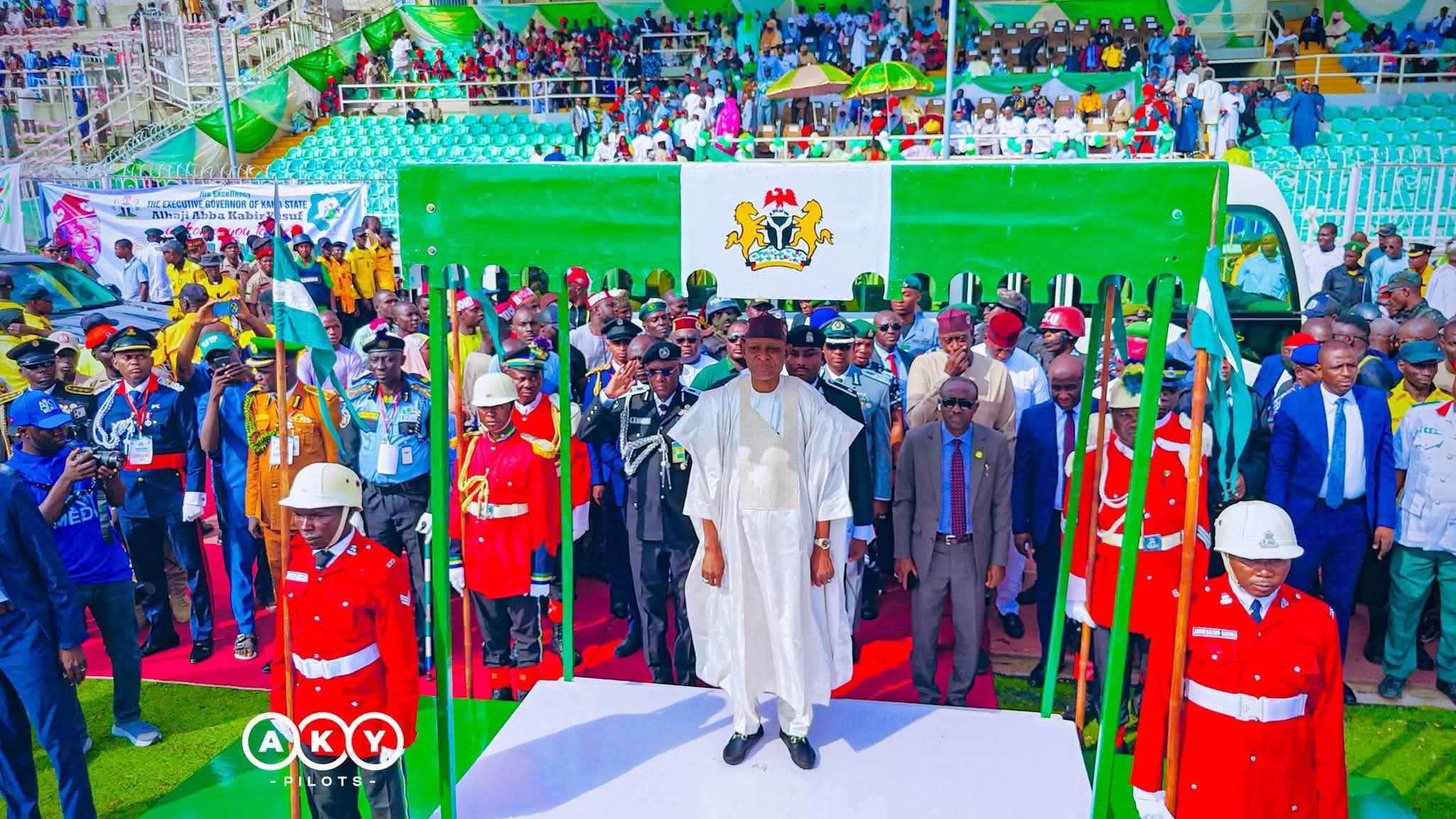
Kano State Governor Abba Kabir Yusuf says his administration has settled approximately N32 billion out of the N48 billion inherited backlog of gratuities and related liabilities owed to retirees in the state.
KANO FOCUS reports that Gov Yusuf disclosed this on Thursday while addressing residents at the 66th Independence Anniversary celebration held at the Sani Abacha Indoor Stadium in Kano.
The governor said the government had also sustained the regular payment of monthly pensions while increasing the minimum monthly pension from N5,000 to N20,000.
He said the welfare of workers and pensioners remained a priority of his administration, citing timely payment of salaries, improved remuneration and measures aimed at strengthening the public service.
According to him, the state has maintained the practice of paying workers’ salaries on or before the 25th of every month while implementing the N71,000 minimum wage for civil servants.
Gov Yusuf also said his administration was sponsoring public servants for professional training, including programmes at the Administrative Staff College of Nigeria (ASCON), to strengthen their administrative and leadership capacity.
He reaffirmed the government’s commitment to building a professional and motivated workforce, while ensuring that the contributions and sacrifices of serving workers and retirees were recognised and treated with dignity.

Insecurity, hunger have deepened Northern Nigeria’s distrust of Tinubu, Imam Gusau says

Kano Police return recovered car, motorcycle to owners

JONAPWD Kano to hold leadership election Saturday

“As You Sow, So Shall You Reap”: Imam Reminds Muslims of Divine Justice

Kano Govt Orders Retired Civil Servants to Vacate Offices, Hand Over Government Property

Kano leads again as NECO successes rise to 74,413
Kano tops states in 2026 NECO results, Governor Yusuf hails students

Kano Govt Suspends Durbar Processions, Horse Riding in Metropolis

INEC holds campus debate on elections, democracy at BUK

